Black Census respondents express deep concern on criminal justice issues, including the illegitimate use of force by the police and the prevalence of gun violence in Black communities. Recognizing the impact of mass incarceration on political power, respondents also want voting rights restored to formerly incarcerated people.
Policing is a major area of concern for Black Census respondents. More than 8 in 10 respondents consider police officers killing Black people a problem in the community (87 percent). Eighty-four percent say that police officers not being held accountable for their crimes is a problem, while 83 percent describe excessive use of force by police officers as a problem. More than half (55 percent) of respondents have personally had a negative interaction with the police at some point, and 28 percent have had at least one negative interaction in the last 6 months. More than a third (38 percent) of Black Census respondents had their first negative interaction with the police before the age of 18. Younger respondents are also more likely to report recent negative police interactions, with 38 percent describing a negative encounter with police in the last 6 months.
Policing in Black communities has always been a site of contention. From the nation’s earliest history of slave patrols searching for and punishing enslaved people they thought were trying to escape, police forces have too often been deployed to suppress the rights of Black people in the United States rather than to improve public safety in Black communities. Today, systemic racism continues to permeate police departments across the country: Unarmed Black people remain far more likely to be victims of police violence than their white counterparts.
Many of the uprisings in the 1960s were sparked by police brutality. For example, when a white police officer repeatedly shot unarmed 16-year-old Matthew Johnson in San Francisco in September 1966, the killing sparked the Hunters Point uprising and helped to inspire the formation of the Black Panther Party for Self-Defense one month later.22 An immediate end to police brutality was central to the Black Panthers’ Ten-Point Program, as members organized armed patrols of Black community members to counter police violence.
Today, the Black Lives Matter movement is shining a powerful spotlight on the persistence of police violence and misconduct. Black Census respondents strongly support Black Lives Matter, giving the movement a net favorability (favorable percentage minus unfavorable percentage) rating of 81 percent, which is about the same rating as the respondents give to President Barack Obama. Meanwhile, net favorability toward the police is minus 37 percent.
Despite an unfavorable view of police departments, most Black Census respondents believe that relations between police and local Black communities can be improved (only 7 percent of respondents assert that “I don’t think the relationship between the police and Black people in my community can improve,” and an additional 5 percent maintain that the relationship needs no improvement). The most popular proposal for improving relations with the police is ensuring that officers are held accountable for their misconduct, endorsed by 73 percent of Black Census respondents.
In addition, 60 percent of respondents believe that requiring police officers to wear body cameras to record interactions with the community would improve relations. While individual-level body cameras clearly cannot address systemic racism in policing, many proponents see them as tools to hold law enforcement broadly accountable for their actions, potentially changing the culture of policing.
About half of respondents recommend measures such as having police officers live in the communities where they work, recruiting more police officers from Black and other minority communities, and creating community boards to supervise police departments. About half (53 percent) of respondents over the age of 60 believe that police/community relations would be improved if parents took more responsibility for the behavior of their children, but younger respondents were less supportive of this approach. Only 24 percent of respondents believe that relations would improve if members of the community were more respectful of police officers.
Gun violence is an area of deep concern, described by nearly 90 percent of Black Census respondents as a problem in Black communities. Three-quarters of respondents see it as a major problem. In nearly half of states, the Black firearm death rate is 2 or more times the white rate.24 Gun violence is the single most common cause of death for Black children and teenagers.25 In response to this epidemic, Black communities across the country have mobilized for years against gun violence, pioneering the use of restorative justice practices, violence interrupters, and other innovative strategies to address the prevalence of gun violence. Congresswoman Lucy McBath (D-GA), whose 17-year-old son, Jordan Davis, was murdered by Michael Dunn, a white man enraged by his loud music, was elected to office in 2018 on a gun control platform.
Yet politicized narratives blame Black communities for violence, ignoring the systemic factors that contribute to its persistence: High rates of gun violence are rooted in poverty, inequality, and racial segregation.26 Neighborhoods that are isolated from basic services and provide little access to stable, well-paid employment experience more violence. Thus, while the Black Census did not ask respondents directly about policy solutions to address gun violence, many of the policies respondents most strongly support—such as raising pay and guaranteeing quality and affordable housing, health care, and education in Black communities—in fact show great promise in reducing violence.28 Improving police-community relations, through efforts such as reliably holding police accountable for their misconduct, can also help establish a foundation for preventing gun violence.
I have personally seen injustices toward black folks when it comes to criminal justice, particularly in sentencing. A rich white woman is getting the bare-ass minimum. A poor black male is more likely to get the maximum sentence, and anything else the prosecution can dig up.
I don't know if it is individual racial bias/prejudice, or lack of effective assistance of counsel or some other factor, but it is real. I have seen it with my own eyes.
I understand why community leaders want to keep young black males from getting a criminal record before they are adults. That will guarantee no benefit of the doubt in the future, and a harsher sentence.
Some police are straight up murderers. That incident where the guy attempted to grab the police officer's taser gun, and the cop shot him in the back as he was running away can be nothing but murder.
Other police are poorly trained (which can be fixed) or incapable of keeping emotions under control (which cannot, and that person is not fit to wear a badge).
There needs to be a "start over" type program with police and the black community where both work to build a relationship of trust. Many of the police transactions with black folks are escalated when they don't need to be, which I believe is brought on by a lack of trust. Cops are largely considered an enemy, rather than protectors and servants. Part of that problem is the general movement toward an authoritarian police state, rather than a more freedom-based society. (Goes back to my war on drugs comment, and general slide toward a loss of personal liberty that began in the late 1800s).
There is a lot of unnecessary police interaction. Most of that is caused by the desire of municipalities to increase funding in the way of fines, which has police officers out stopping drivers for very minor traffic violations. In major metro areas, it is nearly impossible to drive without violating some traffic law, so the only thing preventing a police stop is lack of a police officer.
Regardless, a lot of interactions with police officers and the general public (not just black folks) escalate because of a general lack of understanding of the branch of government the police represent. Arguing with a police officer may persuade him/her to give you a warning, but ultimately, they represent the executive branch, not the judiciary or the legislative branch. Many complaints about those interactions should be directed at the legislatures or argued before the judiciary. The cop is a peon in the grand scheme. Arguing with a cop is similar to arguing with a grounds keeper at a football game about a touchdown pass ruled out of bounds. Yes, the grounds keeper tends the grass and chalked/painted the sideline, but he is not the person making the call on the play.
Today, systemic racism continues to permeate police departments across the country:
I have seen this as well. The father of one of my college roommates was a cop. I remember feeling uneasy when hearing him express his general attitude toward black folks. I remember thinking that the general complaint about racism within the police department was just confirmed. After hearing about some of his experiences, I came away thinking that he was misguided, but his negative experiences with very few individuals who refused to cooperate and caused a situation to escalate into something way beyond what it should have been, shaped his attitude toward the whole black community. Likewise, it seems that interactions with a few bad police officers shaped attitudes toward police as a whole for black folks. So, now you have police expecting certain behaviors and responses from black folks, and black folks expecting police to be unreasonable and unjust.
Again, I think a "start over" campaign may help. Otherwise, I don't know what we can do. It is a vicious cycle of black folks not trusting cops, and thereby being evasive and resistant, and cops expecting black folks to be evasive and resistant, and treating them in like manner.
About half of respondents recommend measures such as having police officers live in the communities where they work, recruiting more police officers from Black and other minority communities, and creating community boards to supervise police departments. About half (53 percent) of respondents over the age of 60 believe that police/community relations would be improved if parents took more responsibility for the behavior of their children, but younger respondents were less supportive of this approach. Only 24 percent of respondents believe that relations would improve if members of the community were more respectful of police officers.
I support having police officers come from the communities they serve and protect. They know the community and the people they serve, and tend to have a personal interest in protecting the community. They are better equipped to keep situations from escalating. Some pasty white cop from a completely different neighborhood is less likely to be trusted in a mostly-black neighborhood.
Congresswoman Lucy McBath (D-GA), whose 17-year-old son, Jordan Davis, was murdered by Michael Dunn, a white man enraged by his loud music, was elected to office in 2018 on a gun control platform.
The Michael Dunn/Jordan Davis MURDER is a sickening situation that highlights my general repulsion of authoritarianism and gravitation toward liberalism/libertarianism. Dunn is the personification of the abhorrent authoritarian attitudes held by the right wing. He apparently does not believe that other people have the right to play loud music in public commercial settings that he does not own or control. When his authoritarian demands were not obeyed and his authority as an older white person was defied by young black kids whom Dunn undoubtedly believed to be inferior in every possible way, he believed it appropriate to issue a death sentence to the disobedient/defiant.
What aggravates the hell out of me is that Mr. Dunn's murderous authoritarian attitude has bred MORE authoritarian attitudes.
It seems that many black folks share my liberal attitudes verses authoritarian attitudes held by many folks on the "right" and the "left."
I am an equal-opportunity lover of liberty. I will fight for every person's liberty, regardless of whether I agree with the particular liberty being exercised.
Example:
The Black Panthers patrolling black neighborhoods in Northern California. There was NOTHING wrong with their actions. They were exercising an inalienable right and power they retained as individuals. Along comes Ronald Reagan, who, for CLEARLY racists reasons, signs the Mulford Act. Racism over rights, brought to you by GOVERNMENT!!! And, the mushy NRA was right there with him (which is why I support other gun advocacy groups).
When the Black Panthers Lobbied For 'Open Carry' Laws | Essay | Zócalo Public Square
https://www.history.com/news/black-panthers-gun-control-nra-support-mulford-act
I don't agree with everything the Black Panthers stand for. But, I will grab my weapons and march beside them in support of their right to keep and bear arms.
I heard endless right-wingers complaining about this:
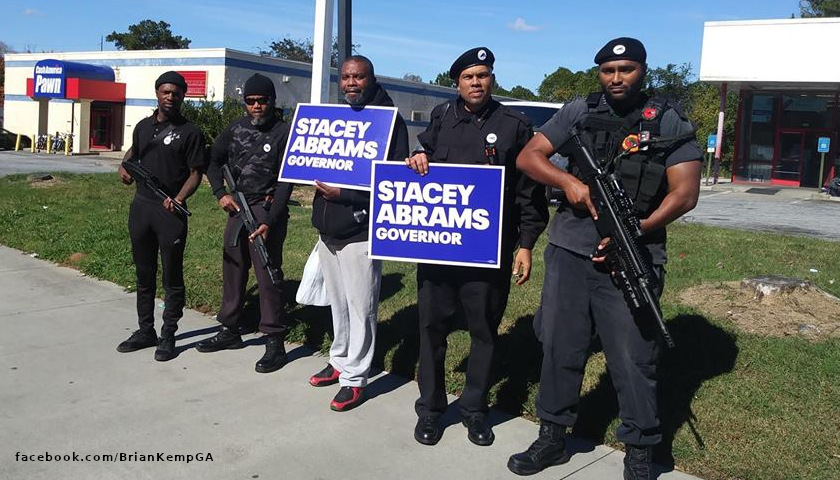
Armed With Assault Rifles, Black Panthers March for Stacey Abrams - Tennessee Star
I see NOTHING wrong with these gentlemen exercising their rights (and I appreciate their clear
trigger discipline -- note the trigger fingers, outside the trigger guard -- very important safety practice. These guys appear to be well trained). But, because they are doing so while holding a Stacey Abrams sign, the right-wingers decided these fellow countrymen and our American brothers were acting like thugs and should be arrested. These are the same people who want open carry, but apparently, they only want open carry for those with whom they agree.
Nothing infuriates me more than people openly hostile to the liberty of others. I don't care who they are.
There are many examples of people demanding their own liberty, but being instantly willing to
shit on the liberty of their fellow Americans because they disagree.
REAL understanding of liberty, and TRUE commitment to it, is demanding liberty for those with whom one disagrees.
To me, a solution to many of the problems facing black folks is to give them LIBERTY.
So, one thing of which you may remain certain and upon which you may rely, IM2. It is my commitment to preserving your liberty. You have not just a mere ally, but an active defender.

.