
Doc7505
Diamond Member
- Feb 16, 2016
- 23,413
- 41,649
- 2,430
The Mainstream Media Will Not Survive 'The Information State
The Mainstream Media Will Not Survive 'The Information State'
Explore 'The Information State' by Jacob Siegel on media, politics, and disinformation in modern America.
 hotair.com
Next month the most important political book of the year, or perhaps the decade, will be published. It is called The Information State: Politics in the Age of Total Control. The author is Jacob Siegel, a journalist for the Tablet.
To summarize: shocked by the arrival of Donald Trump in 2016, American government officials, the media, and the technology giants created a system of censoring the public, spying on other opponents, and planting false stories. The media was complicit and will never fully recover.
Trump’s rise, Siegel writes, “meant that politics had become war, as it is in many parts of the world, and tens of millions of Americans were the enemy.” He goes on: “One of the most disorienting aspects of the conspiratorial mania that overtook America’s elites in response to the rise of Donald Trump was the sheer scale of expert consensus behind views that were, on their merits, utterly deranged. What an ordinary person saw in 2016 was the country’s most venerated institutions all promoting the same claims about a Russian takeover of the American political system. Any given charge about Trump’s ties to the Kremlin might fall apart under scrutiny, but there were so many, coming from seemingly authoritative sources, that their totality seemed to outweigh their individual merits. The alternative—that it might all be so much propaganda—was difficult to face.”
To face the truth means to face the fact that “legions of Harvard professors, senators, senior national security officials, and respected journalists touting Trump’s sinister connections to Vladimir Putin had allowed themselves to become credulous bullhorns for a cynical and destructive information operation. If that was true it suggested that institutions and individuals with hundreds of years of built-up trust behind them were not only capable of getting big questions wrong but could, at any moment, decide to join hands and break out in song while they led the entire country off a cliff.”
~Snip~
Trump’s rise, Siegel writes, “meant that politics had become war, as it is in many parts of the world, and tens of millions of Americans were the enemy.” He goes on: “One of the most disorienting aspects of the conspiratorial mania that overtook America’s elites in response to the rise of Donald Trump was the sheer scale of expert consensus behind views that were, on their merits, utterly deranged. What an ordinary person saw in 2016 was the country’s most venerated institutions all promoting the same claims about a Russian takeover of the American political system. Any given charge about Trump’s ties to the Kremlin might fall apart under scrutiny, but there were so many, coming from seemingly authoritative sources, that their totality seemed to outweigh their individual merits. The alternative—that it might all be so much propaganda—was difficult to face.”
~Snip~
One of the things that is going to make The Information State so powerful is that it will challenge the media’s greatest power - the power to ignore. Siegel, a veteran of both Iraq and Afghanistan wars, is not MAGA, even if he is not liberal. He will be interviewed at the CUNY Graduate Center on March 16. His book will get reviewed - unlike others that the media chooses to ignore.
Siegel explores how reporters became more pliant and stupid, even as the digital revolution exploded with access and new voices. A key moment came in 2015 when White House aide Ben Rhodes tried to sell Obama’s deal with Iran. Rhodes observed, “Most of the outlets are reporting on world events from Washington.” Siegel: “Without reporters on the ground, journalists simply retailed the narratives fed to them by their political contacts….Rhodes seemed to enjoy boasting about his power over people he considered beneath him.
When asked about the “onslaught of freshly minted experts cheerleading for the deal,” Rhodes explained how the White House had manufactured a consensus: “We created an echo chamber.” The legions of experts were apparatchiks. “They were saying things that validated what we had given them to say,” Rhodes acknowledged.
~Snip~
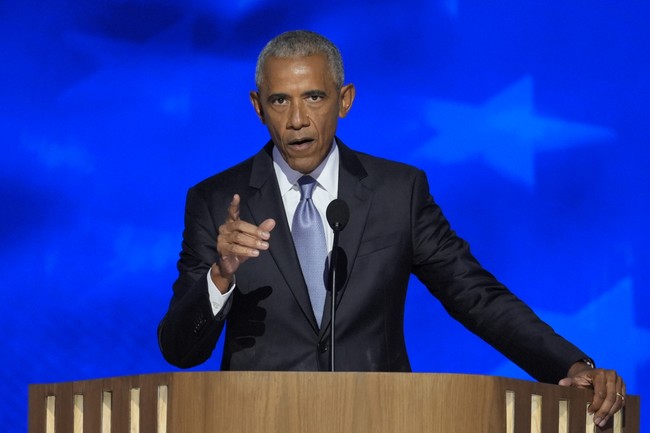
Obama also forced people like Mark Zuckerberg and platforms like Twitter to go along. Zuckerberg at first resisted, but quickly caved when Obama demanded that they combat “disinformation.” The new Leviathan, observes Siegel, was huge. The “whole-of-society apparatus” intent on “fighting disinformation” was in reality a group that “fused the political goals of the Obama-led ruling party with the institutional agenda of the intelligence agencies, funding from the financial elite, the narrative power and activist fervor of the media and NGOs, and the tech companies’ technological control of the public arena. The fact that the populist challenge was both legal and highly democratic did not affect their view that it was illegitimate. If democracy allowed such a threat to arise, then the rules of democracy would have to be changed.”
Siegel sums up the new reality well: “Groups like the Anti-Defamation League, counterterrorism veterans, trust and safety officials, countering violent extremism experts, social scientists, political operatives, FBI agents, millennial journalists, and CIA officers all rubbed shoulders on the counter-disinformation party bus housed inside the social media companies.
Most shamefully guilty in all of this was the media. Yes, people distrust and hate the media now. The Information State will atomize whoever small trust had remained. The media would love us to forget, but Seigel’’s book won’t allow that. The media truly have shown themselves to be the enemy of the people.
Commentary:
The mainstream media will not survive because rational people have rightly concluded that it is biased and dishonest.
A lot of Americans, both Conservative and Liberal, feel that “something changed” over the past 10 to 17 years. Everything is different. Things don’t feel real.
People who pay attention probably have a pretty good idea about what happened. But even the people who have no curiosity and who don’t pay any attention to anything, they also know something weird happened. They just don’t have any idea what it was.
The internet was supposed to make the free flow of information easier, making it easier to circumvent censorship. Instead Obama created the opposite, it’s made it easier for government agencies and giant corporations to control virtually all information flow, it’s brought big brother to life.
Hmm...., I wonder what the history books will say about the Democrat DSA Left today. Will they tell the truth?


