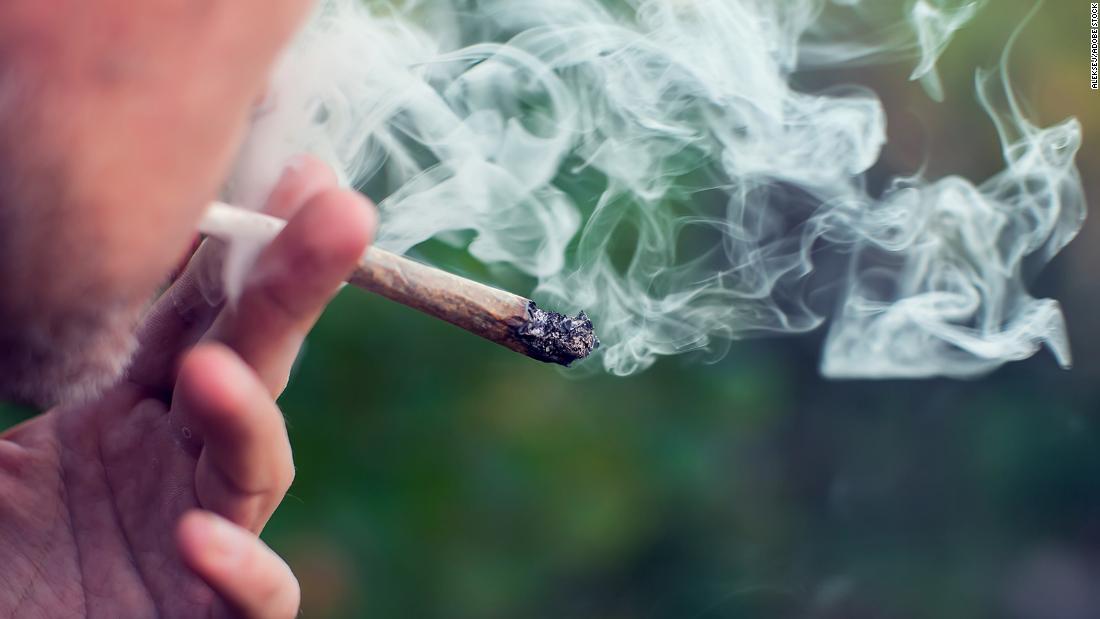
For those whom don't have an hour to watch the program linked, there's a transcript here;
As state-legalized cannabis spreads, NOVA explores its little-known risks and benefits.
www.pbs.org
~~~~~~~~~~
Some excerpts from another link on the program;
...
More than 80 years after America ended one kind of prohibition, it is ending another. Cannabis is growing into a multi-billion-dollar industry as it moves out of the shadow of the illicit market and into newly legalized mainstream commerce. Increasingly eaten, dabbed, vaped, and smoked, cannabis is on the rise and our nation is at a crossroads. The long-demonized plant has been decriminalized in over 30 states, legalized in many, and is frequently marketed as a medicine. Fifty-five million Americans say they currently use it, and yet there’s been surprisingly little scientific investigation of the plant in the U.S.
Though many believe cannabis is benign, and even beneficial, confusion reigns as the federal government still classifies it as a Schedule 1 drug—in the same category as heroin—with no approved medical uses. Because of this classification, research that focuses on the plant’s complex chemicals—and its effects on users—has been limited.
“It’s shocking how little we actually know about cannabis, since scientists have not been able to thoroughly study its effects,”
said NOVA Co-Executive Producer Julia Cort. “This film presents a timely look at what we know about the potential benefits and risks of cannabis use, while also examining how the plant has been weaponized against marginalized communities, causing irreparable harm. We hope THE CANNABIS QUESTION will inspire people to join the national conversation about cannabis—not only around what researchers have learned about the plant, but the science that could be done in the future, as well as the powerful impacts it can have on society.”
THE CANNABIS QUESTION follows scientists such as Daniele Piomelli at UC Irvine and Yasmin Hurd at Mount Sinai Hospital, who are leading research on the endocannabinoid system—a collection of chemicals and receptors throughout the brain and body that help regulate the activity of multiple organs. In fact, the cannabinoid receptor—named after cannabis—is the most abundant receptor in the brain. These receptors bind with our own cannabis-like molecules, called endocannabinoids, regulating key functions such as sleep, cognition, memory, and emotion. The disruption of this crucial biological system can be associated with psychiatric disorders such as post-traumatic stress disorder (PTSD). Cannabis contains over 100 cannabinoid compounds, chemicals that mimic those in our own bodies and can latch onto these key receptors. One is THC, which produces the “high” associated with cannabis use. Another, called CBD, shows promise for treating epilepsy, opioid addiction, and anxiety.
“THE CANNABIS QUESTION is one of the first documentaries to closely examine the latest scientific research on our body’s endocannabinoid system and how cannabis engages it,”
said Director Sarah Holt. “I hope viewers will come away with an understanding of why this is one of the most important regulatory systems in our body—and anytime you use cannabis, you are interfering with it.”
...
As more U.S. states move toward legalizing cannabis, NOVA reports on the latest science investigating the plant and its medical benefits and risks.

www.sopbs.org
~~~~~~~~~~~~~~~
For those not familiar with the nuances, cannabis has two out of hundreds of chemical components that are of major interest (and concern).
One is THC which is the molecule that gets one "high" and in states where it's use is legal, and regulated, often the product marketed will have a label specifying the THC percentage, as well as the strain or type of the plant. Such as sativa or indica, or a blend.
The other major molecule of interest is the CBD which is used to treat many medical conditions, and is not capable of making one "high". Neurological, anxiety, appetite, tension, muscle aches/pains, etc. are some of it's applications.
About eight years ago when I was diagnosed with prostate cancer a friend encouraged me to try a CBD formulation. Limited research and medical test at that time suggested it could arrest the progress of cancer, if not eradicate it. Since the side effects were more benign than the conventional treatment options I figured it was worth a try. My cancer has remained dormant all this time that I've been taking a CBD intense formula, which has negligible THC BTW.
Just short of a year ago, my friend and supplier found out about CBG, a more recently known and understood molecule with potential better than CBD and began including that in the capsules he makes and supplies me with. One unexpected result was that within about 3 weeks of taking this new formulation, the arthritis in my hands went away, and I attribute that to the added CBG.
~~~~~~~~~~~
As we are finding out, cannabis is a complex substance with a wide range of uses and applications and so far that scale and scope has seen the surface barely scratched.