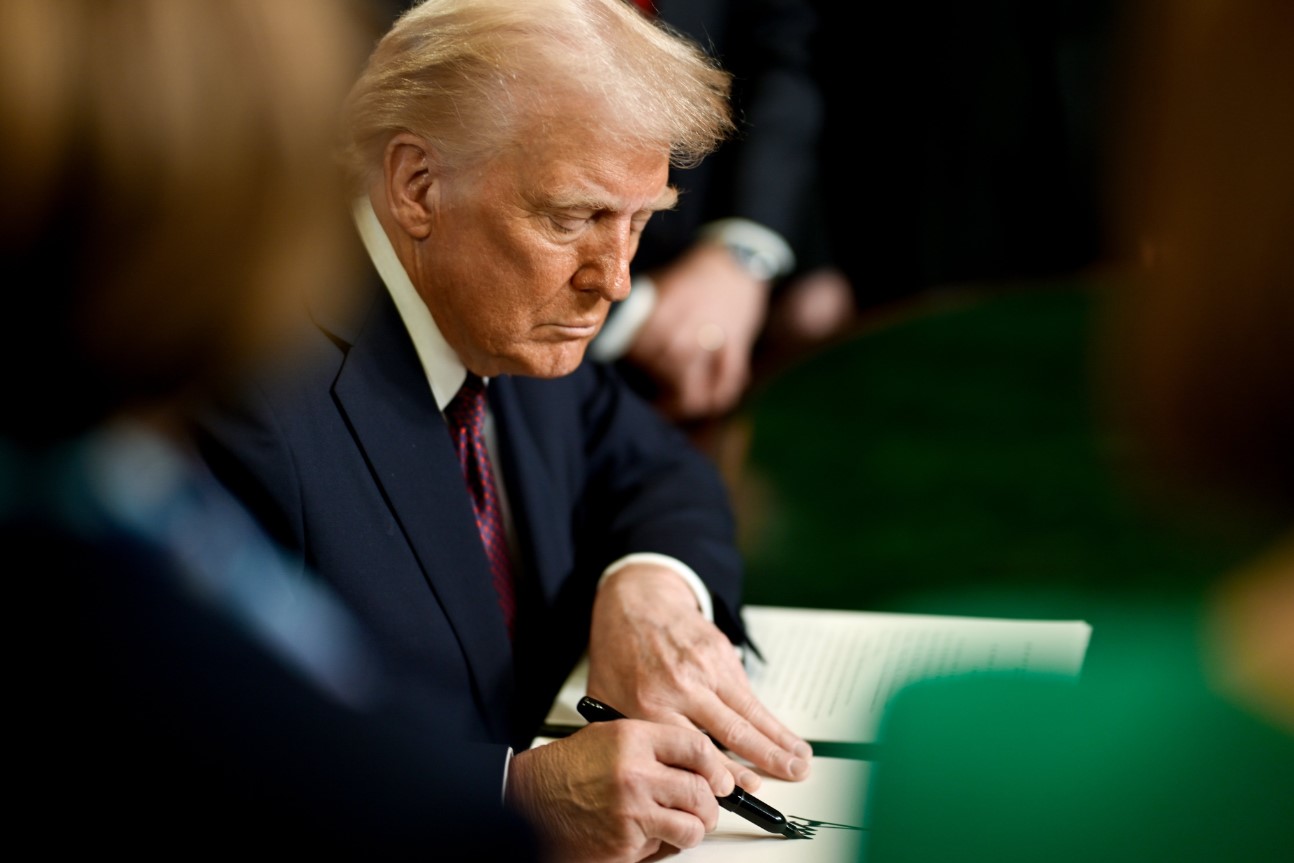
Tariffs do not cause inflation or severe price increases

Status
Not open for further replies.

Hafar1014

Diamond Member
Joined
Sep 1, 2010
Messages
11,770
Reaction score
10,698
Points
2,128
n a groundbreaking revelation that challenges long-held economic orthodoxies, a recent Federal Reserve study has provided historical validation for President Trump’s aggressive tariff policies. Analyzing 150 years of data from 1870 to 2020 across the United States, the United Kingdom, and France, the research demonstrates that tariff increases not only fail to stoke inflation but actually reduce it while boosting domestic economic resilience. This comes at a pivotal moment as the U.S. navigates global trade tensions, reshoring efforts, and the critical role of affordable energy in revitalizing American manufacturing.

Key Insights from the Federal Reserve Study​

The study, authored by economists Régis Barnichon and Aayush Singh of the Federal Reserve Bank of San Francisco, exploits historical tariff variations tied to political shifts rather than economic conditions, creating a natural experiment for analysis.

By examining partisan divides in the U.S.—where Republicans historically favored high tariffs to protect industry and Democrats opposed them to benefit agriculture—the researchers isolated “quasi-random” policy changes.

Popular Energy News Beat Stories

Europe Goes on Blackout Watch as Winter Descends - Can they survive the winter?

Senator Kennedy sheds insights to the $93 Billion DOE waste scandal
Their findings flip conventional wisdom on its head: A 4 percentage point increase in average tariffs lowers inflation by about 2 percentage points and raises unemployment by roughly 1 percentage point.

This pattern holds across eras, from pre-1913 to post-World War II, suggesting tariffs function as negative aggregate demand shocks rather than inflationary cost-push mechanisms. The authors note, “We find that a tariff hike raises unemployment and lowers inflation,” contradicting models that predict rising consumer price index (CPI) inflation from higher tariffs.

Supporting evidence includes falling stock prices and heightened market volatility during tariff hikes, which dampen economic sentiment and activity. The study also highlights eight major U.S. tariff changes driven by long-term political motivations, yielding consistent results. In essence, tariffs reorient economies toward domestic production, reduce reliance on foreign imports, and improve terms of trade by pressuring foreign producers to lower prices.

As Breitbart Economics Editor John Carney emphasized in his coverage, these insights vindicate Trump’s approach, especially amid 2025’s tariff escalations averaging 18% on U.S. imports.

Rather than fueling inflation, tariffs appear to encourage productive investment and manufacturing growth, questioning the Federal Reserve’s traditional hesitancy toward rate cuts in such scenarios.

Tariff Revenue: Billions Generated Without Inflationary Pressure​

One of the most tangible benefits of Trump’s tariff strategy has been a surge in federal revenue, providing fiscal firepower without the inflationary fallout predicted by critics. For Fiscal Year 2025, tariff collections soared to $195 billion—a staggering 150% increase over 2024’s figures.

This includes duties from ongoing trade actions, with the Treasury Department reporting cumulative hauls of about $195 billion through September 2025 across all tariffs.

From January 2025 onward, tariff revenues reached $122 billion by July alone, contributing to deficit reduction while representing just 6.5% of the projected shortfall.

Over the broader Trump era, including prior terms, tariffs have raised billions annually, with estimates suggesting up to $1.8 trillion in potential revenue over the next decade when accounting for economic effects.

Crucially, as the Fed study affirms, this influx occurs without elevating inflation, instead acting as a demand moderator that keeps prices in check.

These funds bolster government coffers for infrastructure, defense, and economic incentives, all while avoiding the broad tax hikes that could stifle growth. Tariffs, in this light, serve as a targeted tool for revenue generation from foreign competitors.

Reshoring Manufacturing: Investments Flow Back to America​

Beyond revenue, Trump’s tariffs are accelerating the reshoring of manufacturing, drawing billions in investments back to U.S. soil and fostering a manufacturing renaissance. Data from the Reshoring Initiative indicates that 2025 manufacturing investments are on par with 2024 levels, a steady clip amid global uncertainties.

High-profile examples include Apple’s $500 billion commitment to relocate production of iPhones, iPads, and iMacs from China and Vietnam to American facilities.

Overall, tariffs have elevated average rates on imports from 2.5% in 2024 to over 20% by mid-2025, incentivizing companies to “friend-shore” or fully reshore operations.

This shift addresses vulnerabilities in global supply chains, with firms like GE, Intel, Nvidia, and Whirlpool also ramping up domestic production in response to tariff pressures.

While critics argue tariffs introduce short-term costs and uncertainties, the net effect is a boost to U.S. competitiveness, job creation, and reduced dependence on adversarial nations.

The Energy Nexus: Cheap Power Fuels Manufacturing Revival​

No discussion of manufacturing rebirth is complete without addressing energy—the lifeblood of industry. Tariffs alone aren’t enough; affordable, reliable energy is essential for cost-competitive production. The U.S. enjoys a natural advantage here, with abundant natural gas, oil, and renewables keeping energy prices lower than in many competitors.

State-level policies are supercharging this edge. Across the nation, incentives like tax cuts on electricity for manufacturers—reduced to EU-minimum levels in states like those in the industrial heartland—are drawing investments.

Clean energy manufacturing has seen over $200 billion in announced investments since 2021, creating more than 250,000 jobs in sectors like batteries, solar, and wind components.

Federal acts like CHIPS and Science signal a robust industrial policy revival, emphasizing government support for key technologies.

States are stepping up with “no-regrets” actions, including capacity building and incentives for low-carbon and traditional energy mixes to ensure reliability.

This hybrid approach—blending fossil fuels for baseload power with renewables—positions the U.S. for a manufacturing boom, as high energy costs elsewhere (e.g., Europe’s net-zero push) drive deindustrialization.

Emerging Trading Blocs: Net Zero vs. Energy Pragmatism​

This tariff-driven, energy-fueled resurgence raises a profound question: Will global trade fracture into new blocs divided by energy philosophies? On one side, the European Union’s “green trade agenda” emphasizes emissions reductions, with policies like the Net-Zero Industry Act aiming for 40% domestic clean tech production by 2030.

However, this has sparked concerns over higher costs, deindustrialization, and regime instability when energy prices spike.

theenergynewsbeat.substack.com

Emerging markets in the G20 are bolstering low-carbon policies, but many prioritize affordable energy over strict net-zero timelines.

The global “net-zero industrial race” pits the EU, China, and the U.S. against each other, with geoeconomic shocks reshaping value chains.

Countries like those in Asia and Latin America may align with pragmatic blocs favoring open energy policies—mixing hydrocarbons and renewables for lower costs—to attract manufacturing and avoid the pitfalls of deindustrialization.The U.S., under Trump’s tariff regime, could anchor a bloc focused on energy abundance and industrial strength, drawing allies seeking economic security over ideological purity. As geoeconomic distress from energy transitions intensifies, trade alignments may increasingly favor cost-competitive, resilient models over rigid net-zero mandates.

In summary, the Fed’s historical analysis not only endorses Trump’s tariffs as inflation tamers but underscores their role in a broader strategy for American economic dominance. Paired with smart energy policies, this could herald a new era of manufacturing might—and reshape global trade in the process.

Got Questions on investing in oil and gas?

ENB Top News
ENB
Energy Dashboard
ENB Podcast
 
...so what happens when the Supreme court calls Trump's tariffs illegal?

Steve Forbes was giddy at the thought, so the 1% prefer importing to producing here.

Congress need to back Trump's tariffs by making them legal.
 
n a groundbreaking revelation that challenges long-held economic orthodoxies, a recent Federal Reserve study has provided historical validation for President Trump’s aggressive tariff policies. Analyzing 150 years of data from 1870 to 2020 across the United States, the United Kingdom, and France, the research demonstrates that tariff increases not only fail to stoke inflation but actually reduce it while boosting domestic economic resilience. This comes at a pivotal moment as the U.S. navigates global trade tensions, reshoring efforts, and the critical role of affordable energy in revitalizing American manufacturing.

Key Insights from the Federal Reserve Study​

The study, authored by economists Régis Barnichon and Aayush Singh of the Federal Reserve Bank of San Francisco, exploits historical tariff variations tied to political shifts rather than economic conditions, creating a natural experiment for analysis.

By examining partisan divides in the U.S.—where Republicans historically favored high tariffs to protect industry and Democrats opposed them to benefit agriculture—the researchers isolated “quasi-random” policy changes.

Popular Energy News Beat Stories

Europe Goes on Blackout Watch as Winter Descends - Can they survive the winter?

Senator Kennedy sheds insights to the $93 Billion DOE waste scandal
Their findings flip conventional wisdom on its head: A 4 percentage point increase in average tariffs lowers inflation by about 2 percentage points and raises unemployment by roughly 1 percentage point.

This pattern holds across eras, from pre-1913 to post-World War II, suggesting tariffs function as negative aggregate demand shocks rather than inflationary cost-push mechanisms. The authors note, “We find that a tariff hike raises unemployment and lowers inflation,” contradicting models that predict rising consumer price index (CPI) inflation from higher tariffs.

Supporting evidence includes falling stock prices and heightened market volatility during tariff hikes, which dampen economic sentiment and activity. The study also highlights eight major U.S. tariff changes driven by long-term political motivations, yielding consistent results. In essence, tariffs reorient economies toward domestic production, reduce reliance on foreign imports, and improve terms of trade by pressuring foreign producers to lower prices.

As Breitbart Economics Editor John Carney emphasized in his coverage, these insights vindicate Trump’s approach, especially amid 2025’s tariff escalations averaging 18% on U.S. imports.

Rather than fueling inflation, tariffs appear to encourage productive investment and manufacturing growth, questioning the Federal Reserve’s traditional hesitancy toward rate cuts in such scenarios.

Tariff Revenue: Billions Generated Without Inflationary Pressure​

One of the most tangible benefits of Trump’s tariff strategy has been a surge in federal revenue, providing fiscal firepower without the inflationary fallout predicted by critics. For Fiscal Year 2025, tariff collections soared to $195 billion—a staggering 150% increase over 2024’s figures.

This includes duties from ongoing trade actions, with the Treasury Department reporting cumulative hauls of about $195 billion through September 2025 across all tariffs.

From January 2025 onward, tariff revenues reached $122 billion by July alone, contributing to deficit reduction while representing just 6.5% of the projected shortfall.

Over the broader Trump era, including prior terms, tariffs have raised billions annually, with estimates suggesting up to $1.8 trillion in potential revenue over the next decade when accounting for economic effects.

Crucially, as the Fed study affirms, this influx occurs without elevating inflation, instead acting as a demand moderator that keeps prices in check.

These funds bolster government coffers for infrastructure, defense, and economic incentives, all while avoiding the broad tax hikes that could stifle growth. Tariffs, in this light, serve as a targeted tool for revenue generation from foreign competitors.

Reshoring Manufacturing: Investments Flow Back to America​

Beyond revenue, Trump’s tariffs are accelerating the reshoring of manufacturing, drawing billions in investments back to U.S. soil and fostering a manufacturing renaissance. Data from the Reshoring Initiative indicates that 2025 manufacturing investments are on par with 2024 levels, a steady clip amid global uncertainties.

High-profile examples include Apple’s $500 billion commitment to relocate production of iPhones, iPads, and iMacs from China and Vietnam to American facilities.

Overall, tariffs have elevated average rates on imports from 2.5% in 2024 to over 20% by mid-2025, incentivizing companies to “friend-shore” or fully reshore operations.

This shift addresses vulnerabilities in global supply chains, with firms like GE, Intel, Nvidia, and Whirlpool also ramping up domestic production in response to tariff pressures.

While critics argue tariffs introduce short-term costs and uncertainties, the net effect is a boost to U.S. competitiveness, job creation, and reduced dependence on adversarial nations.

The Energy Nexus: Cheap Power Fuels Manufacturing Revival​

No discussion of manufacturing rebirth is complete without addressing energy—the lifeblood of industry. Tariffs alone aren’t enough; affordable, reliable energy is essential for cost-competitive production. The U.S. enjoys a natural advantage here, with abundant natural gas, oil, and renewables keeping energy prices lower than in many competitors.

State-level policies are supercharging this edge. Across the nation, incentives like tax cuts on electricity for manufacturers—reduced to EU-minimum levels in states like those in the industrial heartland—are drawing investments.

Clean energy manufacturing has seen over $200 billion in announced investments since 2021, creating more than 250,000 jobs in sectors like batteries, solar, and wind components.

Federal acts like CHIPS and Science signal a robust industrial policy revival, emphasizing government support for key technologies.

States are stepping up with “no-regrets” actions, including capacity building and incentives for low-carbon and traditional energy mixes to ensure reliability.

This hybrid approach—blending fossil fuels for baseload power with renewables—positions the U.S. for a manufacturing boom, as high energy costs elsewhere (e.g., Europe’s net-zero push) drive deindustrialization.

Emerging Trading Blocs: Net Zero vs. Energy Pragmatism​

This tariff-driven, energy-fueled resurgence raises a profound question: Will global trade fracture into new blocs divided by energy philosophies? On one side, the European Union’s “green trade agenda” emphasizes emissions reductions, with policies like the Net-Zero Industry Act aiming for 40% domestic clean tech production by 2030.

However, this has sparked concerns over higher costs, deindustrialization, and regime instability when energy prices spike.

theenergynewsbeat.substack.com

Emerging markets in the G20 are bolstering low-carbon policies, but many prioritize affordable energy over strict net-zero timelines.

The global “net-zero industrial race” pits the EU, China, and the U.S. against each other, with geoeconomic shocks reshaping value chains.

Countries like those in Asia and Latin America may align with pragmatic blocs favoring open energy policies—mixing hydrocarbons and renewables for lower costs—to attract manufacturing and avoid the pitfalls of deindustrialization.The U.S., under Trump’s tariff regime, could anchor a bloc focused on energy abundance and industrial strength, drawing allies seeking economic security over ideological purity. As geoeconomic distress from energy transitions intensifies, trade alignments may increasingly favor cost-competitive, resilient models over rigid net-zero mandates.

In summary, the Fed’s historical analysis not only endorses Trump’s tariffs as inflation tamers but underscores their role in a broader strategy for American economic dominance. Paired with smart energy policies, this could herald a new era of manufacturing might—and reshape global trade in the process.

Got Questions on investing in oil and gas?

ENB Top News
ENB
Energy Dashboard
ENB Podcast

Thief!

Reported...
 
n a groundbreaking revelation that challenges long-held economic orthodoxies, a recent Federal Reserve study has provided historical validation for President Trump’s aggressive tariff policies. Analyzing 150 years of data from 1870 to 2020 across the United States, the United Kingdom, and France, the research demonstrates that tariff increases not only fail to stoke inflation but actually reduce it while boosting domestic economic resilience. This comes at a pivotal moment as the U.S. navigates global trade tensions, reshoring efforts, and the critical role of affordable energy in revitalizing American manufacturing.

Key Insights from the Federal Reserve Study​

The study, authored by economists Régis Barnichon and Aayush Singh of the Federal Reserve Bank of San Francisco, exploits historical tariff variations tied to political shifts rather than economic conditions, creating a natural experiment for analysis.

By examining partisan divides in the U.S.—where Republicans historically favored high tariffs to protect industry and Democrats opposed them to benefit agriculture—the researchers isolated “quasi-random” policy changes.

Popular Energy News Beat Stories

Europe Goes on Blackout Watch as Winter Descends - Can they survive the winter?

Senator Kennedy sheds insights to the $93 Billion DOE waste scandal
Their findings flip conventional wisdom on its head: A 4 percentage point increase in average tariffs lowers inflation by about 2 percentage points and raises unemployment by roughly 1 percentage point.

This pattern holds across eras, from pre-1913 to post-World War II, suggesting tariffs function as negative aggregate demand shocks rather than inflationary cost-push mechanisms. The authors note, “We find that a tariff hike raises unemployment and lowers inflation,” contradicting models that predict rising consumer price index (CPI) inflation from higher tariffs.

Supporting evidence includes falling stock prices and heightened market volatility during tariff hikes, which dampen economic sentiment and activity. The study also highlights eight major U.S. tariff changes driven by long-term political motivations, yielding consistent results. In essence, tariffs reorient economies toward domestic production, reduce reliance on foreign imports, and improve terms of trade by pressuring foreign producers to lower prices.

As Breitbart Economics Editor John Carney emphasized in his coverage, these insights vindicate Trump’s approach, especially amid 2025’s tariff escalations averaging 18% on U.S. imports.

Rather than fueling inflation, tariffs appear to encourage productive investment and manufacturing growth, questioning the Federal Reserve’s traditional hesitancy toward rate cuts in such scenarios.

Tariff Revenue: Billions Generated Without Inflationary Pressure​

One of the most tangible benefits of Trump’s tariff strategy has been a surge in federal revenue, providing fiscal firepower without the inflationary fallout predicted by critics. For Fiscal Year 2025, tariff collections soared to $195 billion—a staggering 150% increase over 2024’s figures.

This includes duties from ongoing trade actions, with the Treasury Department reporting cumulative hauls of about $195 billion through September 2025 across all tariffs.

From January 2025 onward, tariff revenues reached $122 billion by July alone, contributing to deficit reduction while representing just 6.5% of the projected shortfall.

Over the broader Trump era, including prior terms, tariffs have raised billions annually, with estimates suggesting up to $1.8 trillion in potential revenue over the next decade when accounting for economic effects.

Crucially, as the Fed study affirms, this influx occurs without elevating inflation, instead acting as a demand moderator that keeps prices in check.

These funds bolster government coffers for infrastructure, defense, and economic incentives, all while avoiding the broad tax hikes that could stifle growth. Tariffs, in this light, serve as a targeted tool for revenue generation from foreign competitors.

Reshoring Manufacturing: Investments Flow Back to America​

Beyond revenue, Trump’s tariffs are accelerating the reshoring of manufacturing, drawing billions in investments back to U.S. soil and fostering a manufacturing renaissance. Data from the Reshoring Initiative indicates that 2025 manufacturing investments are on par with 2024 levels, a steady clip amid global uncertainties.

High-profile examples include Apple’s $500 billion commitment to relocate production of iPhones, iPads, and iMacs from China and Vietnam to American facilities.

Overall, tariffs have elevated average rates on imports from 2.5% in 2024 to over 20% by mid-2025, incentivizing companies to “friend-shore” or fully reshore operations.

This shift addresses vulnerabilities in global supply chains, with firms like GE, Intel, Nvidia, and Whirlpool also ramping up domestic production in response to tariff pressures.

While critics argue tariffs introduce short-term costs and uncertainties, the net effect is a boost to U.S. competitiveness, job creation, and reduced dependence on adversarial nations.

The Energy Nexus: Cheap Power Fuels Manufacturing Revival​

No discussion of manufacturing rebirth is complete without addressing energy—the lifeblood of industry. Tariffs alone aren’t enough; affordable, reliable energy is essential for cost-competitive production. The U.S. enjoys a natural advantage here, with abundant natural gas, oil, and renewables keeping energy prices lower than in many competitors.

State-level policies are supercharging this edge. Across the nation, incentives like tax cuts on electricity for manufacturers—reduced to EU-minimum levels in states like those in the industrial heartland—are drawing investments.

Clean energy manufacturing has seen over $200 billion in announced investments since 2021, creating more than 250,000 jobs in sectors like batteries, solar, and wind components.

Federal acts like CHIPS and Science signal a robust industrial policy revival, emphasizing government support for key technologies.

States are stepping up with “no-regrets” actions, including capacity building and incentives for low-carbon and traditional energy mixes to ensure reliability.

This hybrid approach—blending fossil fuels for baseload power with renewables—positions the U.S. for a manufacturing boom, as high energy costs elsewhere (e.g., Europe’s net-zero push) drive deindustrialization.

Emerging Trading Blocs: Net Zero vs. Energy Pragmatism​

This tariff-driven, energy-fueled resurgence raises a profound question: Will global trade fracture into new blocs divided by energy philosophies? On one side, the European Union’s “green trade agenda” emphasizes emissions reductions, with policies like the Net-Zero Industry Act aiming for 40% domestic clean tech production by 2030.

However, this has sparked concerns over higher costs, deindustrialization, and regime instability when energy prices spike.

theenergynewsbeat.substack.com

Emerging markets in the G20 are bolstering low-carbon policies, but many prioritize affordable energy over strict net-zero timelines.

The global “net-zero industrial race” pits the EU, China, and the U.S. against each other, with geoeconomic shocks reshaping value chains.

Countries like those in Asia and Latin America may align with pragmatic blocs favoring open energy policies—mixing hydrocarbons and renewables for lower costs—to attract manufacturing and avoid the pitfalls of deindustrialization.The U.S., under Trump’s tariff regime, could anchor a bloc focused on energy abundance and industrial strength, drawing allies seeking economic security over ideological purity. As geoeconomic distress from energy transitions intensifies, trade alignments may increasingly favor cost-competitive, resilient models over rigid net-zero mandates.

In summary, the Fed’s historical analysis not only endorses Trump’s tariffs as inflation tamers but underscores their role in a broader strategy for American economic dominance. Paired with smart energy policies, this could herald a new era of manufacturing might—and reshape global trade in the process.

Got Questions on investing in oil and gas?

ENB Top News
ENB
Energy Dashboard
ENB Podcast
We've seen more than enough evidence of the left's false claims. Trump tariffed in his first term and prices did not go up. Trump is raking in tariff money this year and prices have only inched up microscopically. Yes, tariffs can raise the prices of some items but then people just by different items. In fact, that's more or less what tariffs are designed to do - discourage the purchase of certain foreign goods in favor of US goods. Democrats also forget to mention that these other countries have been tariffing us and they don't seem to give a damn about that.
 
n a groundbreaking revelation that challenges long-held economic orthodoxies, a recent Federal Reserve study has provided historical validation for President Trump’s aggressive tariff policies. Analyzing 150 years of data from 1870 to 2020 across the United States, the United Kingdom, and France, the research demonstrates that tariff increases not only fail to stoke inflation but actually reduce it while boosting domestic economic resilience. This comes at a pivotal moment as the U.S. navigates global trade tensions, reshoring efforts, and the critical role of affordable energy in revitalizing American manufacturing.

Key Insights from the Federal Reserve Study​

The study, authored by economists Régis Barnichon and Aayush Singh of the Federal Reserve Bank of San Francisco, exploits historical tariff variations tied to political shifts rather than economic conditions, creating a natural experiment for analysis.

By examining partisan divides in the U.S.—where Republicans historically favored high tariffs to protect industry and Democrats opposed them to benefit agriculture—the researchers isolated “quasi-random” policy changes.

Popular Energy News Beat Stories

Europe Goes on Blackout Watch as Winter Descends - Can they survive the winter?

Senator Kennedy sheds insights to the $93 Billion DOE waste scandal
Their findings flip conventional wisdom on its head: A 4 percentage point increase in average tariffs lowers inflation by about 2 percentage points and raises unemployment by roughly 1 percentage point.

This pattern holds across eras, from pre-1913 to post-World War II, suggesting tariffs function as negative aggregate demand shocks rather than inflationary cost-push mechanisms. The authors note, “We find that a tariff hike raises unemployment and lowers inflation,” contradicting models that predict rising consumer price index (CPI) inflation from higher tariffs.

Supporting evidence includes falling stock prices and heightened market volatility during tariff hikes, which dampen economic sentiment and activity. The study also highlights eight major U.S. tariff changes driven by long-term political motivations, yielding consistent results. In essence, tariffs reorient economies toward domestic production, reduce reliance on foreign imports, and improve terms of trade by pressuring foreign producers to lower prices.

As Breitbart Economics Editor John Carney emphasized in his coverage, these insights vindicate Trump’s approach, especially amid 2025’s tariff escalations averaging 18% on U.S. imports.

Rather than fueling inflation, tariffs appear to encourage productive investment and manufacturing growth, questioning the Federal Reserve’s traditional hesitancy toward rate cuts in such scenarios.

Tariff Revenue: Billions Generated Without Inflationary Pressure​

One of the most tangible benefits of Trump’s tariff strategy has been a surge in federal revenue, providing fiscal firepower without the inflationary fallout predicted by critics. For Fiscal Year 2025, tariff collections soared to $195 billion—a staggering 150% increase over 2024’s figures.

This includes duties from ongoing trade actions, with the Treasury Department reporting cumulative hauls of about $195 billion through September 2025 across all tariffs.

From January 2025 onward, tariff revenues reached $122 billion by July alone, contributing to deficit reduction while representing just 6.5% of the projected shortfall.

Over the broader Trump era, including prior terms, tariffs have raised billions annually, with estimates suggesting up to $1.8 trillion in potential revenue over the next decade when accounting for economic effects.

Crucially, as the Fed study affirms, this influx occurs without elevating inflation, instead acting as a demand moderator that keeps prices in check.

These funds bolster government coffers for infrastructure, defense, and economic incentives, all while avoiding the broad tax hikes that could stifle growth. Tariffs, in this light, serve as a targeted tool for revenue generation from foreign competitors.

Reshoring Manufacturing: Investments Flow Back to America​

Beyond revenue, Trump’s tariffs are accelerating the reshoring of manufacturing, drawing billions in investments back to U.S. soil and fostering a manufacturing renaissance. Data from the Reshoring Initiative indicates that 2025 manufacturing investments are on par with 2024 levels, a steady clip amid global uncertainties.

High-profile examples include Apple’s $500 billion commitment to relocate production of iPhones, iPads, and iMacs from China and Vietnam to American facilities.

Overall, tariffs have elevated average rates on imports from 2.5% in 2024 to over 20% by mid-2025, incentivizing companies to “friend-shore” or fully reshore operations.

This shift addresses vulnerabilities in global supply chains, with firms like GE, Intel, Nvidia, and Whirlpool also ramping up domestic production in response to tariff pressures.

While critics argue tariffs introduce short-term costs and uncertainties, the net effect is a boost to U.S. competitiveness, job creation, and reduced dependence on adversarial nations.

The Energy Nexus: Cheap Power Fuels Manufacturing Revival​

No discussion of manufacturing rebirth is complete without addressing energy—the lifeblood of industry. Tariffs alone aren’t enough; affordable, reliable energy is essential for cost-competitive production. The U.S. enjoys a natural advantage here, with abundant natural gas, oil, and renewables keeping energy prices lower than in many competitors.

State-level policies are supercharging this edge. Across the nation, incentives like tax cuts on electricity for manufacturers—reduced to EU-minimum levels in states like those in the industrial heartland—are drawing investments.

Clean energy manufacturing has seen over $200 billion in announced investments since 2021, creating more than 250,000 jobs in sectors like batteries, solar, and wind components.

Federal acts like CHIPS and Science signal a robust industrial policy revival, emphasizing government support for key technologies.

States are stepping up with “no-regrets” actions, including capacity building and incentives for low-carbon and traditional energy mixes to ensure reliability.

This hybrid approach—blending fossil fuels for baseload power with renewables—positions the U.S. for a manufacturing boom, as high energy costs elsewhere (e.g., Europe’s net-zero push) drive deindustrialization.

Emerging Trading Blocs: Net Zero vs. Energy Pragmatism​

This tariff-driven, energy-fueled resurgence raises a profound question: Will global trade fracture into new blocs divided by energy philosophies? On one side, the European Union’s “green trade agenda” emphasizes emissions reductions, with policies like the Net-Zero Industry Act aiming for 40% domestic clean tech production by 2030.

However, this has sparked concerns over higher costs, deindustrialization, and regime instability when energy prices spike.

theenergynewsbeat.substack.com

Emerging markets in the G20 are bolstering low-carbon policies, but many prioritize affordable energy over strict net-zero timelines.

The global “net-zero industrial race” pits the EU, China, and the U.S. against each other, with geoeconomic shocks reshaping value chains.

Countries like those in Asia and Latin America may align with pragmatic blocs favoring open energy policies—mixing hydrocarbons and renewables for lower costs—to attract manufacturing and avoid the pitfalls of deindustrialization.The U.S., under Trump’s tariff regime, could anchor a bloc focused on energy abundance and industrial strength, drawing allies seeking economic security over ideological purity. As geoeconomic distress from energy transitions intensifies, trade alignments may increasingly favor cost-competitive, resilient models over rigid net-zero mandates.

In summary, the Fed’s historical analysis not only endorses Trump’s tariffs as inflation tamers but underscores their role in a broader strategy for American economic dominance. Paired with smart energy policies, this could herald a new era of manufacturing might—and reshape global trade in the process.

Got Questions on investing in oil and gas?

ENB Top News
ENB
Energy Dashboard
ENB Podcast
The source of the website interpreting the report is a right wing website that none of us have ever heard of before.
 
In a working paper published on Thursday, San Francisco Fed researchers Régis Barnichon and Aayush Singh said higher tariffs lead to reduced economic activity, higher unemployment and lower inflation in the short term.
 
n a groundbreaking revelation that challenges long-held economic orthodoxies, a recent Federal Reserve study has provided historical validation for President Trump’s aggressive tariff policies. Analyzing 150 years of data from 1870 to 2020 across the United States, the United Kingdom, and France, the research demonstrates that tariff increases not only fail to stoke inflation but actually reduce it while boosting domestic economic resilience. This comes at a pivotal moment as the U.S. navigates global trade tensions, reshoring efforts, and the critical role of affordable energy in revitalizing American manufacturing.

Key Insights from the Federal Reserve Study​

The study, authored by economists Régis Barnichon and Aayush Singh of the Federal Reserve Bank of San Francisco, exploits historical tariff variations tied to political shifts rather than economic conditions, creating a natural experiment for analysis.

By examining partisan divides in the U.S.—where Republicans historically favored high tariffs to protect industry and Democrats opposed them to benefit agriculture—the researchers isolated “quasi-random” policy changes.

Popular Energy News Beat Stories

Europe Goes on Blackout Watch as Winter Descends - Can they survive the winter?

Senator Kennedy sheds insights to the $93 Billion DOE waste scandal
Their findings flip conventional wisdom on its head: A 4 percentage point increase in average tariffs lowers inflation by about 2 percentage points and raises unemployment by roughly 1 percentage point.

This pattern holds across eras, from pre-1913 to post-World War II, suggesting tariffs function as negative aggregate demand shocks rather than inflationary cost-push mechanisms. The authors note, “We find that a tariff hike raises unemployment and lowers inflation,” contradicting models that predict rising consumer price index (CPI) inflation from higher tariffs.

Supporting evidence includes falling stock prices and heightened market volatility during tariff hikes, which dampen economic sentiment and activity. The study also highlights eight major U.S. tariff changes driven by long-term political motivations, yielding consistent results. In essence, tariffs reorient economies toward domestic production, reduce reliance on foreign imports, and improve terms of trade by pressuring foreign producers to lower prices.

As Breitbart Economics Editor John Carney emphasized in his coverage, these insights vindicate Trump’s approach, especially amid 2025’s tariff escalations averaging 18% on U.S. imports.

Rather than fueling inflation, tariffs appear to encourage productive investment and manufacturing growth, questioning the Federal Reserve’s traditional hesitancy toward rate cuts in such scenarios.

Tariff Revenue: Billions Generated Without Inflationary Pressure​

One of the most tangible benefits of Trump’s tariff strategy has been a surge in federal revenue, providing fiscal firepower without the inflationary fallout predicted by critics. For Fiscal Year 2025, tariff collections soared to $195 billion—a staggering 150% increase over 2024’s figures.

This includes duties from ongoing trade actions, with the Treasury Department reporting cumulative hauls of about $195 billion through September 2025 across all tariffs.

From January 2025 onward, tariff revenues reached $122 billion by July alone, contributing to deficit reduction while representing just 6.5% of the projected shortfall.

Over the broader Trump era, including prior terms, tariffs have raised billions annually, with estimates suggesting up to $1.8 trillion in potential revenue over the next decade when accounting for economic effects.

Crucially, as the Fed study affirms, this influx occurs without elevating inflation, instead acting as a demand moderator that keeps prices in check.

These funds bolster government coffers for infrastructure, defense, and economic incentives, all while avoiding the broad tax hikes that could stifle growth. Tariffs, in this light, serve as a targeted tool for revenue generation from foreign competitors.

Reshoring Manufacturing: Investments Flow Back to America​

Beyond revenue, Trump’s tariffs are accelerating the reshoring of manufacturing, drawing billions in investments back to U.S. soil and fostering a manufacturing renaissance. Data from the Reshoring Initiative indicates that 2025 manufacturing investments are on par with 2024 levels, a steady clip amid global uncertainties.

High-profile examples include Apple’s $500 billion commitment to relocate production of iPhones, iPads, and iMacs from China and Vietnam to American facilities.

Overall, tariffs have elevated average rates on imports from 2.5% in 2024 to over 20% by mid-2025, incentivizing companies to “friend-shore” or fully reshore operations.

This shift addresses vulnerabilities in global supply chains, with firms like GE, Intel, Nvidia, and Whirlpool also ramping up domestic production in response to tariff pressures.

While critics argue tariffs introduce short-term costs and uncertainties, the net effect is a boost to U.S. competitiveness, job creation, and reduced dependence on adversarial nations.

The Energy Nexus: Cheap Power Fuels Manufacturing Revival​

No discussion of manufacturing rebirth is complete without addressing energy—the lifeblood of industry. Tariffs alone aren’t enough; affordable, reliable energy is essential for cost-competitive production. The U.S. enjoys a natural advantage here, with abundant natural gas, oil, and renewables keeping energy prices lower than in many competitors.

State-level policies are supercharging this edge. Across the nation, incentives like tax cuts on electricity for manufacturers—reduced to EU-minimum levels in states like those in the industrial heartland—are drawing investments.

Clean energy manufacturing has seen over $200 billion in announced investments since 2021, creating more than 250,000 jobs in sectors like batteries, solar, and wind components.

Federal acts like CHIPS and Science signal a robust industrial policy revival, emphasizing government support for key technologies.

States are stepping up with “no-regrets” actions, including capacity building and incentives for low-carbon and traditional energy mixes to ensure reliability.

This hybrid approach—blending fossil fuels for baseload power with renewables—positions the U.S. for a manufacturing boom, as high energy costs elsewhere (e.g., Europe’s net-zero push) drive deindustrialization.

Emerging Trading Blocs: Net Zero vs. Energy Pragmatism​

This tariff-driven, energy-fueled resurgence raises a profound question: Will global trade fracture into new blocs divided by energy philosophies? On one side, the European Union’s “green trade agenda” emphasizes emissions reductions, with policies like the Net-Zero Industry Act aiming for 40% domestic clean tech production by 2030.

However, this has sparked concerns over higher costs, deindustrialization, and regime instability when energy prices spike.

theenergynewsbeat.substack.com

Emerging markets in the G20 are bolstering low-carbon policies, but many prioritize affordable energy over strict net-zero timelines.

The global “net-zero industrial race” pits the EU, China, and the U.S. against each other, with geoeconomic shocks reshaping value chains.

Countries like those in Asia and Latin America may align with pragmatic blocs favoring open energy policies—mixing hydrocarbons and renewables for lower costs—to attract manufacturing and avoid the pitfalls of deindustrialization.The U.S., under Trump’s tariff regime, could anchor a bloc focused on energy abundance and industrial strength, drawing allies seeking economic security over ideological purity. As geoeconomic distress from energy transitions intensifies, trade alignments may increasingly favor cost-competitive, resilient models over rigid net-zero mandates.

In summary, the Fed’s historical analysis not only endorses Trump’s tariffs as inflation tamers but underscores their role in a broader strategy for American economic dominance. Paired with smart energy policies, this could herald a new era of manufacturing might—and reshape global trade in the process.

Got Questions on investing in oil and gas?

ENB Top News
ENB
Energy Dashboard
ENB Podcast

You have to go down to reality and to see (and feel) what everyone feels.

Here is a comparison on a McDonalds meal in November 2024 compared to 2025

Trumpinflationcomp.webp


Now tell me that tariffs and the inflation it has brought is not real!
 
You have to go down to reality and to see (and feel) what everyone feels.

Here is a comparison on a McDonalds meal in November 2024 compared to 2025

View attachment 1185502

Now tell me that tariffs and the inflation it has brought is not real!
You think a meme is better than research. Heres a thought just dont buy it. You pay nothing and its crap food anyway. You are aware inflation is slowing down after Biden drove it up to 9% not with tariffs. By printing money and dumb energy policies.
 
The source of the website interpreting the report is a right wing website that none of us have ever heard of before.

Aside from opinions regarding the source, it was a complete copypasta theft of pretty much the entire web page without any original content whatsoever from the blip.

I reported it just to be a dick about it when a couple of maudes were on but I guess they didn't give a shit. lol.

I mean, damn. The theft is one thing, and I detest a thief, truly, but at least demonstrate that you might have some thought on the author's work you just stole. They (theoretically) only ask for two sentences for crying out loud. But I suppose if they're only going to enforce it selectively whenever it's reported I guess it doesn't really matter.
 
Last edited:
Aside from opinions regarding the source, it was a complete copypasta theft of pretty much the entire web page without any original content whatsoever from the blip.

I reported it just to be a dick about it when a couple of maudes were on but I guess they didn't give a shit. lol.

I mean, damn. The theft is one thing, and I detest a thief, truly, but at least demonstrate that you might have some thought on the author's work you just stole. They (theoretically) only ask for two sentences for crying out loud. But I suppose if they're only going to enforce it selectively whenever it's reported I guess it doesn't really matter.
Heres the source

In a working paper published on Thursday, San Francisco Fed researchers Régis Barnichon and Aayush Singh said higher tariffs lead to reduced economic activity, higher unemployment and lower inflation in the short term.


Federal Reserve Bank
of San Francisco

  1. /
  2. Research & Insights/Publications/Working Papers

What Is a Tariff Shock? Insights from 150 years of Tariff Policy​

Authors

Experts_Barnichon_sm.jpg

Regis Barnichon
Aayush Singh
Download PDF
(546 KB)

2025-26 | November 13, 2025
 
You think a meme is better than research. Heres a thought just dont buy it. You pay nothing and its crap food anyway. You are aware inflation is slowing down after Biden drove it up to 9% not with tariffs. By printing money and dumb energy policies.
Wow, Biden did all of that to cause the inflation here to rise?

Then why did inflation rise hugely (in most cases higher than the U.S.) in other countries? explain that to me.

Inflationworldvsus.webp


InflationWorldwide.webp
 
Heres the source

And here's the rules, thief...

Opening posts require more than a "Copy and Paste" with a link. You need to include relevant on-topic material of your own.

Content in opening posts must be 2 sentences or more and must contain the opinion of the member starting the thread. "Get a load of this" is not sufficient topical content. Summarize the topic to be discussed and why you think it needs discussion.

Copyright: ...only paste a small to medium section of the material.


I don't really care about your thread, beyond that, you lazy bum. I've probably forgotten more about economic theory and monetary policy than you will ever come to copy and past from somene else.
 
Last edited:
15th post
And here's the rules, thief...

Opening posts require more than a "Copy and Paste" with a link. You need to include relevant on-topic material of your own.

Content in opening posts must be 2 sentences or more and must contain the opinion of the member starting the thread. "Get a load of this" is not sufficient topical content. Summarize the topic to be discussed and why you think it needs discussion.

Copyright: ...only paste a small to medium section of the material.

I don't really care about your thread, beyond that, you lazy bum. I've probably forgotten more about economic theory and monetary policy than you will ever come to copy and past from somene else.
You just cant refute the point. Tariffs dont increase inflation. dont be sore loser try and post a real thought.
 
THREAD TEMPORARILY CLOSED, LACKS REQUIRED ORIGINAL CONTENT, ALSO COPYRIGHT VIOLATION, APPEARS THE ARTICLE IN IT'S ENTIRITY WAS INCLUDED IN THE OP
 
Status
Not open for further replies.
Back
Top Bottom