When Josiane Nizomfura was 12, she wanted to get a glimpse of her father, so she sneaked out of school and went to the public trial where her mother was testifying against him for rape. Levine Mukasakufu had never told Josiane the circumstances of her birth. "I couldn't face it, so she found out from the neighbours," she said. Levine a tiny, delicate woman like a brightly coloured bird in her traditional wrap skirt is one of the half a million women raped during Rwanda's 1994 genocide, when the country's ethnic Hutus, under orders from their leaders, tried to wipe out the minority Tutsis.
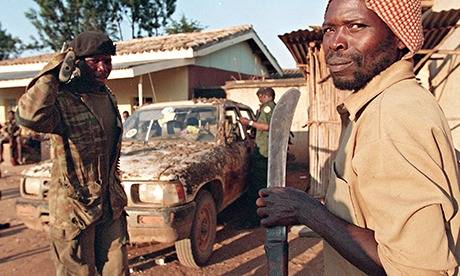
A Hutu Interahamwe militiaman in central Rwanda in June 1994
Then aged 21, Levine and other young women in Kibilizi, 80 miles south of the capital, Kigali, were forced to assemble on the village playing field. The Interahamwe, the Hutu militia that spearheaded the massacres of Tutsis, picked those they wanted, forcing them into the surrounding banana and millet patches to be gang-raped. "Rape was a reward the leaders gave those who killed," said Levine. "This is why I didn't love my daughter her father was the one who killed my family. I wanted to kill her, too." When Levine discovered that her daughter had watched her testify, she beat her all night long. It was one of many assaults. After failing to abort the baby, she frequently lashed out at Josiane when she was a child. "If she misbehaved at all I would say, 'she's like her father, she's an Interahamwe'. I would chase her away saying, 'this is a Tutsi house, and you don't belong here'," she said.
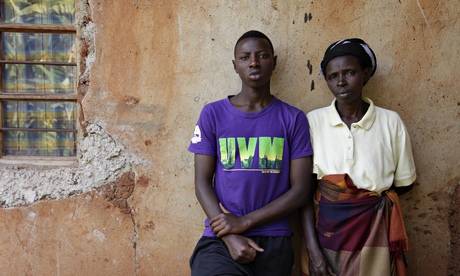
Olivier Utabazi, 19, and his mother, Epiphane Mukamakombe, 44, outside their home in Kibilizi. The son of rape, he is her only close surviving relative, after her family were killed in the genocide.
This week's Global Summit to End Sexual Violence in Conflict, hosted by the British foreign secretary, William Hague, and actress Angelina Jolie, aims to put victims such as Levine and Josiane at the centre of war crimes investigations. Governments are expected to sign a new protocol for documenting wartime sexual assaults and adopt programmes to educate their soldiers that rape is a war crime rather than an inevitable consequence of conflict. Although rape occurs in all wars, it was especially widespread in Rwanda, and the consequences are felt to this day. The International Criminal Tribunal on Rwanda concluded that rape was an integral part of genocide. "Sexual violence was a step in the process of destruction of the Tutsi group
destruction of the spirit, of the will to live, and of life itself," said the verdict on the Hutu leaders who organised the genocide in the Butare region, which includes Kibilizi.
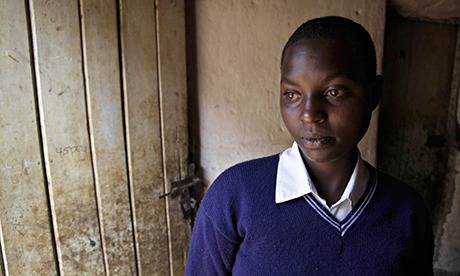
Adeline Uwasi was born after her mother was repeatedly raped. Withdrawn and nervous, she is now her mothers sole carer.
The UN initially estimated that 5,000 children were born of rape in the 1994 genocide, but the Survivors' Fund a British charity working in Rwanda believes the number might be nearer 20,000. Unlike genocide orphans, children of rape do not qualify for government assistance and many live in poverty. Aid programmes have tended to concentrate on the plight of the raped women, paying little attention to the children, who have grown up feeling rejected by their mothers and stigmatised by the wider community. In Rwanda, ethnicity comes through the father's line, so Tutsi survivors call the children Interahamwe and "son of a snake", while the relatives of the Hutu rapists often tell the children that their mothers are wicked for testifying against their fathers and putting them in jail.
MORE