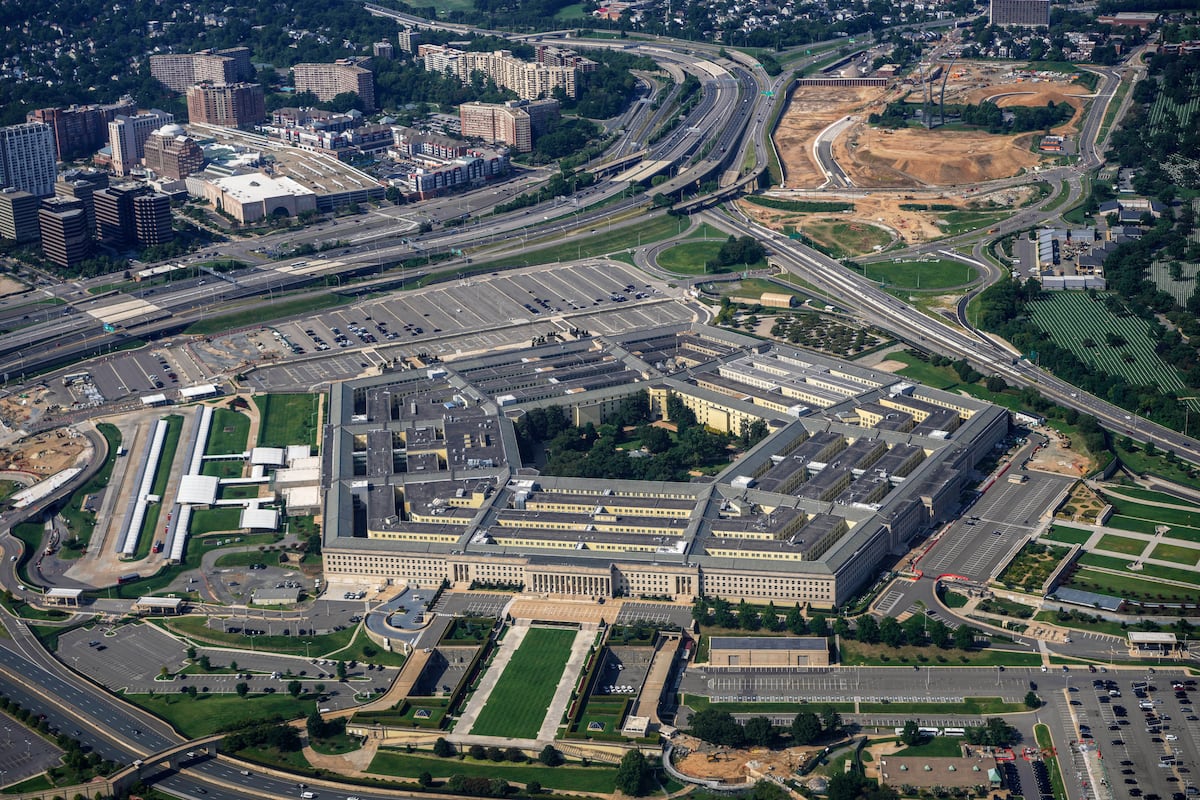
Pentagon fails financial audit for 8th year in a row

Is there anywhere in the country where more fraud, waste & abuse is happening that in the Pentagon?


  • Total voters
    8
Did "DOGE" touch the Pentagon's budget liar?
"On [May 28, 2025, Defense Secretary Pete Hegseth] highlighted DOGE's continued work at the Pentagon," said Chief Pentagon Spokesman Sean Parnell
 
and your party aint guilty too?...
My party? Name me one republican that is guilty of a single white lie or ran a homo male whore house in D.C. out of his taxpayer paid apartment, or a Barney being frank with his frank. Just one!
 
My party? Name me one republican that is guilty of a single white lie or ran a homo male whore house in D.C. out of his taxpayer paid apartment, or a Barney being frank with his frank. Just one!
was i talking to you big bad bob?...
 
That's right, trillions, not millions, or even billions, being wasted away in fraud and abuse.


Where's the self-proclaimed party that pretends to be against American fraud, waste and abuse?

Nowhere to be found, absolutely silent on this.

That should tell you all you need to know about them.

You want to fight fraud, waste and abuse in this country? Then here's where the cutting, and I mean with a gigantic axe, needs to start.

Prove me wrong.
Probably, it is America's destiny. 😑

The US media outlets play a role in the military-industrial complex. Don't be surprised if the Pentagon never passes its audits; it likely never will!
( And let that little boy Hegseth enjoy his new toys in the Pentagon! ) lol. :)

The US news outlets are not a formal part of the defense‑industry supply chain, but they are an influential component of the broader ecosystem that sustains the military‑industrial complex. Their editorial choices, ownership structures, advertising revenue, and relationships with government and industry shape how the public perceives defense spending, policy debates, and accountability.

1. How media intersect with the complex

Dimension? What happens? Why it matters for the complex?

Coverage priorities

- Major networks (CNN, Fox News, MSNBC, major newspapers) devote relatively little airtime or column space to detailed audits of the Pentagon’s finances. Stories that do appear are often framed as “bureaucratic hiccups” rather than systemic waste.

- Limited scrutiny reduces public pressure on lawmakers to demand tighter oversight or budget cuts, allowing the status quo to persist.

Narrative framing

- Defense‑related news is frequently presented through a national‑security lens: “protecting America,” “deterring adversaries,” “supporting troops.”

- Emphasizing security benefits can outweigh discussions of cost overruns or inefficiencies, reinforcing the notion that high spending is necessary.

Access journalism

- Reporters rely on briefings from DoD public‑affairs offices, Pentagon spokespeople, and defense‑industry PR teams. Embedded journalists at military bases or defense‑industry events get privileged access in exchange for favorable coverage.

- Access can create a subtle incentive to avoid aggressively questioning the sources that grant it, leading to softer reporting on controversial issues.

Advertising & sponsorship

- Networks and websites sell ad slots to defense contractors, aerospace firms, and related service providers. Some specialty programs (e.g., “Tech Tomorrow”) are sponsored by companies that also lobby on defense policy.

- Advertising dollars are a legitimate revenue stream, but they can create a conflict of interest that discourages harsh criticism of sponsors.

Ownership & corporate ties

- Large media conglomerates have diversified holdings; some parent companies own defense‑related subsidiaries (e.g., a broadcasting group that also produces military‑training simulations).

- Direct financial stakes can subtly influence editorial direction, even if newsroom policies claim independence.

Opinion ecosystems

- Cable‑news pundits, op‑eds, and talk‑show hosts often have backgrounds in the military, defense consulting, or think‑tanks that receive industry funding.

- Opinion pieces can echo industry talking points, shaping public opinion in ways that align with defense‑industry interests.

Agenda‑setting

- By choosing which stories to highlight (e.g., foreign‑policy crises, cyber‑threats) and which to downplay (e.g., audit failures, cost overruns), media shape the public agenda.

- When defense‑budget debates dominate the news cycle, other aspects—such as fiscal responsibility—receive less attention.

2. Evidence of the connection

Coverage gaps – Analyses of news archives (e.g., AllSides, Media Cloud) show that the Pentagon’s audit failures receive far fewer mentions than headline‑grabbing topics like elections or celebrity news, despite the audit being a major accountability issue.

Industry‑sponsored content – Several major outlets have run “special reports” on emerging defense technologies that are partially funded by the companies featured, blurring the line between journalism and marketing.

Think‑tank pipelines – Many regular commentators on mainstream cable news are former Pentagon officials or employees of defense‑industry think tanks (e.g., Center for Strategic and International Studies, which receives substantial corporate sponsorship). Their analysis often mirrors the language used in industry lobbying briefs.

Public‑affairs influence – The DoD’s Office of Public Affairs maintains a “media liaison” team that coordinates interviews, press releases, and background briefings. Journalists who rely on that access may be less inclined to pursue aggressive investigative leads that could jeopardize the relationship.

3. What this means for accountability

Reduced public pressure: When the mainstream narrative downplays audit failures, voters are less likely to demand congressional hearings or stricter oversight. Policy inertia: Lawmakers, especially those on Armed Services committees, may feel less compelled to act if the media does not spotlight the issue.

Opportunity for alternative sources: Independent investigative outlets (e.g., ProPublica, The Intercept, local public‑radio investigations) often fill the gap, but they have smaller audiences and less influence on the national agenda.

4. Counterpoints – Why media aren’t the sole driver

Editorial independence: Most mainstream newsrooms have policies that separate advertising from editorial decisions. Many journalists do pursue hard‑news investigations into defense spending when resources allow.

Competing priorities: Newsrooms juggle countless beats; limited staffing and the 24‑hour news cycle mean some stories inevitably receive less coverage.

Public appetite: Audience interest tends to gravitate toward immediate, dramatic events (conflicts, scandals) rather than complex financial audits, influencing editorial choices.

5. Bottom line

Mainstream U.S. media outlets are not formal participants in the military‑industrial complex, but they function as a conduit that can amplify or mute the complex’s messages. Their coverage decisions, reliance on access, advertising relationships, and the presence of industry‑linked commentators create a feedback loop that often supports the continuation of high defense spending and diminishes scrutiny of financial mismanagement.

Recognizing this indirect role helps explain why audit failures can persist with relatively little public outcry, even as the underlying financial and procurement problems remain. :)
 
Back
Top Bottom