Pallyweid: (1) No famine in Gaza (2) if an individual is hungry, it's Hamas & UN fault - only

FDR_Reagan

Platinum Member
Joined
Nov 20, 2023
Messages
3,714
Reaction score
2,137
Points
938
Comment:
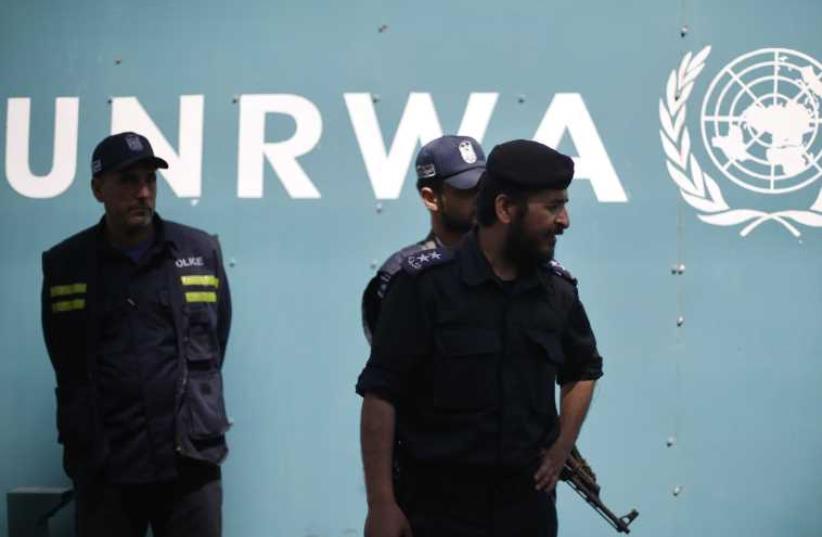
Sometimes you don't know which is which. UNRWA is linked with genocidal Hamas.


The Connection Between UNRWA and Hamas in Gaza


israelinsf
A new report by @UnitedNationsWatch reveals just how close @UNRWA is to Hamas and Islamic Jihad.

The 27-page report, filled with evidence of detailed meetings between #UNRWA officials and terrorists, reveals the influence of groups such as #Hamas and the Palestinian Islamic Jihad over the agency’s decisions and policies.

Read the full report: Report: “The Unholy Alliance: UNRWA, Hamas, and Islamic Jihad” - UN Watch

1000005448.webp


@@@


Former GHF director: If someone is hungry in Gaza, it's the fault of Hamas and the UN.
Shahar Segal, former spokesperson for US aid group GHF, says UN refusal to cooperate and Hamas control are fueling Gaza’s food insecurity and prolonging the war.
Israel National News.
Jul 25, 2025, 8:23 AM (GMT+3)

Israeli security officials clarify: No famine in Gaza.
Israeli sourcs address recent reports claiming 'famine' in Gaza, stressing there is no actual famine in the city, Hamas orchestrating false 'starvation campaign' to pressure Israel into ending the war.
Israel National News.
Jul 25, 2025, 3:43 PM (GMT+3)

What is Pallyweid
 
Last edited:
Comment:
Sometimes you don't know which is which. UNRWA is linked with genocidal Hamas.


@@@


Former GHF director: If someone is hungry in Gaza, it's the fault of Hamas and the UN.
Shahar Segal, former spokesperson for US aid group GHF, says UN refusal to cooperate and Hamas control are fueling Gaza’s food insecurity and prolonging the war.
Israel National News.
Jul 25, 2025, 8:23 AM (GMT+3)

Israeli security officials clarify: No famine in Gaza.
Israeli sourcs address recent reports claiming 'famine' in Gaza, stressing there is no actual famine in the city, Hamas orchestrating false 'starvation campaign' to pressure Israel into ending the war.
Israel National News.
Jul 25, 2025, 3:43 PM (GMT+3)

There's a reason no country on earth wants Palestinian "refugees".
 
What is Pallyweid

The term "pallyweid" can be used to describe a specific type of rhetoric or narrative about the Israeli-Palestinian conflict that is both misleading and one-sided, often found in discussions that accuse Israel erroneously of “apartheid” and “genocide.” Here's how the key elements can be incorporated into the term:


Pallyweid and the Apartheid Slur


The term pallyweid draws from the "apartheid" false accusation leveled at Israel, which critics claim is based on systemic racial segregation akin to the policies of South Africa during apartheid. In reality, Israel’s legal and political framework is far different from the brutal racial segregation of the South African regime. Arab Israelis (who make up about 20% of the population) are full citizens, with the ability to vote, run for office, and enjoy the same civil rights as Jewish citizens. The misuse of the term apartheid in this context dilutes the true historical weight of South Africa’s racial system.


Furthermore, Arabs in Israel often receive preferential treatment in various areas, including land disputes, legal cases, employment opportunities, and even after serving time in prison. This disparity in treatment contradicts the narrative of systemic oppression often pushed by critics, and instead highlights how Israel goes to great lengths to accommodate its Arab citizens, despite the challenges posed by ongoing conflict and security concerns.


From a pallyweid perspective, this term is wielded to paint Israel , falsely, as an oppressive regime based on ethnic separation when, in fact, Israel's security measures—such as restrictions on movement in the West Bank and Gaza—are directly linked to the terrorist threats it faces from groups like Hamas and factions within the Palestinian Authority. These measures are not aimed at racial or ethnic segregation but rather as security precautions against an ongoing campaign of violence that targets Israeli civilians, including through rocket attacks, suicide bombings, and terrorism.


It's important to note that the foundation for the "apartheid" narrative, which continues to be peddled today, was first laid by Ahmad Shukeiri [Shukairy] on October 17, 1961. This is the same Shukeiri who, in 1969, openly admitted that Arabs in Palestine cheered for Hitler and prayed for the Axis powers to win, and who, in 1946, justified the Holocaust alongside Jamal Husseini. Husseini, serving as a spokesperson for the Arab Higher Committee (AHC), also made clear in 1947 and 1948 that the Arab rejection of Israel was rooted in deeply racist motivations. As Husseini himself explained, the establishment of Israel threatened the "racial homogeneity" of the Arab world. This admission highlights the true, racist roots of the Arab world's opposition to the Jewish state, long before any accusations of "apartheid" were ever made.


Pallyweid and Genocide


The greater false accusation of genocide is another cornerstone of the pallyweid narrative, often used to describe Israel’s military actions, particularly in Gaza and the West Bank. However, this claim misrepresents the context and intentions behind Israeli operations. Critics argue that Israel’s military actions are defensive in nature—designed to protect Israeli civilians from terrorist attacks launched by Iranian-backed Hamas and other militant groups—not part of a broader genocidal campaign against Palestinians.


From pallyweid propaganda, these military operations are framed as genocidal, even though Israel’s goal is not the elimination of Palestinian people but the neutralization of violent groups that actively seek Israel's destruction. The genocide claim distorts the situation by ignoring the complexity of the conflict and the regional dynamics at play, including the significant role of militant factions within Palestinian territories. It’s imperative to point out that it simplifies a deeply nuanced conflict and fails to acknowledge the existential security threats Israel faces from groups bent on its destruction.


PS. In 2025, a disturbing trend has emerged where images of children with preexisting conditions—manipulated for maximum emotional impact—are being used as part of a propaganda campaign. These tactics obscure the truth, which is that Hamas, caught indulging in luxury and excess, alongside corrupt UNRWA agents, is actively blocking humanitarian aid provided by Israel and the United States. This ensures the suffering of ordinary Gazans, allowing Hamas to spin the narrative that Israel is deliberately starving them, all while manipulating the world’s sympathies. This is a continuation of the Palestinian leadership’s long-standing, grotesque strategy—dating back to Arafat’s days—where civilian casualties are deliberately orchestrated as part of a cynical effort to fuel anti-Israel sentiment.


Pallyweid and the Key Issues of Conflict


At the heart of the pallyweid problem lies a misunderstanding or willful ignorance of the existential threat that Israel faces from groups like Hamas and Hezbollah. These organizations openly advocate for the destruction of Israel, and their constant use of terrorism—often launched from civilian areas within Gaza—creates significant challenges for Israeli military operations. The pallyweid narrative, however, often downplays this threat, framing Israel's actions as unjust, rather than necessary defensive measures.


Moreover, pallyweid proponents often ignore the Palestinian leadership's role in perpetuating the conflict, especially their refusal to recognize Israel’s right to exist as a legitimate state. Instead of pursuing peaceful negotiations, Palestinian leaders have often sought violence and terrorism as means to achieve political goals, which exacerbates the ongoing conflict and complicates efforts for peace.


Pallyweid and International Criticism


From the perspective of those who use the term pallyweid, much of the international criticism of Israel—especially those accusations of apartheid and genocide—are seen as biased or influenced by anti-Semitism. The Palestinian narrative often takes center stage in international discourse, while Israel’s security needs are either underplayed or outright ignored. This imbalance in global rhetoric is part of a broader effort to delegitimize the Jewish state.


The goal of this delegitimization is not just to criticize Israel's policies but to undermine its very existence as a state. This ideological alignment often coincides with radical anti-Western or anti-Zionist sentiments that seek to portray Israel in a negative light, reinforcing the pallyweid narrative and its false claims of systemic injustice and violence.


In Conclusion


The term pallyweid captures a complex and often misleading narrative that distorts the realities of the Israeli-Palestinian conflict. By falsely equating Israel’s defensive actions with apartheid and genocide, the pallyweid perspective fails to account for the security threats Israel faces, the failure of Palestinian leadership to negotiate peace, and the exaggeration or manipulation of international criticism of Israel. This term highlights how such rhetoric can be weaponized to delegitimize the Jewish state and obscure the true nature of the conflict, making it more difficult to achieve a lasting peace in the region.
 
What is Pallyweid

The term "pallyweid" can be used to describe a specific type of rhetoric or narrative about the Israeli-Palestinian conflict that is both misleading and one-sided, often found in discussions that accuse Israel erroneously of “apartheid” and “genocide.” Here's how the key elements can be incorporated into the term:


Pallyweid and the Apartheid Slur


The term pallyweid draws from the "apartheid" false accusation leveled at Israel, which critics claim is based on systemic racial segregation akin to the policies of South Africa during apartheid. In reality, Israel’s legal and political framework is far different from the brutal racial segregation of the South African regime. Arab Israelis (who make up about 20% of the population) are full citizens, with the ability to vote, run for office, and enjoy the same civil rights as Jewish citizens. The misuse of the term apartheid in this context dilutes the true historical weight of South Africa’s racial system.


Furthermore, Arabs in Israel often receive preferential treatment in various areas, including land disputes, legal cases, employment opportunities, and even after serving time in prison. This disparity in treatment contradicts the narrative of systemic oppression often pushed by critics, and instead highlights how Israel goes to great lengths to accommodate its Arab citizens, despite the challenges posed by ongoing conflict and security concerns.


From a pallyweid perspective, this term is wielded to paint Israel , falsely, as an oppressive regime based on ethnic separation when, in fact, Israel's security measures—such as restrictions on movement in the West Bank and Gaza—are directly linked to the terrorist threats it faces from groups like Hamas and factions within the Palestinian Authority. These measures are not aimed at racial or ethnic segregation but rather as security precautions against an ongoing campaign of violence that targets Israeli civilians, including through rocket attacks, suicide bombings, and terrorism.


It's important to note that the foundation for the "apartheid" narrative, which continues to be peddled today, was first laid by Ahmad Shukeiri [Shukairy] on October 17, 1961. This is the same Shukeiri who, in 1969, openly admitted that Arabs in Palestine cheered for Hitler and prayed for the Axis powers to win, and who, in 1946, justified the Holocaust alongside Jamal Husseini. Husseini, serving as a spokesperson for the Arab Higher Committee (AHC), also made clear in 1947 and 1948 that the Arab rejection of Israel was rooted in deeply racist motivations. As Husseini himself explained, the establishment of Israel threatened the "racial homogeneity" of the Arab world. This admission highlights the true, racist roots of the Arab world's opposition to the Jewish state, long before any accusations of "apartheid" were ever made.


Pallyweid and Genocide


The greater false accusation of genocide is another cornerstone of the pallyweid narrative, often used to describe Israel’s military actions, particularly in Gaza and the West Bank. However, this claim misrepresents the context and intentions behind Israeli operations. Critics argue that Israel’s military actions are defensive in nature—designed to protect Israeli civilians from terrorist attacks launched by Iranian-backed Hamas and other militant groups—not part of a broader genocidal campaign against Palestinians.


From pallyweid propaganda, these military operations are framed as genocidal, even though Israel’s goal is not the elimination of Palestinian people but the neutralization of violent groups that actively seek Israel's destruction. The genocide claim distorts the situation by ignoring the complexity of the conflict and the regional dynamics at play, including the significant role of militant factions within Palestinian territories. It’s imperative to point out that it simplifies a deeply nuanced conflict and fails to acknowledge the existential security threats Israel faces from groups bent on its destruction.


PS. In 2025, a disturbing trend has emerged where images of children with preexisting conditions—manipulated for maximum emotional impact—are being used as part of a propaganda campaign. These tactics obscure the truth, which is that Hamas, caught indulging in luxury and excess, alongside corrupt UNRWA agents, is actively blocking humanitarian aid provided by Israel and the United States. This ensures the suffering of ordinary Gazans, allowing Hamas to spin the narrative that Israel is deliberately starving them, all while manipulating the world’s sympathies. This is a continuation of the Palestinian leadership’s long-standing, grotesque strategy—dating back to Arafat’s days—where civilian casualties are deliberately orchestrated as part of a cynical effort to fuel anti-Israel sentiment.


Pallyweid and the Key Issues of Conflict


At the heart of the pallyweid problem lies a misunderstanding or willful ignorance of the existential threat that Israel faces from groups like Hamas and Hezbollah. These organizations openly advocate for the destruction of Israel, and their constant use of terrorism—often launched from civilian areas within Gaza—creates significant challenges for Israeli military operations. The pallyweid narrative, however, often downplays this threat, framing Israel's actions as unjust, rather than necessary defensive measures.


Moreover, pallyweid proponents often ignore the Palestinian leadership's role in perpetuating the conflict, especially their refusal to recognize Israel’s right to exist as a legitimate state. Instead of pursuing peaceful negotiations, Palestinian leaders have often sought violence and terrorism as means to achieve political goals, which exacerbates the ongoing conflict and complicates efforts for peace.


Pallyweid and International Criticism


From the perspective of those who use the term pallyweid, much of the international criticism of Israel—especially those accusations of apartheid and genocide—are seen as biased or influenced by anti-Semitism. The Palestinian narrative often takes center stage in international discourse, while Israel’s security needs are either underplayed or outright ignored. This imbalance in global rhetoric is part of a broader effort to delegitimize the Jewish state.


The goal of this delegitimization is not just to criticize Israel's policies but to undermine its very existence as a state. This ideological alignment often coincides with radical anti-Western or anti-Zionist sentiments that seek to portray Israel in a negative light, reinforcing the pallyweid narrative and its false claims of systemic injustice and violence.


In Conclusion


The term pallyweid captures a complex and often misleading narrative that distorts the realities of the Israeli-Palestinian conflict. By falsely equating Israel’s defensive actions with apartheid and genocide, the pallyweid perspective fails to account for the security threats Israel faces, the failure of Palestinian leadership to negotiate peace, and the exaggeration or manipulation of international criticism of Israel. This term highlights how such rhetoric can be weaponized to delegitimize the Jewish state and obscure the true nature of the conflict, making it more difficult to achieve a lasting peace in the region.
You are trying too hard, give it up before you make more of a fool of yourself.
 
1000005663.webp

30e02060-6e27-11f0-992e-65a3ce5d4a6f__h1080_w1440.webp


Revealed.
Secret Hamas Menu Reveals Shocking Underground Reality.


IDF Arabic Spokesman Lt. Col. Avichay Adraee released new images Thursday evening showing Hamas operatives deep inside Gaza tunnels enjoying abundant meals - raising questions about the contrast between the terror group’s conditions and the dire food crisis affecting Gaza’s civilian population.
 
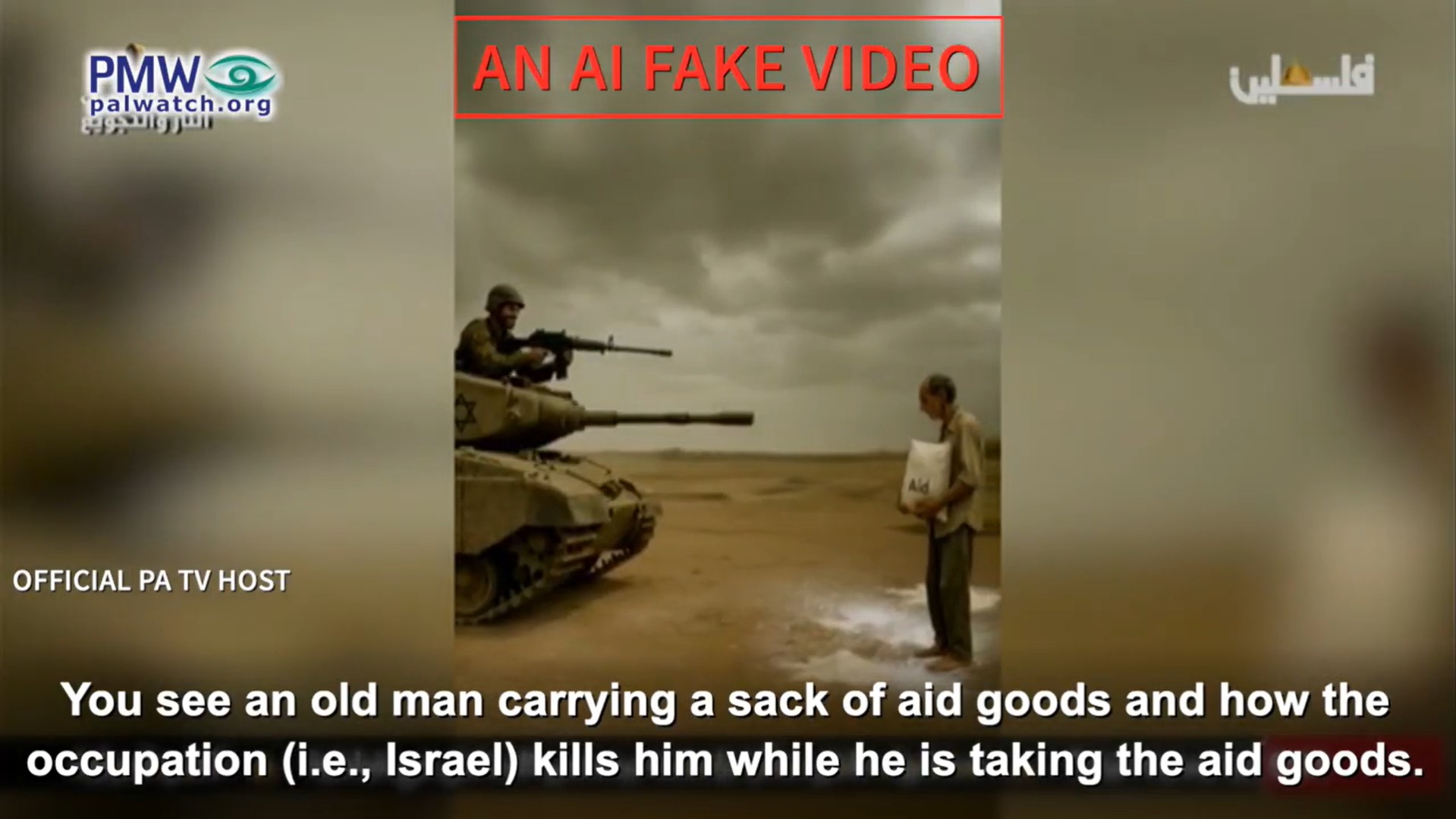
Palestinian Authority TV presents AI video of “Israeli soldier killing a man” as “evidence” of ‎‎“death traps” at Gaza aid distribution centers.
AI misused by the PA to demonize Israeli soldiers and distort what’s really ‎happening in Gaza.
Gaza War (2023)
Jul 28, 2025
 
Open Source Intel @Osint613
Palestinian in Gaza:

"May God curse every single member of Hamas. And anyone who loves Hamas."

The pro Palestinian crowed is in disbelief.
Jul 31, 2025


GAZAWOOD - the PALLYWOOD saga
@GAZAWOOD1:
Despite the hunger and lack of supplies, Gaza’s increasingly skeletal doctors keep pushing forward💪
Jul 31, 2025
 
Who’s Really Starving Gaza?
The world deserves to stop being lied to.
July 31, 2025 by Aynaz Anni Cyrus.

The Hunger Narrative.
“Israel is starving[sic] Gaza.”

That’s the line. You’ve seen it splashed across headlines, painted on protest signs, shouted from international stages. The UN calls it a “man-made famine.” Celebrities post black squares with #LetGazaLive. Social media reels show crying children with empty bowls, overlaid with dramatic music and a single, pointed caption: Genocide by hunger.

The accusation is explicit, and it’s powerful. What better way to cast Israel as a monster than to say it withholds food from children? No need to mention rockets, tunnels, or terrorists when you can show an empty plate and let the world assume who’s holding it back.

But there’s a problem.

That narrative has a kill switch. It’s called truth.

And the truth is this: yes, Israel has restricted aid into Gaza, especially during periods of intensified fighting. Prime Minister Netanyahu has publicly said that only “minimal” humanitarian aid will be allowed in—not zero, but not full access either. Tactical pauses have been announced to let trucks through. Convoys still move daily. Airdrops are happening. Israel even restored power to water pumps that serve Gaza civilians.

So no—this isn’t a total blockade. It’s a controlled, reduced flow of aid during a war against a terror regime that hijacks every resource it can. Israel’s goal, as stated, is military pressure—not civilian starvation.

But the global narrative ignores all that nuance.

Because the truth makes for bad propaganda.

Meanwhile, Hamas does everything it can to intensify the suffering, block the flow, and profit off the corpses. And that’s what the next section is about.

What Israel Is Actually Doing

Despite what you’ve been told, aid is entering Gaza.

Every day, trucks loaded with food, water, medical supplies, and fuel line up at Israel’s Kerem Shalom crossing. Some days, it’s a few dozen. Others, over 300 trucks enter. This isn’t a trickle, it’s a lifeline. And it’s moving under the coordination of COGAT, Israel’s agency for humanitarian operations in the territories.

Even at the height of war, Israel hasn’t sealed Gaza off completely. It has restricted what goes in, but it hasn’t shut the gates.

Why the restrictions? Because every convoy that crosses that border is a security risk. Aid trucks have been used to smuggle weapons. Fuel tanks have been siphoned to power Hamas rocket systems. Food warehouses have been turned into military storage sites.

Israel is fighting an enemy that fires from hospitals, stores missiles under schools, and hides behind civilians. Every bag of flour that crosses the line is at risk of becoming a bargaining chip for Hamas or a shield for its fighters.

So yes, Israel restricts. But it also allows. And no army on Earth would do more for civilians under the direct control of a terrorist regime it is actively at war with.

When the U.S. invaded Iraq in 2003, civilian casualties were deemed unavoidable. No aid was flowing in from Baghdad to Fallujah once the firefights began.

During World War II, the Allied blockade of Nazi Germany caused mass civilian hardship, and no one called it genocide. The British didn’t airdrop supplies into Berlin until the Nazis were gone.

In Afghanistan, the Taliban’s use of human shields didn’t lead NATO to feed them. It led to airstrikes.

Israel, by contrast, is providing food and water to civilians governed by the same terror group that kidnapped its children, burned its elderly alive, and launched over 20,000 rockets into its cities.

In fact, just this week, Israel announced daily tactical pauses in military operations to allow aid to pass safely. Specific windows were created in areas such as Deir al-Balah, Muwasi, and Gaza City, providing humanitarian workers with a protected corridor to move supplies.

There’s also been airdrops coordinated by Israel, Jordan, and the UAE to deliver food directly into isolated areas that Hamas controls. The same Israel accused of “genocidal starvation” is coordinating with Arab governments to feed its enemy’s civilians.

And then there’s the infrastructure:

Israel restored electricity to pumping stations that deliver water inside Gaza.
It allowed fuel shipments for UN operations and hospitals.
It facilitated evacuation corridors for civilians to flee combat zones—even when Hamas blocked them at gunpoint.
So what’s the problem?

Why are Gazans still dying of hunger?

Because getting aid into Gaza isn’t the same as getting it to the people.

That’s where the real obstruction begins—and it doesn’t come from the Israeli side of the fence.

Hamas Controls the Food and the Chaos

Once the aid crosses the border, it doesn’t go to the people. It goes through Hamas.

And Hamas has no interest in feeding Gaza. It’s too busy feeding itself.

Convoys meant for civilians are routinely intercepted, hijacked, or redirected by Hamas operatives. The terrorist group either sells the supplies on the black market or reserves them for fighters and their families. The World Food Programme, UNRWA staff, and other NGOs have reported seizures of aid trucks and armed theft from warehouses.

Hamas has turned humanitarian aid into a weapon of war. Flour becomes leverage. Fuel becomes power, literally and politically. Even medical supplies are filtered through loyalty: if you’re not pro-Hamas, you’re last in line. Or never in line at all.

And if that weren’t enough, they’ve openly attacked aid distribution sites, blaming the chaos on Israel while stoking it themselves.

In March 2024, Hamas gunmen reportedly fired on civilians rushing to collect flour near an aid drop, causing panic that turned deadly. In another case, UN officials confirmed that trucks were seized and rerouted by Hamas just minutes after crossing from Israel.

Why flour? Because in Gaza, it’s not just food, it’s survival. It’s the base for bread, the core of every meal, and the only calorie source many families can afford. Control the flour, and you control whether a family eats or riots.

Let’s be clear: Israel isn’t holding the food. Hamas is.

They are starving their own people to manufacture outrage, rally global sympathy, and weaponize every image of a hungry child as a propaganda tool.

And they’re not the only Islamic regime that operates this way.

Iran’s Islamic Republic crushed protestors while cutting fuel subsidies and hoarding emergency funds for Hezbollah. The Taliban took international aid and denied it to women and Hazara minorities. Bashar al-Assad, backed by Iran, bombed bread lines in Syria and called them “terrorist gatherings.”

When Islamic regimes want power, their own people are the first to suffer. Children aren’t sacred, they’re props. Civilians aren’t citizens; they’re shields, leverage, and sacrifice.

Gaza’s Mob Problem

Even when aid does make it past Hamas checkpoints, it doesn’t guarantee safe delivery.

Why? Because Gaza is no longer a functioning society. It’s a pressure cooker, and Hamas has destroyed the lid.

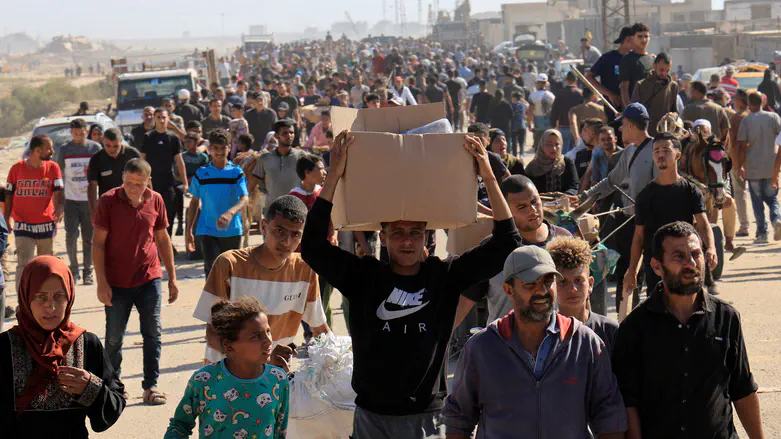
With no civil order, no fair distribution, and no enforcement beyond Hamas loyalists, desperate civilians mob the trucks as they arrive. And what begins as desperation often ends in deadly chaos.

Crowds have surrounded convoys before they can unload. People climb onto moving vehicles, tear into trucks mid-route, and trample each other to grab a sack of flour or a box of supplies.

In multiple documented cases, stampedes have killed dozens, not because Israel fired on them, but because Hamas created an environment where food delivery looks like a riot scene.

One UN report described the convoy process as “humanitarian roulette” where driver safety, crowd control, and civilian survival are all left to chance.

And yet, every time the headlines run, they point the finger outward:

“Israeli fire kills aid seekers.”
“Dozens die in Gaza food panic—blame placed on blockade.”
“Hunger turns deadly amid lack of international pressure.”

The media shows the blood but not the context.

They don’t show the armed Hamas fighters looting the trucks. They don’t show the lack of organized aid distribution. They don’t show the terror group controlling the crowd with bullets or letting it descend into mayhem for the optics.

Gaza’s Mob Problem Orchestrated for the Camera

If Gaza were truly under “total siege,” there’s one simple solution no one ever talks about: Egypt. The other Islamic country…

Gaza shares a border with Egypt’s Sinai Peninsula, and the Rafah crossing sits right there, ready to be opened.

If the people of Gaza were dying solely because Israel won’t open its gates, Egypt could save them. It could let in aid. It could take in refugees. It could coordinate medical evacuations, fuel shipments, and food deliveries.

But it doesn’t.

Because Egypt, like Israel, knows who controls Gaza: Hamas, a violent offshoot of the Muslim Brotherhood, and an enemy of the Egyptian state.

If Egypt opens Rafah, it risks Hamas infiltrating Sinai, reigniting jihadist activity, and destabilizing its own borders. So Egypt keeps the gate closed.

And guess what?

No one screams “genocide.” No one calls for sanctions. No UN resolutions. No campus protests. No aid convoys are sailing to the Egyptian shore.

That silence tells you everything.

Because this was never about feeding the people. It was never about saving Gaza. It was always about the anti-Israel narrative.

The real blockade isn’t around Gaza. It’s around the truth.

Gaza’s Starvation Is Real, But the Villain Isn’t Who You Think

Yes, people in Gaza are suffering. That part isn’t a lie.

The truth is being starved far more viciously than any population.

And that should matter not just to those who support Israel, but to anyone who believes in justice, in human life, in the dignity of the oppressed.

Because real justice demands we call evil by its name, even when it wears a keffiyeh and screams “resistance.” Real compassion requires discernment, not just tears.

And if you follow the God of the Bible, then you already know:
Lies serve death. Truth serves life.

It is the truth, not propaganda, not pressure, not public opinion, that sets people free. Free from tyrants. Free from false gods. Free from systems built to destroy.

The people of Gaza deserve the truth. Israel deserves justice. And the world deserves to stop being lied to.

Let’s start telling the truth even when it’s not popular.


Why is the UN preventing food and aid from entering Gaza? Why are Hamas supporters well-fed and thriving? The starvation in Gaza is man-made – orchestrated and perpetuated by the media.
July 30, 2025.
 
Full Stop, with the propaganda!

Bottom line, they are being starved in Gaza....give all the reasons or excuses or different blame you want.... but the facts are:

The humans in Gaza are being starved, and it needs to STOP!
 
Nataly Dadon | 📢 Important clarification about the fake footage from Gaza:

Enough with Pallywood.
Enough with the lies.
Don’t be another victim of manipulative propaganda meant to incite hatred toward Jews.

Anyone can stand beside a sick child in a hospital and make up a heartbreaking story.
But morality demands more.
Courage means asking real questions.

How is it logical that someone drives while holding a child and filming a “CPR attempt” at the same time?
How can a girl “die of starvation” while everyone around her looks well-fed, with double chins and full bellies?

There is no famine in Gaza.
On the contrary massive humanitarian aid flows in.
They receive products most average Israeli families can’t even afford.

Take back your critical thinking.
Ask: who benefits from these viral videos?

Not the child. Not the girl.
But the terrorist who pockets your donations.
The leader who lives in a luxury hotel thanks to your manipulated compassion.
#pallywood #fakenews #brainwash 🛑✋🏼
July 22, 2025
 
Full Stop, with the propaganda!

Bottom line, they are being starved in Gaza....give all the reasons or excuses or different blame you want.... but the facts are:

The humans in Gaza are being starved, and it needs to STOP!
Hamas is to blame for all the suffering in Gaza, from A to Z. Take it to them.
 
No Jews, no news.

"If you starve to death, no one will care."
A rare video obtained by Sky News shows a city of over a million people dying from hunger, disease, and complete lack of aid.
Why does no one care about what's happening there?
Because the city isn't called Gaza — it's called El Fasher.
Never heard of it?
Don’t remember?
Exactly.
Because it’s not near Israel.
It’s in Sudan.

IMG_0806.webp
 
No Jews, no news.

"If you starve to death, no one will care."
A rare video obtained by Sky News shows a city of over a million people dying from hunger, disease, and complete lack of aid.
Why does no one care about what's happening there?
Because the city isn't called Gaza — it's called El Fasher.
Never heard of it?
Don’t remember?
Exactly.
Because it’s not near Israel.
It’s in Sudan.

View attachment 1145581
Since 1955...4-5 million died because of Arab supremacy and Islamic bigotry.
 

( 23,000 "victims" / 2,100,000 estimated resident of Gaza ) x 100 = 1.09 percent of the entire population killed since October 7, 2023.

As a "genocide," that's a really poor example, by the numbers, at the hands of the IDF. But as a "genocide" of Hamas, it certainly seems to have exercised them to make such assertions.
 
15th post
Debunking the Fake History of Palestine With Robert Spencer | Viktor Frankl Podcast.

Daniel Schonbuch.
Robert Spencer, one of the world’s leading experts on jihad, political Islam, and Middle Eastern affairs, joins Rabbi Daniel Schonbuch, LMFT, and Lori Fein, Esq. on The Viktor Frankl Podcast for an in-depth discussion about the rise of extremism, the threats facing Western democracies, and the urgent need for moral clarity in our time.
 
Back
Top Bottom