montelatici, Kondor3, P F Tinmore, et al,
This is not accurate.
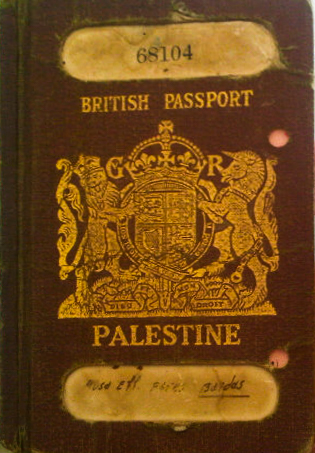
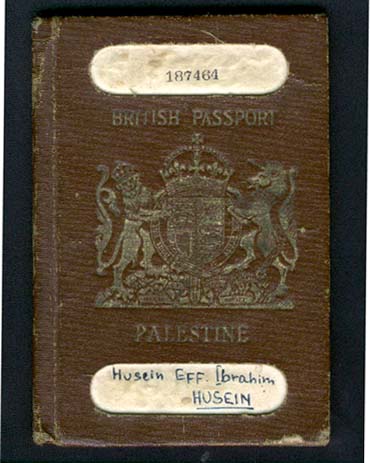
Of course there was a Palestine. It also had provisional statehood per the League of Nations. What are you talking about?
(COMMENT)
Palestine was NOT necessarily given provisional recognition by the Covenant; but it had potential.
The Covenant never mentions Palestine even once in the text. What it says is:
EXCERPT ---- Article 22 Covenant of League of Nations said:
Certain communities formerly belonging to the Turkish Empire have reached a stage of development where their existence as independent nations can be provisionally recognized subject to the rendering of administrative advice and assistance by a Mandatory
until such time as they are able to stand alone. The wishes of these communities must be a principal consideration in the selection of the Mandatory. - See more at:
League of Nations covenant - Peace Treaty of Versailles Peace Conference text Non-UN document 28 April 1919
The word "certain" implies "not all." If they would have meant that all communities were provisionally recognized, then the would have said: "ALL." But they did not. In the case of the Mandate for Palestine, certainly Trans-Jordan, which was promised to the Sharif of Mecca as a Kingdom for one of his sons, was "provisionally recognized."
Second, the Arab Higher Committee was demanding the entire expanse under the Mandate
(from the River to the Sea). Nothing of the sort was promised in the Covenant.
87. The members of the Peel Commission were led by their diagnosis of the situation in Palestine to the conclusion that the obligations imposed upon the Mandatory by the terms of the Mandate were mutually irreconcilable.
“To put it in one sentence, we cannot-in Palestine as it now is-both concede the Arab claim to self-government and secure the establishment of the Jewish National Home.”
88. In these circumstances the maintenance of the Mandate would mean the indefinite continuance of unrest and disturbance. The Commission therefore recommended that His Majesty’s Government should take steps to terminate the Mandate and to partition the country in such a way as to create an independent Jewish State in the north and west, and to incorporate most of the remaining territory in Trans-Jordan.
“Manifestly”, the Commission wrote, “the problem cannot be solved by giving either the Arabs or the Jews all they want. The answer to the question ‘which of them in the end will govern Palestine?’ must surely be ‘Neither.’ We do not think that any fair-minded statesman would suppose, now that the hope of harmony between the races has proved untenable, that Britain ought either to hand over to Arab rule 400,000 Jews, whose entry into Palestine has been for the most part facilitated by the British Government and approved by the League of Nations; or that, if the Jews should become a majority, a million or so of Arabs should be handed over to their rule. But, while neither race can justly rule all Palestine, we see no reason why, if it were practicable, each race should not rule part of it.”
89. The Commission believed that partition on the lines they proposed, while demanding from both Arabs and Jews some sacrifice of their aspirations, would confer on each of them substantial advantages. A large part of the Arab population would obtain its independence, and would be finally delivered from the possibility of ultimate subjection to Jewish rule. The Jews, conversely, would be secured against the possibility of subjection to Arab rule, and would be free to determine their own rate of immigration. To both peoples partition would offer the prospect of peace. “it is surely worth some sacrifice on both sides if the quarrel which the Mandate started could be ended with its termination.”
129. The twelve members of the Anglo-American Committee of Inquiry, working with a time limit of 120 days, held their first meeting in Washington on 4th January, 1946, and signed an unanimous Report at Lausanne on 20th April.
The committee recommended that the constitutional future of Palestine should be based on three principles:-
I. That Jew shall not dominate Arab and Arab shall not dominate Jew in Palestine
II. That Palestine shall be neither a Jewish state nor an Arab state.
III. That the form of government ultimately to be established, shall, under international guarantees, fully protect and preserve the interests in the Holy land of Christendom and of the Moslem and Jewish Faiths.
Third, the Arab Palestinians never stipulated that they were able to "stand alone;" nor did they practically demonstrate the required criteria.
It was not intended, that the remainder of the Mandate be dominated by Arab Palestinian rule. Palestine
(less the Article 25 carve-out for Jordan) was not going to be totally ruled under Arab Sovereignty.
The Question is: What are YOU talking about?
Most Respectfully,
R