RandomPoster
Platinum Member
- May 22, 2017
- 2,584
- 1,815
- 970
Here are some quotes from the NPR interview of the radical leftists author of "In Defense of Looting". The woman sounds like a radical left-wing lunatic.
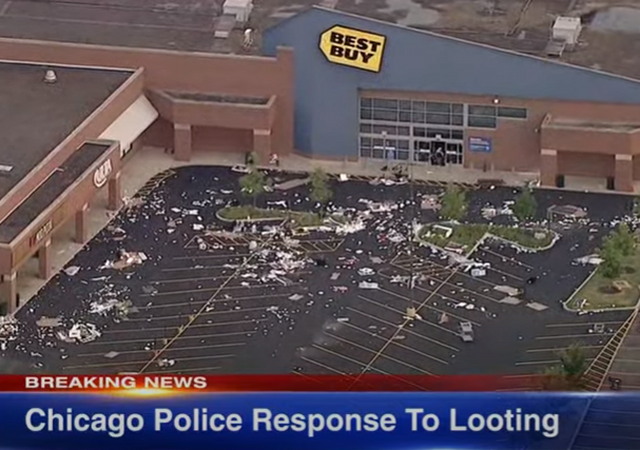
 legalinsurrection.com
"And the reason that the world is organized that way, obviously, is for the profit of the people who own the stores and the factories. So you get to the heart of that property relation, and demonstrate that without police and without state oppression, we can have things for free.
...
Looting strikes at the heart of property, of whiteness and of the police. It gets to the very root of the way those three things are interconnected. And also it provides people with an imaginative sense of freedom and pleasure and helps them imagine a world that could be. And I think that’s a part of it that doesn’t really get talked about—that riots and looting are experienced as sort of joyous and liberatory."
She then goes on to explain that the riots aren't hurting anyone.
“You’re mass shoplifting,” she minimized. “Most stores are insured; it’s just hurting insurance companies on some level. It’s just money. It’s just property. It’s not actually hurting any people.”
"Osterweil continued it is “a Republican myth” that small, family-owned businesses provide greater benefits to a local community than big corporations.
“They are no more likely to have to provide good stuff for the community than big businesses,” she said, adding it’s a “right-wing myth” that has “crawled into even leftist discourse” that “the small business owner must be respected” because he or she “creates jobs.”
Osterweil concluded by denying the value of nonviolent protests."
From the book:
"As a mode of struggle, riots are marked by many characteristics traditionally defined as feminine: not driven by rational argumentation or "proper" political dialogue, they are instead driven by desire, affect, rage, and pain. They are disordered, emotional, and chaotic. Importantly, too, riots struggle within the sphere of social reproduction: looting makes day-to-day life easier by changing the price of goods to zero, relieves pressure by spreading wealth within the community, and reinforces bonds of solidarity and kinship through mutual struggle and action. It is important to remember that, for the most part, riots are experienced as celebration, as joyous and cathartic releases of emotion"

'In Defense of Looting'? Seriously, Leftist Author Went There
'It's actually a Republican myth that has, over the last 20 years, really crawled into even leftist discourse: that the small business owner must be respected, that the small business owner creates jobs and is part of the community.'
legalinsurrection.com
"And the reason that the world is organized that way, obviously, is for the profit of the people who own the stores and the factories. So you get to the heart of that property relation, and demonstrate that without police and without state oppression, we can have things for free.
...
Looting strikes at the heart of property, of whiteness and of the police. It gets to the very root of the way those three things are interconnected. And also it provides people with an imaginative sense of freedom and pleasure and helps them imagine a world that could be. And I think that’s a part of it that doesn’t really get talked about—that riots and looting are experienced as sort of joyous and liberatory."
She then goes on to explain that the riots aren't hurting anyone.
“You’re mass shoplifting,” she minimized. “Most stores are insured; it’s just hurting insurance companies on some level. It’s just money. It’s just property. It’s not actually hurting any people.”
"Osterweil continued it is “a Republican myth” that small, family-owned businesses provide greater benefits to a local community than big corporations.
“They are no more likely to have to provide good stuff for the community than big businesses,” she said, adding it’s a “right-wing myth” that has “crawled into even leftist discourse” that “the small business owner must be respected” because he or she “creates jobs.”
Osterweil concluded by denying the value of nonviolent protests."
From the book:
"As a mode of struggle, riots are marked by many characteristics traditionally defined as feminine: not driven by rational argumentation or "proper" political dialogue, they are instead driven by desire, affect, rage, and pain. They are disordered, emotional, and chaotic. Importantly, too, riots struggle within the sphere of social reproduction: looting makes day-to-day life easier by changing the price of goods to zero, relieves pressure by spreading wealth within the community, and reinforces bonds of solidarity and kinship through mutual struggle and action. It is important to remember that, for the most part, riots are experienced as celebration, as joyous and cathartic releases of emotion"


 ...
...