My information is that the Catholic Church ceased support of the Nazis at the end of the war. Tell us what you know?Actually, most of the really bad Nazis, like Eichmann and Mengele, didn't need to sneak on a sub.
They used "Ratlines" provided by the Catholic Church and facilitated by the Western Allies.
Navigation
Install the app
How to install the app on iOS
Follow along with the video below to see how to install our site as a web app on your home screen.
Note: This feature may not be available in some browsers.
More options
Style variation
You are using an out of date browser. It may not display this or other websites correctly.
You should upgrade or use an alternative browser.
You should upgrade or use an alternative browser.
Nazi Sub used to smuggle hitler to argentina (possibly) discovered in Argentina
- Thread starter Persuader
- Start date
luiza
Diamond Member
Patagonia, to be precise and from memory he died in 1962. The bunker shooting has been totally discredited for some time . Completely invented.See Dunstan and Williams , "Grey Wolf" for the scholarly details .They claimed U-518 was the sub that carried him from Denmark to Necochea on the Argentine coast.Argentina is not cooperating in the investigation of the sub.....which is highly suspicious.
All those alleged conspiracyi theories that have claimed hitler escaped to argentina have been givern new life.
It seems more lposlsible that hitler escaped Germany and lived in Argentina till his death.

1srelluc
Diamond Member
My information is that the Catholic Church ceased support of the Nazis at the end of the war. Tell us what you know?

Ratlines (World War II) - Wikipedia

BackAgain
Neutronium Member & truth speaker #StopBrandon
I saw some pictures. It sure looked like Hitler.Hitler died in his bunker
luiza
Diamond Member
Must of been a hell of a surprise for those expecting to see a stranger or a second Goebbels !!!!!!!!! Actually there was nothing to look at apart from bones and the later DNA results are unequivocal . Not Uncle Adolf or young Eva .I saw some pictures. It sure looked like Hitler.
"Some controversial clergy of the catholic church"Ratlines (World War II) - Wikipedia
en.wikipedia.org
I suppose that supports the claim.
It's also contested by the CC.
And it's Wikipedia?
Is that so?Must of been a hell of a surprise for those expecting to see a stranger or a second Goebbels !!!!!!!!! Actually there was nothing to look at apart from bones and the later DNA results are unequivocal . Not Uncle Adolf or young Eva .
What is your source? Not so I can stomp on a controversial source! I don't do that, because even those sources can be validated as being reliable.
BackAgain
Neutronium Member & truth speaker #StopBrandon
My favorite photo of Herr sHitler.
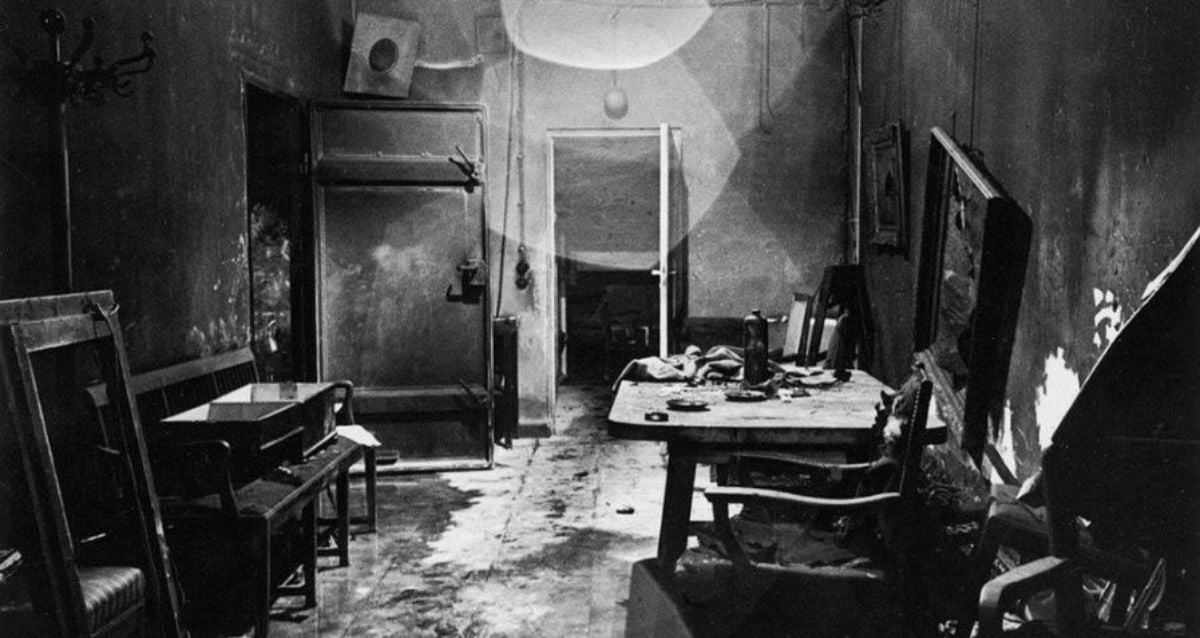
Inside The Führerbunker, The Lavish Hideout Where Adolf Hitler Lived And Died In The Final Days Of WW2
Hitler spent his final 105 days living in the Führerbunker.
 allthatsinteresting.com
1srelluc
Diamond Member
It was just a quick and dirty explanation. I could give two shits myself."Some controversial clergy of the catholic church"
I suppose that supports the claim.
It's also contested by the CC.
And it's Wikipedia?
May as well believe in Iron Sky Hitler for all the difference it makes now.


Votto
Diamond Member
- Oct 31, 2012
- 70,500
- 79,966
- 3,605
Yep, Putin done it.It would have been the Russians
Votto
Diamond Member
- Oct 31, 2012
- 70,500
- 79,966
- 3,605
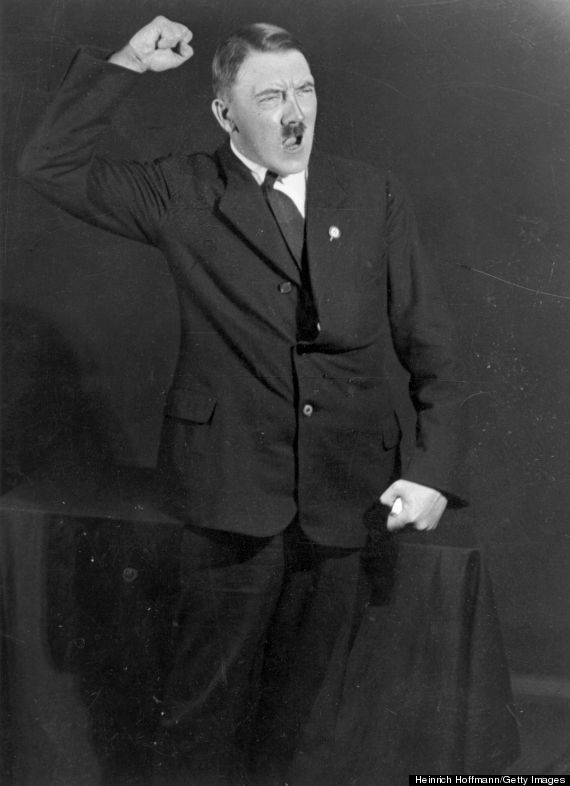
Don't look now, but is that Charlie Chaplin?View attachment 801344
My favorite photo of Herr sHitler.
Inside The Führerbunker, The Lavish Hideout Where Adolf Hitler Lived And Died In The Final Days Of WW2
Hitler spent his final 105 days living in the Führerbunker.

Damn, maybe they are the same person. I know Charlie leaned Left and all, so he might have been a National Socialist.
BackAgain
Neutronium Member & truth speaker #StopBrandon
Lol. There is a similarity.Don't look now, but is that Charlie Chaplin?
Damn, maybe they are the same person. I know Charlie leaned Left and all, so he might have been a National Socialist.
The sides of that mustache angle downward toward the upper lip. Herr sHitler’s bizzaro little stash went straight up and down. Like a black square or rectangle under his nose.
The mustache on the avatar presently used by @miketex is more Hitler than Chaplin.


Gary Seven
Diamond Member
- Aug 18, 2020
- 6,937
- 7,835
- 1,928
Looks like a fake mustache and the face is much more frailView attachment 801344
My favorite photo of Herr sHitler.
Inside The Führerbunker, The Lavish Hideout Where Adolf Hitler Lived And Died In The Final Days Of WW2
Hitler spent his final 105 days living in the Führerbunker.

Muhammed
Diamond Member
Lol. There is a similarity.
The sides of that mustache angle downward toward the upper lip. Herr sHitler’s bizzaro little stash went straight up and down. Like a black square or rectangle under his nose.

Likkmee
Gold Member
I've heard for years that the Germans used the Type XIV supply and replenishment U-boat (Milchkuh or 'milk cow') for several end of the war one-way trips to Argentina.
They were simply scuttled at the end of their voyages.

1srelluc
Diamond Member
The whole notion of the Nazis to SA thing is at this point it does not even matter.
All of them are long dead and at best one or two may have helped a couple SA countries develop their .mils a bit so in the grand scheme of things it amounted to not much of a much.

JoeB131
Diamond Member
My information is that the Catholic Church ceased support of the Nazis at the end of the war. Tell us what you know?
Ratlines (World War II) - Wikipedia
Early efforts: Bishop Hudal[edit]
Austrian Catholic bishop Alois Hudal, a Nazi sympathiser, was rector of the Pontificio Istituto Teutonico Santa Maria dell'Anima in Rome, a seminary for Austrian and German priests, and "Spiritual Director of the German People resident in Italy".[14] After the end of the war in Italy, Hudal became active in ministering to German-speaking prisoners of war and internees then held in camps throughout Italy. In December 1944, the Vatican Secretariat of State received permission to appoint a representative to "visit the German-speaking civil internees in Italy", a job assigned to Hudal.[citation needed]Hudal used this position to aid the escape of wanted Nazi war criminals, including Franz Stangl, commanding officer of Treblinka; Gustav Wagner, commanding officer of Sobibor; Alois Brunner, responsible for the Drancy internment camp near Paris and in charge of deportations in Slovakia to German concentration camps; Erich Priebke, who was responsible for the Ardeatine Massacre; and Adolf Eichmann—a fact about which he was later unashamedly open.[15][16] Some of these wanted men were being held in internment camps: generally without identity papers, they would be enrolled in camp registers under false names. Other Nazis hid in Italy and sought Hudal out as his role in assisting escapes became known on the Nazi grapevine.[17]
According to Aarons and Loftus, Hudal's private operation was small scale compared to what came later. The major Roman ratline was operated by a small but influential network of Croatian priests, members of the Franciscan order, led by Father Krunoslav Draganović, who organised a highly sophisticated chain with headquarters at the San Girolamo degli Illirici Seminary College in Rome, but with links from Austria to the final embarcation point at the port of Genoa. The ratline initially focused on aiding members of the Croatian Ustaše including its leader (or Poglavnik), Ante Pavelić.[22]
Priests active in the chain included: Fr. Vilim Cecelja, former Deputy Military Vicar to the Ustaše, based in Austria where many Ustashe and Nazi refugees remained in hiding; Fr. Dragutin Kamber, based at San Girolamo; Fr. Dominik Mandić, an official Vatican representative at San Girolamo and also "General Economist" or treasurer of the Franciscan order, who used this position to put the Franciscan press at the ratline's disposal; and Monsignor Karlo Petranović, based in Genoa. Vilim would make contact with those hiding in Austria and help them cross the border to Italy; Kamber, Mandić and Draganović would find them lodgings, often in the monastery itself, while they arranged documentation; finally, Draganović would phone Petranović in Genoa with the number of required berths on ships leaving for South America (see below).

whitehall
Diamond Member
The "possibility" of a Nazi smuggling route created by the United States? You need a lot more than the word "possible" to make that theory work.
Next they will claim that the Israelis helpedThe "possibility" of a Nazi smuggling route created by the United States? You need a lot more than the word "possible" to make that theory work.
JoeB131
Diamond Member
Next they will claim that the Israelis helped
Not as crazy as it sounds...

Otto Skorzeny - Wikipedia
The Israeli security and intelligence magazine Matara published an article in 1989 claiming that Skorzeny had been recruited by Mossad in 1963 to obtain information on German scientists who were working on an Egyptian project to develop rockets to be used against Israel.[46] Reporting on the Matara story, the major Israeli daily Yedioth Ahronot said that it had confirmed the story from their own senior Mossad source.[46] Former Mossad head Isser Harel confirmed the story that former Nazis were recruited to provide intelligence on Arab countries.[47]
Ian Black and Benny Morris wrote in 1991 that Skorzeny may not have known for whom he was working,[48] but in 2010, Tom Segev published in his biography of Simon Wiesenthal that Skorzeny had offered to help only if Wiesenthal removed him from his list of wanted war criminals.[49] Wiesenthal refused, but Skorzeny finally agreed to help anyway.[49] Segev gave as his main source the senior Mossad agent Rafi Meidan to whom Segev attributes the primary role in the recruitment of Skorzeny.[49]
Further details of the story were published by Yossi Melman and Dan Raviv in 2016.[2] According to their information, a Mossad team had started to develop a plan to kill Skorzeny, but chief Isser Harel decided to attempt to recruit him instead, as a man on the inside would greatly enhance their ability to target Nazis who were providing military assistance to Egypt.[2] He allegedly was recruited and conducted operations for Mossad from 1964, working with Avraham Ahituv and Rafi Eitan.[50]
Other unnamed sources[2] asserted Skorzeny was recruited after Mossad visited his home in Spain, where he expected that he would be assassinated. After undergoing instruction and training in the Mossad's facilities in Israel, the rumoured work for Mossad included assassinating German rocket scientist Heinz Krug who was working for the Egyptian government and posting a letter bomb which killed five Egyptians at the Egyptian military rocket site Factory 333. He also allegedly supplied the names and addresses of German scientists working for Egypt and the names of European front companies supplying military hardware to Egypt.[2]
No confirmed source can explain Skorzeny's motives for working with Israel, but he may have craved adventure and intrigue and feared assassination by Mossad.[2] An article featured in Der Spiegel on 22 January 2018 raised doubts as to the involvement of Skorzeny in Krug's death, stating that Mossad boss Isser Harel ordered the murder.[51]
Similar threads

- Replies
- 12
- Views
- 650


- Replies
- 24
- Views
- 2K

- Replies
- 25
- Views
- 2K

- Locked
- Replies
- 29
- Views
- 3K

New Topics
-
 Zone1 All they know is what they are told to know
- Started by LibertyWeeps
- Replies: 0
-
 Thanks to scientists, we now know that Trump's reflecting pool fiasco was a botch job from the get go!
- Started by Astrostar
- Replies: 1
-
 Zone1 Should CHURCHES and Synagogues USE Alternative Currencies to assist Homeless people?
- Started by DennisPTate
- Replies: 0
-
 BAD news for putin. The US wants to build missiles the McDonald's way
- Started by Litwin
- Replies: 1
-
 With time running out, Trump digs in on changing midterm election rules
- Started by C_Clayton_Jones
- Replies: 2
Latest Discussions
-

-
Zone1 this is just one way churchs are failing in their duties..
- Latest: progressive hunter
-
 Apocalyptic Climate Change is a grift used for political power and money
- Latest: BluesLegend

