"Owning the factors of production" and "
owning a couple dozen businesses" are two very different things. There are some 18M+ non-government owned enterprises in the U.S. and you equate the notion of "socialist system" with the government owning some 20 or so while there are that many others that no government owns?
You can have a free market economy with socialism. You cannot have it with a command economy. If the socialist state implements a command economy, then no, but one can have a socialist state -- socialism -- without having a command economy.
Free market just means that the market forces determine the prices at which goods and services are exchanged and the quantities of them that are exchanged and made available.
When the Socialist Government dictates what every bread maker can charge for a loaf of bread THATS SOCIALISM!
Your anecdotal observations are just that.
- That's one form of socialism. Despite what you may think, there is not just one form of socialism. The reason for that is that the economic, social and political aspects of socialism are separable, though they need not be separated in any given implementation of socialism.
Go to Hanoi and visit the street vendors. EVERY vendor charges exactly the same for a bowl of Pho. A vendor who attempts to operate in a free market very soon regrets it.
That is indicative of nothing. It may be the consequence of state controlled/stipulated pho prices, but that the all the street vendors charge the same price does not in any way show that the state is controlling the prices. Showing a piece of legislation or a regulation that does stipulate such pricing would show your claim to be so.
For example:
- If you look here, every seller in the U.S. charges the exact same price for the items you'll see at the link. That being the case has nothing to do with state controls on prices.
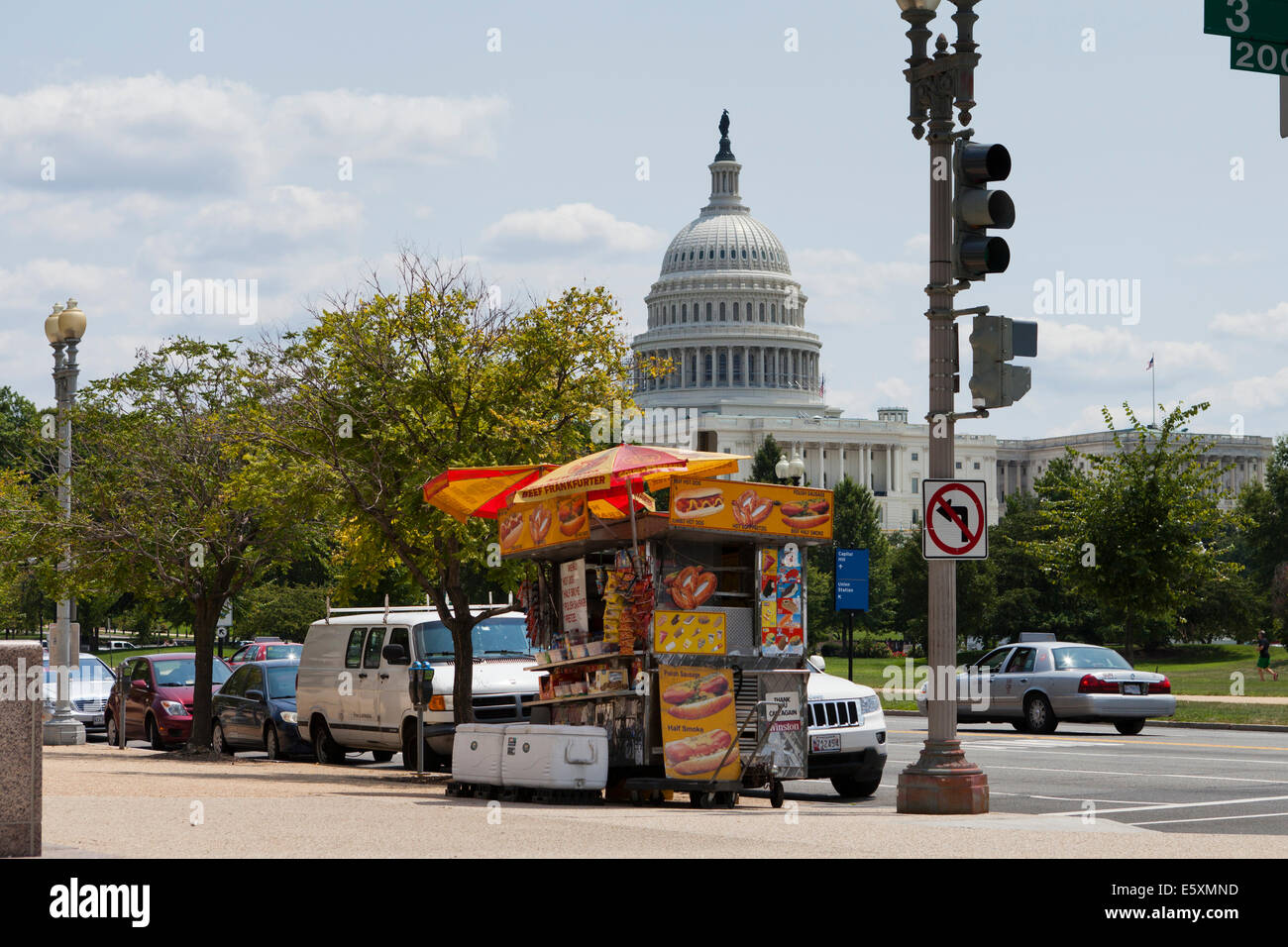
- When one is in downtown D.C., one will find hotdog vendors all over the place. They all charge the same prices, and the state has nothing to do with it.
- Looking at the photo above, you'll see a taxicab. The prices the taxis charge are controlled by the taxicab commission. There are other goods/services in the U.S. that are stipulated by various governments: water, electricity, and home heating oil and gas.
- Go to Macy's, Bloomingdales, and Saks, and you'll find the price of a Ralph Lauren button down shirt is the same at all of them. The same is so for nearly perfume and cosmetic one might aim to buy. The government is not making that be so.
One need not consider the matter solely in terms of differentiated goods. Purchase any commodity on the commodities exchange and you'll find that at any given point in time, every sellers sells at the same price unless and until (1) a buyer offers a higher price or (2) a seller agrees to accept a lower price. That happens because commodity sellers are
price takers.
As for Vietnam, I'm aware of their
Law on Price, but I don't know that pho is included in its scope. A variety of food items appear to be outside its scope judging by the variability noted for
certain items shown here. Now it may still be that the price of pho is controlled, but you've not shown that to be so, and I don't know it to be so. In light of that, I'd say that pho sellers offer a commoditized good -- pho -- and are thus price takers. Now, if you care to put forth something that shows Vietnam has indeed by governmental fiat set pho prices, I'll accept that as so.
....
There is still an unwritten rule that no one should be making more money than anyone else.
The concept is so ingrained now that no one would ever even question it.
So yes there are no longer any 'Government Officials' walking through the markets looking for 'Capitalists' because there is no need to. Everyone is on the same boat. And everyone likes it that way.
Any food vendor who would offer to sell their Pho for less than their neighbor would be considered 'unpatriotic' and be shunned by the community.
Self regulated economy based on Communist doctrine.
No one gets ahead of the others and no one falls behind unless they don't know how to make a great Pho. LOL
Um.... Let the merchants collude and use peer pressure to keep the prices consistent. That's all well and good, but:
- "Shunned by one's peers" does not socialism make.
- Unwritten rules do not make for socialism.
When the Socialist Government dictates what every bread maker can charge for a loaf of bread THATS SOCIALISM!
Go to Hanoi and visit the street vendors. EVERY vendor charges exactly the same for a bowl of Pho. A vendor who attempts to operate in a free market very soon regrets it.
Your claim is very clear in the quote just above, and what you've said now and what you said before -- "THATS [sic] SOCIALISM" -- are not the the same things.
It's worth noting that in economically socialist systems, what makes it socialist is that the government tends to nationalize essential monopolistic enterprises -- huge industries like banking, natural resource production, and other infrastructural concerns -- while leaving non-essential industries and businesses (like, but not limited to, sidewalk pho sellers, large and small scale discretionary retailing, etc.) to remain privately held.
Lastly, your remarks have focused on the prices end consumers pay. Socialism isn't about fixing the prices consumers see; it's about managing production. For example, the state would own the aquifer and sell water to various bottlers. What the bottlers charge the consumer is up to them. The thing is that the state will freely disclose its selling price to bottlers, so bottlers can only get away with charging so much. That is the result of there being more perfect information (less
information asymmetry) about the prices of the item in question, not the result of the state saying, "Thou shalt only charge 40 shekels for a bottle of water."