Well now, Owl, why don't you just hang a big sign on your back stating stupid and ignorant? No, in the '70's most scientists stated even then that warming was most likely the danger. Acid rain was and is a real problem, and was addressed the the air pollution regulations put in place, the ozone hole was and is a problem, but one we have a handle on after reducing the CFl's we put into the atmosphere. Global warming has been recognized by scientists as a problem since after WW2.
Peer-Reviewed Literature
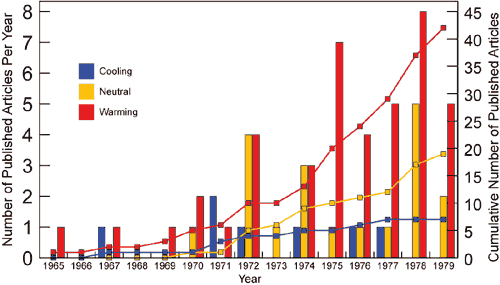
However, these are media articles, not scientific studies. A survey of peer reviewed scientific papers from 1965 to 1979 show that few papers predicted global cooling (7 in total). Significantly more papers (42 in total) predicted global warming (
Peterson 2008). The large majority of climate research in the 1970s predicted the Earth would warm as a consequence of CO2. Rather than 1970s scientists predicting cooling, the opposite is the case.
Figure 1: Number of papers classified as predicting global cooling (blue) or warming (red). In no year were there more cooling papers than warming papers (Peterson 2008).
Scientific Consensus
In the 1970s, the most comprehensive study on climate change (and the closest thing to a scientific consensus at the time) was the
1975 US National Academy of Sciences/National Research Council Report. Their basic conclusion was
"…we do not have a good quantitative understanding of our climate machine and what determines its course. Without the fundamental understanding, it does not seem possible to predict climate…"
This is in strong contrast with the current position of the US National Academy of Sciences:
"...there is now strong evidence that significant global warming is occurring... It is likely that most of the warming in recent decades can be attributed to human activities... The scientific understanding of climate change is now sufficiently clear to justify nations taking prompt action." This is in a
joint statement with the Academies of Science from Brazil, France, Canada, China, Germany, India, Italy, Japan, Russia and the United Kingdom.
What were climate scientists predicting in the 1970s?
Full text of "Understanding climatic change"
Depending on where you live, maybe you've heard of acid rain. Now, acid rain is not pure acid falling from the sky, but rather it is rainfall or atmospheric moisture that has been mixed with elements and gases that have caused the moisture to become more acidic than normal. Pure water has a
pH of 7, and, generally, rainfall is somewhat on the acidic side (a bit less than 6). But, acid rain can have a pH of about 5.0-5.5, and can even be in the 4 range in the northeastern United States, where there are a lot of industries and cars.
Causes of acid rain
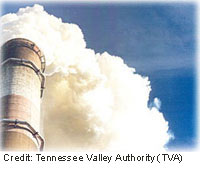
Acidic precipitation can be caused by natural (volcanoes) and man-made activities, such as from cars and in the generation of electricity. The precursors, or chemical forerunners, of acid rain formation result from both natural sources, such as volcanoes and decaying vegetation, and man-made sources, primarily emissions of sulfur dioxide (SO2) and nitrogen oxides (NOx) resulting from fossil fuel combustion. The burning of fossil fuels (coal and oil) by power-production companies and industries releases sulfur into the air that combines with oxygen to form sulfur dioxide (SO2). Exhausts from cars cause the formation of nitrogen oxides in the air. From these gases, airborne sulfuric acid (H2SO4) and nitric acid (HNO3) can be formed and be dissolved in the water vapor in the air. Although acid-rain gases may originate in urban areas, they are often carried for hundreds of miles in the atmosphere by winds into rural areas. That is why forests and lakes in the countryside can be harmed by acid rain that originates in cities
Acid rain, from USGS Water-Science School






 ............they cant post up one single link showing us where their shit is winning in the real world!!