Below is the beginning of he Judge Ruling....the judge simply is following Arizona Law, and Kari Lake Lawyers were not.
---------------------------------------------------
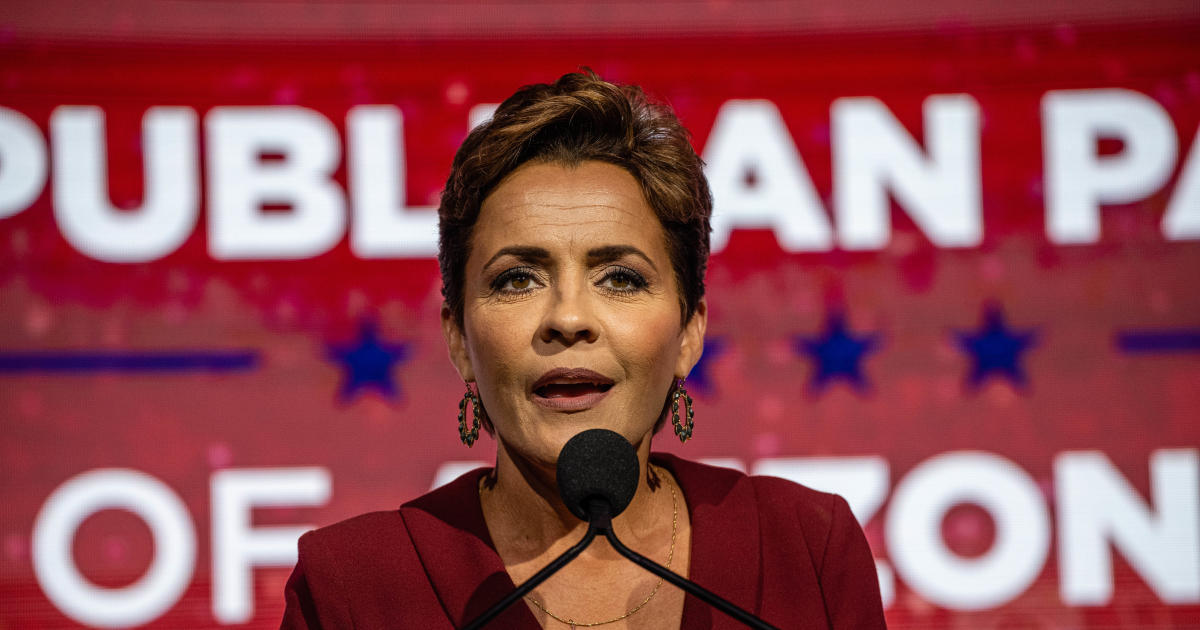
A Maricopa County judge has ruled against Kari Lake in her election lawsuit, affirming governor-elect Katie Hobbs’ win.

www.azfamily.com
The Court has considered the evidence presented at the Evidentiary Hearing on December 21-22, 2022, including all exhibits admitted as well as the testimony of witnesses. The Court has read and considered all 220 Affidavits attached to the Verified Petition. The Court has also considered the arguments by counsel. The Court accordingly issues the following findings of fact and conclusions of law: LEGAL STANDARDS AND BURDEN OF PROOF Throughout the history of Arizona, the bar to overturn an election on the grounds of misconduct in this State – or Territory – has always been a high one. See Territory ex rel. Sherman v. Bd. of Supervisors of Mohave Cnty., 2 Ariz. 248, 253 (1887) (“It is the object of elections to ascertain a free expression of the will of the voters, and no mere irregularity can be considered, unless it be shown that the result has been affected by such irregularity.”) (citations omitted).
SUPERIOR COURT OF ARIZONA MARICOPA COUNTY CV 2022-095403 12/24/2022 Docket Code 926 Form V000A Page 2 Our Territorial Supreme Court agreed in Oakes v. Finlay, 5 Ariz. 390, 398 (1898) that “it is . . . unwise to lay down any rule by which the certainty and accuracy of an election may be jeopardized by the reliance upon any proof affecting such results that is not of the most clear and conclusive character.” (citing Young v. Deming, 33 P. 818, 820 (Utah 1893)) (emphasis added). The official election returns are prima facie evidence of the votes actually cast by the electorate. See Hunt v. Campbell, 19 Ariz. 254, 268 (1917). The burden of proof in an election contest is on the challenger. Findley v. Sorenson, 35 Ariz. 265, 271-72 (1929). “The duty of specifying and pointing out the alleged illegal irregularities and insufficiencies is a task that should be undertaken by litigants and their counsel.” Grounds v. Lawe, 67 Ariz. 176, 189 (1948). As for the actions of elections officials themselves, this Court must presume the good faith of their official conduct as a matter of law. Hunt, 19 Ariz. at 268. “[A]ll reasonable presumptions must favor the validity of an election.” Moore v. City of Page, 148 Ariz. 151, 155 (App. 1986). Election challengers must prove the elements of their claim by clear and convincing evidence. Cf. McClung v. Bennett, 225 Ariz. 154, 156, ¶ 7 (2010). The Order granting in part Defendants’ Motions to Dismiss gave Plaintiff two independent claims for seeking their requested relief under A.R.S. § 16-672(A)(1). Plaintiff has only these options because election contests, “are purely statutory and dependent upon statutory provisions for their conduct.” Fish v. Redeker, 2 Ariz.App. 602, 605 (1966). Put another way, Plaintiff has no free-standing right to challenge election results based upon what Plaintiff believes – rightly or wrongly – went awry on Election Day. She must, as a matter of law, prove a ground that the legislature has provided as a basis for challenging an election. See Henderson v. Carter, 34 Ariz. 528, 534-35 (1928) (“[O]ne who would contest an election assumes the burden of showing that his case falls within the terms of the statute providing for election contests. The remedy may not be extended to include cases not within the language or intent of the legislative act.”); see also Donaghey v. Att’y Gen., 120 Ariz. 93, 95 (1978) (“[F]ailure of a contestant to an election to strictly comply with the statutory requirements is fatal to h[er] right to have the election contested.”). Plaintiff’s remaining claims are based on the following statutory ground: “[M]isconduct on the part of election boards or any members thereof in any of the counties of the state, or on the part of any officer making or participating in a canvass for a state election.” A.R.S. § 16-672(A)(1). This trial was premised on Plaintiff’s theories arising from the second clause, concerning an officer making or participating in a canvass. The Order permitted two counts to proceed to Trial: 1) the claim that ballot-on-demand (“BOD”) printer malfunctions experienced on Election Day were caused intentionally and that these malfunctions resulted in a changed outcome (Count II); and 2) the claim that Maricopa
SUPERIOR COURT OF ARIZONA MARICOPA COUNTY CV 2022-095403 12/24/2022 Docket Code 926 Form V000A Page 3 County violated its own election procedures manual (“EPM”) as to chain of custody procedures in such a way as to result in a changed election outcome (Count IV). As outlined in the Order partially granting the Motion to Dismiss, there are four elements to each claim. Plaintiff needed to prove by clear and convincing evidence, each element to be entitled to relief: 1) That the alleged misconduct – whether the BOD printer irregularities, or the ostensible failure to abide by county election procedures – was an intentional act. See Findley, 35 Ariz. at 269. 2) That the misconduct was an intentional act conducted by a person covered by A.R.S. § 16-672(A)(1), that is – an “officer making or participating in a canvass.” 3) That the misconduct was intended to change the result of the November 2022 General Election. See Findley, 35 Ariz. at 269. 4) That the misconduct did, in fact, change the result of that election. See Grounds, 67 Ariz. at 189. It bears mentioning that because of the requested remedy – setting aside the result of the election – the question that is before the Court is of monumental importance to every voter. The margin of victory as reported by the official canvass is 17,117 votes – beyond the scope of a statutorily required recount. A court setting such a margin aside, as far as the Court is able to determine, has never been done in the history of the United States. This challenge also comes after a hotly contested gubernatorial race and an ongoing tumult over election procedures and legitimacy – a far less uncommon occurrence in this country. See e.g., Hunt, supra. This Court acknowledges the anger and frustration of voters who were subjected to inconvenience and confusion at voter centers as technical problems arose during the 2022 General Election. But this Court’s duty is not solely to incline an ear to public outcry. It is to subject Plaintiff’s claims and Defendants’ actions to the light of the courtroom and scrutiny of the law. See Winsor v. Hunt, 29 Ariz. 504, 512 (1926) (“It is the boast of American democracy that this is a government of laws, and not of men.”) And so, the Court begins with a review of the evidence. DISCUSSION It was Plaintiff’s burden to establish each element by clear and convincing evidence. If Plaintiff herself failed to sustain her burden of proof, the matter is decided. Thus, the Court begins with Plaintiff’s case in chief.
More to come!

 www.cbsnews.com


