
Doc7505
Diamond Member
- Feb 16, 2016
- 24,488
- 43,506
- 2,430
It’s Not the Poor Fueling Socialism’s Rise. It’s the Rich.
Darializa Avila Chevalier’s victory in New York’s 13th district exposes a national paradox: Candidates running on working-class politics are powered by affluent, highly educated voters.
Darializa Avila Chevalier’s victory in New York’s 13th district exposes a national paradox: Candidates running on working-class politics are powered by affluent, highly educated voters.
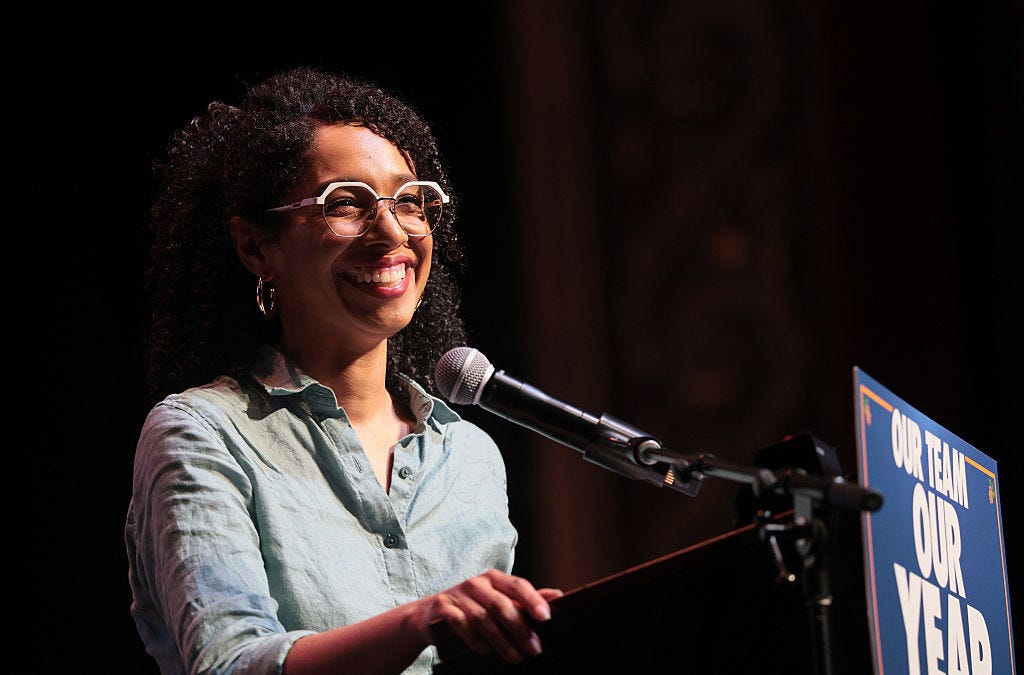
It’s Not the Poor Fueling the Rise of Socialists. It’s the Rich.
Darializa Avila Chevalier’s victory in New York’s 13th district exposes a national paradox: Candidates running on working-class politics are increasingly powered by affluent, highly educated voters, writes Rafael A. Mangual.
 www.thefp.com
There’s a seeming paradox at the epicenter of the political earthquake that hit New York City on Tuesday night, when a trio of Democratic Socialists of America (DSA) and Zohran Mamdani–backed candidates triumphed in congressional primaries across the city. The progressive candidates who claim to represent a working-class revolution won thanks to the votes of the well-educated, credentialed, and affluent, while low-income New Yorkers tended to back the more moderate candidate. The results reflect a nationwide political reality: Across the country, higher education and income increasingly correlate with progressive voting, while working-class voters—including in long-established immigrant communities—opt for more moderate choices.
That pattern was on full display in New York’s 13th Congressional District last night, where Mamdani-backed Darializa Avila Chevalier dominated in higher-income precincts, while five-term Democratic incumbent Adriano Espaillat carried lower-income areas by 40 points. The race, featuring two Dominican American candidates, exposed a growing divide between the district’s long-established immigrant community and its more activist, college-educated heirs. Today, Rafael A. Mangual examines these dynamics, focusing not only on the contest itself but on the district’s particular character—and diagnosing what he sees as a new political framework in America: “The immigrant who built a career on becoming American has given way to the American-born activist who rejects American patriotism in favor of militant Third Worldism.”
But this contest is about more than Mamdani’s influence in such races. It was a primary fought in Upper Manhattan and the West Bronx, the largest center of Dominican political life in the United States, between two candidates of Dominican origin. The more revealing question is not about how Mamdani’s backing affected the outcome, but what Avila Chevalier’s victory tells us about the changing politics of race, ethnicity, and class within that community.
Commentary:
For rich leftists Socialism is virtue signaling and do not care what the cost is to the actual poor.
Socialism, in real life, is a wealth transfer from the less to the more. The rich aren’t paying for socialism, because they removed their income from being taxed by changing it to revenue. Socialism is being paid for by the poor and middle classes. It’s all about keeping them from building wealth.
It's a way for those with government bureaucratic connections to protect their positions from smart and ambitious middle class kids who want to rise.
One of the first industries the socialists set out to capture was higher education. Then it was all education. By a high majority instructors are mostly leftist indoctrinators. Normal Americans were told their children needed college. They weren’t warned they would be corrupted. Consequently, if a student wasn’t aware to be on the lookout for the indoctrination, they were swept up in it. They are now too stupid to understand how wrong they are.
The voters are being used as useful idiots. Not one of them can point to a successful socialist country or community. They all make excuses about how the US trade policy caused it to fail or that the “right person” wasn’t in charge.


