Is Europe’s Free Ride Over?

Doc7505

Diamond Member
Joined
Feb 16, 2016
Messages
23,502
Reaction score
41,828
Points
2,430

Is Europe’s Free Ride Over?

Ending military dependence on America.
25 Jul 2025 ~~ By Jake Scott

A welcome and significant change has come to European politics: an admission that the European Union (EU) has relied too heavily on the US for its military defense. Only a few years ago, any suggestion that Europe had not been pulling its weight in defending its own continent, or had outsourced its military might to the US, would have been met with scorn and derision. Yet Germany’s Chancellor Friedrich Merz has now not only acknowledged this reality, but has gone as far as saying the continent has been “free-loading” off the US.
A single power dominating global affairs through military power is hardly unusual. In fact, it’s been the norm in international relations for centuries that regions have dominant powers: in Europe, that role was largely played by France from the 14th to the 19th centuries, and it was only the advent of a globalized empire under the aegis of the British crown that a truly “global” power could emerge.
In the waning years of the 19th century, Britain developed what it called the “two-power standard.” The principle was that the British Royal Navy ought to be as strong, if not as large, as the next two great powers combined—then France and Russia. By the first decade of the 20th century, Germany’s rapid industrialization saw this balance of power shift. The purpose of Britain’s policy was to protect its global (and, therefore, maritime) empire and the source of her geopolitical strength.
Nearly 150 years later, we see a remarkably similar approach taken by the United States, but for somewhat different reasons. For better or for worse, the US does not act in the primarily realist fashion of Britain’s former empire. Rather than using its military power solely in pursuit of national interest, the US has often embraced the role of “world
~Snip~
This is why it’s being viewed as a significant victory for Trump that NATO members have committed to raising their defense spending, not just to 4%, but now 5% by 2035.
Realistically, can this be met? It is highly doubtful; the 5% commitment does not come with carte blanche in how that should be apportioned, with 3.5% being spent on “core defense requirements” and the remaining 1.5% on “supporting defense like port infrastructure.” Many European nations are already facing tighter budgets with much less room to maneuver. Meeting these targets would add further strain on national finances.
Currently, Britain only spends 2.3% of our GDP on defense. The government pledges to increase this to 3% by 2027—but by the time the 2035 deadline rolls around, it’s likely that a different party will be in power. That could result in the current government delaying the remaining 2% increase until after the 2029 election, leaving its successor to foot the bill. It might be bad international diplomacy, but it’s good politics.
Whether spending more money on defense is a good idea or not is, at this stage, irrelevant. Russia’s continued battering of Ukraine means the luxuries of the postwar era can no longer be taken for granted. Given that Britain’s former army chief has warned that we must prepare for war with Russia, tough decisions lie ahead. The question is whether Britain in particular, and Europe in general, can continue to afford generous domestic programs in the face of looming geopolitical conflict.


Commentary:
The main problem in breaking dependency on the US is the technical gap in aircraft, air defense, and (of course) nukes. The Poles made a wise choice in doing a lot of co-production with SK, which gets them first-rate arms at a discount price and significant tech transfer. But they still need Patriots and THAAD as do the other European states.
Europe for years has been given a free ride by the U.S. in terms of defense. Other than France and Brussels the U.S. has maintained military bases both in the UK, Germany and Poland, not to mention the supply depots situated throughout Europe the Middle East and Japan.
Trump has been and is correct that these countries step up their contributions to NATO and their own self defense.
It makes no sense when the UK, or Germany claim they don't have the personnel or munitions to protect themselves from an attack from Russia for more than two weeks.

Read more:
xxxxxxxxxx​
xxxxxxxxxx​
 
  • Informative
Reactions: pal

Is Europe’s Free Ride Over?

Ending military dependence on America.

25 Jul 2025 ~~ By Jake Scott

A welcome and significant change has come to European politics: an admission that the European Union (EU) has relied too heavily on the US for its military defense. Only a few years ago, any suggestion that Europe had not been pulling its weight in defending its own continent, or had outsourced its military might to the US, would have been met with scorn and derision. Yet Germany’s Chancellor Friedrich Merz has now not only acknowledged this reality, but has gone as far as saying the continent has been “free-loading” off the US.
A single power dominating global affairs through military power is hardly unusual. In fact, it’s been the norm in international relations for centuries that regions have dominant powers: in Europe, that role was largely played by France from the 14th to the 19th centuries, and it was only the advent of a globalized empire under the aegis of the British crown that a truly “global” power could emerge.
In the waning years of the 19th century, Britain developed what it called the “two-power standard.” The principle was that the British Royal Navy ought to be as strong, if not as large, as the next two great powers combined—then France and Russia. By the first decade of the 20th century, Germany’s rapid industrialization saw this balance of power shift. The purpose of Britain’s policy was to protect its global (and, therefore, maritime) empire and the source of her geopolitical strength.
Nearly 150 years later, we see a remarkably similar approach taken by the United States, but for somewhat different reasons. For better or for worse, the US does not act in the primarily realist fashion of Britain’s former empire. Rather than using its military power solely in pursuit of national interest, the US has often embraced the role of “world
~Snip~
This is why it’s being viewed as a significant victory for Trump that NATO members have committed to raising their defense spending, not just to 4%, but now 5% by 2035.
Realistically, can this be met? It is highly doubtful; the 5% commitment does not come with carte blanche in how that should be apportioned, with 3.5% being spent on “core defense requirements” and the remaining 1.5% on “supporting defense like port infrastructure.” Many European nations are already facing tighter budgets with much less room to maneuver. Meeting these targets would add further strain on national finances.
Currently, Britain only spends 2.3% of our GDP on defense. The government pledges to increase this to 3% by 2027—but by the time the 2035 deadline rolls around, it’s likely that a different party will be in power. That could result in the current government delaying the remaining 2% increase until after the 2029 election, leaving its successor to foot the bill. It might be bad international diplomacy, but it’s good politics.
Whether spending more money on defense is a good idea or not is, at this stage, irrelevant. Russia’s continued battering of Ukraine means the luxuries of the postwar era can no longer be taken for granted. Given that Britain’s former army chief has warned that we must prepare for war with Russia, tough decisions lie ahead. The question is whether Britain in particular, and Europe in general, can continue to afford generous domestic programs in the face of looming geopolitical conflict.


Commentary:
The main problem in breaking dependency on the US is the technical gap in aircraft, air defense, and (of course) nukes. The Poles made a wise choice in doing a lot of co-production with SK, which gets them first-rate arms at a discount price and significant tech transfer. But they still need Patriots and THAAD as do the other European states.
Europe for years has been given a free ride by the U.S. in terms of defense. Other than France and Brussels the U.S. has maintained military bases both in the UK, Germany and Poland, not to mention the supply depots situated throughout Europe the Middle East and Japan.
Trump has been and is correct that these countries step up their contributions to NATO and their own self defense.
It makes no sense when the UK, or Germany claim they don't have the personnel or munitions to protect themselves from an attack from Russia for more than two weeks.

Read more:
xxxxxxxxxx​
xxxxxxxxxx​
Yes, and Canadas too I imagine.

I am doing my part to educate Americans agencies so that they do not allow the Police State to continue to undermine the U.S, your corporations and your national security.

If a nation openly violated your Constitution, they must not be rewarded, they must be held in check.

Tariffs will do that. I did my best to try and drag Canada out of the Dark Ages. I hope CSIS does their job and exposes them all or Canada is cooked.

I just hope the FBI and their surrogates don't continue to bend their knee to Canadas Police State. If so, Trump should demand that leadership hand in their badges.
 
Last edited:
Time to stop defending Europe who is capable of defending themselves and cut our military budget accordingly

Russia is not the threat that was claimed
Cut funding for something that's actually in the Constitution for things that aren't.

I'll agree to those cuts if you loons agree for cuts across the board. I'm betting you won't.
 
Cut funding for something that's actually in the Constitution for things that aren't.

I'll agree to those cuts if you loons agree for cuts across the board. I'm betting you won't.
We can cut our miitary budget and still be following the constitution.
 

Is Europe’s Free Ride Over?

Ending military dependence on America.

25 Jul 2025 ~~ By Jake Scott

A welcome and significant change has come to European politics: an admission that the European Union (EU) has relied too heavily on the US for its military defense. Only a few years ago, any suggestion that Europe had not been pulling its weight in defending its own continent, or had outsourced its military might to the US, would have been met with scorn and derision. Yet Germany’s Chancellor Friedrich Merz has now not only acknowledged this reality, but has gone as far as saying the continent has been “free-loading” off the US.
A single power dominating global affairs through military power is hardly unusual. In fact, it’s been the norm in international relations for centuries that regions have dominant powers: in Europe, that role was largely played by France from the 14th to the 19th centuries, and it was only the advent of a globalized empire under the aegis of the British crown that a truly “global” power could emerge.
In the waning years of the 19th century, Britain developed what it called the “two-power standard.” The principle was that the British Royal Navy ought to be as strong, if not as large, as the next two great powers combined—then France and Russia. By the first decade of the 20th century, Germany’s rapid industrialization saw this balance of power shift. The purpose of Britain’s policy was to protect its global (and, therefore, maritime) empire and the source of her geopolitical strength.
Nearly 150 years later, we see a remarkably similar approach taken by the United States, but for somewhat different reasons. For better or for worse, the US does not act in the primarily realist fashion of Britain’s former empire. Rather than using its military power solely in pursuit of national interest, the US has often embraced the role of “world
~Snip~
This is why it’s being viewed as a significant victory for Trump that NATO members have committed to raising their defense spending, not just to 4%, but now 5% by 2035.
Realistically, can this be met? It is highly doubtful; the 5% commitment does not come with carte blanche in how that should be apportioned, with 3.5% being spent on “core defense requirements” and the remaining 1.5% on “supporting defense like port infrastructure.” Many European nations are already facing tighter budgets with much less room to maneuver. Meeting these targets would add further strain on national finances.
Currently, Britain only spends 2.3% of our GDP on defense. The government pledges to increase this to 3% by 2027—but by the time the 2035 deadline rolls around, it’s likely that a different party will be in power. That could result in the current government delaying the remaining 2% increase until after the 2029 election, leaving its successor to foot the bill. It might be bad international diplomacy, but it’s good politics.
Whether spending more money on defense is a good idea or not is, at this stage, irrelevant. Russia’s continued battering of Ukraine means the luxuries of the postwar era can no longer be taken for granted. Given that Britain’s former army chief has warned that we must prepare for war with Russia, tough decisions lie ahead. The question is whether Britain in particular, and Europe in general, can continue to afford generous domestic programs in the face of looming geopolitical conflict.


Commentary:
The main problem in breaking dependency on the US is the technical gap in aircraft, air defense, and (of course) nukes. The Poles made a wise choice in doing a lot of co-production with SK, which gets them first-rate arms at a discount price and significant tech transfer. But they still need Patriots and THAAD as do the other European states.
Europe for years has been given a free ride by the U.S. in terms of defense. Other than France and Brussels the U.S. has maintained military bases both in the UK, Germany and Poland, not to mention the supply depots situated throughout Europe the Middle East and Japan.
Trump has been and is correct that these countries step up their contributions to NATO and their own self defense.
It makes no sense when the UK, or Germany claim they don't have the personnel or munitions to protect themselves from an attack from Russia for more than two weeks.

Read more:
xxxxxxxxxx​
xxxxxxxxxx​
A whole lot of bullshit to distract from attacking US Citizens with new sales taxes
.
 

Is Europe’s Free Ride Over?

Ending military dependence on America.

25 Jul 2025 ~~ By Jake Scott

A welcome and significant change has come to European politics: an admission that the European Union (EU) has relied too heavily on the US for its military defense. Only a few years ago, any suggestion that Europe had not been pulling its weight in defending its own continent, or had outsourced its military might to the US, would have been met with scorn and derision. Yet Germany’s Chancellor Friedrich Merz has now not only acknowledged this reality, but has gone as far as saying the continent has been “free-loading” off the US.
A single power dominating global affairs through military power is hardly unusual. In fact, it’s been the norm in international relations for centuries that regions have dominant powers: in Europe, that role was largely played by France from the 14th to the 19th centuries, and it was only the advent of a globalized empire under the aegis of the British crown that a truly “global” power could emerge.
In the waning years of the 19th century, Britain developed what it called the “two-power standard.” The principle was that the British Royal Navy ought to be as strong, if not as large, as the next two great powers combined—then France and Russia. By the first decade of the 20th century, Germany’s rapid industrialization saw this balance of power shift. The purpose of Britain’s policy was to protect its global (and, therefore, maritime) empire and the source of her geopolitical strength.
Nearly 150 years later, we see a remarkably similar approach taken by the United States, but for somewhat different reasons. For better or for worse, the US does not act in the primarily realist fashion of Britain’s former empire. Rather than using its military power solely in pursuit of national interest, the US has often embraced the role of “world
~Snip~
This is why it’s being viewed as a significant victory for Trump that NATO members have committed to raising their defense spending, not just to 4%, but now 5% by 2035.
Realistically, can this be met? It is highly doubtful; the 5% commitment does not come with carte blanche in how that should be apportioned, with 3.5% being spent on “core defense requirements” and the remaining 1.5% on “supporting defense like port infrastructure.” Many European nations are already facing tighter budgets with much less room to maneuver. Meeting these targets would add further strain on national finances.
Currently, Britain only spends 2.3% of our GDP on defense. The government pledges to increase this to 3% by 2027—but by the time the 2035 deadline rolls around, it’s likely that a different party will be in power. That could result in the current government delaying the remaining 2% increase until after the 2029 election, leaving its successor to foot the bill. It might be bad international diplomacy, but it’s good politics.
Whether spending more money on defense is a good idea or not is, at this stage, irrelevant. Russia’s continued battering of Ukraine means the luxuries of the postwar era can no longer be taken for granted. Given that Britain’s former army chief has warned that we must prepare for war with Russia, tough decisions lie ahead. The question is whether Britain in particular, and Europe in general, can continue to afford generous domestic programs in the face of looming geopolitical conflict.


Commentary:
The main problem in breaking dependency on the US is the technical gap in aircraft, air defense, and (of course) nukes. The Poles made a wise choice in doing a lot of co-production with SK, which gets them first-rate arms at a discount price and significant tech transfer. But they still need Patriots and THAAD as do the other European states.
Europe for years has been given a free ride by the U.S. in terms of defense. Other than France and Brussels the U.S. has maintained military bases both in the UK, Germany and Poland, not to mention the supply depots situated throughout Europe the Middle East and Japan.
Trump has been and is correct that these countries step up their contributions to NATO and their own self defense.
It makes no sense when the UK, or Germany claim they don't have the personnel or munitions to protect themselves from an attack from Russia for more than two weeks.

Read more:
xxxxxxxxxx​
xxxxxxxxxx​
 

Is Europe’s Free Ride Over?

Ending military dependence on America.

25 Jul 2025 ~~ By Jake Scott

A welcome and significant change has come to European politics: an admission that the European Union (EU) has relied too heavily on the US for its military defense. Only a few years ago, any suggestion that Europe had not been pulling its weight in defending its own continent, or had outsourced its military might to the US, would have been met with scorn and derision. Yet Germany’s Chancellor Friedrich Merz has now not only acknowledged this reality, but has gone as far as saying the continent has been “free-loading” off the US.
A single power dominating global affairs through military power is hardly unusual. In fact, it’s been the norm in international relations for centuries that regions have dominant powers: in Europe, that role was largely played by France from the 14th to the 19th centuries, and it was only the advent of a globalized empire under the aegis of the British crown that a truly “global” power could emerge.
In the waning years of the 19th century, Britain developed what it called the “two-power standard.” The principle was that the British Royal Navy ought to be as strong, if not as large, as the next two great powers combined—then France and Russia. By the first decade of the 20th century, Germany’s rapid industrialization saw this balance of power shift. The purpose of Britain’s policy was to protect its global (and, therefore, maritime) empire and the source of her geopolitical strength.
Nearly 150 years later, we see a remarkably similar approach taken by the United States, but for somewhat different reasons. For better or for worse, the US does not act in the primarily realist fashion of Britain’s former empire. Rather than using its military power solely in pursuit of national interest, the US has often embraced the role of “world
~Snip~
This is why it’s being viewed as a significant victory for Trump that NATO members have committed to raising their defense spending, not just to 4%, but now 5% by 2035.
Realistically, can this be met? It is highly doubtful; the 5% commitment does not come with carte blanche in how that should be apportioned, with 3.5% being spent on “core defense requirements” and the remaining 1.5% on “supporting defense like port infrastructure.” Many European nations are already facing tighter budgets with much less room to maneuver. Meeting these targets would add further strain on national finances.
Currently, Britain only spends 2.3% of our GDP on defense. The government pledges to increase this to 3% by 2027—but by the time the 2035 deadline rolls around, it’s likely that a different party will be in power. That could result in the current government delaying the remaining 2% increase until after the 2029 election, leaving its successor to foot the bill. It might be bad international diplomacy, but it’s good politics.
Whether spending more money on defense is a good idea or not is, at this stage, irrelevant. Russia’s continued battering of Ukraine means the luxuries of the postwar era can no longer be taken for granted. Given that Britain’s former army chief has warned that we must prepare for war with Russia, tough decisions lie ahead. The question is whether Britain in particular, and Europe in general, can continue to afford generous domestic programs in the face of looming geopolitical conflict.


Commentary:
The main problem in breaking dependency on the US is the technical gap in aircraft, air defense, and (of course) nukes. The Poles made a wise choice in doing a lot of co-production with SK, which gets them first-rate arms at a discount price and significant tech transfer. But they still need Patriots and THAAD as do the other European states.
Europe for years has been given a free ride by the U.S. in terms of defense. Other than France and Brussels the U.S. has maintained military bases both in the UK, Germany and Poland, not to mention the supply depots situated throughout Europe the Middle East and Japan.
Trump has been and is correct that these countries step up their contributions to NATO and their own self defense.
It makes no sense when the UK, or Germany claim they don't have the personnel or munitions to protect themselves from an attack from Russia for more than two weeks.

Read more:
xxxxxxxxxx​
xxxxxxxxxx​
Brussels is a city in Belgium, not a country.

What bases do we have in France?
 
Cut funding for something that's actually in the Constitution for things that aren't.

There is nothing in the Constitution that says we have to have a military larger than the next seven nations combined

General Welfare is in the Constitution
 
None of the 100's of entitlement programs you loons champion are mentioned in the Constitution. The military is.

Congress is authorized to do things to provide the General Welfare of We the People
 

Is Europe’s Free Ride Over?

Ending military dependence on America.

25 Jul 2025 ~~ By Jake Scott

A welcome and significant change has come to European politics: an admission that the European Union (EU) has relied too heavily on the US for its military defense. Only a few years ago, any suggestion that Europe had not been pulling its weight in defending its own continent, or had outsourced its military might to the US, would have been met with scorn and derision. Yet Germany’s Chancellor Friedrich Merz has now not only acknowledged this reality, but has gone as far as saying the continent has been “free-loading” off the US.
A single power dominating global affairs through military power is hardly unusual. In fact, it’s been the norm in international relations for centuries that regions have dominant powers: in Europe, that role was largely played by France from the 14th to the 19th centuries, and it was only the advent of a globalized empire under the aegis of the British crown that a truly “global” power could emerge.
In the waning years of the 19th century, Britain developed what it called the “two-power standard.” The principle was that the British Royal Navy ought to be as strong, if not as large, as the next two great powers combined—then France and Russia. By the first decade of the 20th century, Germany’s rapid industrialization saw this balance of power shift. The purpose of Britain’s policy was to protect its global (and, therefore, maritime) empire and the source of her geopolitical strength.
Nearly 150 years later, we see a remarkably similar approach taken by the United States, but for somewhat different reasons. For better or for worse, the US does not act in the primarily realist fashion of Britain’s former empire. Rather than using its military power solely in pursuit of national interest, the US has often embraced the role of “world
~Snip~
This is why it’s being viewed as a significant victory for Trump that NATO members have committed to raising their defense spending, not just to 4%, but now 5% by 2035.
Realistically, can this be met? It is highly doubtful; the 5% commitment does not come with carte blanche in how that should be apportioned, with 3.5% being spent on “core defense requirements” and the remaining 1.5% on “supporting defense like port infrastructure.” Many European nations are already facing tighter budgets with much less room to maneuver. Meeting these targets would add further strain on national finances.
Currently, Britain only spends 2.3% of our GDP on defense. The government pledges to increase this to 3% by 2027—but by the time the 2035 deadline rolls around, it’s likely that a different party will be in power. That could result in the current government delaying the remaining 2% increase until after the 2029 election, leaving its successor to foot the bill. It might be bad international diplomacy, but it’s good politics.
Whether spending more money on defense is a good idea or not is, at this stage, irrelevant. Russia’s continued battering of Ukraine means the luxuries of the postwar era can no longer be taken for granted. Given that Britain’s former army chief has warned that we must prepare for war with Russia, tough decisions lie ahead. The question is whether Britain in particular, and Europe in general, can continue to afford generous domestic programs in the face of looming geopolitical conflict.


Commentary:
The main problem in breaking dependency on the US is the technical gap in aircraft, air defense, and (of course) nukes. The Poles made a wise choice in doing a lot of co-production with SK, which gets them first-rate arms at a discount price and significant tech transfer. But they still need Patriots and THAAD as do the other European states.
Europe for years has been given a free ride by the U.S. in terms of defense. Other than France and Brussels the U.S. has maintained military bases both in the UK, Germany and Poland, not to mention the supply depots situated throughout Europe the Middle East and Japan.
Trump has been and is correct that these countries step up their contributions to NATO and their own self defense.
It makes no sense when the UK, or Germany claim they don't have the personnel or munitions to protect themselves from an attack from Russia for more than two weeks.

Read more:
xxxxxxxxxx​
xxxxxxxxxx​
The other side of the coin is, never look a gift horse in the mouth. If the horse keeps giving, then you would be daft not to keep taking.

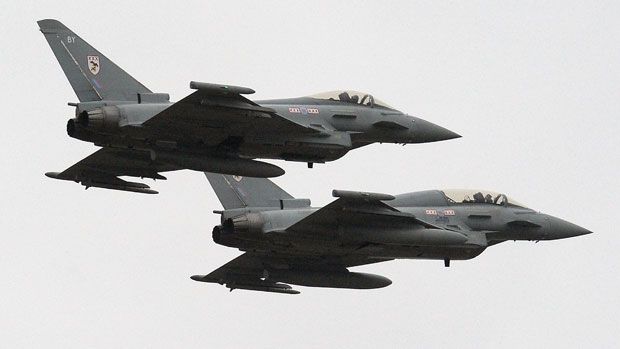
About 46% of jet fighters in Europe are American. As equipment is replaced, I'd imagine this figure will reduce.

No offence, but America is good at military equipment and budget spending, but their weakness has always been combat strategy. It means the US can reduce it's military budget and use the saving to solve it's problems at home.
 
Last edited:
When will people wake up to the fact all this cash going for defence has nothing to do with defence it's about fueling the IMC and Nato which is the biggest pyramid selling and money laundering scam in History.
Smedley Butler said it even before WW2 war is a Racket.
I served in all commissioned ranks from a second Lieutenant to a Major General. And during that time, I spent most of my time being a high-class muscle man for Big Business, for Wall Street, and for the bankers. In short, I was a racketeer for capitalism.
https://www.allgreatquotes.com/quote-401788/
– Smedley Butler
 

Is Europe’s Free Ride Over?

Ending military dependence on America.

25 Jul 2025 ~~ By Jake Scott

A welcome and significant change has come to European politics: an admission that the European Union (EU) has relied too heavily on the US for its military defense. Only a few years ago, any suggestion that Europe had not been pulling its weight in defending its own continent, or had outsourced its military might to the US, would have been met with scorn and derision. Yet Germany’s Chancellor Friedrich Merz has now not only acknowledged this reality, but has gone as far as saying the continent has been “free-loading” off the US.
A single power dominating global affairs through military power is hardly unusual. In fact, it’s been the norm in international relations for centuries that regions have dominant powers: in Europe, that role was largely played by France from the 14th to the 19th centuries, and it was only the advent of a globalized empire under the aegis of the British crown that a truly “global” power could emerge.
In the waning years of the 19th century, Britain developed what it called the “two-power standard.” The principle was that the British Royal Navy ought to be as strong, if not as large, as the next two great powers combined—then France and Russia. By the first decade of the 20th century, Germany’s rapid industrialization saw this balance of power shift. The purpose of Britain’s policy was to protect its global (and, therefore, maritime) empire and the source of her geopolitical strength.
Nearly 150 years later, we see a remarkably similar approach taken by the United States, but for somewhat different reasons. For better or for worse, the US does not act in the primarily realist fashion of Britain’s former empire. Rather than using its military power solely in pursuit of national interest, the US has often embraced the role of “world
~Snip~
This is why it’s being viewed as a significant victory for Trump that NATO members have committed to raising their defense spending, not just to 4%, but now 5% by 2035.
Realistically, can this be met? It is highly doubtful; the 5% commitment does not come with carte blanche in how that should be apportioned, with 3.5% being spent on “core defense requirements” and the remaining 1.5% on “supporting defense like port infrastructure.” Many European nations are already facing tighter budgets with much less room to maneuver. Meeting these targets would add further strain on national finances.
Currently, Britain only spends 2.3% of our GDP on defense. The government pledges to increase this to 3% by 2027—but by the time the 2035 deadline rolls around, it’s likely that a different party will be in power. That could result in the current government delaying the remaining 2% increase until after the 2029 election, leaving its successor to foot the bill. It might be bad international diplomacy, but it’s good politics.
Whether spending more money on defense is a good idea or not is, at this stage, irrelevant. Russia’s continued battering of Ukraine means the luxuries of the postwar era can no longer be taken for granted. Given that Britain’s former army chief has warned that we must prepare for war with Russia, tough decisions lie ahead. The question is whether Britain in particular, and Europe in general, can continue to afford generous domestic programs in the face of looming geopolitical conflict.


Commentary:
The main problem in breaking dependency on the US is the technical gap in aircraft, air defense, and (of course) nukes. The Poles made a wise choice in doing a lot of co-production with SK, which gets them first-rate arms at a discount price and significant tech transfer. But they still need Patriots and THAAD as do the other European states.
Europe for years has been given a free ride by the U.S. in terms of defense. Other than France and Brussels the U.S. has maintained military bases both in the UK, Germany and Poland, not to mention the supply depots situated throughout Europe the Middle East and Japan.
Trump has been and is correct that these countries step up their contributions to NATO and their own self defense.
It makes no sense when the UK, or Germany claim they don't have the personnel or munitions to protect themselves from an attack from Russia for more than two weeks.

Read more:
xxxxxxxxxx​
xxxxxxxxxx​
Europe is being run by Talmudic puppets who hate the Aryan Christian Israel population of Europe. All the puppet double talk is designed to keep the victims quiet, until their throats are cut.
 
15th post
In the above, this excerpt from a post;
...
In that 125 year timeline you present the USA has been dragged into TWO WORLD WARS started by you Euros.
Not only have we/U$A paid out a lot of trea$ure to fight and end those wars, we've also been left with the tab for the major share of rebuild co$t$. With very limited "thank you"s from those whose arse we saved when pulling their fat out of the fire.

So yeah, you Euros have sort of forced USA to think about war/wars, especially the ones you started, and also now the others than might start, either directly by some on the list above, or as we've seen the past 75+ years, from mismanagement and disruptions you Euros caused with your colonies around the world of the past few centuries.

If you Euros could break your 4-5 centuries old habit of mangling other peoples lands and starting wars every couple of decades, which tend to trickle down upon USA, we might not need to "think about war/wars".

USA would really appreciate if you Euros would grow up, mature, and stop leaving your messes around the world which more often than not we USA have to clean up.

At this point, the discussion is QED.

Oh yeah ...
About this "USA stands alone regardless of allies in other parts of the world." We've noticed that. Especially since we most often are left paying the check after those "allies" dined and dashed.
 
And this;
...
Here's something to sink your teeth into and chew on. If anything these past 20+ years, the sentiment has grown.

By Ralph Peters
May 15, 2003

The societies of “Old Europe” remind Americans of the Arab Street. Preferring comforting delusions to challenging realities, Europeans talk a great deal, do very little, and blame the United States for home-grown ills. The recent chants in the boulevards of Berlin were almost indistinguishable from those heard–until recently–in downtown Baghdad. Europe’s culture of complaint, its enthusiasm for accusing America of every wickedness while assigning every virtue to itself, and its stunning lack of self-examination leave Americans bewildered.

We thought you were adults, but, from across the Atlantic, you look like spoiled children. And your recent tantrums have convinced Big Daddy America to deposit you on the steps of the strategic orphanage. The damage done by the recent confrontation between The United States and those nations whose vocabularies collapsed to the single words “Nein!” or “Non!” will be repaired–on the surface. We shall continue to cooperate on matters of mutual interest. But, on a deeper level, the exuberantly dishonest attacks on America heard from France and Germany (Belgium simply doesn’t count), along with the shameless grandstanding of Mr. Schroeder and Mr. Chirac, appear to even the most pragmatic Americans as grounds for divorce from our long marriage of convenience.

The divorce is long overdue. Ignoring “Old Europe” on questions of grand strategy will liberate the United States, freeing us at last from the failed European model of diplomacy that has given the world so many hideous wars, dysfunctional borders and undisturbed dictators. The recent mischief wrought in Paris and Berlin has enabled Washington to escape a long thrall of enchantment, a slumber of sorts during which America allowed Europe’s ghost to haunt its decisions.

Now you have awakened us, and we see that Europe’s influence was nothing but a legacy of nightmares. We shall no longer subscribe to your bloodsoaked, corrupt rules for the international system, but will forge our own. You will not like many of our new rules. But to paraphrase Frederick the Great’s remark about Maria Theresia, you will cry, but take your share of any available spoils. As a result of a series of remarkable strategic miscalculations, France and Germany have lost their international footing–not only with the USA, but with the world. You had your moment in the anti-American sun. High noon revealed you as powerless and inept.
....
 
Congress is authorized to do things to provide the General Welfare of We the People
Which includes "provide for the common defence".
Our nation's size, economy~economic interests, foreign investments and alliances have grown a bit over the past near 250 years. In a way, we did too good a job winning WW2 we got stuck with being global policeman during process of cleaning up after.
 
There is nothing in the Constitution that says we have to have a military larger than the next seven nations combined

General Welfare is in the Constitution
"provide for common defence" has grown and taken on greater meaning and application over past two and a half centuries.
 
Back
Top Bottom