
JGalt
Diamond Member
- Mar 9, 2011
- 85,255
- 113,243
- 3,635
I went to an "estate sale" this morning, showing up at 6AM to be the first one there. The majority of stuff there was fudd shit: Cheap, worn-out hunting clothes, a couple crappy Simmons and Tasco scopes, worn-out Chinese-made pocket knives, a couple old compound bows, mostly crap.
But I did find this one gem on a table for the grand sum of $1: A Revolutionary War era powder horn for priming the frizzen pan on a flintlock rifle. These were usually filled with a finer grain of black powder to ignite the powder inside the barrel. The horn measures about 5", has a hand-carved wooden plug, and a wooden end cap held in place with tiny square-headed iron nails or brads. The horn actually has some fine-grained black powder in it. I dumped it in the driveway and made the stupid mistake for igniting it with a Bic lighter The powder flashed all at once and I got some minor first-degree flash burns on my hand, but it doesn't hurt anymore.
I used AI to determine the time period when those nails were made:
"If you’ve found a powder horn with tiny, square-headed iron nails, you’re likely looking at a piece of frontier technology from the mid-18th century through the mid-19th century (approx. 1750–1850).
In the world of muzzleloading, these "brads" or "sprigs" weren't just fasteners; they were the standard before the mass production of round, wire nails took over the hardware world.
The Era of the Hand-Forged Nail
During the height of the flintlock era, nails were not "cut" by machines from sheets of steel. Instead, they were hand-forged by blacksmiths or specialized nailators.
1750s–1790s (The Golden Age): This is the peak period for "Revolutionary War" style horns. Builders used hand-forged iron or brass pins to secure the wooden butt plate (usually made of pine, maple, or walnut) to the hollowed-out cow horn.
The Look: These nails have a distinct taper on all four sides and a head that is roughly square or rectangular. Because they were made one by one, no two are exactly alike.
Identifying the Period by the Nail Type
If you are trying to date a specific horn, the "square" shape tells a story:
Nail Type Approximate Era Characteristics
Hand-Forged Pre-1800 Four-sided taper, irregular square heads, "hammered" texture.
Early Cut Nails 1790 – 1830s Two-sided taper (cut from plates), often have "burrs" on the edges.
Late Cut Nails 1830 – 1880s More uniform, machine-headed, but still square/rectangular in cross-section.
Wire Nails 1880 – Present Round shafts and round heads. If you see these, the horn is likely a later repair or a modern reproduction.
Why Square Nails?
It wasn't just about what was available; square nails actually worked better for horn construction.
Mechanical Grip: The flat sides of a square nail bite into the horn and wood fibers much more effectively than a smooth, round wire nail, preventing the plug from popping out under the pressure of the powder weight.
Fiber Compression: In the 18th century, "brads" (nails without large heads) were often used so they could be driven flush or slightly sub-surface, then sanded over to create a smooth finish on the horn's butt end.
A Quick Tip for Authenticity:
If the square heads are perfectly identical, they might be modern "tremont" nails used by contemporary reenactors. Authentic 18th-century nails will almost always show slight variations in the "shanking" and the thickness of the head."
And now some pictures:
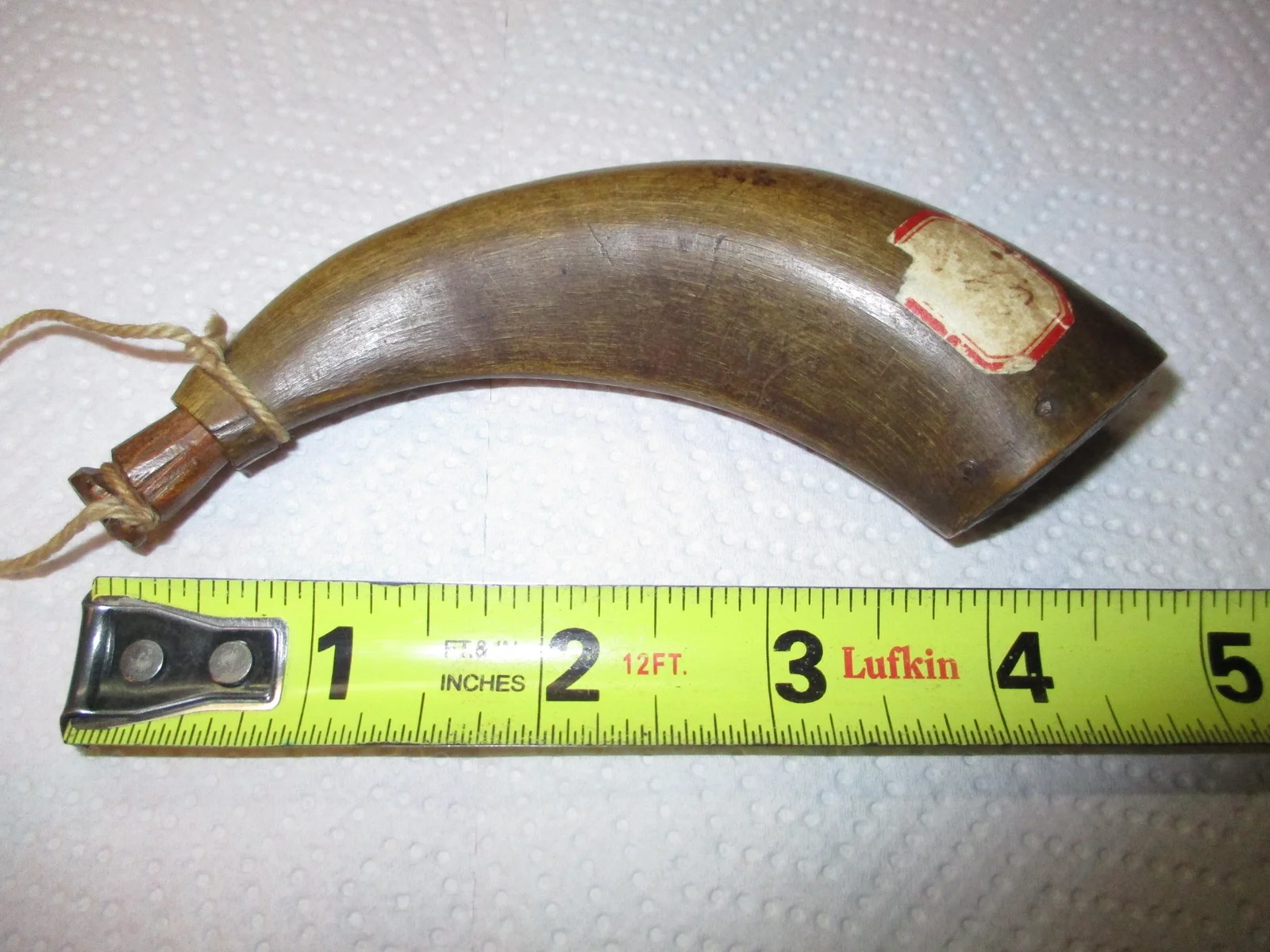
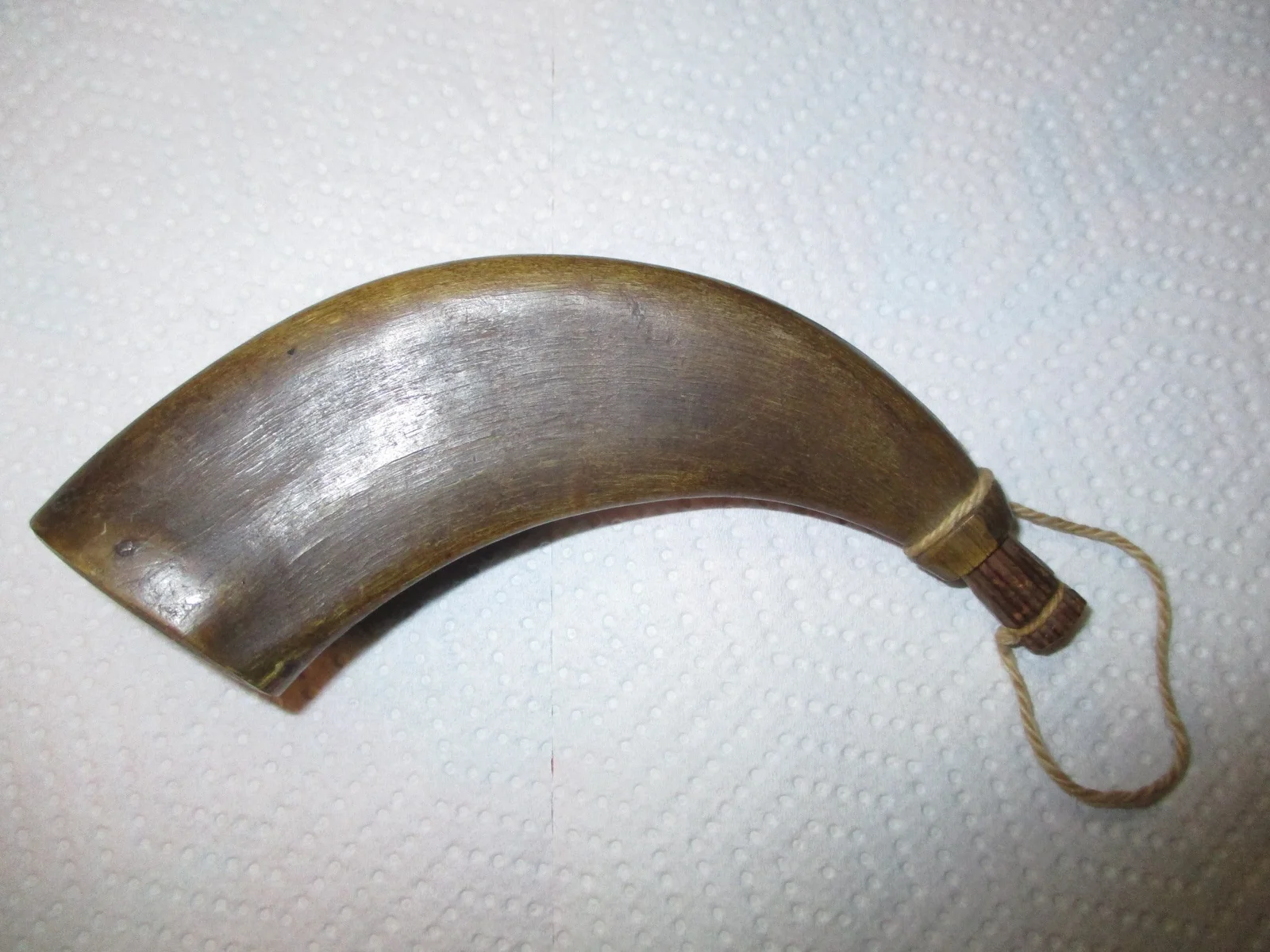
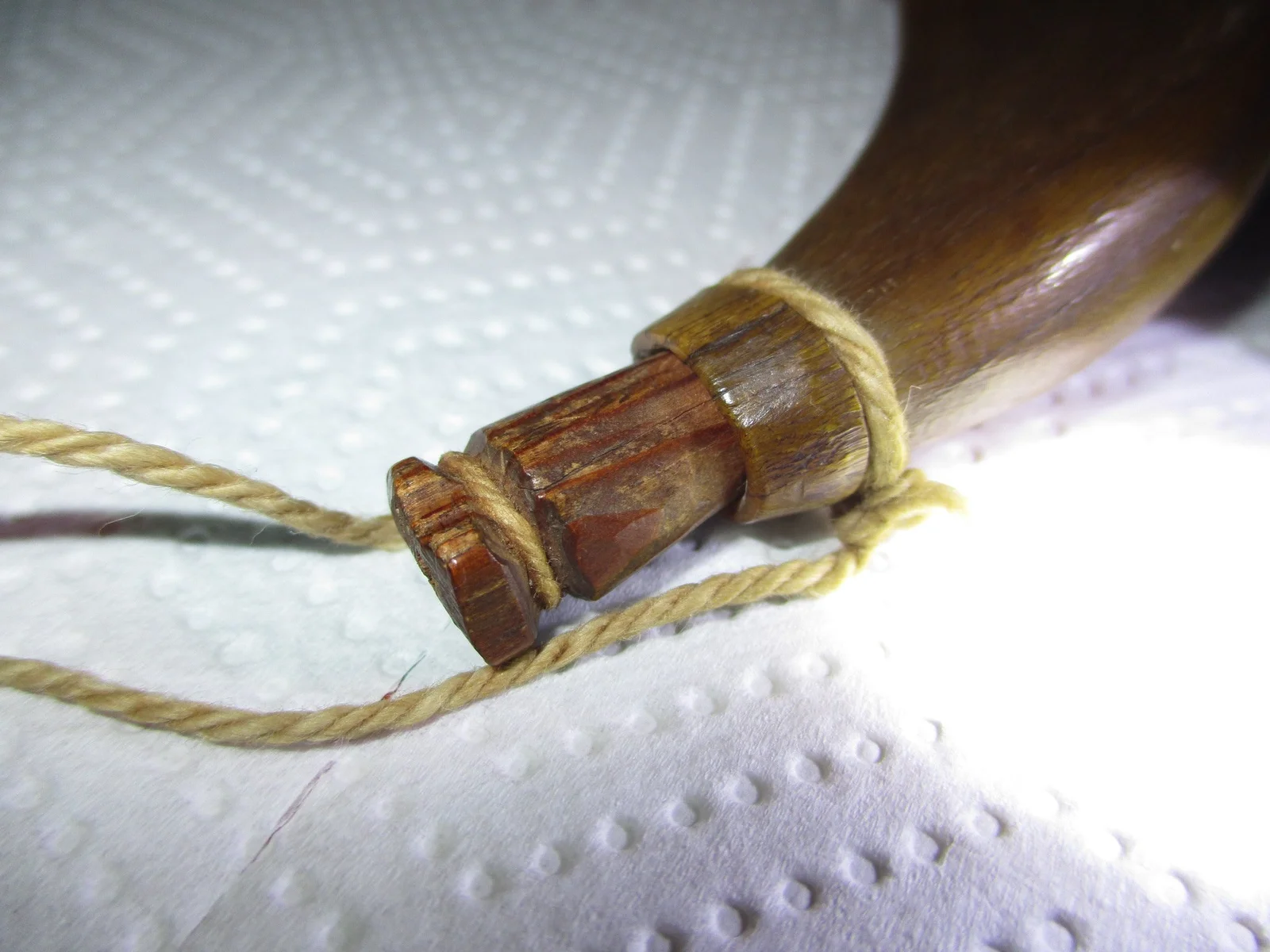
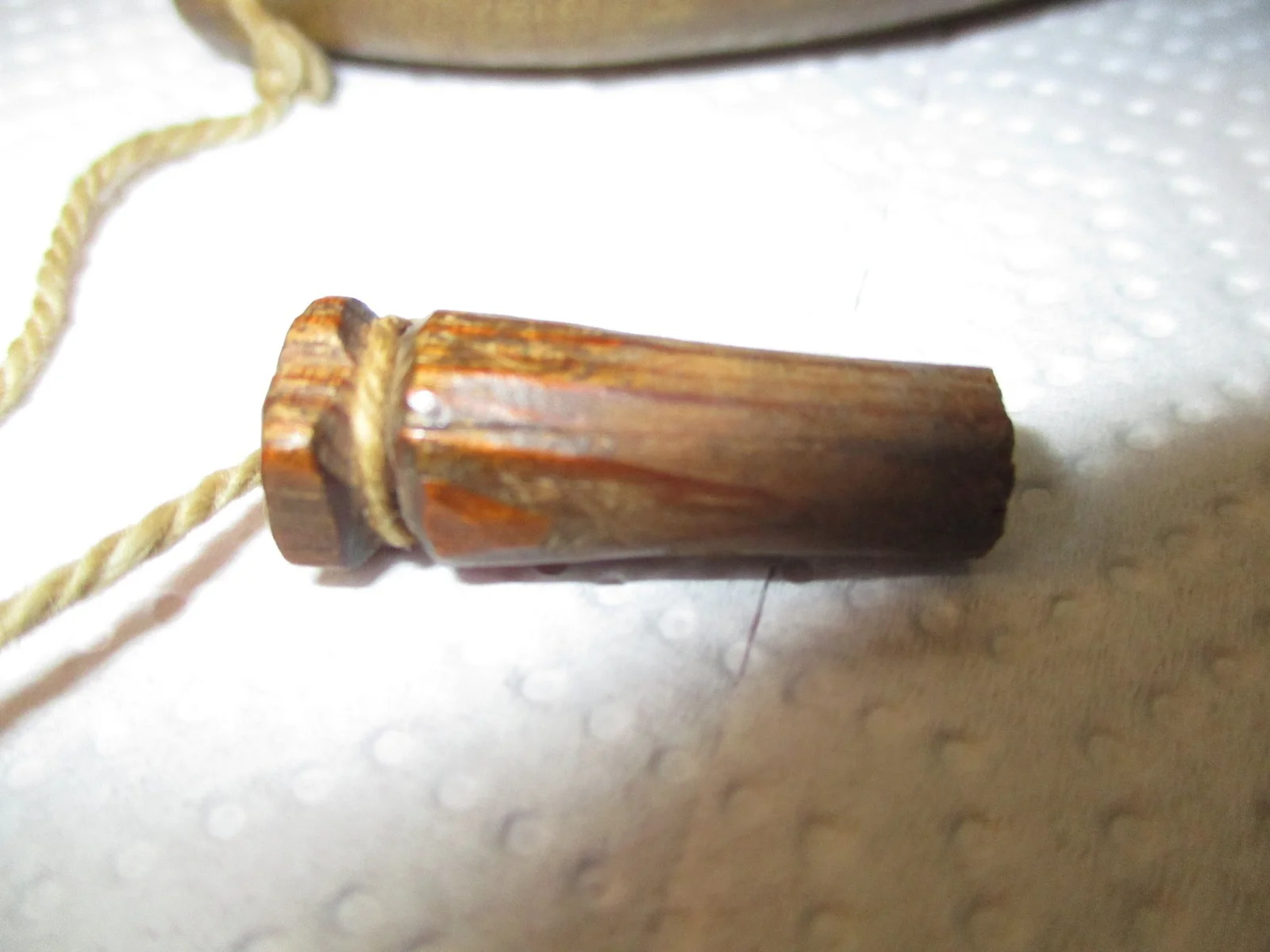
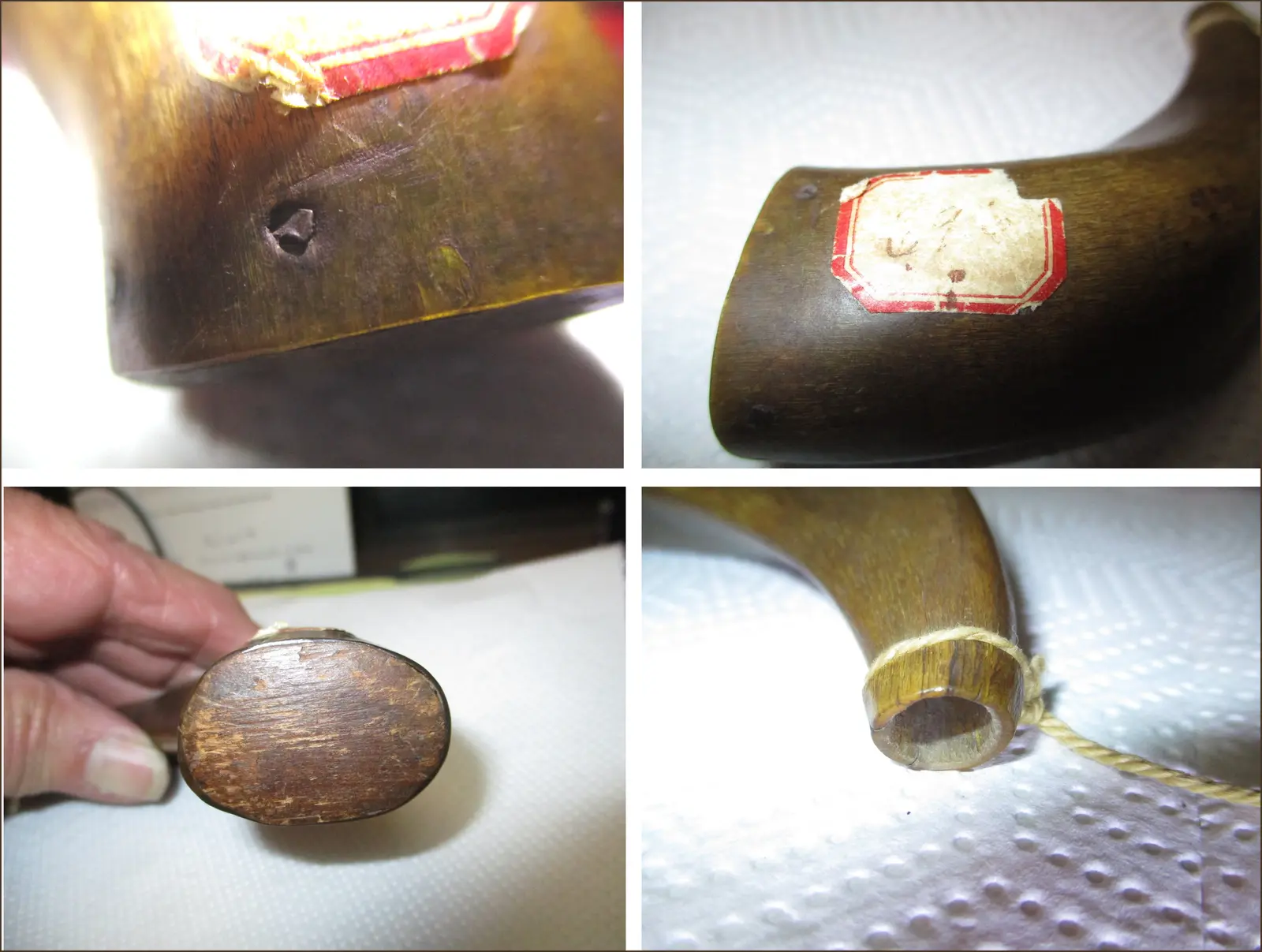
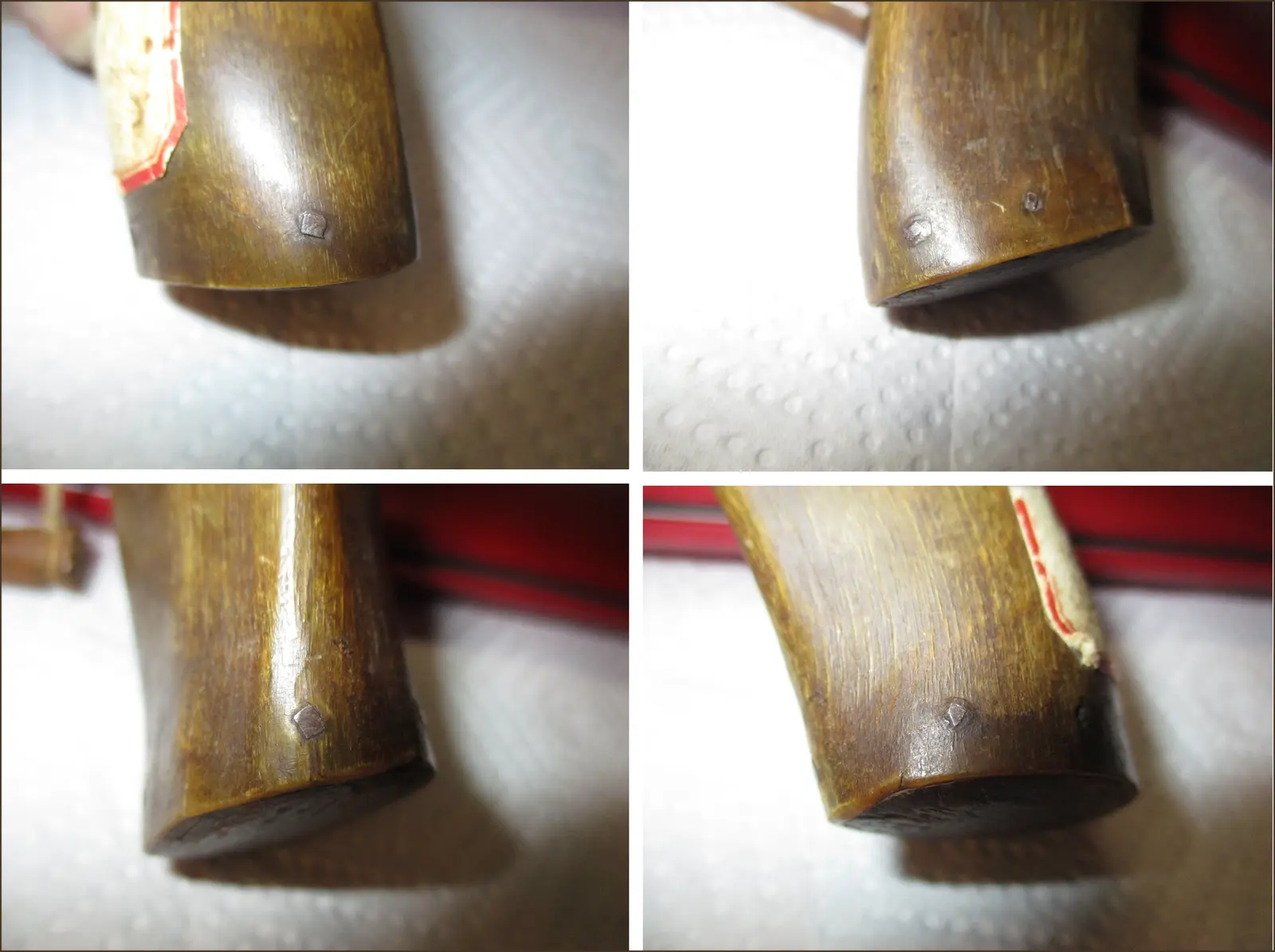
Pretty neat, huh?
But I did find this one gem on a table for the grand sum of $1: A Revolutionary War era powder horn for priming the frizzen pan on a flintlock rifle. These were usually filled with a finer grain of black powder to ignite the powder inside the barrel. The horn measures about 5", has a hand-carved wooden plug, and a wooden end cap held in place with tiny square-headed iron nails or brads. The horn actually has some fine-grained black powder in it. I dumped it in the driveway and made the stupid mistake for igniting it with a Bic lighter The powder flashed all at once and I got some minor first-degree flash burns on my hand, but it doesn't hurt anymore.
I used AI to determine the time period when those nails were made:
"If you’ve found a powder horn with tiny, square-headed iron nails, you’re likely looking at a piece of frontier technology from the mid-18th century through the mid-19th century (approx. 1750–1850).
In the world of muzzleloading, these "brads" or "sprigs" weren't just fasteners; they were the standard before the mass production of round, wire nails took over the hardware world.
The Era of the Hand-Forged Nail
During the height of the flintlock era, nails were not "cut" by machines from sheets of steel. Instead, they were hand-forged by blacksmiths or specialized nailators.
1750s–1790s (The Golden Age): This is the peak period for "Revolutionary War" style horns. Builders used hand-forged iron or brass pins to secure the wooden butt plate (usually made of pine, maple, or walnut) to the hollowed-out cow horn.
The Look: These nails have a distinct taper on all four sides and a head that is roughly square or rectangular. Because they were made one by one, no two are exactly alike.
Identifying the Period by the Nail Type
If you are trying to date a specific horn, the "square" shape tells a story:
Nail Type Approximate Era Characteristics
Hand-Forged Pre-1800 Four-sided taper, irregular square heads, "hammered" texture.
Early Cut Nails 1790 – 1830s Two-sided taper (cut from plates), often have "burrs" on the edges.
Late Cut Nails 1830 – 1880s More uniform, machine-headed, but still square/rectangular in cross-section.
Wire Nails 1880 – Present Round shafts and round heads. If you see these, the horn is likely a later repair or a modern reproduction.
Why Square Nails?
It wasn't just about what was available; square nails actually worked better for horn construction.
Mechanical Grip: The flat sides of a square nail bite into the horn and wood fibers much more effectively than a smooth, round wire nail, preventing the plug from popping out under the pressure of the powder weight.
Fiber Compression: In the 18th century, "brads" (nails without large heads) were often used so they could be driven flush or slightly sub-surface, then sanded over to create a smooth finish on the horn's butt end.
A Quick Tip for Authenticity:
If the square heads are perfectly identical, they might be modern "tremont" nails used by contemporary reenactors. Authentic 18th-century nails will almost always show slight variations in the "shanking" and the thickness of the head."
And now some pictures:
Pretty neat, huh?


