In the Norfolk, Virginia, area, the nearby ocean, bay and rivers brought centuries of prosperity from maritime activities, including a major commercial port, the world’s largest naval base, a fishing fleet, and many businesses that support ocean commerce. Having the Atlantic Ocean for a close neighbor has a cost as rising seas encroach on many low-lying neighborhoods. Three floods have hit Karen Speights’ Norfolk home in the past few years. Her home was built in 1921 and is about 100 meters from one of the area’s many waterfronts. Speights’ house had been dry for decades until she had a nasty surprise the first time floodwaters rose inside her home. “We started to see items float around,” she said. “The water came in, just like it does at the beach, when the waves come in, and go in and out, but it consistently came in. And we rushed to pick things up.”
Seas rising for century
Old Dominion University researcher and retired U.S. Navy Captain Ray Toll says seas have been rising for quite a while. In an interview, he holds up a smartphone and says seas have been rising about the length of the phone every 20 years over the past century. He is concerned that the rate may become faster. Toll says higher sea levels make homes, businesses, and the huge naval base more vulnerable to flooding, particularly when high winds combine with high tides. “You better be ready for flooding from all directions,” he said. Scientists say part of the problem is that the land in the Norfolk area is subsiding because of the complex effects of an ancient meteor strike and glaciers; but, researchers say most of the problem is because of rising seas.
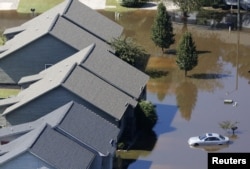
Flooding waters of theTar River cover the Riverwalk Apartments due to rainfall caused from Hurricane Matthew in Greenville, North Carolina
Real estate data expert Daren Blomquist of ATTOM Data Solutions says worries about flooding are beginning to affect demand for homes in coastal areas around the nation. Traditionally, pleasant climate and nice views meant coastal homes commanded top prices, he said, but some buyers are having second thoughts about major investments in vulnerable areas. “This isn’t just something that people are predicting,” he said. “It’s happening. Homes are getting destroyed in some of these natural disasters. And I think that is why we are starting to see a shift.” Blomquist says the only surprise is that home purchasers have reacted so slowly to the growing threat.
Raising home