How will SCOTUS rule on Trump's tariffs? (Poll)

Will the Supreme Court rule Trump's tariffs are legal or illegal?

  • Legal

    Votes: 13 68.4%
  • Illegal

    Votes: 3 15.8%
  • No SCOTUS decision by 10/14/25

    Votes: 3 15.8%

  • Total voters
    19

kyzr

Diamond Member
Joined
Oct 14, 2009
Messages
50,925
Reaction score
44,478
Points
3,605
Location
The AL part of PA
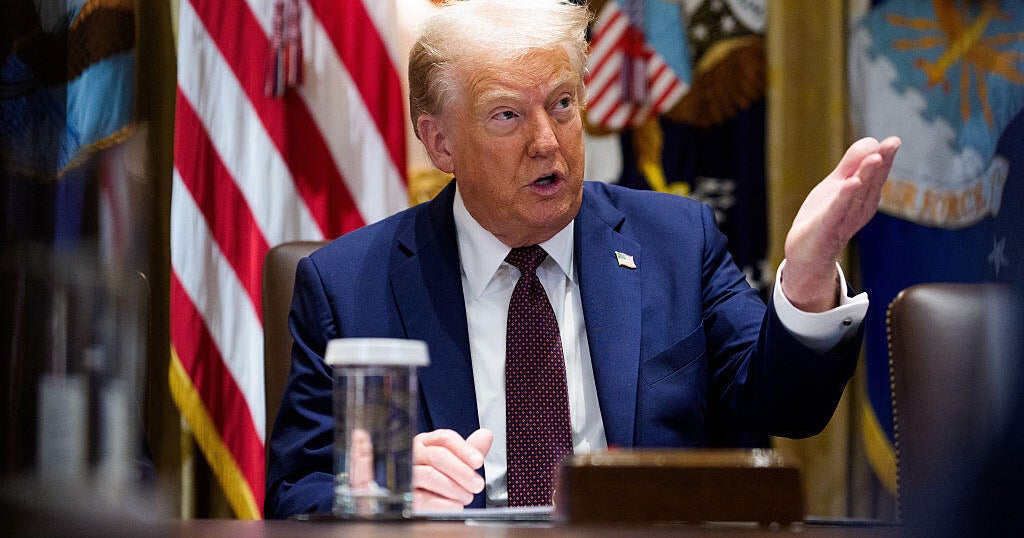
Trump is warning of a "catastrophe" if the USSC rules against him on his managing tariffs, ruled illegal after 10/14/25.
Congress gave presidents power over tariffs. They could aways take it back​

Joining Grassley are former Republican leader Sen. Mitch McConnell of Kentucky and GOP Sens. Jerry Moran of Kansas, Lisa Murkowski of Alaska, Thom Tillis of North Carolina, Todd Young of Indiana and Susan Collins of Maine.
A similar bill is being introduced by Rep. Don Bacon, a Nebraska Republican, in the House of Representatives.
“It’s time that Congress restores its authorities here,” Bacon said on CBS News over the weekend. “We gave some of that power to the executive branch, and I think in hindsight, that was a mistake.”
Not everyone agrees that Trump’s current interpretation of the law — in which he can impose tariffs by declaring a national emergency — is legitimate.
In short: Although the District Court was adamant that imposing tariffs requires an exercise of taxation power, rather than the power to regulate commerce, the Constitution’s original meaning and Supreme Court precedent indicate that tariffs can be used in both the taxation and commerce-regulation settings. Thus, by clearly delegating power to regulate foreign commerce—a power that has long been understood to include the authority to impose tariffs—IEEPA is best understood as delegating tariff-setting authority to the President. What’s more, neither the nondelegation doctrine nor the major questions doctrine invalidate IEEPA’s delegation of tariff authority.


Interestingly, Section 122 has never previously been used, and as a consequence, the courts have not had reason to interpret its language. Some commentators have suggested that it might legitimately be used to target trade deficits, but others conclude that the term balance-of-payments does not refer to trade deficits, Section 122 (a) referring to the balance-of-payments, and Section 122 (c) which refers the balance of trade, i.e., there is a presumption that Congress intended to make the distinction.

So most experts say its not a slam dunk either way. We should know by 10/14 which is when the tariffs become illegal.
 
Trump won't tolerate a loss at the Scotus. Think of it as a conditional win coming, that can be interpreted in a way that satisfies him.

Losses for Trump are no longer possible. Any power of the democratic process is gone!
 
Trump is warning of a "catastrophe" if the USSC rules against him on his managing tariffs, ruled illegal after 10/14/25.

Congress gave presidents power over tariffs. They could aways take it back​

Joining Grassley are former Republican leader Sen. Mitch McConnell of Kentucky and GOP Sens. Jerry Moran of Kansas, Lisa Murkowski of Alaska, Thom Tillis of North Carolina, Todd Young of Indiana and Susan Collins of Maine.
A similar bill is being introduced by Rep. Don Bacon, a Nebraska Republican, in the House of Representatives.
“It’s time that Congress restores its authorities here,” Bacon said on CBS News over the weekend. “We gave some of that power to the executive branch, and I think in hindsight, that was a mistake.”
Not everyone agrees that Trump’s current interpretation of the law — in which he can impose tariffs by declaring a national emergency — is legitimate.

In short: Although the District Court was adamant that imposing tariffs requires an exercise of taxation power, rather than the power to regulate commerce, the Constitution’s original meaning and Supreme Court precedent indicate that tariffs can be used in both the taxation and commerce-regulation settings. Thus, by clearly delegating power to regulate foreign commerce—a power that has long been understood to include the authority to impose tariffs—IEEPA is best understood as delegating tariff-setting authority to the President. What’s more, neither the nondelegation doctrine nor the major questions doctrine invalidate IEEPA’s delegation of tariff authority.


Interestingly, Section 122 has never previously been used, and as a consequence, the courts have not had reason to interpret its language. Some commentators have suggested that it might legitimately be used to target trade deficits, but others conclude that the term balance-of-payments does not refer to trade deficits, Section 122 (a) referring to the balance-of-payments, and Section 122 (c) which refers the balance of trade, i.e., there is a presumption that Congress intended to make the distinction.

So most experts say its not a slam dunk either way. We should know by 10/14 which is when the tariffs become illegal.
Here's another good summary of the law.

 
Trump is warning of a "catastrophe" if the USSC rules against him on his managing tariffs, ruled illegal after 10/14/25.

Congress gave presidents power over tariffs. They could aways take it back​

Joining Grassley are former Republican leader Sen. Mitch McConnell of Kentucky and GOP Sens. Jerry Moran of Kansas, Lisa Murkowski of Alaska, Thom Tillis of North Carolina, Todd Young of Indiana and Susan Collins of Maine.
A similar bill is being introduced by Rep. Don Bacon, a Nebraska Republican, in the House of Representatives.
“It’s time that Congress restores its authorities here,” Bacon said on CBS News over the weekend. “We gave some of that power to the executive branch, and I think in hindsight, that was a mistake.”
Not everyone agrees that Trump’s current interpretation of the law — in which he can impose tariffs by declaring a national emergency — is legitimate.

In short: Although the District Court was adamant that imposing tariffs requires an exercise of taxation power, rather than the power to regulate commerce, the Constitution’s original meaning and Supreme Court precedent indicate that tariffs can be used in both the taxation and commerce-regulation settings. Thus, by clearly delegating power to regulate foreign commerce—a power that has long been understood to include the authority to impose tariffs—IEEPA is best understood as delegating tariff-setting authority to the President. What’s more, neither the nondelegation doctrine nor the major questions doctrine invalidate IEEPA’s delegation of tariff authority.


Interestingly, Section 122 has never previously been used, and as a consequence, the courts have not had reason to interpret its language. Some commentators have suggested that it might legitimately be used to target trade deficits, but others conclude that the term balance-of-payments does not refer to trade deficits, Section 122 (a) referring to the balance-of-payments, and Section 122 (c) which refers the balance of trade, i.e., there is a presumption that Congress intended to make the distinction.

So most experts say its not a slam dunk either way. We should know by 10/14 which is when the tariffs become illegal.
It would mean every president that did tariffs without Congress would be historically deemed illegal if the SCOTUS rule that way.

The internet suggests -

Although the US Constitution grants Congress the sole authority to levy taxes, including tariffs, Congress has passed laws allowing the President to impose tariffs for national security reasons unilaterally.
 
Frankly, I don't see how, in any practical manner, how Congress could negotiate tariffs with all of these countries.
I don't see how Congress could negotiate tariffs with any of these countries. Hell, last time they took on tariffs was in the 1930s.
 
It would mean every president that did tariffs without Congress would be historically deemed illegal if the SCOTUS rule that way.

The internet suggests -

Although the US Constitution grants Congress the sole authority to levy taxes, including tariffs, Congress has passed laws allowing the President to impose tariffs for national security reasons unilaterally.
If that happened, what would be the next step? Would countries be asking demanding refunds?
 
I just got charged a tariff!

20%. Electronic parts. I think Indonesia.
 
Here's another good summary of the law.
Summary? Its a detailed history. Now I know what Law Clerks do all day...
Here is the last paragraph. It still looks like a jump ball. SCOTUS generally defers to the executive, which is good, too many chefs spoil the broth. Let the voters decide who the head chef is.

"In light of judicial precedent that has given the President broad latitude to exercise his tariff authorities, Congress may consider whether existing tariff authorities provide suitable guardrails around executive action. Since the Federal Circuit has traditionally permitted the President to act under his tariff authorities unless he "clearly misconstrues" their scope, Congress may consider whether limitations on presidential authority in these statutes are sufficiently clear. In addition, since courts have held that presidential actions and fact-findings are unreviewable when committed to his discretion by statute, Congress may consider whether existing authorities give too little or too much discretion to the President, including whether and in what manner executive agencies should be required to conduct investigations and make findings before the President may act."
 
I don't see how Congress could negotiate tariffs with any of these countries. Hell, last time they took on tariffs was in the 1930s.
OUr founding fathers were frigging brilliant, don' get me wrong. But even 50 years ago, I don't think anyone could have imagined the extent of the globalization of markets.
 
Trump is warning of a "catastrophe" if the USSC rules against him on his managing tariffs, ruled illegal after 10/14/25.

Congress gave presidents power over tariffs. They could aways take it back​

Joining Grassley are former Republican leader Sen. Mitch McConnell of Kentucky and GOP Sens. Jerry Moran of Kansas, Lisa Murkowski of Alaska, Thom Tillis of North Carolina, Todd Young of Indiana and Susan Collins of Maine.
A similar bill is being introduced by Rep. Don Bacon, a Nebraska Republican, in the House of Representatives.
“It’s time that Congress restores its authorities here,” Bacon said on CBS News over the weekend. “We gave some of that power to the executive branch, and I think in hindsight, that was a mistake.”
Not everyone agrees that Trump’s current interpretation of the law — in which he can impose tariffs by declaring a national emergency — is legitimate.

In short: Although the District Court was adamant that imposing tariffs requires an exercise of taxation power, rather than the power to regulate commerce, the Constitution’s original meaning and Supreme Court precedent indicate that tariffs can be used in both the taxation and commerce-regulation settings. Thus, by clearly delegating power to regulate foreign commerce—a power that has long been understood to include the authority to impose tariffs—IEEPA is best understood as delegating tariff-setting authority to the President. What’s more, neither the nondelegation doctrine nor the major questions doctrine invalidate IEEPA’s delegation of tariff authority.


Interestingly, Section 122 has never previously been used, and as a consequence, the courts have not had reason to interpret its language. Some commentators have suggested that it might legitimately be used to target trade deficits, but others conclude that the term balance-of-payments does not refer to trade deficits, Section 122 (a) referring to the balance-of-payments, and Section 122 (c) which refers the balance of trade, i.e., there is a presumption that Congress intended to make the distinction.

So most experts say its not a slam dunk either way. We should know by 10/14 which is when the tariffs become illegal.
With all of the presidents whom have imposed tariffs, including Biden, it would be hard for the SC to rule them illegal.
 
With only a layman's understanding of our laws, I'd say it was rather clear that the power to tax is held by Congress as stated in the Constitution's Article I, Section 8, Clause 1

With that limited understanding, anything the court decides won't surprise me.
 
With only a layman's understanding of our laws, I'd say it was rather clear that the power to tax is held by Congress as stated in the Constitution's Article I, Section 8, Clause 1
With that limited understanding, anything the court decides won't surprise me.
Congress delegated tariff authority to the president within certain parameters.
The question is, are Trump's tariffs within those congressional parameters?
 
Trump won't tolerate a loss at the Scotus. Think of it as a conditional win coming, that can be interpreted in a way that satisfies him.

Losses for Trump are no longer possible. Any power of the democratic process is gone!
The “democratic [sic] process” has nothing to do with this topic.

And your baseless assertions about what President Trump will or will not “tolerate” is also ridiculous.

The reality is (as it often is) that there exists legitimate bases for what the President has done and is doing; and there also exists some arguable bases to contest what he has done and is doing.

So, it is far from predetermined how the SCOTUS will eventually decide the matter.

On balance, where (as here) Congress has authorized the President to make determinations about these matters (with some conditions, which they have spelled out), the issue before the Court is likely to boil down to: “were those conditions satisfied?”

I say, yes.

EDIT: I belatedly read the post immediately above this one AFTER I sent it. I am pleased to see that kyzr was on the same page — and I see that he was far more succinct. 👍
 
Here is the last paragraph. It still looks like a jump ball. SCOTUS generally defers to the executive, which is good, too many chefs spoil the broth. Let the voters decide who the head chef is.

"In light of judicial precedent that has given the President broad latitude to exercise his tariff authorities, Congress may consider whether existing tariff authorities provide suitable guardrails around executive action. Since the Federal Circuit has traditionally permitted the President to act under his tariff authorities unless he "clearly misconstrues" their scope, Congress may consider whether limitations on presidential authority in these statutes are sufficiently clear. In addition, since courts have held that presidential actions and fact-findings are unreviewable when committed to his discretion by statute, Congress may consider whether existing authorities give too little or too much discretion to the President, including whether and in what manner executive agencies should be required to conduct investigations and make findings before the President may act."
~~~~~~
Meanwhile, has anyone ever perused the Federal Register?
Beside the announcement of Regulations.
Have any of you ever seen the number of deferred tariffs given to countries on wood, aluminum, steel, lead, etc., that allow these materials into the U.S. at lower prices than we can manufacture/produce them?
 
15th post
~~~~~~
Meanwhile, has anyone ever perused the Federal Register?
Beside the announcement of Regulations.
Have any of you ever seen the number of deferred tariffs given to countries on wood, aluminum, steel, lead, etc., that allow these materials into the U.S. at lower prices than we can manufacture/produce them?
Paid for I'm sure by the foreign corporations.
 
Trump is following the law. Over time, Congress has delegated some authority to the President through various laws, allowing the executive branch to impose tariffs under certain conditions, such as national security or trade emergencies. Statutory provisions like the Trade Expansion Act of 1962 and the Trade Act of 1974 enable the President to act on tariffs based on investigations and determinations by federal agencies, but this authority ultimately stems from congressional legislation.
 
The poll seems to imply that the Supreme Court will agree that Trump has the authority to negotiate tariffs.
Part of the rationale' is that they rarely disagree with the executive on declarations of fact, such as declaring a "national emergency".
 

New Topics

Back
Top Bottom