
Zincwarrior
Diamond Member
I hope you bought everything you needed. The shitstorm is about to hit.
 amp.cnn.com
Published 4:00 AM EDT, Sun July 6, 2025

Alex Wong/Getty Images
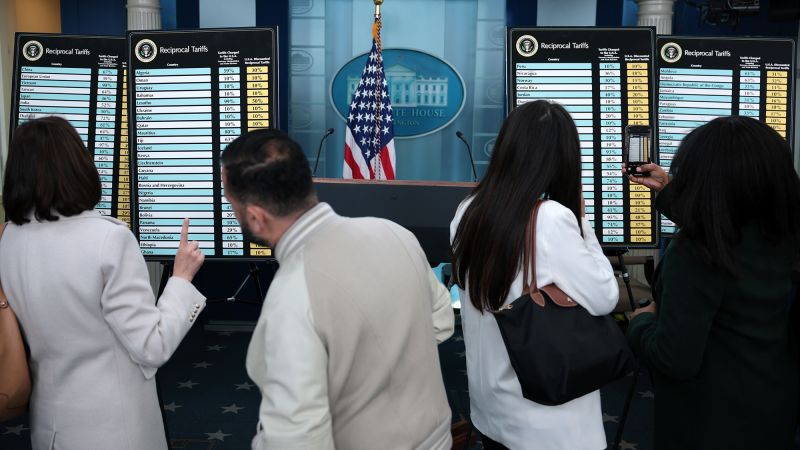
Charts that show America's “reciprocal tariffs” on display in the press briefing room at the White House on April 2 in Washington, DC.
CNN —
The 90-day deadline President Donald Trump set for countries to make trade deals with the United States or risk substantially higher tariffs is just days away. What will happen after that’s reached at 12:01 a.m. ET on July 9 is anyone’s best guess.
The stakes could not be higher, with the entire global economy on notice.
On April 2, a date Trump dubbed “Liberation Day,” he unveiled new, “reciprocal” tariff rates for key US trading partners, with some levies as high as 50%. Collectively, the rates were the highest the US has charged on foreign goods in over a century. Economists quickly sounded alarms about a recession hitting not just certain countries, but rather the whole world.
Trump’s ‘reciprocal’ tariff pause is about to expire. Cue the confusion | CNN Business
The 90-day deadline President Donald Trump set for countries to make trade deals with the United States or risk substantially higher tariffs is just days away. What will happen after that’s reached at 12:01 a.m. ET on July 9 is anyone’s best guess.
amp.cnn.com
Trump’s ‘reciprocal’ tariff pause is about to expire. Cue the confusion
By Elisabeth Buchwald, CNNPublished 4:00 AM EDT, Sun July 6, 2025
Alex Wong/Getty Images
Charts that show America's “reciprocal tariffs” on display in the press briefing room at the White House on April 2 in Washington, DC.
CNN —
The 90-day deadline President Donald Trump set for countries to make trade deals with the United States or risk substantially higher tariffs is just days away. What will happen after that’s reached at 12:01 a.m. ET on July 9 is anyone’s best guess.
The stakes could not be higher, with the entire global economy on notice.
On April 2, a date Trump dubbed “Liberation Day,” he unveiled new, “reciprocal” tariff rates for key US trading partners, with some levies as high as 50%. Collectively, the rates were the highest the US has charged on foreign goods in over a century. Economists quickly sounded alarms about a recession hitting not just certain countries, but rather the whole world.


