Grid scale batteries are now competing directly with coal and gas

Old Rocks

Diamond Member
Joined
Oct 31, 2008
Messages
65,289
Reaction score
11,313
Points
2,040
Location
Portland, Ore.
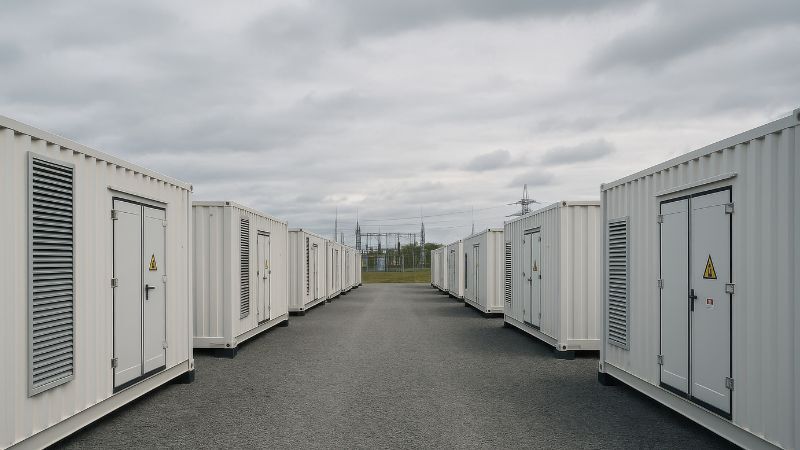
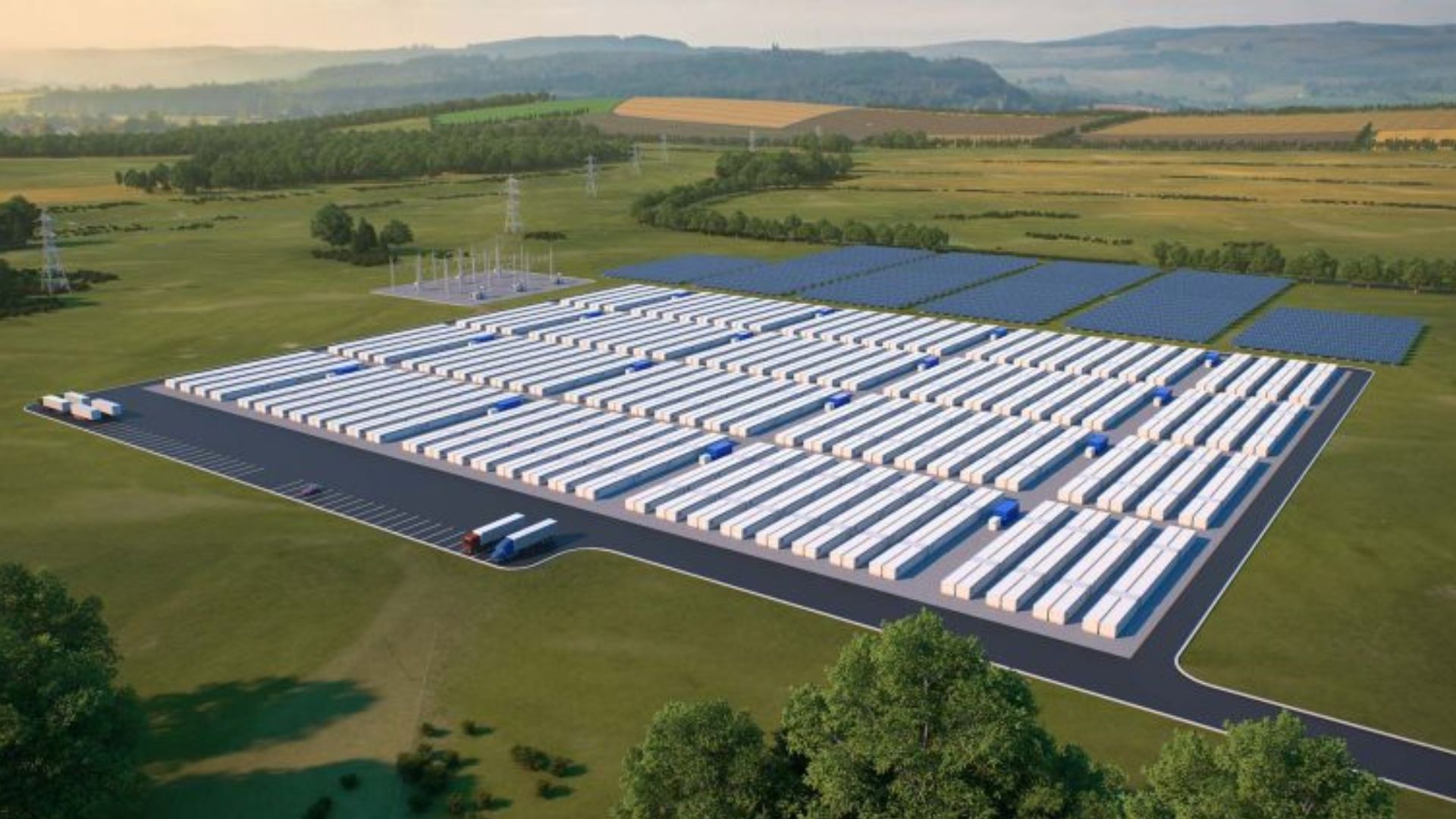
In the last decade grid scale batteries have dropped dramatically in price, and use several different chemistries to achieve the desired response time and duration. When we get rid of our present kakistocracy and get knowledgeable people making policy, we can both lower the cost of electricity and make the grid more robust.

 
In the last decade grid scale batteries have dropped dramatically in price,

Batteries suck, I don't care if they are free. Every cordless battery device I own has failed me and it is always like pulling teeth to replace them. Expensive to buy, expensive to replace. I have a 100 ft, all copper, 10 ga power cord just for that: I can run power wherever I need it, no need for farging batteries.
 
Tucker4.gif
 
Just imagine the environmental horrors that a large warehouse worth of thermal runaway would unleash.
 
Just imagine the environmental horrors that a large warehouse worth of thermal runaway would unleash.

The unspoken fact in all of this OB is that every time you convert energy to a different state, YOU LOSE POWER. No energy conversion is perfect. Every time you handle power, you give some of it up.
  • Gas engines lose power in heat and friction.
  • Converting solar energy to electric, you lose power.
  • Converting DC to AC, you lose power.
  • Storing electricity in a battery, you lose power.
  • Discharging a battery, you lose power.
The failing to all this green energy is the COMPLEXITY of the technology. It loses power and efficiency all along the way.

Which is why you just cannot beat fusion, nuclear, internal combustion, etc., because the shorter the path/the more direct the conversion for power source to delivered load, the more efficient you become.

EV owners tout the simplicity of EV cars but they ignore the complexity that goes into to CREATING the electricity, TRANSMITTING it to you, then STORING and RE-RELEASING it to the wheel motors.
 
In the last decade grid scale batteries have dropped dramatically in price, and use several different chemistries to achieve the desired response time and duration. When we get rid of our present kakistocracy and get knowledgeable people making policy, we can both lower the cost of electricity and make the grid more robust.


1771295673034.webp
 
The unspoken fact in all of this OB is that every time you convert energy to a different state, YOU LOSE POWER. No energy conversion is perfect. Every time you handle power, you give some of it up.
  • Gas engines lose power in heat and friction.
  • Converting solar energy to electric, you lose power.
  • Converting DC to AC, you lose power.
  • Storing electricity in a battery, you lose power.
  • Discharging a battery, you lose power.
The failing to all this green energy is the COMPLEXITY of the technology. It loses power and efficiency all along the way.

Which is why you just cannot beat fusion, nuclear, internal combustion, etc., because the shorter the path/the more direct the conversion for power source to delivered load, the more efficient you become.

EV owners tout the simplicity of EV cars but they ignore the complexity that goes into to CREATING the electricity, TRANSMITTING it to you, then STORING and RE-RELEASING it to the wheel motors.
Quit confusing the issue with the facts.

Speaking of conversion, don't you think that it's odd that the hybrid technology NOT in use outside of huge rail locomotives, is the hybrid technology used in huge rail locomotives?

Hook up a 20 HP riding mower motor up to a Tesla and *poof * your 300 mile range becomes a 3000 mile range.
 
Just imagine the environmental horrors that a large warehouse worth of thermal runaway would unleash.
Dumb ****, most of the batteries now being used for storage do not have a thermal runaway problem. Some, being water based, cannot burn. Of course being willfully ignorant, you would not know that.
 
The unspoken fact in all of this OB is that every time you convert energy to a different state, YOU LOSE POWER. No energy conversion is perfect. Every time you handle power, you give some of it up.
  • Gas engines lose power in heat and friction.
  • Converting solar energy to electric, you lose power.
  • Converting DC to AC, you lose power.
  • Storing electricity in a battery, you lose power.
  • Discharging a battery, you lose power.
The failing to all this green energy is the COMPLEXITY of the technology. It loses power and efficiency all along the way.

Which is why you just cannot beat fusion, nuclear, internal combustion, etc., because the shorter the path/the more direct the conversion for power source to delivered load, the more efficient you become.

EV owners tout the simplicity of EV cars but they ignore the complexity that goes into to CREATING the electricity, TRANSMITTING it to you, then STORING and RE-RELEASING it to the wheel motors.
Dumb-de-dumb dumb. Carnot cycle for internal combustion. In practical applications seldom better than 30%. Fusion still in the future. Nuclear, damned expensive. Wind turbines, solar panels do not need railroads or pipelines, they do not need vast areas to be torn up and degraded through mining. They do not produce toxic gases while operating, and a natural disaster will just shut them down, not release toxic radioactivity in the environment. Plus solar and wind are the least expensive and the quickest to install.
 
Come on man that'll never happen......ummmm.....ummmm
And natural gas pipelines never explode and kill people. Nuclear plants never have meltdowns. Mining coal never poisons whole watersheds. Given the progress being made in the different battery chemistries, sodium, iron-air, and many others, thermal runaways will be a thing of the past shortly.
 
15th post
At this point the only way electric costs are going to come down is if data-centers and crypto-miners start paying the same price for electric as average residential consumers, and with a serious push towards regulating these actors.

I find it interesting that the same leftists that are pushing net-zero are all in on the government and silicon valley hogging the energy for their data centers.
 
At this point the only way electric costs are going to come down is if data-centers and crypto-miners start paying the same price for electric as average residential consumers, and with a serious push towards regulating these actors.

I find it interesting that the same leftists that are pushing net-zero are all in on the government and silicon valley hogging the energy for their data centers.
If they didn't have double standards, they'd have no standards at all.
 
Dumb-de-dumb dumb. Carnot cycle for internal combustion. In practical applications seldom better than 30%.

You miss the point. Yes, there are losses there, but the power source is carried in the car, then combusted right in the engine. It obviates the need to generate the power elsewhere, 100 miles away, send it through miles of wires, stepping it down several times in costly substations, to then convert it to rectified DC, then feed it into a storage battery to hold. All the power is right there in the gasoline, already put there millions of years ago by the Sun and plants.

There are no perfect solutions, every energy form has advantages and liabilities. Thing is that current battery-powered technology to carry massive batteries, charge them up with energy made elsewhere is at best a Rube Goldberg solution instituted at the absolute earliest opportunity in a desperate attempt to replace ICE, and the technology is far from mature.

EV cars, solar panels, windmills--- practical solutions for SOME people SOME of the time, but not for everyone all of the time.

Jetsons we are not.

Me, I'm still pulling for hydrogen-power.
 
Back
Top Bottom