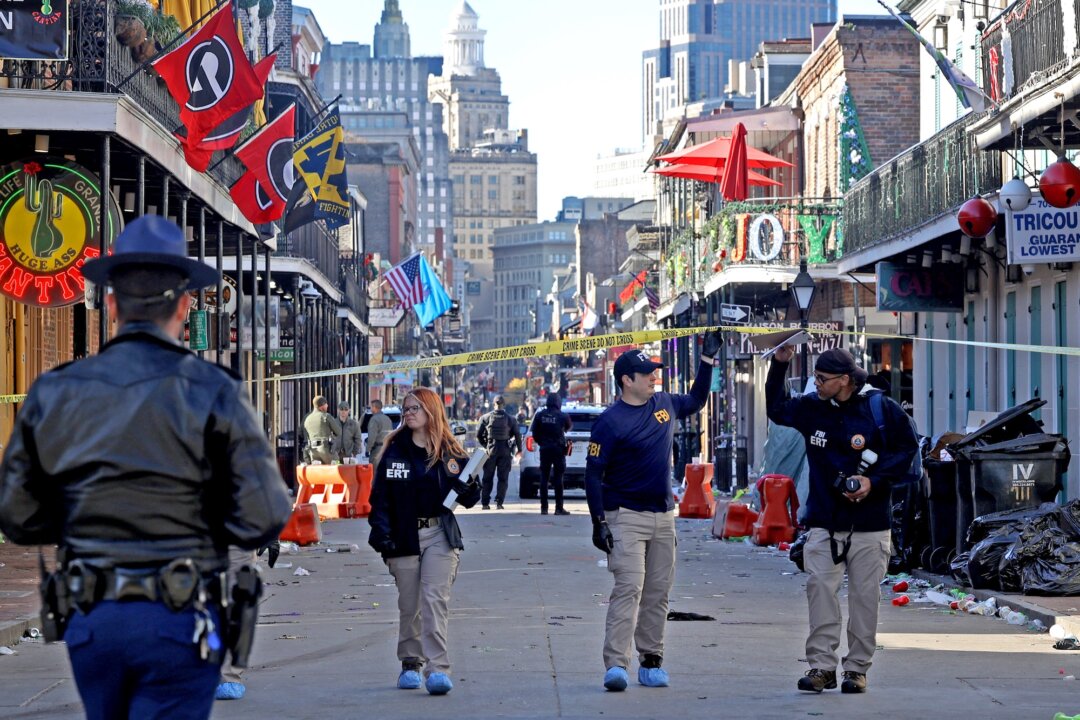
Just look at all this FBI CORRUPTION..

en.wikipedia.org
Here is the first 20% pf the listed corruption:
The following is a
list of controversies involving the Federal Bureau of Investigation (FBI). Throughout its history, the
FBI has been the subject of a number of controversial cases, both at home and abroad.
Files on U.S. citizens
The FBI has maintained files on numerous people, including celebrities such as
Elvis Presley,
Frank Sinatra,
John Denver,
John Lennon,
Jane Fonda,
Groucho Marx,
Charlie Chaplin, the band
MC5,
Lou Costello,
Sonny Bono,
Bob Dylan,
Michael Jackson, and
Mickey Mantle. The reason for the existence of the files varied. Some of the subjects were investigated for alleged ties to the
Communist party (Charlie Chaplin and Groucho Marx), or in connection with antiwar activities during the
Vietnam War (John Denver, John Lennon, and Jane Fonda). Numerous celebrity files concern threats or
extortion attempts against them (Sonny Bono, John Denver, John Lennon, Elvis Presley, Michael Jackson, Mickey Mantle, Groucho Marx, and Frank Sinatra).
[1]
Domestic surveillance
A 1985 wiretapping and civil liberties report by the U.S. Congress found that the FBI had "installed over 7,000 national security surveillances," including many on American citizens, from 1940 to 1960.
[2]
Covert operations on political groups

Image from the FBI monograph of the
Nation of Islam (1965):
Elijah Muhammad
COINTELPRO tactics have been alleged to include discrediting targets through
psychological warfare, smearing individuals and/or groups using forged documents and by planting false reports in the media, harassment, wrongful imprisonment, and illegal violence, including
assassination.
[3][4] The FBI's stated motivation was "protecting
national security, preventing violence, and maintaining the existing social and political order."
[5]
FBI records show that 85 percent of COINTELPRO resources targeted groups and individuals that the FBI deemed "subversive",
[6] including
communist and
socialist organizations; organizations and individuals associated with the
civil rights movement, including
Martin Luther King Jr. and others associated with the
Southern Christian Leadership Conference, the
National Association for the Advancement of Colored People, and the
Congress of Racial Equality and other civil rights organizations;
black nationalist groups (e.g.,
Nation of Islam and the
Black Panther Party); the
American Indian Movement; a broad range of organizations labeled "
New Left", including
Students for a Democratic Society and the
Weathermen; almost all groups protesting the
Vietnam War, as well as individual student demonstrators with no group affiliation; the
National Lawyers Guild; organizations and individuals associated with the
women's rights movement;
[7] nationalist groups such as those seeking independence for
Puerto Rico,
United Ireland, and Cuban exile movements including
Orlando Bosch's Cuban Power and the
Cuban Nationalist Movement. The remaining 15% of COINTELPRO resources were expended to marginalize and subvert
white hate groups, including the
Ku Klux Klan and the
National States' Rights Party.
[19]
Files on Puerto Rican independence advocates
The FBI also spied upon and collected information on
Puerto Rican independence leader
Pedro Albizu Campos and his
Nationalist political party in the 1930s. Albizu Campos was convicted three times in connection with deadly attacks on US government officials: in 1937 (Conspiracy to overthrow the government of the United States), in 1950 (attempted murder), and in 1954 (after an armed assault on the US House of Representatives while in session; although not present, Albizu Campos was considered the mastermind).
[20] The FBI operation was covert and did not become known until U.S. Congressman
Luis Gutierrez had it made public via the
Freedom of Information Act in the 1980s.
[21]
In the 2000s, researchers obtained files released by the FBI under the Freedom of Information Act revealing that the San Juan FBI office had coordinated with FBI offices in
New York,
Chicago and other cities, in a decades-long surveillance of Albizu Campos and Puerto Ricans who had contact or communication with him. The documents available are as recent as 1965.
[22][23]
Activities in Latin America
From the 1950s to the 1980s, the governments of many Latin American and Caribbean countries, including Argentina, Brazil, Chile, Cuba, Mexico and others were infiltrated by the FBI.
[24] These operations began in World War II as 700 agents were assigned to monitor Nazi activity, but soon expanded to monitoring communist activity in places like Ecuador.
[25]
Viola Liuzzo
In one particularly controversial 1965 incident, white civil rights worker
Viola Liuzzowas murdered by
Ku Klux Klansmen, who gave chase and fired shots into her car after noticing that her passenger was a young black man; one of the Klansmen was
Gary Thomas Rowe, an acknowledged FBI informant.
[26][27] The FBI spread rumors that Liuzzo was a member of the
Communist Party and a heroin addict
[28]and had abandoned her children to have sexual relationships with
African Americans involved in the
civil rights movement.
[29][30] FBI records show that
J. Edgar Hoover personally communicated these insinuations to President Johnson.
[31][32]
Waco siege
Main article:
Waco siege
The
Waco siege in 1993 was a failed raid by the
ATF that resulted in the deaths of four ATF agents and six
Branch Davidians. The FBI and
US military became involved with the 51-day siege that followed. The building housing the Davidians was burnt down, killing 76 of them, including 26 children.
Timothy McVeigh was reportedly motivated by the outcome of this siege, along with
Ruby Ridge incident, to carry out the
Oklahoma City bombing in 1995.
[33]
Ruby Ridge
Main article:
Ruby Ridge standoff
The
Ruby Ridge siege in 1992 was a shootout between the FBI and
Randy Weaverover his
failure to appear in court on weapons charges. Weaver's wife and son were killed by FBI gunmen in the incident. A US Marshal was shot in what was ruled reasonable self-defense. The US Government paid over 3 million dollars in an out-of-court settlement and $380,000 court awarded settlement.
[34]
1996 campaign finance controversy
Main article:
1996 United States campaign finance controversy
The U.S. Department of Justice investigation into the fund-raising activities had uncovered evidence that
Chinese agents sought to direct contributions from foreign sources to the
Democratic National Committee (DNC) before the
1996 presidential campaign. The
Chinese embassy in Washington, D.C. was used for coordinating contributions to the DNC.
[35][36]
In addition to partisan complaints from Republicans, a number of FBI agents suggested the investigations into the fund-raising controversies were willfully impeded.
[37][38][39] FBI agent Ivian Smith wrote a letter to FBI Director
Louis Freehthat expressed "a lack of confidence" in the Justice Department's attorneys regarding the fund-raising investigation. FBI agent Daniel Wehr told Congress that the first head U.S. attorney in the investigation, Laura Ingersoll, told the agents they should "not pursue any matter related to solicitation of funds for access to the president. The reason given was, 'That's the way the American political process works.' I was scandalized by that," Wehr said. The four FBI agents also said that Ingersoll prevented them from executing
search warrants to stop destruction of evidence and micromanaged the case beyond all reason.
[40]
FBI agents were also denied the opportunity to ask President
Bill Clinton and Vice President
Al Gore questions during Justice Department interviews in 1997 and 1998 and were only allowed to take notes.
[41]
Internal investigations of shootings
During the period from 1993 to 2011, FBI agents fired their weapons on 289 occasions; FBI internal reviews found the shots justified in all but 5 cases, in none of the 5 cases were people wounded. Samuel Walker, a professor of criminal justice at the
University of Nebraska Omaha said the number of shots found to be unjustified was "suspiciously low." In the same time period, the FBI wounded 150 people, 70 of whom died; the FBI found all 150 shootings to be justified. Likewise, during the period from 2011 to the present, all shootings by FBI agents have been found to be justified by internal investigation. In a 2002 case in Maryland, an innocent man was shot, and later paid $1.3 million by the FBI after agents mistook him for a bank robber; the internal investigation found that the shooting was justified, based on the man's actions.
[42]
The ****** Bulger case
The FBI has been criticized for its handling of Boston organized crime figure
****** Bulger.
[43][44][45] Beginning in 1975, Bulger served as an informant for the FBI.
[46]As a result, the Bureau largely ignored his organization in exchange for information about the inner workings of the Italian American
Patriarca crime family.
[47][48][49]
In December 1994, after being tipped off by his former FBI handler about a pending indictment under the
Racketeer Influenced and Corrupt Organizations Act, Bulger fled Boston and went into hiding. For 16 years, he remained at large. For 12 of those years, Bulger was prominently listed on the
FBI Ten Most Wanted Fugitiveslist.
[50] Beginning in 1997, the New England media exposed criminal actions by federal, state, and local law enforcement officials tied to Bulger. The revelation caused great embarrassment to the FBI.
[51][52][53] In 2002, Special Agent
John J Connolly was convicted of federal racketeering charges for helping Bulger avoid arrest. In 2008, Special Agent Connolly completed his term on the federal charges and was transferred to Florida where he was convicted of helping plan the murder of John B Callahan, a Bulger rival. In 2014, that conviction was overturned on a technicality. Connolly was the agent leading the investigation of Bulger.
[54]
In June 2011, the 81-year-old Bulger was arrested in
Santa Monica, California.
[55][56][57][58][59] Bulger was tried on 32 counts of
racketeering,
money laundering,
extortion, and weapons charges; including complicity in 19 murders.
[60] In August 2013, the jury found him guilty on 31 counts, and having been involved in 11 murders.
[61] Bulger was sentenced to two consecutive life terms plus five years.
[62]
Robert Hanssen
On February 20, 2001, the bureau announced that a special agent,
Robert Hanssen (born 1944) had been arrested for spying for the Soviet Union and then Russia from 1979 to 2001. He was serving 15 consecutive
life sentences without the possibility of parole at
ADX Florence, a federal
supermax prison near Florence, Colorado until his death on June 5, 2023. Hanssen was arrested on February 18, 2001, at
Foxstone Park[63] near his home in
Vienna, Virginia, and was charged with selling US secrets to the
USSR and subsequently
Russia for more than US$1.4 million in cash and diamonds over a 22-year period.
[64] On July 6, 2001, he pleaded guilty to 15 counts of
espionage in the
United States District Court for the Eastern District of Virginia.
[65][66] His spying activities have been described by the
US Department of Justice's Commission for the Review of FBI Security Programs as "possibly the worst intelligence disaster in U.S. history".
[67]
Killing of Filiberto Ojeda Rios
Puerto Rican Nationalist leader
Filiberto Ojeda Ríosdied in a gun battle with FBI agents in 2005.
In 2005, fugitive Puerto Rican Nationalist leader
Filiberto Ojeda Ríos died in a gun battle with FBI agents that some believe was an assassination.[
citation needed] Puerto Rico Governor
Aníbal Acevedo Vilá criticized the FBI assault as "improper" and "highly irregular" and demanded to know why his government was not informed of it.
[68] The FBI refused to release information beyond the official press release, citing security and agent privacy issues. The Puerto Rico Justice Department filed suit in federal court against the FBI and the US Attorney General, demanding information crucial to the Commonwealth's own investigation of the incident. The case was dismissed by the U.S. Supreme Court.
[69] Ojeda Rios' funeral was attended by a long list of dignitaries, including the highest authority of the
Roman Catholic Church in Puerto Rico,
Archbishop Roberto Octavio González Nieves, ex-Governor
Rafael Hernández Colón, and numerous other personalities.
[70]
In the aftermath of his death, the
United Nations Special Committee on Decolonization approved a draft resolution urging a "probe of [the] pro-independence killing, human rights abuses", after "Petitioner after petitioner condemned the assassination of Mr. Ojeda Rios by agents of the Federal Bureau of Investigation (FBI)".
[71]
Associated Press impersonation case
In 2007, an agent working in Seattle, Washington for the FBI impersonated an
Associated Press (AP) journalist and unwittingly infected the computer of a 15-year old suspect with a malicious surveillance software.
[72][73] The incident sparked a strongly-worded statement from the AP demanding the bureau refrain from ever impersonating a member of the news media again.
[74] Moreover, in September 2016 the incident resulted in a condemnation by the Justice Department.
[75]
In December 2017, following a US court appearance, a judge ruled in favor of the AP in a lawsuit against the FBI for fraudulently impersonating a member of the news media.
[76][77]
Wikipedia edits
In August 2007,
Virgil Griffith, a
Caltech computation and neural-systems graduate student, created
WikiScanner, a searchable database that linked changes made by anonymous Wikipedia editors to companies and organizations from which the changes were made. The database cross-referenced logs of Wikipedia edits with publicly available records pertaining to the Internet
IP addresses edits were made from.
[78] Griffith was motivated by the edits from the United States Congress,
[79][80][81][82] and wanted to see if others were similarly promoting themselves. The tool was designed to detect
conflict of interest edits.
[83] Among his findings were that FBI computers were used to edit the FBI article on Wikipedia.
[84] Although the edits correlated with known FBI IP addresses, there was no evidence that the changes actually came from a member or employee of the FBI, only that someone who had access to their network had edited the FBI article on Wikipedia.
[80] Wikipedia spokespersons received Griffith's "WikiScanner" positively, noting that it helped prevent conflicts of interest from influencing articles
[84] as well as increasing transparency
[80] and mitigating attempts to remove or distort relevant facts.
[85]