The
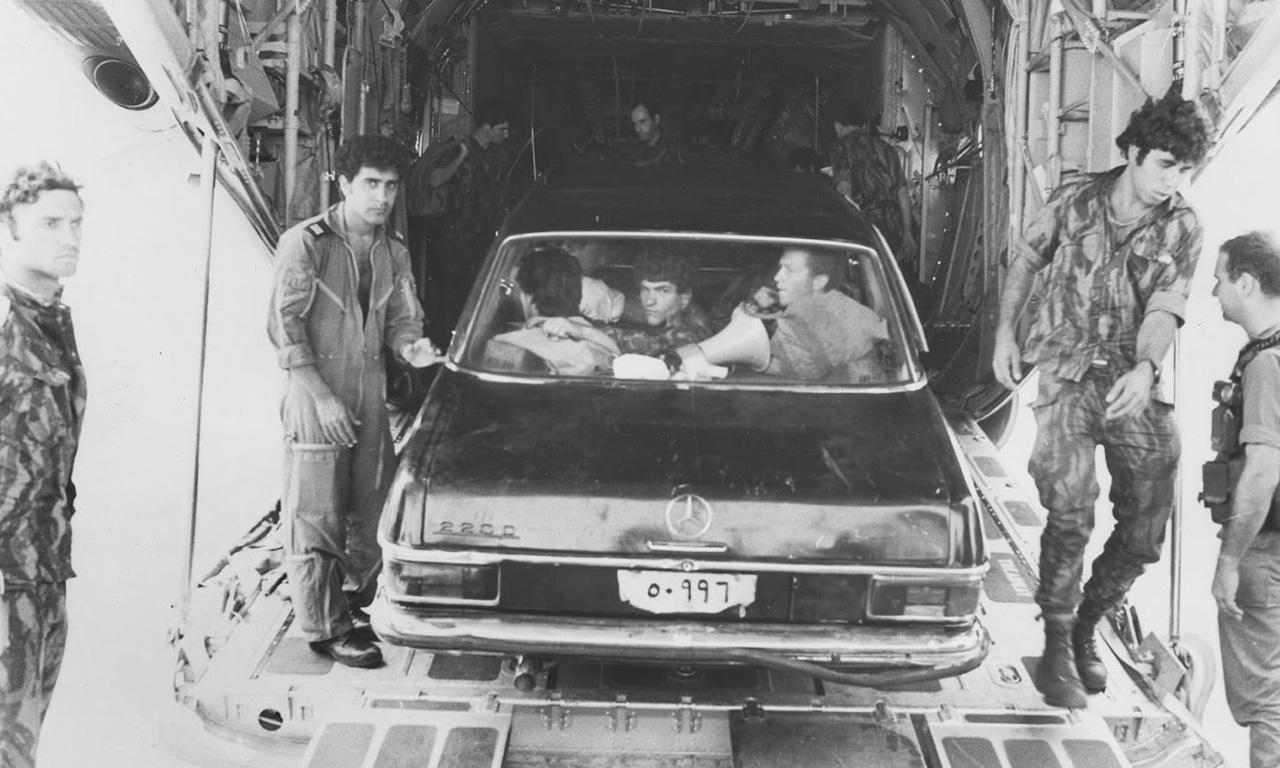
Entebbe raid or
Operation Entebbe, officially codenamed
Operation Thunderbolt (retroactively codenamed
Operation Yonatan), was a 1976 Israeli counter-terrorist mission in
Uganda. It was launched in response to the Palestinian-led hijacking of an international civilian passenger flight (an
Airbus A300) operated by
Air France between the cities of
Tel Aviv and
Paris. During a stopover in
Athens, the aircraft was hijacked by two Palestinian
PFLP–EO militants and two German
RZ militants,
[8] who diverted the flight to
Libya and then to Uganda, where they landed at
Entebbe International Airport to be joined by other militants. Once in Uganda, the group enjoyed support from Ugandan dictator
Idi Amin.
[9]
Having hijacked the flight of 248 passengers on 27 June 1976, the militants took hostages with the stated objective of compelling the release of 40 Palestinian militants imprisoned in Israel as well as the release of 13 prisoners in four other countries.
[10] The hijackers had the stated objective to free 40 Palestinian and affiliated militants imprisoned in Israel and 13 prisoners in four other countries in exchange for the hostages.
[10] Over 100 Ugandan soldiers were deployed to support the hijackers after the flight landed, and Amin, who had been informed of the hijacking from the beginning,
[11] had personally welcomed the militants at Entebbe.
[12] After moving all of the hostages to a defunct airport, the hijackers separated all Israelis and several non-Israeli
Jews from the larger group of passengers,

en.m.wikipedia.org







 Zone1 Why is someone who is not white roleplaying as a white man?


 Court tosses another case due to conduct of Toronto Crown attorney Marnie Goldenberg. Judge cites ‘unacceptable negligence’


