More than halfway done.. Wonderfully explained. I recommend it.
Amazon.com: Empires of Trust: How Rome Built--and America Is Building--a New World (9780525950745): Thomas F. Madden: Books
Does America face the same destiny endured by ancient Rome? Is the U.S. military overextended? Does the separation of church and state strengthen or weaken a geopolitical powerhouse? Is the United States just another Empire of Conquest being corrupted by its own power? Of late, it is not only historians who have been asking these questions. Thomas Madden, an award-winning professor of history, now shows almost everything we thought we knew about Rome to be wrong, and revolutionizes our understanding of what a good world empire can be.
Taking readers on a dramatic tour of the Roman Republic, a golden era before the depravities of the Caesars and late Empire, Madden uncovers a peaceful, retiring people who above all wanted to be left alone to enjoy their own families and communities, maintaining the rural traditions of their forebears. But external threats required them to establish security, which they did by creating superlative military forces and transforming defeated enemies into friends. Trust, not brutality, was the key ingredient. All other empires since have been Empires of Conquest—until now.
Beginning with a Roman story strikingly parallel to the American Abu Ghraib scandal, Madden provides a much needed historical context to our burning contemporary debates. The United States can be an empire of trust, and Madden is on a mission to get pundits, candidates, and other election-year spectators—which means all of us—to recognize this profound duty.
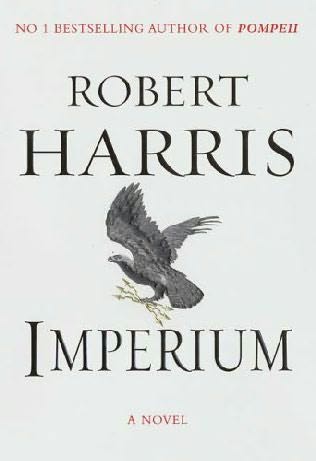
Thank you for that recommendation. I recommend Robert Harris' "Imperium" (first of three in a trilogy, the second being "Conspirata," with the third still unwritten) for a detailed look at a famous orator and stateman in the political struggle of Ancient Rome a the time of the republic's failure to cope with events and ambitions for power in a republican system.
IMPERIUM
I always have seen Roman history, not as a predictor of American history, but as a long detached and removed view of republican history and politics. Today, even after two millennia, debate is still hot about the personalities of many of the important figures, and what they stood for.
Their history doesn't predict ours but does offer some caveats for pitfalls. Roman history has been seen as that of a "conservative" and sterile state, and didn't offer very much to inspire or interest our intellectuals to write about; especially compared to the Greek city states, particularly Athens.
But recently there have been some friendly, almost giddy comparisons of our own president Obama and Julius Caesar: The chairman of the National Endowment for the Arts has declared that "Barack Obama is the most powerful writer since Julius Caesar." And liberal author and commentor Michael Parenti authored a book titled "The Assassination of Julius Caesar: A People's History of Ancient Rome", in which he critiqued previous theories of Caesar's murder, saying that it is a story of popular resistance against entrenched power and wealth.
Remember that Caesar is generally credited with being the lead actor who destroyed the Roman republic.