No, they would not and did not. If you're really interested you can start with this Wikipedia article regarding chattel slavery in the U.S.
Slavery in the United States - Wikipedia
Slavery in the United States was the legal institution of human
chattel enslavement, primarily of
Africans and
African Americans, that existed in the
United States of America in the 18th and 19th centuries. Slavery had been practiced in
British America from early
colonial days, and was legal in all
Thirteen Colonies at the time of the Declaration of Independence in 1776. It lasted in about half the
states until 1865, when it was prohibited nationally by the
Thirteenth Amendment. As an economic system, slavery was largely replaced by
sharecropping.
....
"Fancy ladies"
A little-discussed but important aspect of slavery in the United States is that owners of female slaves, including children (the sale of a 13 year old "nearly a fancy" is documented,
[56] Zephaniah Kingsley, Jr. bought his wife when she was 13,
[57]:191 and
Thomas Jefferson's relation with
Sally Hemings began when she was about 15), could freely and legally use them as
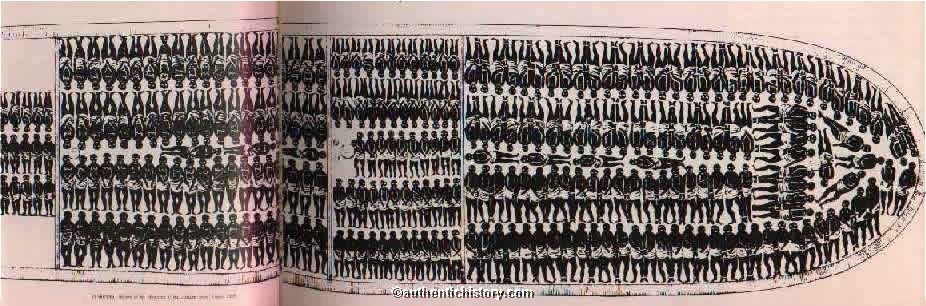
sexual objects. (Homosexual use of male slaves may well have existed, but no evidence has come to light.) They had no more rights than cows did. This follows free use of female slaves on slaving vessels by the crews.
[58]:83
Furthermore, females of breeding age were supposed to be kept pregnant[
citation needed], producing more slaves to sell. The variations in skin color found in the United States make it obvious how often black females were impregnated by whites.
[59]:78–79 For example, in the 1850 Census, 75.4% of "free negros" in Florida were described as
mulattos, of mixed race.
[60]:2 Nevertheless, it is only very recently, with
DNA studies, that any sort of reliable number can be provided, and the research has only begun.
"Fancy" was a code word that indicated the girl or young woman was suitable for or trained for sexual use.
[61]:56 Light-skinned girls, who contrasted with the black field workers, were preferred.
[56][62]
The sexual use of black slaves by white men, either slave owners or those who could purchase the temporary services of a slave, took various forms. A slaveowner, or his teenage sons, could go to the slave quarters area of the plantation and do what he wanted, usually in front of the rest of the slaves, or with minimal privacy. It was not unusual for a "house" female — a housekeeper, maid, cook, laundress, or
nanny — to be used by one or more white males of the household for their sexual enjoyment.
Houses of prostitution throughout the slave states were largely staffed by female slaves providing sexual services, to their owners' profit. There were a small number of free black females engaged in prostitution, or concubinage, especially in New Orleans.
[61]:41
Light-skinned young girls were sold openly for sexual use; their price was much higher than that of a field hand.
[63][61]:38, 55 Special markets for the fancy girl trade existed in New Orleans
[61]:55 and
Lexington, Kentucky.
[64] We have this on no less an authority than
Abraham Lincoln:
Describing the 1828 trip, Gentry vividly remembered a day in New Orleans when he and the nineteen-year-old Lincoln came upon a slave market. Pausing to watch, Gentry recalled looking down at Lincoln's hands and seeing that he "doubled his fists tightly; his knuckles went white." Men wearing black coats and white hats buy field hands, "black and ugly," for $500 to 800. And then the real horror begins: "When the sale of "fancy girls" began, Lincoln, "unable to stand it any longer," muttered to Gentry "Allen that's a disgrace. If I ever get a lick at that thing I'll hit it hard."
[65]
Those "considered educated and refined, were purchased by the wealthiest clients, usually plantation owners, to become personal sexual companions." "There was a great demand in New Orleans for 'fancy girls'."
[66]
At the very top, like the case of
Sally Hemings,
Thomas Jefferson's now-famous and very light-skinned (3/4 white) slave
concubine, some type of relationship other than the merely sexual could exist between master and slave. There is a parallel in the non-sexual friendship, affection, and a grudging, limited respect, that sometimes occurred between owner and slave.[
citation needed]
A master could control a slave's body — her actions and words — but not her thoughts. Plantation owners were often isolated and lonely, and there was a surplus of single white men.
Antebellum society was not known for happy marriages, and life for white women on plantations was often boring; not many wanted to live in what then were often remote areas. There were occasional cases of manumission of a female slave followed by marriage, which were grudgingly accepted, at least in more liberal areas (cities and upper South). There were a larger number in which the father/owners legally recognized the children as theirs.[
citation needed]
The sexual use of female slaves by white men was an open secret. Abolitionists often touched on it, though in the context of more serious abuses, such as splitting up families.[
citation needed] White women had usually heard of it, but generally were not in a position to do anything about it. So it was swept under the rug and ignored.
[67] Sexual values were different then. Some things we abhor, such as sex between adults and minors, were not seen as big problems. In contrast, things we[
original research?] think of today (2018) as harmless or even healthy, such as
masturbation, they viewed with horror.