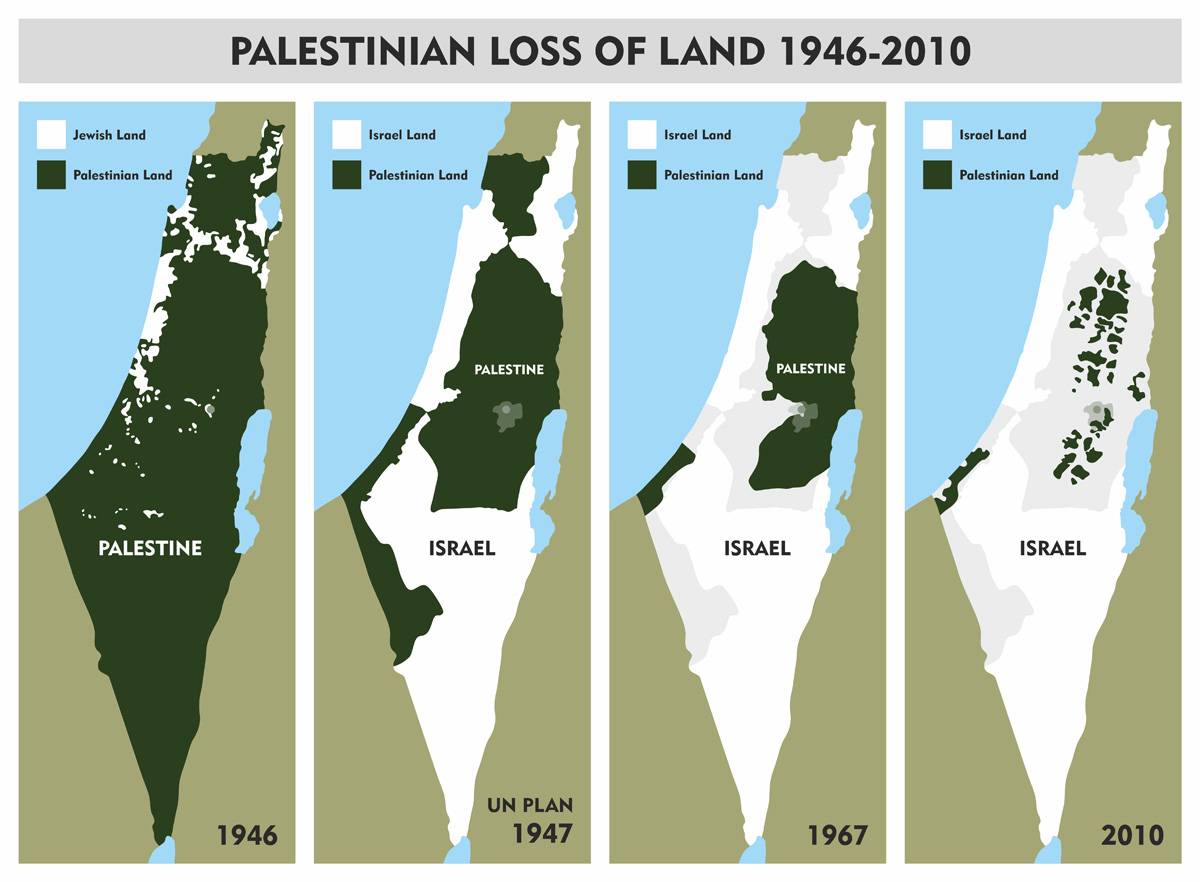
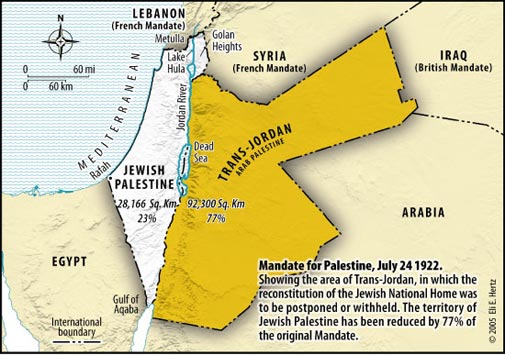
"His Majesty's government view with favour the establishment in Palestine of a national home for the Jewish people, and will use their best endeavours to facilitate the achievement of this object,
it being clearly understood that nothing shall be done which may prejudice the civil and religious rights of existing non-Jewish communities in Palestine..."
Jews have been prejudicing the civil and religious rights of existing non-Jewish communities in Palestine since the inception of Zionism. Currently there are nearly equal numbers of Jews and non-Jews living under Israeli laws between the River and the sea.
Every Jew has a vote in Israeli elections.
Less than half of non-Jews have the same privilege.
Would you call that prejudicial?
Balfour Declaration - Wikipedia, the free encyclopedia
Nobody's saying there isn't problems but:
FACT
Israel is one of the most open societies in the world. Out of a population of 6.7 million, about 1.3 million 20 percent of the population are non-Jews (approximately 1.1 million Muslims, 130,000 Christians and 100,000 Druze).1
Arabs in Israel have equal voting rights; in fact, it is one of the few places in the Middle East where Arab women may vote. Arabs currently hold 8 seats in the 120-seat Knesset. Israeli Arabs have also held various government posts, including one who served as Israel's ambassador to Finland and the current deputy mayor of Tel Aviv. Oscar Abu Razaq was appointed Director General of the Ministry of Interior, the first Arab citizen to become chief executive of a key government ministry. Ariel Sharon's original cabinet included the first Arab minister, Salah Tarif, a Druze who served as a minister without portfolio. An Arab is also a Supreme Court justice.
Arabic, like Hebrew, is an official language in Israel. More than 300,000 Arab children attend Israeli schools. At the time of Israel's founding, there was one Arab high school in the country. Today, there are hundreds of Arab schools.2
In 2002, the Israeli Supreme Court also ruled that the government cannot allocate land based on religion or ethnicity, and may not prevent Arab citizens from living wherever they choose.2a
The sole legal distinction between Jewish and Arab citizens of Israel is that the latter are not required to serve in the Israeli army. This is to spare Arab citizens the need to take up arms against their brethren. Nevertheless, Bedouins have served in paratroop units and other Arabs have volunteered for military duty. Compulsory military service is applied to the Druze and Circassian communities at their own request.
Some economic and social gaps between Israeli Jews and Arabs result from the latter not serving in the military. Veterans qualify for many benefits not available to non-veterans. Moreover, the army aids in the socialization process.
On the other hand, Arabs do have an advantage in obtaining some jobs during the years Israelis are in the military. In addition, industries like construction and trucking have come to be dominated by Israeli Arabs.
Although Israeli Arabs have occasionally been involved in terrorist activities, they have generally behaved as loyal citizens. During the 1967, 1973 and 1982 wars, none engaged in any acts of sabotage or disloyalty. Sometimes, in fact, Arabs volunteered to take over civilian functions for reservists. During the outbreak of violence in the territories that began in September 2000, Israeli Arabs for the first time engaged in widespread protests with some violence.
The United States has been independent for almost 230 years and still has not integrated all of its diverse communities. Even today, 60 years after civil rights legislation was adopted, discrimination has not been eradicated. It should not be surprising that Israel has not solved all of its social problems in only 57 years.
Myths & Facts - Human Rights in Israel and the Territories
Israel's Declaration of Independence called for the establishment of a Jewish state with equality of social and political rights, irrespective of religion, race, or sex.[156]
The rights of citizens are guaranteed by a set of basic laws (Israel does not have a written constitution).[157] Although this set of laws does not explicitly include the term "right to equality", the Israeli Supreme Court has consistently interpreted "Basic Law: Human Dignity and Liberty"[158] and "Basic Law: Freedom of Occupation (1994)"[159] as guaranteeing equal rights for all Israeli citizens.[160]
The Israeli Ministry of Foreign Affairs states that "Arab Israelis are citizens of Israel with equal rights" and states that "The only legal distinction between Arab and Jewish citizens is not one of rights, but rather of civic duty. Since Israel's establishment, Arab citizens have been exempted from compulsory service in the Israel Defense Forces (IDF)."[161] Druze and Circassians are drafted into the Israeli army, while other Arabs may serve voluntarily; however, only a very small number of Arabs choose to volunteer for the Israeli army[162]).
Many Arab citizens feel that the state, as well as society at large, not only actively limits them to second-class citizenship, but treats them as enemies, impacting their perception of the de jure versus de facto quality of their citizenship.[163] The joint document The Future Vision of the Palestinian Arabs in Israel, asserts:

"Defining the Israeli State as a Jewish State and:eusa exploiting democracy in the service of its Jewishness excludes us, and creates tension between us and the nature and essence of the State."
The document explains that by definition the "Jewish State" concept is based on ethnically preferential treatment towards Jews enshrined in immigration (the Law of Return) and land policy (the Jewish National Fund), and calls for the establishment of minority rights protections enforced by an independent anti-discrimination commission.[164]
A 2004 report by Mossawa, an advocacy center for Palestinian-Arab citizens of Israel, states that since the events of October 2000, 16 Arabs had been killed by security forces, bringing the total to 29 victims of "institutional violence" in four years.[165] Ahmed Sa'adi, in his article on The Concept of Protest and its Representation by the Or Commission, states that since 1948 the only protestors to be killed by the police have been Arabs.[166]
Yousef Munayyer, an Israeli citizen and the executive director of The Jerusalem Fund, wrote that Palestinians only have varying degrees of limited rights in Israel. Although Palestinians make up about 20 percent of Israel's population, less than 7 percent is allocated to Palestinian citizens. He describes 1.5 million as second-class citizens while four million more are not citizens at all. He points out that a Jew from any country can move to Israel but a Palestinian refugee, with a valid claim to property in Israel, cannot. Munayyer also described the difficulties he and his wife faced when visiting the country
Arab citizens of Israel - Wikipedia, the free encyclopedia

Are there problems, Yes, however you can see the problem when the Arab Muslims say that the very definition of Israel as being a Jewish state. They feel this excludes them. Really? Isn't that kinda like the pot calling the kettle black? There are 50+ Muslim based countries in the world and only ONE Jewish State. Other religions live in said Muslim countries so why don't those countries have secular rule? I'd also like to point out that the "Palestinians" have had several chances since 1917 to have their own state and turned it down repeatedly. Now Israel has given them land, they have thier own state,Muslim rule, Hamas in fact. Now lets see how the civil rights stack up there. Now before you take the splinter out of the Israeli eye, maybe the Palestinians should take the massive log out of their own.
1.Freedom of speech[edit source]
The PA has guaranteed freedom of assembly to the Palestinian population. Nevertheless, the right to demonstrate for opponents of the PA regime or of PA policy has become increasingly subject to police control and restriction and is a source of concern for human rights groups[5]
2.Freedom of the press[edit source]
As of 2006, sixteen Palestinian journalists have been killed or wounded by PA security forces or armed groups.[15]
Abdullah Issa, Palestinian publisher and editor of the on-line magazine Donia al Watan was detained in July 2006 by the Palestinian Authority for publishing a story about the theft of $400,000 from PA Foreign Minister Mahmoud Zahar while visiting Kuwait. The story cast aspersions on Hamas for having large amounts of cash while the Palestinian people were suffering from poverty. This story had appeared elsewhere in the Arabic media. Issa, accused Zahar and Hamas of interfering with freedom of the press in the Palestinian territories and expressed disappointment with Hamas's failure to reign in corruption as promised in their election platform: "Our people have the right to hold Hamas accountable for the deterioration in their living conditions,...We were hoping that the Hamas government would start chasing and arresting all the murderers and thugs who continue to roam the streets of the Gaza Strip and to open all the cases of financial corruption." Donia al Watan's offices have been attacked by masked gunmen and there have been death threats against Issa and staff.[16]
3.Freedom of association[edit source]
In 2000 the Palestinian President ratified the first Palestinian Labor Law. However, according to the Democracy and Workers' Rights Center (DWRC) the final draft lacked teeth;[20][21] late in 2005, working with Palestinian Authority legal experts, DWRC successfully achieved Palestinian Legislative Council acceptance of an alternative Palestinian Labor Law.[22]
The decades-old Palestinian General Federation of Trade Unions (PGFTU), which claims to represent all Palestinian workers, was incorporated into the PA upon its inception. Independent unionists assert the PGFTU lacks in internal democracy and transparency, and is dominated by Fateh (all of its general secretaries and most of its unit heads have come from Fateh). In a 2007 press release carried by the Advocacy Project, DWRC noted that internal elections had not been held since 1981.[23] These critiques have been supported by scholars Joost Hiltermann,[24][25] Nina Sovich[26][27] and Sos Nissen,[28] who argue that the PGFTU has long been dominated by political factions and has in turn failed to provide effective representation for workers.
According to the PGFTU, in June 2007 Hamas seized their headquarters and ordered PGFTU staff to discuss how they were to operate under Hamas rule. According to the PGFTU general secretary, the PGFTU's refusal to negotiate led Hamas to attempt to assassinate Rasem Al Bayari, the union's deputy general secretary, three times thereafter. According to Al-Jazeera, "Saed, who has been linked to Fatah, said Hamas executive forces had seized two more offices - in Gaza and Khan Younis - taking much of the property within."[29]
In 2007, when DWRC organized the Federation of Independent and Democratic Trade Unions & Workers' Committees in Palestine representing 50,000 workers outside of the PGFTU,[30] the PGFTU retaliated by informing on the Gaza head of DWRC and the independent trade union coalition to Palestinian internal security, claiming that they were affiliated with Hamas.[31]
4.
Freedom of property ownership[edit source]
In the Palestinian National Authority, selling land to Jews is a crime PUNISHABLE BY DEATH.[32]
5.Freedom of religion[edit source]
Many Jewish and Christian holy sites remain in areas controlled by the Palestinian National Authority. Under the Oslo Accords, both the Palestinians and Israel agreed to respect and protect religious rights of Jews, Christians, Muslims, and Samaritans by a) protecting the Holy Sites, 2) providing free access to the Holy Sites, and assuring freedom of worship and practice. a. Protection of the Holy Sites; b. Free access to the Holy Sites; and c. Freedom of worship and practice. The PA, however, has in some cases failed to honor these commitments (see sections below).
A Christian leader claimed that there were "rampant reports" of abuses and persecution in PA-run areas. Anti-Christian riots were reported in Ramallah and surrounding villages, as well as in towns in the Gaza Strip.[14]
Christian sites[edit source]
During 2007 many Western and Christian targets were attacked in the West Bank and Gaza. Members of local gangs and terror cells blew up and destroyed institutions linked to Western culture such as American schools, church libraries and dozens of Internet cafes. These events were largely ignored by the media.[33]
According to the U.S. State Department's Annual Report on Religious Freedom, 2000, "there were periodic reports that some Christian converts from Islam who publicize their religious beliefs have been harassed. Converts complained that they were mistreated and threatened. The draft Palestinian Basic Law specifically forbids discrimination against individuals based on their religion; however, the PA did not take any action against persons accused of harassment".[34]
After a visit to the Palestinian Authority administered areas, Senator Connie Mack related on the floor of the US Senate the case of a Christian convert from Islam who was falsely charged with selling land to Jews, arrested, beaten and tortured, and held for eight months without trial. Despite being released after his family borrowed thousands of dollars for bribes, his father continued to be held, he believed as insurance of his silence on the matter.[35]
7.Jewish sites[edit source]
Joseph's Tomb in Nablus was a site of clashes between Jews and Palestinians. The Israeli army agreed to withdraw from the site and turn over control to the Palestinian police, who had agreed to protect the site. Instead, they stood by while mobs ransacked the site and burned holy books.[36]
Moreover, prominent members of the PA have denied that there is any Jewish historical connection to many Jewish holy sites, and PA Ministries have embedded such ideas in their press releases:
Yasser Arafat:
"That is not the Western Wall at all, but a Moslem shrine". Yasser Arafat.[37]
"Abraham was neither Jewish nor a Hebrew, but was simply an Iraqi. The Jews have no right to claim part of the Tomb of the Patriarchs in Hebron, Abraham's resting place, as a synagogue. Rather, the whole building should be a mosque."[38]
Mufti Sheikh 'Ikrima Sabri:
"No stone of the Al-Buraq [Western] Wall has any relation to Judaism. The Jews began praying at this wall only in the 19th century, when they began to develop [national] aspirations."[39]
PA Information Ministry Press Release:
"The archeology of Jerusalem is diverse excavations in the Old City and the areas surrounding it revealed Umayyad Islamic palaces, Roman ruins, Armenian ruins and others, but nothing Jewish. Outside of what is mentioned in the Old and New Testaments, there is no tangible evidence of any Jewish traces in the old city of Jerusalem and its immediate vicinity."[40]
Al-Hayat Al-Jadeeda, PA newspaper:
"Be alert and treat Joseph's Tomb and Rachel's Tomb as parcels of Palestinian land which must be liberated, and treat Joseph and Rachel as two people who died, like anyone else."[41]
8.Right to education[edit source]
According the ministerial statistic collected in September 2005, there are 2267 schools in general education, 31001 classes, 1078488 students, and 48674 teachers in the Palestinian territories. 24% of schools are UNRWA-operated, 70% are governmental, and 6% are private. Another survey conducted in May 2005 shows that there are 138139 students enrolled in Higher Education Institutions. Between these students, 9002 (6.5%) are in community colleges, 6034 (4.4%) in university colleges, 46453 (33.6%) in Al-Quds Open University, and 76650 (55.5%) in traditional universities.
Moves by the Hamas-run Education Ministry to impose Islamist ideals onto the educational system concern many Palestinians and outside observers. In March 2007, the Ministry pulled an anthology of folktales narrated by Palestinian women from the curriculum, removed the book from libraries, and reportedly destroyed 1,500 copies. The anthology was edited by Sharif Kanaana, a novelist and anthropology professor at Ramallah's Birzeit University, and Ibrahim Muhawi, a teacher of Arabic literature and the theory of translation. Education Minister Nasser Shaer said that the book is "full of clear sexual expressions." A story entitled, "The Little Bird," mentions private parts, and in the notes the authors say that, "the bird in the story is a symbol of femininity and that sexual subjects are a principal source of humor in Palestinian folklore".[42]
9.Arab Organization for Human Rights Report[edit source]
In December 2012, Arab Organization for Human Rights (AOHR) released a report that accused the Palestinian Authority (PA) of "inhumane practices and human rights violations" against Palestinian civilians. The AOHR alleges that from 2007-2011, the PA detained 13,271 Palestinians, and tortured 96% of them, resulting in six deaths.[44] The report claims that PA law enforcement raided universities, hospitals and houses in order to arrest people wanted for protesting against the Israeli occupation. The report also relates that PA officers confiscated equipment and personal cash after arresting the suspects.[44]
10.Conditions for detainees[edit source]
Amnesty International has published a number of reports documenting the Palestine Authority's arrest and detention of civilians without charge. In one year at least 400 such detentions were reported, primarily of political dissidents to the Palestine Authority .[45] In that single year Amnesty International found: "Torture [by the Palestine Authority] of detainees remained widespread. Seven detainees died in custody. Unlawful killings, including possible extrajudicial executions, continued to be reported."
11.Status of women[edit source]
Women have full suffrage in the PA. In the 2006 elections, women made up 47 per cent of registered voters. Prior to the elections, the election law was amended to introduce a quota for women on the national party lists, resulting in 22 per cent of candidates on the national lists being women. The quota's effectiveness was illustrated in comparison with the district elections, where there was no quota, and only 15 of the 414 candidates were women.[55]
Hamas has begun enforcing some Islamic standards of dress for women in the PA; women must don headscarves in order to enter government ministry buildings.[42] In July 2010, Hamas banned the smoking of hookah by women in public. They claimed that it was to reduce the increasing amount of divorces.[56]
Honor killings are a problem in the PA; the Hamas government has not moved to stop these killings and may have set up infrastructures which participate in them. According to the 2005 Annual report of The Palestinian Human Rights Monitoring Group, 11 Palestinian women died as a result of honor killings in 2005.[57] A November 2006 Human Rights Watch report, A Question of Security Violence against Palestinian Women and Girls,[58] notes that, "a significant number of women and girls in the Occupied Palestinian Territories (OPT) are victims of violence perpetrated by family members and intimate partners. While there is increasing recognition of the problem and some Palestinian Authority (PA) officials have indicated their support for a more forceful response, little action has been taken to seriously address these abuses. Indeed, there is some evidence the level of violence is getting worse while the remedies available to victims are being further eroded." The report discusses spousal and child abuse, rape, incest, and "honor" crimes. The report suggests that reasons for the PA's failure to respond to the violence include, "discriminatory laws that condone and perpetuate such violence and the virtual absence of institutionalized policies to prevent violence, assist victims, and hold perpetrators accountable". The report outlines Jordanian laws in force in the West Bank and Egyptian laws in Gaza, "include provisions that provide a reduction in penalty to men who kill or attack female relatives committing adultery; relieve rapists who agree to marry their victims from any criminal prosecution; and allow only male relatives to file incest charges on behalf of minors". In addition, HRW interviewed Palestinian police officers, including chiefs of police who, "downplayed the severity of violence against women in the OPT and questioned the need for their involvement in the dissemination of potentially life-saving information to victims." The report also noted that, "police officers and clan leaders regularly "mediate" and "resolve" these cases, typically by returning the abused women to the "care and protection" of her attacker, without ever referring the case to the courts or the woman to social or other services she might need". While Human Rights Watch acknowledged, "the severe constraints that the Israeli occupation imposes upon the PA," they concluded that, "notwithstanding these limitations, the PA holds ultimate responsibility for protecting victims and holding perpetrators accountable...and that PA is failing to act diligently to prevent, investigate, and punish violence against women, putting women's health and lives in jeopardy. Ultimately, the PA is denying victims their rights under international human rights law to non-discrimination and an effective judicial remedy for abuse".
Crimes against women accelerated during 2007. Cases of women being beaten are common in the Gaza strip. Women murdered for "family honor" are seldom reported. Most women who are murdered are buried by members of their family in secret, and their deaths are not reported to any official body. The Palestinian media also refrain from reporting on this, for the sake of "family honor."[33]
Israeli officials say Hamas in the Gaza Strip has established hard-line Islamic courts and created the Hamas Anti-Corruption Group, which is described as a kind of "morality police" operating within Hamas' organization. Hamas has denied the existence of the anti-corruption group, but it was recently report to have carried out a high-profile "honor killing" widely covered by the Palestinian media.[14]
In 2013, UNRWA canceled its annual marathon in Gaza after Hamas rulers prohibited women from participating in the race.[59]
Status of homosexuality[edit source]
12.Status of homosexuality[edit source]
According to Shaul Ganon of the Tel-Aviv based gay rights group, Agudah, "The P.A.'s usual excuse for persecuting gays is to label them collaborators--though I know of two cases in the last three years where people were tried explicitly for being homosexuals." "It's now impossible to be an open gay in the P.A." Ganon says that Islamic law is the main justification for such treatment of homosexuals under the Palestinian Authority.
Human rights in the Palestinian territories - Wikipedia, the free encyclopedia