You are repeating the same oversimplified false dilemma, positing a uniaxis political identity where at least a dual axis, if not a tri-axis, is necesary. The parties have never been defined in terms of one issue, though the closest parallel in Civil War era was economic issues. One of the primary causes for the alignment shift that happened was transitioning economic views and priorities. However, there was also evolution across nearly ever form of issue, most of which eventually became viewed as connecting to other issues differently than used to be the case. This same type of realignment has continued to this day, resulting in, for example, a variety of Republican flavors.
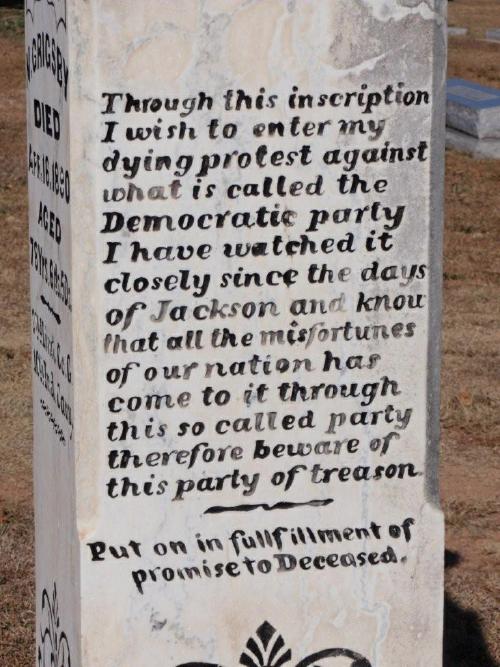
Conservative southern Democrats were supported by a primarily rural, working class, and lower income electorate. The aftermath of the Civil War and the abolition of slavery inflicted substantial economic hardship on the south. Some parts still have yet to recover fully, to this day. Meanwhile, the Republicans of those days were more closely aligned with a more liberal, rich elite professional class. Conservatives back then were the champions of the poor and working classes, while liberals were the ones who advocated on behalf of the ownership and business classes. Republicans were champions of federal power, while Democrats were champions of state rights.
As southern Democrats attempted to use state measures to continue suppressing blacks, Republicans attempted to leverage federal power to suppress Jim Crow. As time went on, the race politics of both sides opened the door for both parties memberships to become more diverse on economic issues. By the early 20th century both parties had their own variants of conservative and progressive elements. Economic issues were more complex, and clear economic identities were difficult to maintain, and a variety of other issues became common identifying markers.
Perhaps one of the best examples of the quintessential liberal style of Republican of a century ago is Teddy Roosevelt. Roosevelt once said "We welcome the German and the Irishman who becomes an American. We have no use for the German or Irishman who remains such," in regards to his view that American immigration policy should contain the expectation that an immigrant "Americanize" and become a US citizen. This, his endorsement of the gold standard in monetary policy, and his support for protectionary tariffs to favor American products over foreign imports are examples of positions that would be considered conservative principles by today's standards. But he also pushed Congress to deliver a wealth of new regulations on business, called for substantial estate taxation, supported unions, and was known as the "trust-buster." By modern standards, these would be considered liberal positions.