I even have the same paranoia as of late swimming in lake..
Well actually your fear might not be all that unfounded as Bull Sharks have been known to swim upstream, into fresh water.
The
bull shark (
Carcharhinus leucas), also known as the
Zambezi shark or, unofficially, as
Zambi in Africa and
Nicaragua shark in
Nicaragua, is a
requiem shark commonly found worldwide in warm, shallow waters along coasts and in rivers. The bull shark is known for its aggressive nature, predilection for warm shallow water, and presence in
brackish and freshwater systems including
estuaries and rivers.
Bull sharks can thrive in both saltwater and freshwater and can travel far up rivers. They have even been known to travel as far up the
Mississippi River as
Illinois,
[2] although there have been few recorded freshwater attacks. They are probably responsible for the majority of near-shore
shark attacks, including many attacks attributed to other species.
[3]
Unlike the
river sharks of the genus
Glyphis, bull sharks are not true freshwater sharks, despite their ability to survive in freshwater habitats.
Jersey shore attacks 1916
Jersey Shore shark attacks of 1916 - Wikipedia the free encyclopedia
Between July 1 and July 12, 1916, five people were attacked along the coast of New Jersey by sharks; only one of the victims survived. The first attack occurred on Saturday, July 1 at
Beach Haven, a resort town established on
Long Beach Island off the southern coast of New Jersey. Charles Epting Vansant, 25, of
Philadelphia was on vacation at the
Engleside Hotel with his family. Before dinner, Vansant decided to take a quick swim in the Atlantic with a
Chesapeake Bay Retriever that was playing on the beach. Shortly after entering the water, Vansant began shouting. Bathers believed he was calling to the dog, but a shark was actually biting Vansant's legs. He was rescued by
lifeguardAlexander Ott, and bystander Sheridan Taylor who claimed the shark followed him to shore as they pulled the bleeding Vansant from the water. Vansant's left thigh was stripped of its flesh; he
bled to death on the manager's desk of the Engleside Hotel at 6:45. p.m.
[1]
Despite the Vansant incident, beaches along the Jersey Shore remained open. Sightings of large sharks swarming off the coast of New Jersey were reported by sea captains entering the ports of
Newark and
New York City but were dismissed. The second attack occurred 45 miles (72 km) north of Beach Haven at the resort town of
Spring Lake, New Jersey. The victim was Charles Bruder, 27, a
Swiss bellhopat the Essex & Sussex Hotel. Bruder was killed on Thursday, July 6, 1916, while swimming 130 yards (120 m) from shore. A shark bit him in the abdomen and severed his legs; Bruder's blood turned the water red. After hearing screams, a woman notified two lifeguards that a canoe with a red
hull had capsized and was floating just at the water's surface. Lifeguards Chris Anderson and George White rowed to Bruder in a lifeboat and realized he had been bitten by a shark. They pulled him from the water, but he bled to death on the way to shore. According to
The New York Times, "women [were] panic-stricken [and fainted] as [Bruder's] mutilated body ... [was] brought ashore." Guests and workers at the Essex & Sussex and neighboring hotels raised money for Bruder's mother in Switzerland.
[2][3]
The next two attacks took place in Matawan Creek near the town of Keyport on Wednesday, July 12. Located 30 miles (48 km) north of Spring Lake and inland of Raritan Bay, Matawan resembled a Midwestern town rather than an Atlantic beach resort.[4] Matawan's location made it an unlikely site for shark attacks. When Thomas Cottrell, a sea captain and Matawan resident, spotted an 8 ft (2.40m) long shark in the creek, the town dismissed him.[5] Around 2:00 p.m. local boys, including epileptic[6] Lester Stillwell, 11, were playing in the creek at an area called the Wyckoff dock when they saw what appeared to be an "old black weather-beaten board or a weathered log." A dorsal finappeared in the water and the boys realized it was a shark. Before Stillwell could climb from the creek, the shark attacked him and pulled him underwater.[7]
The boys ran to town for help, and several men, including local businessman Watson Stanley Fisher, 24, came to investigate. Fisher and others dived into the creek to find Stillwell's body, believing him to have suffered a seizure; Fisher was also attacked by the shark in front of the townspeople. He was pulled from the creek without recovering Stillwell's body. His right thigh was severely injured and he bled to death at Monmouth Memorial Hospital in
Long Branch at 5:30 p.m.
[8] Stillwell's body was recovered 150 feet (46 m) upstream from the Wyckoff dock on July 14.
[9]
The fifth and final victim, Joseph Dunn, 14, of New York City was attacked a half-mile from the Wyckoff dock nearly 30 minutes after the attacks on Stillwell and Fisher. The shark bit his left leg, but Dunn was rescued by his brother and friend after a vicious tug-of-war battle with the shark. Joseph Dunn was taken to
Saint Peter's University Hospital in
New Brunswick; he recovered from the attack and was released on September 15, 1916.
[10]


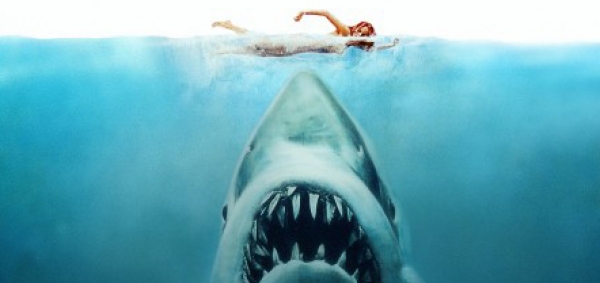

 just picturing them screaming..... more power to them, I would have died of the heart attack already...


