Wood heat.

Woodznutz

Diamond Member
Joined
Dec 9, 2021
Messages
33,141
Reaction score
16,679
Points
1,788
I had Thanksgiving dinner with a family that lives in a huge house. The large main floor was heated solely by an ornate enameled cast iron wood heater (although there is a backup heating system). A slow-moving ceiling fan gently circulated the heat throughout the open floor plan living area. Throughout the four or five hours I was there the heater was fed only three or four pieces of oak firewood. I was amazed at the heat output and the efficiency of the heater (it was cold outside that day). I have an open fireplace as well that heats my whole living area but uses several times as much wood as that heater.
 
I have never been in a house where a wood fireplace heated anything more than the immediate area around the fireplace. My last house was built with a cold-air suction system that drew air from outside into the fireplace, so that you weren't just re-heating air that you had already heated via the gas furnace.

They do make "wood burners" that are intended to heat a house, but they are rare in these parts (Western Pennsylvania), mostly owned by the same people who hunt deer and actually have them butchered for food.
 
Fireplaces are inefficient wood eaters.

If you want more efficiency get a insert.

 
We had a old two story chestnut log house (hunt camp) that only had a old stone fireplace for heat.....It really sucked ass.

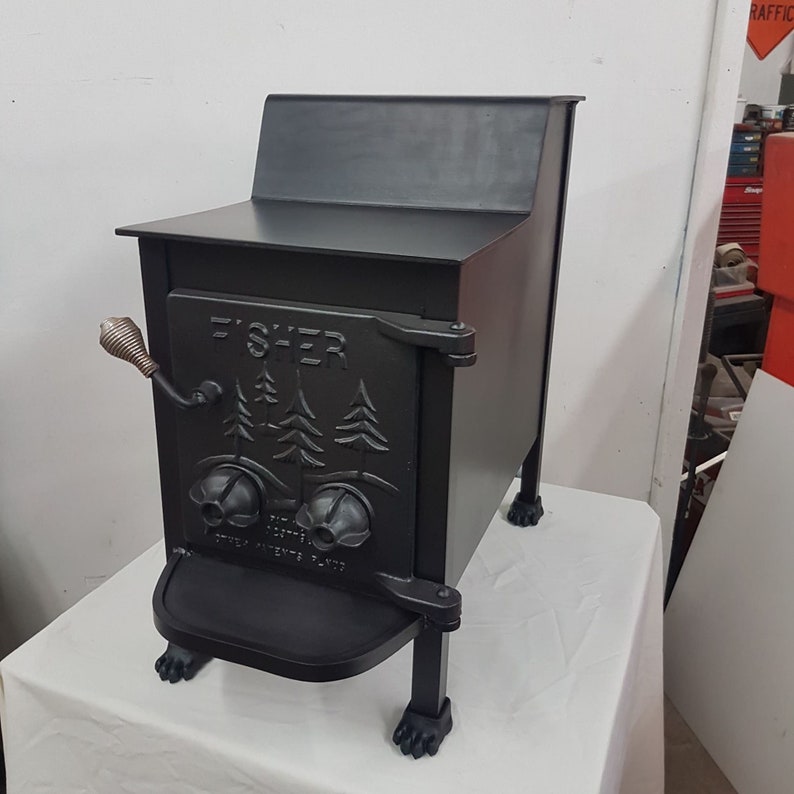
I found a single-door Fisher woodstove at a yard sale for $75.00 and we just built out the hearth a bit and sat it in front of the fire place and ran the stovepipe up into the chimney a ways and sealed around it.

Sorta like this one:

il_794xN.2203515030_jkjg.jpg


It would run you out of there in no time. Before it would take a few days of constant burning to get the fireplace to halfway heat the old house.
 
Both of my grandparent's homes were heated with wood and coal, using a stove, and I was never cold. My father installed a wood stove in our free-standing garage and kept it warm all winter to keep things from freezing and keep us warm when working out there.
 
My father-in-law had a wood burning fireplace. It was in a back family room, made the room like a furnace while the rest of the house was cold.
Fire freaks me out. I don't like gas heating or cooking, or candles. It's probably a trust thing, meaning I don't trust others to not be carless.
 
My father-in-law had a wood burning fireplace. It was in a back family room, made the room like a furnace while the rest of the house was cold.
Fire freaks me out. I don't like gas heating or cooking, or candles. It's probably a trust thing, meaning I don't trust others to not be carless.
It bothers you when people ride the bus or walk? :abgg2q.jpg:
 
I have never been in a house where a wood fireplace heated anything more than the immediate area around the fireplace. My last house was built with a cold-air suction system that drew air from outside into the fireplace, so that you weren't just re-heating air that you had already heated via the gas furnace.

They do make "wood burners" that are intended to heat a house, but they are rare in these parts (Western Pennsylvania), mostly owned by the same people who hunt deer and actually have them butchered for food.
Mine is an insulated 'heatilator' type that circulates air around the firebox and into the room. A variable speed blower helps the process. My fireplace not only heats the entire downstairs (five rooms) but helps heat the second floor as well as heat rises powerfully. I set my furnace at 72 degrees but when the fireplace is going the house reaches nearly 80 degrees. The furnace never comes on while the fireplace is burning even on the coldest nights.

Two years ago I upgraded the attic insulation to R-49, which has also helped measurably.
 
I have a wood stove in the livingroom and it does heat the whole house (968sf). It can take awhile for the heat to get back to the bedrooms.

Woodstoves are better at heating than an open fireplaces, an insert would improve heating capability.

Species of wood burned can also make a huge difference in heat output. Oak is excellent as it's a hardwood & burns slower, and gives a higher btu than other woods.


Cottonwood sucks, no matter what you do with it and around here they can't give it away. It will burn and produce some heat if that's what you have, but you'd be better off with another type of wood.

And ALWAYS burn dry seasoned wood that has been down a year, no matter the species.
 
I have a wood stove in the livingroom and it does heat the whole house (968sf). It can take awhile for the heat to get back to the bedrooms.

Woodstoves are better at heating than an open fireplaces, an insert would improve heating capability.

Species of wood burned can also make a huge difference in heat output. Oak is excellent as it's a hardwood & burns slower, and gives a higher btu than other woods.


Cottonwood sucks, no matter what you do with it and around here they can't give it away. It will burn and produce some heat if that's what you have, but you'd be better off with another type of wood.

And ALWAYS burn dry seasoned wood that has been down a year, no matter the species.
I did have a cabinet style woodstove that also heated my water but when I remodeled I lost the chimney inlet as we lowered the old ceiling. It heated the whole house including the upstairs apartment. I cut a vent in the ceiling for this. I ran a coil at the top of the heater and circulated the water through a 40 gallon 'preheater' tank that was connected ahead of the water heater. I lost that as well due to the remodel.
 
I have a wood stove in the livingroom and it does heat the whole house (968sf). It can take awhile for the heat to get back to the bedrooms.

Woodstoves are better at heating than an open fireplaces, an insert would improve heating capability.

Species of wood burned can also make a huge difference in heat output. Oak is excellent as it's a hardwood & burns slower, and gives a higher btu than other woods.


Cottonwood sucks, no matter what you do with it and around here they can't give it away. It will burn and produce some heat if that's what you have, but you'd be better off with another type of wood.

And ALWAYS burn dry seasoned wood that has been down a year, no matter the species.
Aspen is similar to cottonwood and I have had great results burning it. Of course it must be completely dry. Those species hold a lot of water.
 
A Farmer John friend has an outside wood heater/boiler (hot water system) that heats his 2500 sq ft home and even his pool!

Something along these lines except bigger:

OIP.TLIJt9_BrS-_ZXG2akaPOQHaEK


He put it under a metal awning with three sides closed in and feeds it slab wood he gets from a local sawmill. He just takes his lowboy to the mill and they load it up for him and he cuts it to length.

The amount of watered down creosote it produces is impressive.....5 gallons every couple days.

LOL.....He just pours it out under his fences to keep the grass under them down. ;)
 
Aspen is similar to cottonwood and I have had great results burning it. Of course it must be completely dry. Those species hold a lot of water.


Fir, especially Douglas fir is very common here and also holds alot of water/moisture and is a softwood. But it needs to burn at a higher temp to prevent creosote build up in the pipes. Always good to burn a mix of hardwoods and softwoods. Softwoods, such as fir get a fire good and hot fairly quickly, They do leave alot of hot coals but then hardwoods to hold the heat/fire overnight.

Hardwoods have leaves and softwoods have needles or fronds that stay on the tree thru the year and are evergreens. Just sayin
 
A good insert will do very well and is very efficient. From 10 percent open to 90 percent withe the insert and blowers.
 
15th post
A good insert will do very well and is very efficient. From 10 percent open to 90 percent withe the insert and blowers.
I only burn a few hours each evening, and I like the open fire.
 
Back
Top Bottom