
Litwin
Diamond Member
From 1917 to 1991, a multitude of war crimes and crimes against humanity were carried out by The Bolshevik empire

 en.wikipedia.org
so here we go:
Massacre of Kyiv
After the Battle of Kruty, which successfully delayed the Bolshevik advance on Kyiv and gave time for those who wanted to evacuate, the Red Guards approached the outskirts of Kyiv on February 4, 1918, where Mikhail Muravyov gave the order to begin the assault.[11] During the capture of the capital, poison gas was used and massive shelling was carried out, which did not stop for several days (up to 15 thousand shells), as a result of which, among other things, the house of Mykhailo Hrushevsky was destroyed.[12]
On Duma Square (today Maidan Nezalezhnosti), Muravyov was met by a delegation of the city council led by then-mayor Yevhen Ryabtsov. Andriy Polupanov was appointed Soviet commander in Kyiv.[13] Entering the city, Soviet troops killed about 5,000 civilians, declared enemies. Among the dead were only two politicians: Secretary for Territorial Affairs of UPR Oleksandr Zarudny and Central Rada deputy Isak Puhach.[14][15
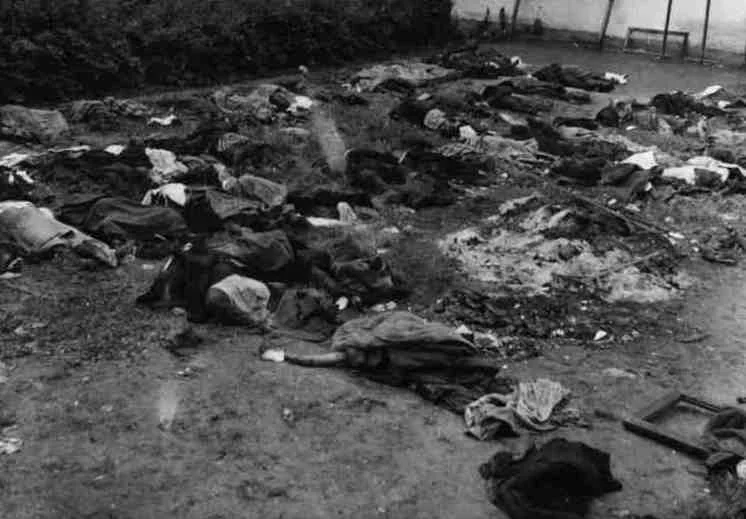
Soviet war crimes - Wikipedia
so here we go:
Massacre of Kyiv
After the Battle of Kruty, which successfully delayed the Bolshevik advance on Kyiv and gave time for those who wanted to evacuate, the Red Guards approached the outskirts of Kyiv on February 4, 1918, where Mikhail Muravyov gave the order to begin the assault.[11] During the capture of the capital, poison gas was used and massive shelling was carried out, which did not stop for several days (up to 15 thousand shells), as a result of which, among other things, the house of Mykhailo Hrushevsky was destroyed.[12]
On Duma Square (today Maidan Nezalezhnosti), Muravyov was met by a delegation of the city council led by then-mayor Yevhen Ryabtsov. Andriy Polupanov was appointed Soviet commander in Kyiv.[13] Entering the city, Soviet troops killed about 5,000 civilians, declared enemies. Among the dead were only two politicians: Secretary for Territorial Affairs of UPR Oleksandr Zarudny and Central Rada deputy Isak Puhach.[14][15


