We all came out of Africa, deal with it.
Negroids came much later than Cro Magnoids.
Cro Magnoids existed 36,000 years with Kostenki Man.
Negroids existed only maybe 6,000 years with Asselar Man.
Link?
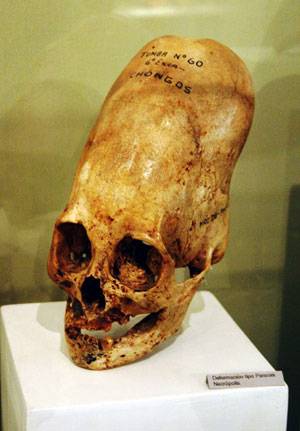
The Asselar specimen has been dated to around 6,400 BP, making it no older than the
Holocene. Along with such fossils as
Iwo Eleru (11,000 BP) and
Ishango (8,000 BP), which were excavated from archaeological sites in West and Central Africa, Asselar is one of the earliest known anatomically modern human skeletons of
Negroid type
Asselar man - Wikipedia
Remember that Melanesian-like
old bust of the Man from Markina Gora aka. Kostenki14? Well, apparently he didn't look like that. Behind a paywall at
Herald of the Russian Academy of Sciences:
Abstract: The latest results of anthropological studies of bone remains from the earliest Upper Paleolithic burial discovered on Russian territory, the Markina Gora site (Kostenki 14), are described. Multivariate statistical methods and parallel studies of the buried skull structure and dentition established that their morphological characteristics undoubtedly belonged to the Caucasian complex. In combination with paleogenetic data, the findings contradict the earlier hypothesis of the southern origin of the Kostenki 14 individual and its similarity to the population of the Australo-Melanesian region
Eurogenes Blog: Kostenki14: morphologically Caucasoid
Kostenki14: first genome of an Upper Paleolithic European
At last, we have an ancient genome from pre-LGM Europe: Kostenki14 (K14) from the famous Kostenki Upper Paleolithic site in southern Russia. The paper,
Seguin-Orlando et al. 2014, is locked away behind a paywall, but at least the supplementary materials are open access.
K14 is dated at 38,700-36,200 cal BP and belongs to Y-chromosome haplogroup C-M130, a basal and widespread paternal marker that has already been reported in three other ancient European genomes: La Brana-1 from Mesolithic Spain and NE5 and NE6 from Neolithic Hungary. It also belongs to mitochondrial (mtDNA) haplogroup U2, but we've actually known this since 2010 (see
here).
The shared drift stats of the form
f3(Mbuti;K14,X), where X is the test population, reveal that from among present-day Eurasians, this early European is most similar to Northeast Europeans, such as Lithuanians, Estonians and Belarusians, and some Western Europeans, like Basques and Orcadians (ie. people from the Orkney Isles). This is also what we've seen from other indigenous European hunter-gatherer genomes sequenced to date
Eurogenes Blog: Kostenki14: first genome of an Upper Paleolithic European