
Doc7505
Diamond Member
- Feb 16, 2016
- 23,414
- 41,649
- 2,430
Why are Afghanistan and Pakistan fighting?
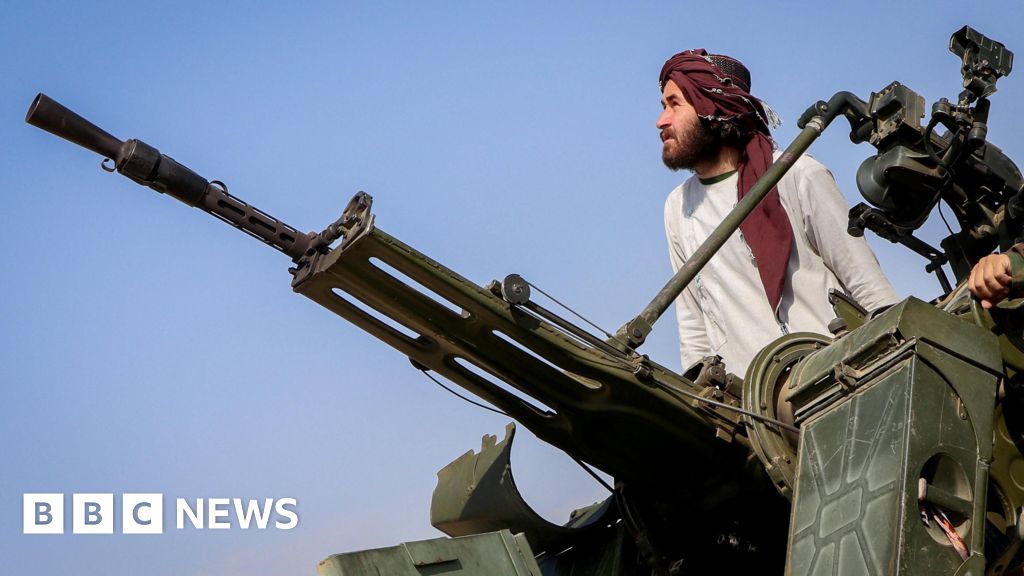
Why are Afghanistan and Pakistan fighting?
The two sides have different versions of how and why the deadly dispute began.
 www.bbc.com
Residents of Kabul's District 6 were awakened abruptly on Thursday night by the sound of an explosion that shook their homes. They rushed out in the street and heard jets flying overhead.
It was a night that saw a serious escalation in violence between Afghanistan and Pakistan, with Pakistan launching airstrikes in Afghanistan - including its capital city, Kabul. Other places struck were in Paktia and Kandahar provinces, the latter a stronghold and the birthplace of the Taliban movement.
Hostilities between the two sides have been ongoing for months, yet the answer to who started the aggression depends on who you ask.
~Snip~
The Taliban government says they were "retaliatory operations" - a response after "Pakistani military elements carried out an incursion into Afghan territory, violated Afghan sovereignty, and caused the deaths of several civilians, including women and children".
They were referring to an earlier round of Pakistani airstrikes carried out less than a week ago - on the night of 21 February - targeting the eastern Nangarhar and Paktika provinces. The United Nations has said it has credible reports that 13 Afghan civilians were killed in those strikes.
Islamabad has a different view. It says its airstrikes have not targeted civilians but instead have targeted militant hideouts in Afghanistan, specifically those of the Tehreek-i-Taliban Pakistan (TTP) or the Pakistani Taliban, which Pakistan's government refers to as Fitna al Khawarij.
Pakistan says it has "conclusive evidence" that TTP has been behind a series of attacks in the country, including the recent suicide bombing of a Shia mosque in Islamabad in which more than 30 people were killed. IS claimed to be behind the Islamabad attack, but Pakistan has said it has "conclusive evidence" the TTP is behind it.
~Snip~
Both countries blamed the other for not engaging seriously in diplomacy.
Militarily, Pakistan has the upper hand by a long mile. It is a significant military power with hundreds of tanks and aircraft, and advanced defence technology.
Commentary:
Sounds like typical dog bites hand of master.
For years Pakistan was the haven, sources of weapons and food for the Taliban.
Pakistani Inter-Service Intelligence ISI supplied the haven, logistics, materiel ammunition, fuel and fighters to fight U.S. forces.
A 2012 NATO study concluded that ISI support was critical to the Taliban's survival and resurgence following their retreat from Afghanistan in 2001.
U.S. forces frequently encountered, captured, or killed Pakistani nationals fighting alongside or for the Taliban.
Taliban commanders told the BBC that Pakistan provided training, and they received supplies like rocket-propelled grenades and landmines.
Former U.S. military chief Adm. Mike Mullen described the Haqqani network—a key Taliban component targeting U.S. troops—as a "veritable arm" of the ISI.


