
Doc7505
Diamond Member
- Feb 16, 2016
- 23,594
- 41,978
- 2,430
The Real Reason America Attacked Iran and Took Down Nicolas Maduro
The White House's stated justifications are true. They're just not the whole truth.
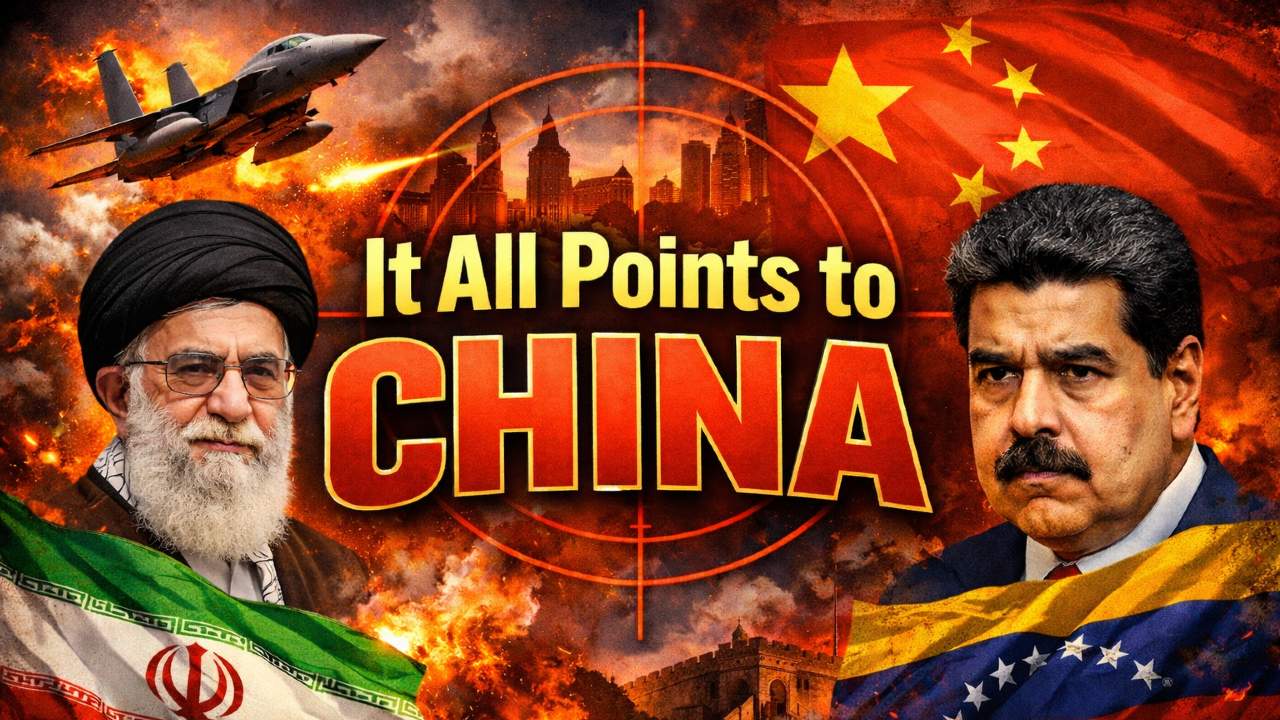
The Real Reason America Attacked Iran and Took Down Nicolas Maduro
The official story is real — but incomplete. Operation Epic Fury's stated goals — eliminating Iran's nuclear program, destroying its
 discernreport.com
The Real Reason America Attacked Iran and Took Down Nicolas Maduro
The official story is real — but incomplete. Operation Epic Fury's stated goals — eliminating Iran's nuclear program, destroying its
discernreport.com
28 Feb 2026 ~~ By Alexis Williamson
(Excerpt)
The China-Iran relationship was a strategic hedge, not just a business deal. The 2021 Comprehensive Strategic Partnership committed China to $400 billion in Iranian investment over 25 years. Crucially, this gave China a sanctions-resistant, American-proof energy backstop — a lifeline specifically designed to function in a scenario where the U.S. tries to squeeze China’s energy supply during a Taiwan confrontation. Operation Epic Fury just incinerated that hedge.China is the world’s largest crude oil importer, consuming roughly eleven million barrels per day, with approximately half of that supply sourced from the Middle East. And Iran has been one of the most critical — and most strategically convenient — nodes in that supply chain.
What Epic Fury Actually Severs
Operation Epic Fury’s military objectives are clear. But its strategic consequences extend far beyond nuclear centrifuges and IRGC command posts.Iran was not merely a security problem for the United States. It was the central pillar of a regional energy architecture that Beijing had spent fifteen years constructing — one explicitly designed to give China reliable, discounted, sanctions-resistant access to Middle Eastern oil in the event that relations with the West deteriorated, or that a Taiwan contingency forced China to find energy sources beyond the reach of American naval interdiction.
China imports roughly 70 percent of its oil, most of it transiting the Strait of Malacca. In any serious Taiwan contingency, those sea lanes become contested. American planners know this. Chinese planners know this. The strategic logic of China’s Iran relationship was never purely economic. It was a hedge against the day when the United States might try to squeeze China’s energy supply as part of a larger confrontation — a reserve lifeline that bypassed American-dominated sea lanes and American-aligned Gulf states.
Operation Epic Fury does not just eliminate a nuclear threat or kill a supreme leader. It smashes that hedge. It forces China to reckon with the possibility that its Iran-based energy backstop is gone, that its 25-year, $400 billion strategic partnership has been incinerated by American and Israeli airstrikes, and that the Middle Eastern architecture Beijing spent fifteen years building has just been cracked at its most concentrated and vulnerable point.
~Snip~
What Washington Won’t Say in the Briefing Room
None of what I have described will appear in a Pentagon press release. The four official objectives of Operation Epic Fury — nuclear, missile, proxy, naval — are all legitimate. Trump’s stated desire to end 47 years of Iranian aggression against American interests is genuine. The intelligence community’s concerns about Iran reconstituting its nuclear program after last June’s Operation Midnight Hammer strikes were real.But the architects of this policy have also read the same analysis that any serious strategist reads. They know that every year Washington spends managing Tehran is another year Beijing buys in the Pacific. They know that the orientation of the Middle East will determine whether the United States can prevail in the defining confrontation of this century: a Chinese move against Taiwan. They know that if energy-producing states in the Gulf drift deeply enough into the Chinese economic orbit, the entire sanctions architecture that the United States might need in a Taiwan contingency collapses at the moment it is most needed.
Operation Epic Fury is, at one level, the settlement of a 47-year-old account with the Islamic Republic. At another level, it is the opening act of a campaign to reshape the energy architecture of the world in ways that advantage the United States in the AI race — by denying China a critical backstop energy source, reorienting Middle Eastern oil flows, gaining countervailing leverage over China’s rare earth position, and demonstrating the kind of decisive, high-risk military action that makes adversaries recalibrate their willingness to accelerate confrontation.
The Reckoning That Must Come
Whether this gamble succeeds is an open question that history, not commentary, will answer. The risks are severe and immediate. Iran is retaliating against U.S. bases, against Israel, against Gulf state infrastructure. The Strait of Hormuz is disrupted. Oil markets face potential price shocks that could send crude toward $130 or $140 a barrel in a worst-case scenario. The region could metastasize into a broader war. The costs in human life — Iranian civilians, American soldiers, Israeli citizens — are not abstractions.Commentary:
Viewing Operation Epic Fury and the joint U.S.-Israeli campaign against Iran is an interesting viewpoint and can explain why Democrats are vehemently opposed to Trumps actions against Venezuela, now Iran and ultimately with China.
This is the antithesis of what Democrats have accomplished and striven for decades....
Every move Trump makes weakens China, by design.
Energy is the limiting ability for enterprising humans to get things done at the margin. The margin is currently AI.
Trounce an enemy’s energy lifeline, and you’ve trounced their ability to advance.


