
So this bat has turned the venom of its main meal, the Bark Scorpion, into a painkiller, an analgesic. It did it by rewiring its own brain chemistry, and the same thing happened to an entirely different species, a mouse than can also hunt these scorpions. The Pallid Bat uses echolocation only to avoid running into obstacles but does it hunting on foot, as it uses its hearing to catch and eat these scorpions that it heard from the air.
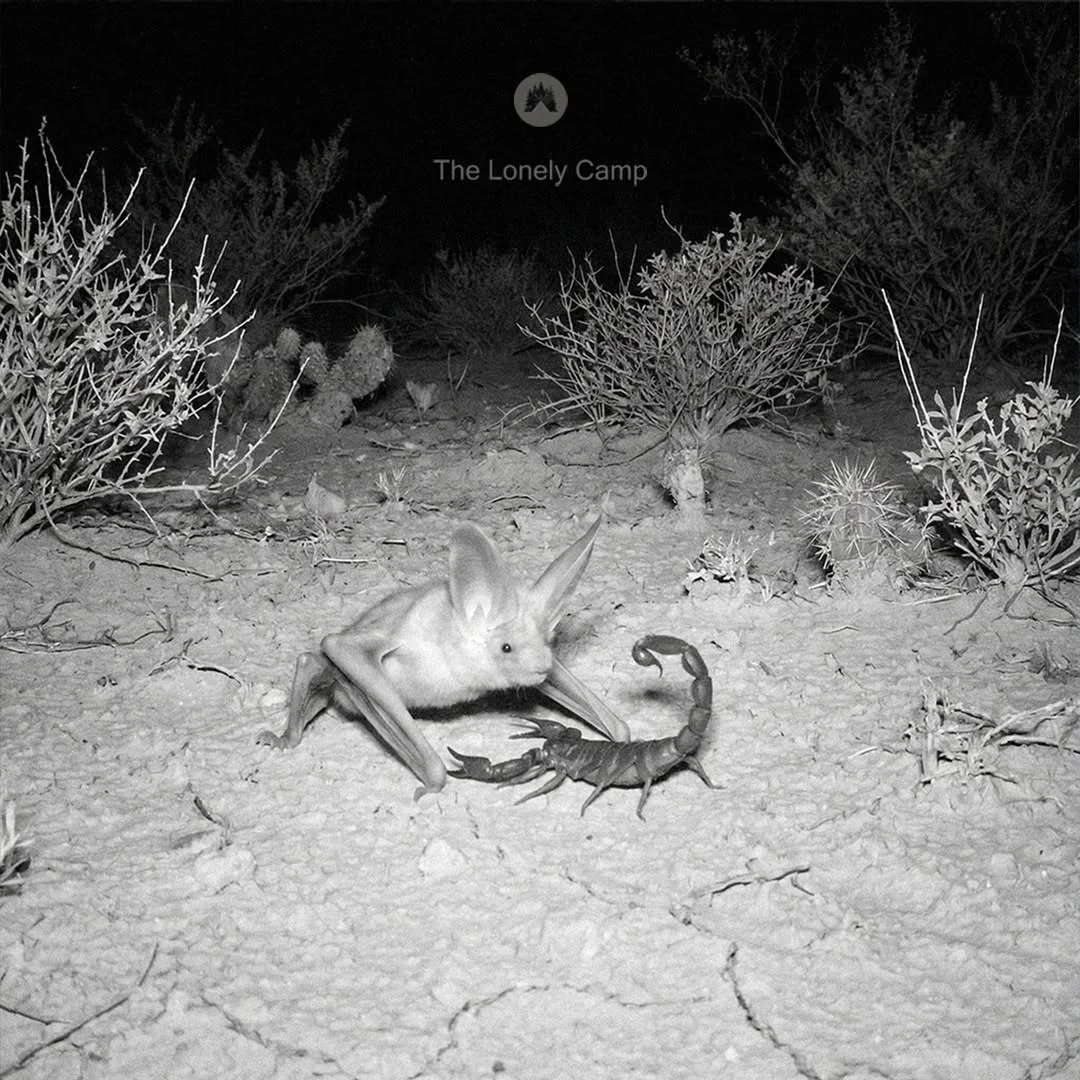
A bat in the American desert lands on the ground, folds its wings, walks up to a scorpion, and eats it. The scorpion stings it repeatedly during the fight. The bat shows no reaction.
Researchers at UC Riverside injected pallid bats with the venom of the Arizona bark scorpion, North America's most venomous scorpion species, at concentrations that would kill a mouse, and the bats behaved as if nothing had happened. The pallid bat is immune to the most dangerous scorpion on the continent and it hunts them on foot in the dark by listening for the sound of their legs moving across sand.
Most bats hunt by echolocation, sending out ultrasonic pulses and reading the returns to locate flying insects in midair. The pallid bat does not do this. It belongs to a small group of species called gleaners, bats that hunt from surfaces rather than in flight. The pallid bat uses its enormous ears to listen for prey-generated sounds on the ground: the scratch of a cricket's leg, the rustle of a centipede through leaf litter, the click of a scorpion crossing hardpan. When it locates the sound, it drops out of the air, lands beside the prey, and attacks on foot. It uses echolocation mostly for navigation and obstacle avoidance, not hunting. Its primary sensory tool for finding food is passive hearing so acute that it can pinpoint a scorpion walking across sand from flight altitude in total darkness.
The bat weighs between half an ounce and an ounce. It is roughly four inches long with a wingspan of fifteen inches and a blunt, pig-like snout. It is pale yellow-brown, built for blending into the desert substrates it hunts across. White Sands National Park says a pallid bat can eat half its body weight in arthropods in a single night. Its diet includes crickets, centipedes, cicadas, beetles, small lizards, and mice. The scorpion is the signature prey.
The venom resistance was confirmed in a 2017 study published in PLOS ONE by Bradley Hopp and Khaleel Razak at the University of California, Riverside. The researchers filmed pallid bats hunting live Arizona bark scorpions in controlled lab conditions. The bats were stung multiple times during every encounter. The stings produced no visible change in behavior. The bats did not flinch, did not slow down, and did not hesitate before attacking the next scorpion.
To test the limits, the team injected pallid bats with bark scorpion venom at the dose that kills fifty percent of mice (1.5 milligrams per kilogram of body weight). No effect. They increased the dose to nearly seven times the mouse lethal concentration. Three out of four bats showed no effect at all. The fourth showed a brief, transient response and recovered. A sting that sends a human to the emergency room and kills a mouse outright does not register in the pallid bat's nervous system.
The mechanism is not in the blood. The researchers tested whether pallid bat blood serum neutralized the venom before it reached the nerves. It did not. Venom incubated in bat serum retained full potency when injected into mice. The bats do not detoxify the venom. They ignore it. The resistance operates at the level of the sensory neurons themselves, likely through altered sodium ion channels that the venom's toxins are designed to activate. The scorpion's weapon targets a lock that the bat's nervous system has changed.
We covered a similar adaptation on this page with the grasshopper mouse, the small desert rodent that eats bark scorpions and howls at the moon. The grasshopper mouse uses a comparable mechanism: a mutation in its sodium channels converts the scorpion's pain signal into an analgesic effect, essentially turning the venom into a painkiller. Two unrelated desert animals, a bat and a mouse, evolved the same answer to the same problem independently. The bark scorpion's venom is one of the most effective chemical weapons in North American wildlife, and two of its neighbors found the off switch.
There is one more layer. Pallid bats visit cactus flowers. They are not doing it for the nectar, or at least not primarily. They are hunting insects that congregate around the blooms. But in the process of landing on the flowers and crawling across them to grab prey, they pick up pollen on their fur and carry it to the next flower. Bat Conservation International lists the pallid bat as a natural pollinator of several cactus species. An animal that spends its nights landing on the desert floor to eat scorpions that sting it without effect is also, by accident, keeping the cactus population alive.
The pallid bat does not echolocate to find its food. It listens. It does not catch insects in the air. It lands and walks. It does not avoid the most venomous scorpion in North America. It eats them. It gets stung during every hunt and processes the venom as background noise. And when it flies between scorpion kills, it pollinates the desert. Nothing about this animal works the way a bat is supposed to work, and all of it works.
Source: Hopp et al. (2017), PLOS ONE. Bat Conservation International. White Sands National Park Service. Animal Diversity Web, University of Michigan. UC Riverside Department of Psychology.
A bat in the American desert lands on the ground, folds its wings, walks up to a scorpion, and eats it. The scorpion stings it repeatedly during the fight. The bat shows no reaction.
Researchers at UC Riverside injected pallid bats with the venom of the Arizona bark scorpion, North America's most venomous scorpion species, at concentrations that would kill a mouse, and the bats behaved as if nothing had happened. The pallid bat is immune to the most dangerous scorpion on the continent and it hunts them on foot in the dark by listening for the sound of their legs moving across sand.
Most bats hunt by echolocation, sending out ultrasonic pulses and reading the returns to locate flying insects in midair. The pallid bat does not do this. It belongs to a small group of species called gleaners, bats that hunt from surfaces rather than in flight. The pallid bat uses its enormous ears to listen for prey-generated sounds on the ground: the scratch of a cricket's leg, the rustle of a centipede through leaf litter, the click of a scorpion crossing hardpan. When it locates the sound, it drops out of the air, lands beside the prey, and attacks on foot. It uses echolocation mostly for navigation and obstacle avoidance, not hunting. Its primary sensory tool for finding food is passive hearing so acute that it can pinpoint a scorpion walking across sand from flight altitude in total darkness.
The bat weighs between half an ounce and an ounce. It is roughly four inches long with a wingspan of fifteen inches and a blunt, pig-like snout. It is pale yellow-brown, built for blending into the desert substrates it hunts across. White Sands National Park says a pallid bat can eat half its body weight in arthropods in a single night. Its diet includes crickets, centipedes, cicadas, beetles, small lizards, and mice. The scorpion is the signature prey.
The venom resistance was confirmed in a 2017 study published in PLOS ONE by Bradley Hopp and Khaleel Razak at the University of California, Riverside. The researchers filmed pallid bats hunting live Arizona bark scorpions in controlled lab conditions. The bats were stung multiple times during every encounter. The stings produced no visible change in behavior. The bats did not flinch, did not slow down, and did not hesitate before attacking the next scorpion.
To test the limits, the team injected pallid bats with bark scorpion venom at the dose that kills fifty percent of mice (1.5 milligrams per kilogram of body weight). No effect. They increased the dose to nearly seven times the mouse lethal concentration. Three out of four bats showed no effect at all. The fourth showed a brief, transient response and recovered. A sting that sends a human to the emergency room and kills a mouse outright does not register in the pallid bat's nervous system.
The mechanism is not in the blood. The researchers tested whether pallid bat blood serum neutralized the venom before it reached the nerves. It did not. Venom incubated in bat serum retained full potency when injected into mice. The bats do not detoxify the venom. They ignore it. The resistance operates at the level of the sensory neurons themselves, likely through altered sodium ion channels that the venom's toxins are designed to activate. The scorpion's weapon targets a lock that the bat's nervous system has changed.
We covered a similar adaptation on this page with the grasshopper mouse, the small desert rodent that eats bark scorpions and howls at the moon. The grasshopper mouse uses a comparable mechanism: a mutation in its sodium channels converts the scorpion's pain signal into an analgesic effect, essentially turning the venom into a painkiller. Two unrelated desert animals, a bat and a mouse, evolved the same answer to the same problem independently. The bark scorpion's venom is one of the most effective chemical weapons in North American wildlife, and two of its neighbors found the off switch.
There is one more layer. Pallid bats visit cactus flowers. They are not doing it for the nectar, or at least not primarily. They are hunting insects that congregate around the blooms. But in the process of landing on the flowers and crawling across them to grab prey, they pick up pollen on their fur and carry it to the next flower. Bat Conservation International lists the pallid bat as a natural pollinator of several cactus species. An animal that spends its nights landing on the desert floor to eat scorpions that sting it without effect is also, by accident, keeping the cactus population alive.
The pallid bat does not echolocate to find its food. It listens. It does not catch insects in the air. It lands and walks. It does not avoid the most venomous scorpion in North America. It eats them. It gets stung during every hunt and processes the venom as background noise. And when it flies between scorpion kills, it pollinates the desert. Nothing about this animal works the way a bat is supposed to work, and all of it works.
Source: Hopp et al. (2017), PLOS ONE. Bat Conservation International. White Sands National Park Service. Animal Diversity Web, University of Michigan. UC Riverside Department of Psychology.


