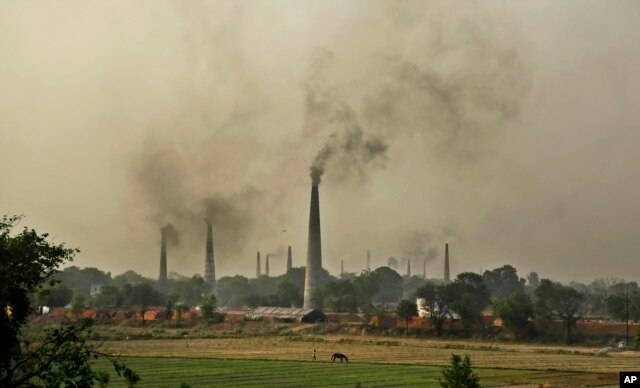
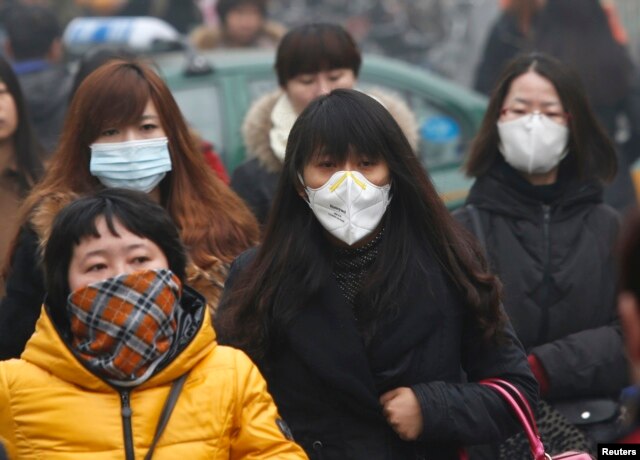
In the middle of the day, Beijing can be as dark as midnight. Yet, New Delhi is now the considered the most polluted city in the world, according to the World Health Organization, which also lists 12 other Indian cities among the world's 20 most polluted. In both countries, the air pollution comes mostly from vehicles burning diesel fuel and coal-fired power plants.
Dangers of air pollution kills
Globally, air pollution kills millions of people every year, including more than 627,000 in India alone, according to the World Health Organization. Fumes spewed by cars and smokestacks from coal-burning power plants contribute to air pollution the world over. And studies show air pollution kills. Patrick Breysse leads efforts to investigate the relationship between environmental factors and health at the U.S. Centers for Disease Control and Prevention. "We know when air quality is bad, hospital admissions go up for asthma; hospital admissions go up for cardiovascular disease. We know that mortality goes up when air pollution is bad," Breysse told VOA during an interview at CDC headquarters in Atlanta. He added that chronic obstructive pulmonary disease and cardio-vascular disease have a strong link to environmental pollutants.
Smoke rises from chimneys of brick kilns on the outskirts of New Delhi, India
In Paris on Saturday, doctors, nurses and other health professionals called on governments to reach a strong agreement about climate change at the UN negotiations. A recent report in The Lancet medical journal has warned that 50 years of global health improvements could be thrown into reverse by climate change and that the future for human health depends on the survival of the environment. Research at Stanford University shows that each increase of one degree Celsius caused by carbon dioxide would lead to 1,000 deaths annually in the U.S. Worldwide, that would translate to 20,000 air-pollution-related deaths per year.
Commuters wearing masks make their way amid thick haze in the morning in Beijing
Children, the elderly, people with respiratory disease and those who live in cities are most at risk. "If you look globally,” Breysse said, “people estimate that as much as a quarter of the global burden of disease is environmentally mediated. ... and so understanding what those factors are and minimizing our exposure to those factors will help us lower that burden of disease that we think are environmentally associated." The CDC had a healthy communities program where scientists evaluated the factors that affect people's health. The program is no longer funded, but one conclusion was that if communities minimized people's exposure to traffic, they increased the health of people who live there. "We can encourage biking, we can encourage carpooling, we can encourage mass transit — anything we can do to relieve that traffic burden will also improve people's health," Breysse said.
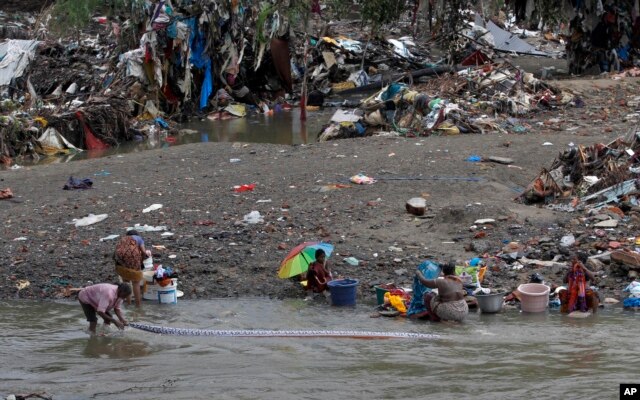
Concerns about water pollution