Liberia declared free of Ebola

TheOldSchool

Diamond Member
Joined
Sep 21, 2012
Messages
62,631
Reaction score
10,109
Points
2,070
Location
last stop for sanity before reaching the south
Lessons learned from the Ebola epidemic in West Africa...

Ebola Crisis Spurs New WHO Reform Program
October 20, 2015 — The World Health Organization chief said preparedness, awareness, and transparency are at the heart of the WHO reform process. World Health Organization Director General Margaret Chan said many lessons have been learned from the Ebola epidemic in West Africa and these will be incorporated in the reform process that is underway.
She said being prepared is decisive in fighting any epidemic or pandemic of such magnitude. She told VOA that involves shoring up and strengthening the resilience of fragile health systems in Africa and elsewhere in the world. “In the past, when we talk about a health system, the tendency is to talk about clinical care, curative care. And now we should integrate the public health disease surveillance and laboratory testing as part of the health system capability,” she stated. As part of the reform program, Dr. Chan said WHO is building a global emergency health work force. She said trained foreign medical teams will be on standby, ready to respond rapidly to a disease outbreak or natural disaster in any country.

She said decisive leadership, awareness of the dangers posed by an epidemic and being transparent about these problems are critical in controlling an outbreak. One of the big lessons learned from the Ebola outbreak in West Africa she said is the importance of building trust between the communities and health workers. She said community engagement is a big part of the ongoing work, even as the epidemic is winding down. “As we are speaking, we are still seeing community resistance. They hide cases. They continue to do secret burials and if that is happening, it will undermine the effective public health measures,” said Chan.

She said Liberia has been declared Ebola free. Sierra Leone has not had a case of Ebola in four weeks and is moving closer to the 42 days needed for it too to be declared free of the disease. But Dr. Chan warns Ebola is not yet finished. She said the World Health Organization is in the process of confirming three new suspected cases of Ebola in Guinea.

Ebola Crisis Spurs New WHO Reform Program

See also:

WHO Alarmed Over 'Unacceptably' High Road Accident Deaths
October 19, 2015 — The World Health Organization (WHO) says road traffic crashes continue to take an unacceptably high toll with 1.25 million people dying each year from accidents, which are largely preventable. The statistics are part of the “Global Status Report on Road Safety 2015” launched on Monday in Geneva.
The report, which is based on data collected from 180 countries, shows the number of annual deaths from road traffic crashes is stabilizing. It considers this good news since this is occurring while the number of motor vehicles is increasing rapidly and populations are growing worldwide. But, in a particularly sobering note, the data also show that road crashes are the number one cause of death among young people between the ages of 15 and 29. The WHO report also finds a big gap in terms of road safety and deaths between poor and rich countries.

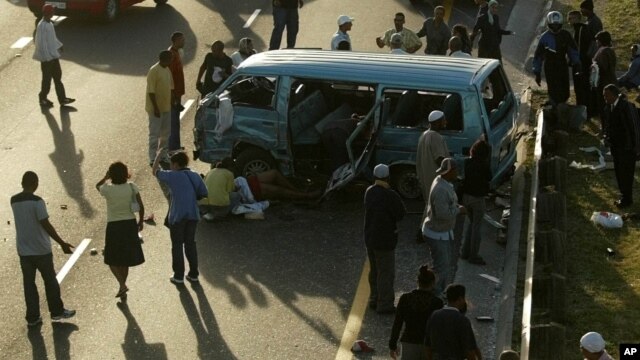
C1F856FA-81FD-4D02-BEE6-9C6A94DF0066_w640_r1_s_cx17_cy9_cw83.jpg

The site of a car crash is seen in Cape Town, South Africa.​

Africa, Middle East

It says 90 percent of road traffic deaths occur in low-and middle-income countries though they have just 54 percent of the world’s vehicles. The head of the WHO Department of Non-communicable Diseases, Etienne Krug, says the highest rate of traffic deaths is in Africa, followed by the Middle East. “Africa has only two percent of the world’s vehicles, but has the highest death rate on the road. Some countries, such as Sweden, the United Kingdom, the Netherlands, etc. have managed to decrease their road death rates by over 80 percent in the last decades by implementing a set of well-known measures. We are talking about improving legislation and enforcing it, particularly on the key risk factors such as speed, drinking and driving, the use of motorcycle helmets, seat belts and child restraints,” Krug said.

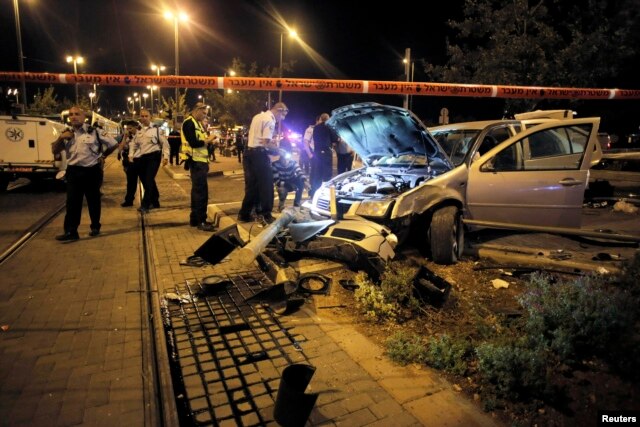
E1415CC4-D7C2-4904-AA2C-3D06DED87233_w640_s.jpg

Israeli policemen inspect a car wreck in Jerusalem​

Indeed, Krug added that in the last three years, 17 countries have made progress by implementing road safety laws. He said rapid response after the crash also is important in saving lives. He said studies show half of deaths from injuries could be avoided if victims received good trauma care after the crash. The report shows cyclists and pedestrians make up 26 percent of all road traffic deaths, with this figure reaching 33 percent in Africa. The report also finds some vehicles sold in 80 percent of all countries fail to meet basic safety standards. This, it says is particularly true in the poorer countries where nearly 50 percent of the 67 million new passenger cars were produced last year.

WHO Alarmed Over 'Unacceptably' High Road Accident Deaths
 
We need more infected people to get on airplanes and roam around the USA, that's the only way to control it
 
Remaining cases of ebola are all in Guinea...

Ebola Lingers in Guinea, Where Outbreak Began
November 10, 2015 — After killing more than 11,000 people, West Africa's Ebola outbreak is down to a handful of cases. They are all in Guinea, where the disease first emerged nearly two years ago and where health workers battle community resistance in their bid to extinguish the disease.
New cases that cropped up in the Forecariah district “have taken us all by surprise,” said Guinea's Minister of Health Col. Remy Lama, adding that the district had been free of the disease for nearly 40 days. Guinea’s battle against Ebola is hampered by residents who have abandoned preventive measures that help halt the spread of the virus, said Guinea task force spokesman Fode Tass Sylla. People shake hands, don’t wash hands and consult traditional healers instead of medics, said Sylla.

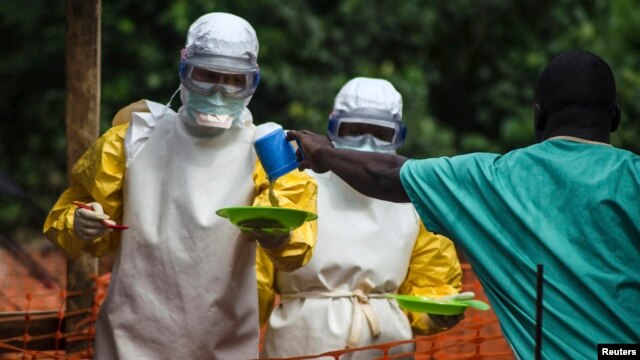
EE7D8C51-000A-4B9D-A6E5-CB91895150D0_w640_r1_s_cx4_cy7_cw96.jpg

Medical staff working with Medecins Sans Frontieres (Doctors Without Borders) in July 2014 take food to patients in the isolation area of an Ebola treatment center in Sierra Leone.​

In the tiny village of Tanah, about 160 kilometers (99 miles) southeast of Conakry, health workers mingle with residents, the majority of whom are being tracked to see if they show Ebola symptoms after an ill woman came here in September to see a traditional healer. Both she and the healer died, said Sylla. Six Ebola cases remain and more than 60 people are being monitored for symptoms. The World Health Organization recorded seven cases in Guinea in the past 21 days, according to the Nov. 4 situation report.

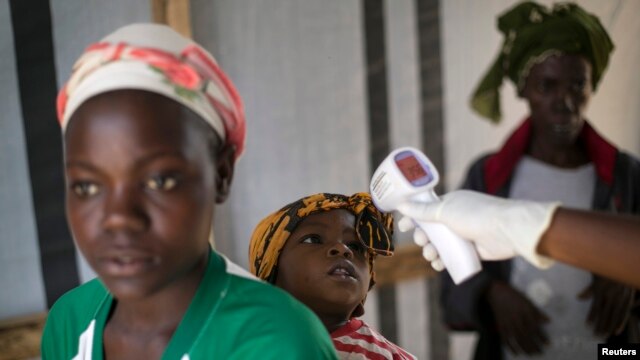
1B9DAA10-6CFC-4FA9-A8F5-5EB1126F5374_w640_r1_s.jpg

A health worker checks the temperature of a girl at the entrance to a Red Cross facility in the town of Koidu, Sierra Leone.​

Though Guinea has seen the least cases and deaths among its neighbors, with just over 2,500 dead from about 3,800 cases, according to the World Health Organization, the deadly virus hangs on as residents resist warnings and safer practices. Mounir Soumah, a 42-year-old teacher, said Guinea will continue to face problems unless people change their habits. “It's important for our survival in Forecariah because we always have baptisms, marriages and Quran lectures,” he said. “It's in these ceremonies that people are contaminated.”

Ebola Lingers in Guinea, Where Outbreak Began
 
Carla...

... nah, governor-elect Matt Bevin gonna stand up against Obolacare...

... an' disconnect Kentucky Kynect.
 
No doubt the aftereffects are the same in Liberia and Guinea...

Sierra Leone Ebola Survivors Face New Hardships
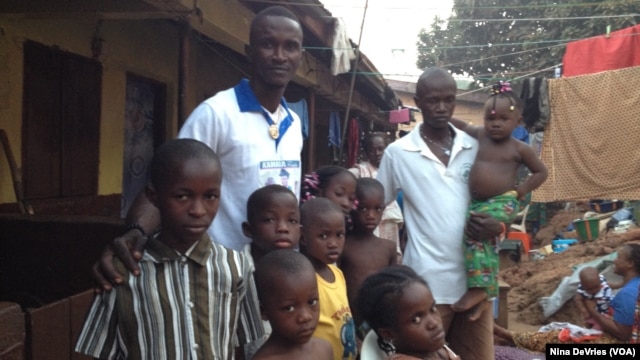
January 02, 2016 — As 2016 begins, Daddy Hasan Kamara, one of more than 4,000 Ebola survivors in Sierra Leone, is grateful to have his children with him. They mean the world to him.
Nine of his family members were not so lucky and died from the disease, including one son. “I’m really suffering, I’m really seeing things very hard,” Kamara said. Since his recovery, he has not been able to find work. He has eight children and two sisters to care for. He contracted Ebola from his mother in November 2014, a time when the virus was surging across Sierra Leone. “When I was in the treatment center I was totally mad over the whole thing," he said. "Even when the doctors called me to give me medicine, I always ignore [them], and then there were times the doctors feared me.”

E4FF8D55-028B-40D7-B82A-68431F5D4C78_w640_r1_s_cx0_cy8_cw0.jpg

Daddy Hasan Kamara stands outside his Freetown, Sierra Leone, home with family members​

The Ebola virus, which is transmitted through direct contact with bodily fluids, also ravaged Guinea and Liberia. The initial outbreak started in December 2013. Over 11,000 people died during the crisis. Now Sierra Leone and Guinea have been officially declared Ebola-free by the World Health Organization. Liberia should be completely free of Ebola transmission by this month.

Worries over Ebola return

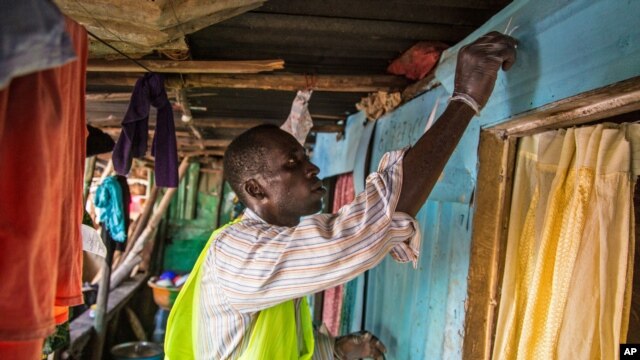
It is clear the emotions and memories are still raw for those who fought the virus as well. Salieu Jalloh is a social mobilization officer with the U.N. children's fund, UNICEF, in Sierra Leone. He went door to door informing people on how to protect themselves from the disease. Jalloh is happy 2016 was rung in Ebola-free but worries about a recurrence.

CFA62D04-6A18-422C-B943-B7943E230112_w640_r1_s.jpg

A health worker marks a home with chalk to identify that it has been visited, as they distribute bars of soap and information about Ebola in Freetown, Sierra Leone​

One of the biggest warnings about Ebola transmission is to avoid body contact. This is a difficult task for Sierra Leoneans, because the society is very affectionate. “We don’t want them to abandon" such behaviors as hugging and shaking hands, he said, "but there’s little you can do. You see people back-slapping each other, handshaking, dancing together. It’s frightening.”

As for Kamara, he worries about his future. He does not know how he will pay his rent or continue to provide for his family. He has been getting help from friends but knows that will not last forever. Still, he is trying to keep his spirits up and hopes that 2016 will bring him better luck.

Sierra Leone Ebola Survivors Face New Hardships

See also:

Ebola's Effect on West African Children,Traditions Outlasts Disease
January 02, 2016 - Guinea and Sierra Leone have been declared Ebola-free, while Liberia is expected to follow in mid-January. Experts say that health care systems need to be rebuilt and that safety practices adopted during the crisis must be maintained to prevent future outbreaks.
The epidemic touched many parts of society in the three countries stricken by the virus. Economies declined as quarantines affected cross-border trade, while unsteady health care systems collapsed. The outbreak, which started in March 2014, killed over 11,000 people and infected over 28,000.

Children heavily impacted

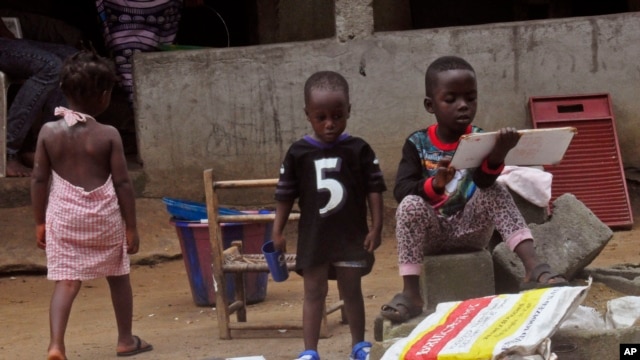
C28D7CB9-B568-4024-B5D8-DD6D78EE5A2E_w640_r1_s.jpg

Liberian children stand in front of their home that has been placed under Ebola quarantine​

UNICEF says children have been particularly affected. It says 22,000 children in Sierra Leone, Guinea and Liberia have lost one or both parents. Children also missed vaccinations, and several million between ages 3 and 17 missed from six to nine months of school. Parents stopped registering their children at health care centers, which many considered to be places where the disease could be easily contracted. "A child that is not registered does not exist in an administrative sense," said Patrick Moser, a spokesman with UNICEF in New York. "They're vulnerable to exclusion; it's difficult to obtain identity documents, have access to basic health and social services, and there's even the danger of being trafficked or illegally adopted."

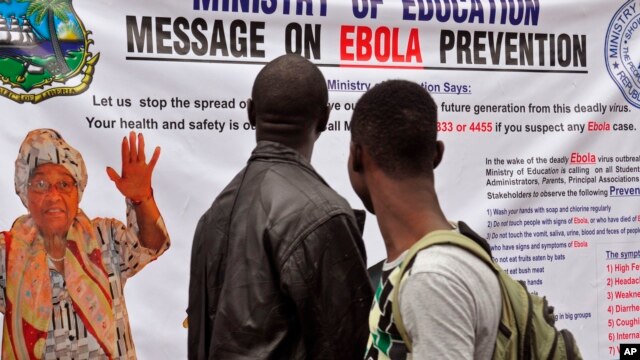
597F7129-FA1E-4E99-B01C-1F712A3FD280_w640_r1_s.jpg

Liberian President Ellen Johnson Sirleaf appears on a banner warning people about the Ebola virus in Monrovia​

Education gains must be maintained

UNICEF says the outbreak reinforced the need for educating rural people on simple methods of stopping the spread of the virus. But this was complicated by rumors and misinformation. Some said the outbreak was created by the West and health care workers were there to kill people or force them into trafficking.

9B628640-1F61-4C9F-A009-3054B86D0507_w640_r1_s.jpg

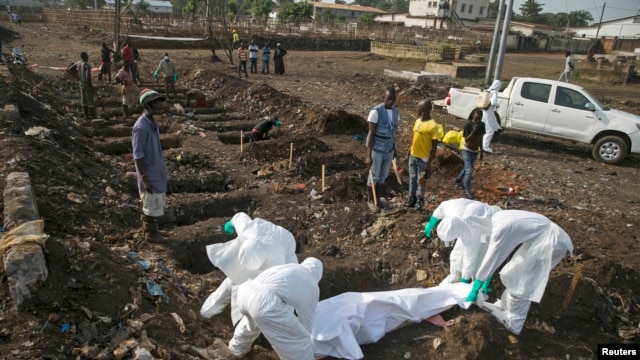
Health workers bury the body of a suspected Ebola victim at a cemetery in Sierra Leone​

Dr. Mohamed Ayoya, UNICEF's representative in Guinea, told VOA in an email that at the beginning of the outbreak, people told him that “the treatment centers are really 'extermination camps' and once you agree to go there, you'll never come out.” "To many,” he said, “treatment centers were places where shady tests were conducted, where people were used as guinea pigs to carry on various experiments and then killed to get their organs." Ayoya said. "Most thought that spraying their houses with chlorine water, which was used by the Red Cross, was actually a way of spreading the disease."

UNICEF countered with efforts of its own.
 
Back
Top Bottom