UN Resolution 181 - The Partition Plan
The resolution recognized the need for immediate Jewish statehood (and a parallel Arab state), but the blueprint for peace became a moot issue when the Arabs refused to accept it.Subsequently,
de facto [In Latin: realities] on the ground in the wake of Arab aggression (and Israel’s survival) became the basis for UN efforts to bring peace.
Aware of Arabs’ past aggression, Resolution 181, in paragraph C, calls on the Security Council to:
“Determine as a threat to the peace, breach of the peace or
act of aggression, in accordance with Article 39 of the Charter, any attempt
to alter by force the settlement envisaged by this resolution.
” [italics by author]
The ones who sought to alter the settlement envisioned in Resolution 181 by force, were the Arabs who threatened
bloodshed if the United Nations was to adopt the Resolution:
“The [British] Government of Palestine fear that strife in Palestine will be greatly intensified when the Mandate is terminated, and that the international status of the United Nations Commission will mean little or nothing to the Arabs in Palestine, to whom
the killing of Jews now transcends all other considerations. Thus, the Commission will be faced with the problem of how to avert certain
bloodshed on a very much wider scale than prevails at present. … The Arabs have made it quite clear and have told the Palestine government that they do not propose to co-operate or to assist the Commission, and that, far from it, they
propose to attack and impedeits work in every possible way. We have no reason to suppose that they do not mean what they say.” [2] [italics by author]
Arabs’ intentions and deeds did not fare better after Resolution 181 was adopted:
“Taking into consideration that the Provisional Government of Israel has indicated its acceptance in principle of a prolongation of the truce in Palestine; that the States members of the Arab League have rejected successive appeals of the United Nations Mediator, and of the Security Council in its resolution 53 (1948) of 7 July 1948, for the prolongation of the truce in Palestine; and that there has consequently developed a renewal of hostilities in Palestine." [3]
The conclusion:
“Having constituted a Special Committee and instructed it to investigate all questions and issues relevant to the problem of Palestine, and to prepare proposals for the solution of the problem, and having received and examined the report of the Special Committee (document A/364). …
Recommends to the United Kingdom, as the mandatory Power for Palestine, and to all other Members of the United Nations the adoption and implementation, with regard to the future Government of Palestine, of the Plan of Partition with Economic Union set out below;” [italics by author].
In the late 1990s, more than 50 years after Resolution 181 was rejected by the Arab world, Arab leaders suddenly recommended to the General Assembly that UN Resolution 181 be resurrected as the basis for a peace agreement.There is no foundation for such a notion.
Resolution 181 was the last of a
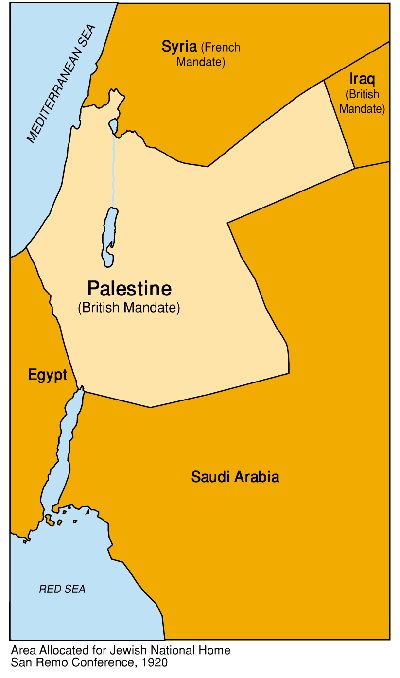
series of recommendations that had been drawn up over the years by the Mandator and by international commissions, plans designed to reach an historic compromise between Arabs and Jews in western Palestine. The first was in 1922 when Great Britain unilaterally partitioned Palestine, which did not satisfy the Arabs who wanted the entire country to be Arab. Resolution 181 followed such proposals as the Peel Commission (1937); the Woodhead Commission (1938); two 1946 proposals that championed a bi-national state; one proposed by the Anglo-American Committee of Inquiry in April 1946 based on a single state with equal powers for Jews and Arabs; and the Morrison-Grady Plan raised in July 1946 which recommended a federal state with two provinces – one Jewish, one Arab. Every scheme since 1922 was rejected by the Arab side, including decidedly pro-Arab ones merely because these plans recognized Jews as a nation and gave Jewish citizens of Mandate Palestine political representation.