I read this on the subject:
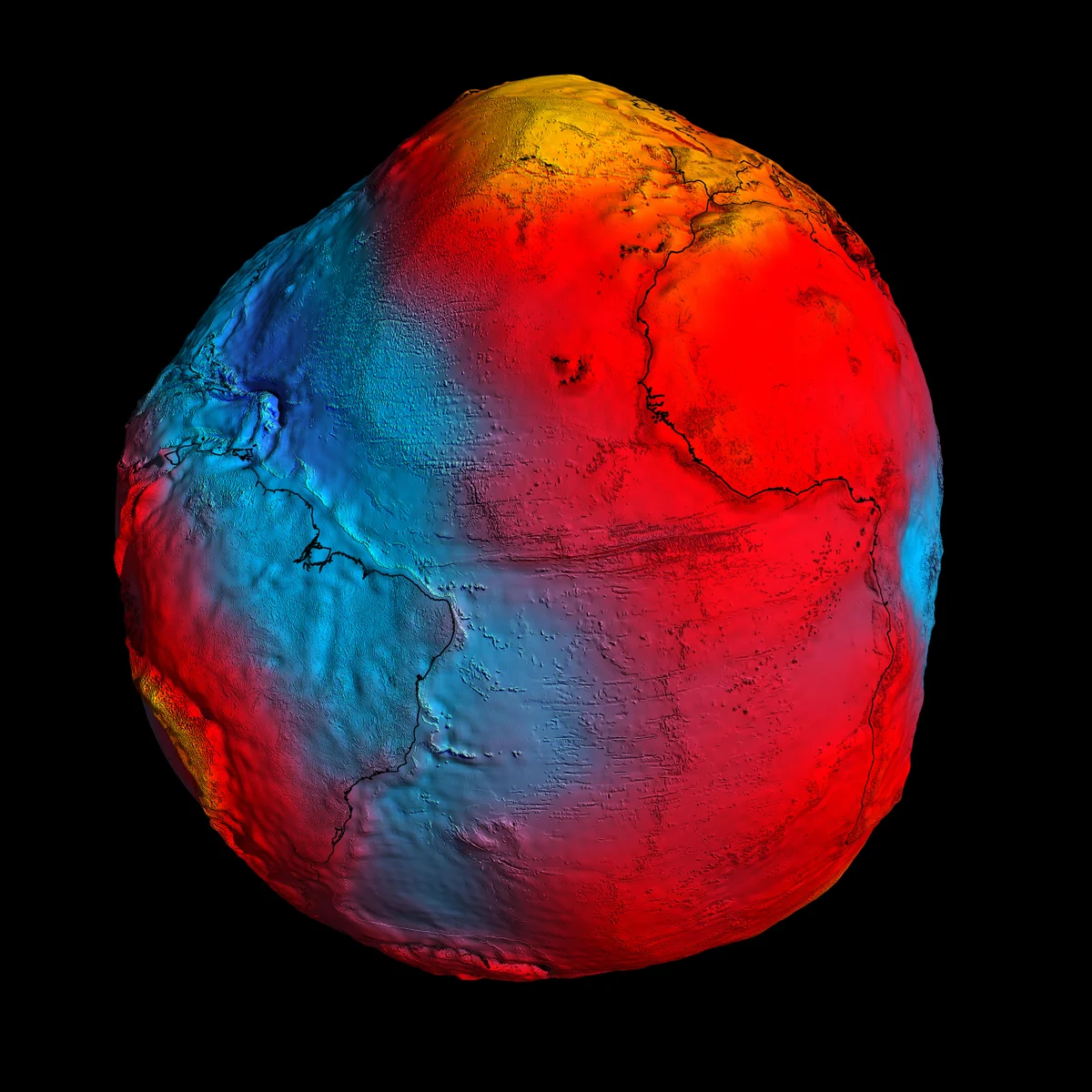
In simplified terms, mass concentration (which increases gravity locally) "pulls in" water from the surrounding sea, raising the water level.
Essentially, a large mass will cause "down" to be bent slightly toward it, and water from the surrounding sea will flow "down" toward the mass concentration. The resulting surface of the water will (ignoring currents, wind, etc) will form a bulge above/around the concentration which at every point is perpendicular to the local "down."
If an area of lower density results in lower gravity, the effect will be the opposite, with down being bent AWAY from the center of the area and water flowing out until the surface is perpendicular to the local direction of gravity. If it helps, consider the lower gravity to simply be surrounded by a ring of higher gravity areas which all tend to pull the water away from the center.
Note that this effect is VERY small and won't be noticeable to an individual - it is only when the effect takes place over hundreds or thousands of miles that the tiny change in gravity results in a detectable change in water levels. It won't make a noticeable change in the horizon, etc., and any differences in actual acceleration due to gravity would need very precise and sensitive instruments to measure and separate from other effects (such as actual distance from the center of the Earth and latitude) which affect the apparent acceleration due to gravity.