Haley released a statement Friday saying, "We welcome the Burmese government committing humanitarian assistance to all displaced by violence. However, we will continue to urge them to make sure this aid actually reaches those in need, as quickly as possible, and that it is delivered in a manner that protects their rights and dignity," she said. Earlier Friday, the State Department said it is "very focused" on restoring humanitarian assistance to Myanmar's northern Rakhine state and is "very concerned about sustained allegations of abuses" in that area.
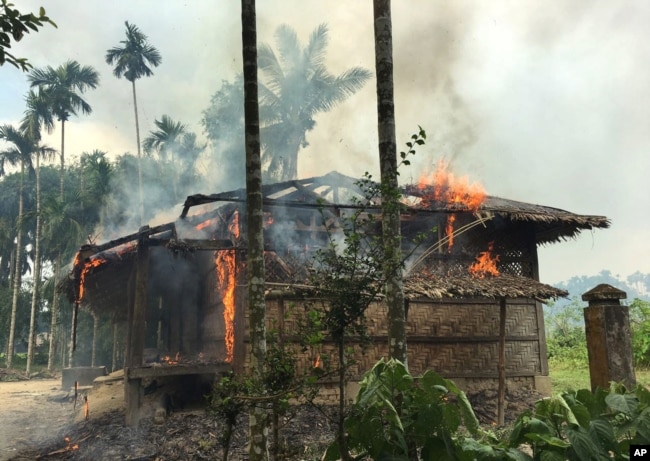
Houses are on fire in Gawdu Zara village, northern Rakhine state, Myanmar
Patrick Murphy, deputy assistant secretary of state for Southeast Asia, told reporters by phone Friday that the United States is urging all parties to take steps to calm tensions in the area. He said that since August, "probably well over" 200,000 refugees have crossed over the border into Bangladesh to escape the violence. The U.N. puts the number at over 270,000. He said the number of internally displaced persons — those who have left their homes but not left Myanmar — is unknown. But he said those displaced include members of the Rohingya ethnic group and non-Rohingya in the area. Discussions with the Myanmar government are "ongoing," he said, through the U.S. ambassador to the country.
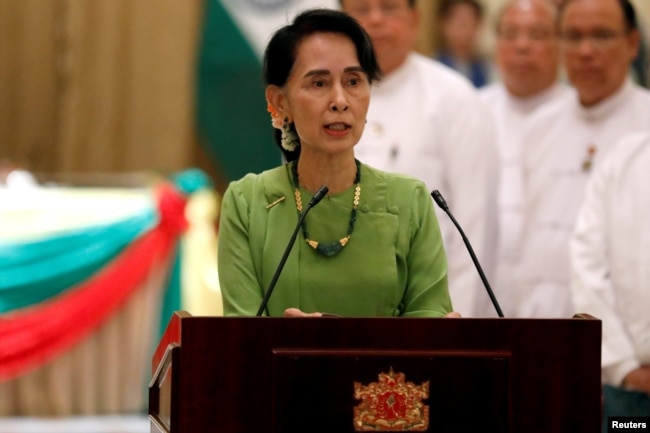
Myanmar State Counselor Aung San Suu Kyi talks during a news conference with India's Prime Minister Narendra Modi in Naypyitaw, Myanmar
On Thursday, State Department spokeswoman Heather Nauert told reporters that the United States has "deep concerns" about the situation. She said the State Department is in close contact with Myanmar's government on the situation in Rakhine state. "We are deeply concerned by the troubling situation in Burma's northern Rakhine state," she said. "There has been a significant displacement of local populations following serious allegations of human rights abuses, including mass burnings of Rohingya villages and violence conducted by security forces and also armed civilians. "We again condemn deadly attacks on Burmese security forces, but join the international community in calling on those forces to prevent further violence and protect local populations in ways that are consistent with the rule of law and with full respect for human rights," she continued. "We urge all in Burma, including in the Rakhine state, to avoid actions that exacerbate tensions there."
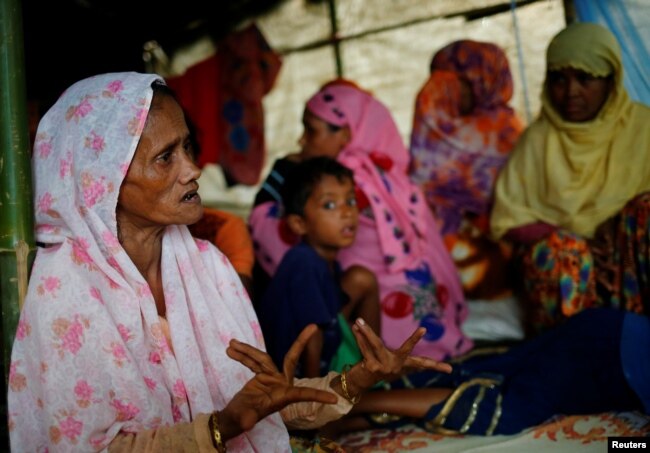
Shamsun Nahar, 60, a Rohingya widow who fled from Kha Maung Seik village of Myanmar to Bangladesh alone, whose 30-year-old son is missing, tells her story at Kutupalang Makeshift Camp in Cox’s Bazar, Bangladesh
Nauert also said the U.S. welcomes acknowledgement by the Myanmar government of the need to protect all communities, and its pledge to implement recommendations of the advisory commission on the Rakhine state aimed at addressing long-standing challenges that predate the country's democratic transition. Asked if the U.S. has confidence at this point in the desire of the government of Myanmar to protect the Rohingya community, Nauert said the U.S. would certainly like to call on Myanmar to allow better access, both to reporters to enter the country and to humanitarian aid groups to reach those in need.
Fleeing violence