Government Control in the Digital Age ,.... Is it Truly "All Good"?

TruthSeeker112125

Platinum Member
Joined
Nov 21, 2025
Messages
1,739
Reaction score
1,152
Points
903
A "Digital ID", where the Government, will know everything about You, via "Your Digital ID", be it a "Card", or even an "Implanted Chip", ... It'll be "All Good!", because Our Leaders tell Us so Right?

But how many have paid attention to what the "Leaders" are saying?!? When they clearly state that "They will know everything about You", and that "You will not be able to work if You do not have a Digital ID"?

Is Mankind, being "herded like sheep", to an Outcome, that George Orwell wrote of in his book "1984"?

Will "The Land of the Free & Home of the Brave", give up it's cherished "Constitutional Freedoms", & kneel down to this "Freedom Destroying Method of Control"?!?

==========================


"European politicians go much further
, reports Stossel TV producer Kristin Tokarev.

They're pushing government-mandated digital IDs that tie your identity to nearly everything you do.

Spain's prime minister promises "an end to anonymity" online!

Britain's prime minister warns, "You will not be able to work in the United Kingdom if you do not have digital ID."

Queen Maxima of the Netherlands enthusiastically told the World Economic Forum that digital IDs are good for knowing "who actually got a vaccination or not."

Many American tech leaders also like digital IDs.

The second richest man in the world, Oracle founder Larry Ellison, says, "Citizens will be on their best behavior because we're constantly recording and reporting everything."

 
If the government cannot balance its budget, fix roads, or manage healthcare effectively, how can it possibly be trusted to control everything?
Mankind if far more interested in controlling than fixing

Hence the problem

An example is AI.

We used to hear from the Left 24/7 about how we should cut down on electricity usage to try and combat carbon emisssions, as well as the fact we should depopulate the world due to the strain on natural resources like access to fresh water.

However, AI will someday use more electricity and water than humanity, yet not a word from the Left about that problem.

No, the Left is all about getting AI up and running so it can monitor and control the populace, which is their prime directive as the fascists they are.

I include Rhinos in the assessment as well as every day it seems a member from the GOP shows their true colors as to whom they really represent.
 
Last edited:
A "Digital ID", where the Government, will know everything about You, via "Your Digital ID", be it a "Card", or even an "Implanted Chip", ... It'll be "All Good!", because Our Leaders tell Us so Right?

But how many have paid attention to what the "Leaders" are saying?!? When they clearly state that "They will know everything about You", and that "You will not be able to work if You do not have a Digital ID"?

Is Mankind, being "herded like sheep", to an Outcome, that George Orwell wrote of in his book "1984"?

Will "The Land of the Free & Home of the Brave", give up it's cherished "Constitutional Freedoms", & kneel down to this "Freedom Destroying Method of Control"?!?

==========================


"European politicians go much further
, reports Stossel TV producer Kristin Tokarev.

They're pushing government-mandated digital IDs that tie your identity to nearly everything you do.

Spain's prime minister promises "an end to anonymity" online!

Britain's prime minister warns, "You will not be able to work in the United Kingdom if you do not have digital ID."

Queen Maxima of the Netherlands enthusiastically told the World Economic Forum that digital IDs are good for knowing "who actually got a vaccination or not."

Many American tech leaders also like digital IDs.

The second richest man in the world, Oracle founder Larry Ellison, says, "Citizens will be on their best behavior because we're constantly recording and reporting everything."

The Globalists around the world (including the USA) are working diligently to usher in the New World Order -- One World Government. The current administration calls it "The Golden Age." George Bush Sr., Bill Clinton, Joe Biden, all called it what it is: "New World Order."


Trump's "Golden Age:


For decades, Global leaders have been working diligently to create this "Golden, New World Order" when a handful of men will control every human on earth. The Bible clearly warns us of the coming age and it warns us of a "mark" that will be required to buy or sell. This giant pimple on the earth's butt is coming to a head. Do everything in your power to avoid being surveilled and whatever you do -- REJECT THE MARK OF THE BEAST.
 
A "Digital ID", where the Government, will know everything about You, via "Your Digital ID", be it a "Card", or even an "Implanted Chip", ... It'll be "All Good!", because Our Leaders tell Us so Right?

But how many have paid attention to what the "Leaders" are saying?!? When they clearly state that "They will know everything about You", and that "You will not be able to work if You do not have a Digital ID"?

Is Mankind, being "herded like sheep", to an Outcome, that George Orwell wrote of in his book "1984"?

Will "The Land of the Free & Home of the Brave", give up it's cherished "Constitutional Freedoms", & kneel down to this "Freedom Destroying Method of Control"?!?

==========================


"European politicians go much further
, reports Stossel TV producer Kristin Tokarev.

They're pushing government-mandated digital IDs that tie your identity to nearly everything you do.

Spain's prime minister promises "an end to anonymity" online!

Britain's prime minister warns, "You will not be able to work in the United Kingdom if you do not have digital ID."

Queen Maxima of the Netherlands enthusiastically told the World Economic Forum that digital IDs are good for knowing "who actually got a vaccination or not."

Many American tech leaders also like digital IDs.

The second richest man in the world, Oracle founder Larry Ellison, says, "Citizens will be on their best behavior because we're constantly recording and reporting everything."

"NO" to digital ID chips. Your DL or ID has a scannable bar code on it already. That's far enough IMHO.
 
The Globalists around the world (including the USA) are working diligently to usher in the New World Order -- One World Government. The current administration calls it "The Golden Age." George Bush Sr., Bill Clinton, Joe Biden, all called it what it is: "New World Order."


Trump's "Golden Age:


For decades, Global leaders have been working diligently to create this "Golden, New World Order" when a handful of men will control every human on earth. The Bible clearly warns us of the coming age and it warns us of a "mark" that will be required to buy or sell. This giant pimple on the earth's butt is coming to a head. Do everything in your power to avoid being surveilled and whatever you do -- REJECT THE MARK OF THE BEAST.

:yes_text12::yes_text12:

I Fully Agree Saxon.

But Shockingly, & Sadly, very, very few people are Waking up to these Hardcore Facts!

Like "Programed Sheeple",.... They will will obediently follow the Satanicly inspired Dictates of their so called 'Leaders".

In My Belief,.... A Publicly displayed Rush towards that "New World Order" began shortly after the Treasonous Act of 9-11.

The "Fruit" of 9-11 grows by the day, & is Force Fed not only to those who were once "We the People", but also the World.

And the "Churches & Synagogues" have failed the people, by not Stoutly Warning them of what is very soon to Fall Upon Mankind.
 
:yes_text12::yes_text12:

I Fully Agree Saxon.

But Shockingly, & Sadly, very, very few people are Waking up to these Hardcore Facts!

Like "Programed Sheeple",.... They will will obediently follow the Satanicly inspired Dictates of their so called 'Leaders".

In My Belief,.... A Publicly displayed Rush towards that "New World Order" began shortly after the Treasonous Act of 9-11.

The "Fruit" of 9-11 grows by the day, & is Force Fed not only to those who were once "We the People", but also the World.

And the "Churches & Synagogues" have failed the people, by not Stoutly Warning them of what is very soon to Fall Upon Mankind.
Everyone on earth will wake up when it's way too late to do anything about it. They'll sit there, dumbfounded, saying to themselves: "those kooky conspiracy theorists were absolutely right" (right before being ushered into their cell at the local FEMA camp or their studio apartment in the new "smart city").

9/11 was a planned event. It was shock therapy. The main goal of 9/11 was to expand the size and scope of the Federal Government. And Americans willingly accepted it. Airport DHS agents treat all of us like we're guilty until we can prove our innocence. There's a good reason why the American populace are called "sheeple." Most are so focused on the Demican vs. Republicrat circus sideshow that they're oblivious to the fact that a virtual wall is being built to contain and control them.
 
Everyone on earth will wake up when it's way too late to do anything about it. They'll sit there, dumbfounded, saying to themselves: "those kooky conspiracy theorists were absolutely right" (right before being ushered into their cell at the local FEMA camp or their studio apartment in the new "smart city").

9/11 was a planned event. It was shock therapy. The main goal of 9/11 was to expand the size and scope of the Federal Government. And Americans willingly accepted it. Airport DHS agents treat all of us like we're guilty until we can prove our innocence. There's a good reason why the American populace are called "sheeple." Most are so focused on the Demican vs. Republicrat circus sideshow that they're oblivious to the fact that a virtual wall is being built to contain and control them.
Again,.... I fully Agree with You Saxon!
 

The App Store Accountability Act Is A Privacy Nightmare Disguised As Child Protection​

Tyler Durden's Photo

by Tyler Durden
Authored...
Authored by Julio Rivera via American Greatness,

Washington has discovered a familiar political trick: wrap a flawed policy in the language of protecting children and hope nobody reads the fine print. The latest example is the App Store Accountability Act, a bill championed by lawmakers who appear eager to regulate the internet without understanding how it actually works.


Supporters insist the legislation will protect kids online. In reality, it risks undermining privacy, violating constitutional protections, and creating a cybersecurity disaster in the process.

And remarkably, Congress is pushing forward with this even though federal courts have already signaled that this exact regulatory model is unconstitutional.

The App Store Accountability Act would require app stores to verify the ages of every user and share age information with app developers. On paper, that sounds straightforward. In practice, it would force companies to collect massive amounts of sensitive personal data simply to download everyday apps.

Want to download a weather app? Verify your age.

Want to install a calculator? Verify your age.

Want to read the news? Verify your age.


The practical result is obvious: app stores would be compelled to gather highly sensitive identity data on tens of millions of Americans and then distribute that information to countless third-party developers.

This could be one of the largest digital identity honeypots ever conceived.


Security experts have been warning about this for months. In fact, 419 cybersecurity and privacy academics from 30 countries recently signed an open letter warning that large-scale age verification systems are “dangerous and socially unacceptable” because they create enormous new attack surfaces for hackers and data thieves.

The logic is simple. If every app download requires age verification, that means sensitive identity data must be stored, transmitted, and accessed across thousands of services. Instead of limiting the spread of personal information, the bill effectively multiplies it.

For cybercriminals, it would be a dream target.

Equally troubling is the bill’s blatant disregard for recent federal court rulings. Lawmakers promoting the legislation often claim that age-verification mandates have already received judicial approval.

That claim collapses under even basic scrutiny.

Just months ago, a federal judge blocked a nearly identical Texas law modeled on the same concept, ruling that it was “exceedingly overbroad” and failed strict constitutional scrutiny.

The court compared the requirement to a government mandate forcing bookstores to check the ID of every customer before allowing them inside. Such a system, the judge explained, would restrict minors from participating in the “democratic exchange of views online.”

In other words, it violates the First Amendment.

Despite that ruling, Congress now appears ready to repeat the same mistake on a national scale.

Supporters of the bill, including lawmakers like Representatives John James (R-MI), Gus Bilirakis (R-FL), and Erin Houchin (R-IN), argue that forcing app stores to verify the age of every user will protect children online. But critics warn the approach risks creating new privacy and security problems while doing little to address the real harms children face on the internet.

Additionally, the proposal ignores the practical realities of how the modern app ecosystem actually functions.

Most apps are not social media platforms. They are mundane tools: banking apps, airline apps, school apps, fitness trackers, weather alerts, home security dashboards, and so forth. The App Store Accountability Act would force age verification for all of them.

Even worse, the bill requires verification across four distinct age brackets: under 13, 13 to 15, 16 to 17, and adults. That may sound bureaucratically tidy, but in the real world, it creates a massive liability problem for app stores.

If a company guesses wrong about whether someone is 12 or 13, it could face penalties from federal regulators. The only way to avoid that risk is to demand hard identification, such as driver’s licenses, credit cards, or even birth certificates to prove parental relationships.

That is the inevitable outcome of the bill’s legal structure.


And millions of Americans do not even possess the required credentials. More than 45 million Americans are either credit unserved or underserved, meaning the law could effectively force them to hand over government IDs simply to download basic apps.

Ironically, many parents do not even support this approach. Surveys show parents overwhelmingly prefer tools that protect children while they use apps rather than a one-time age verification at the app store level.

In other words, the bill creates a massive bureaucracy that fails to solve the problem it claims to address.

More importantly, it distracts from real solutions that actually help protect kids online.

Digital literacy education, stronger parental control tools, and targeted enforcement against platforms that knowingly facilitate exploitation are all more effective approaches. These strategies address harmful behavior without building a nationwide surveillance system for internet users.

The App Store Accountability Act does the opposite. It places the burden on every user, every developer, and every app store while doing little to target the bad actors responsible for real harm.

That is why critics from across the technology and cybersecurity communities are raising alarms. The legislation threatens to create new privacy risks while inviting years of constitutional litigation that will likely end with the law being blocked in court.

If lawmakers truly want to protect children online, they should start by listening to experts instead of rushing through legislation that ignores both legal precedent and technical reality.

Unfortunately, Washington often prefers symbolic victories to workable solutions.

The App Store Accountability Act is a perfect example of what happens when lawmakers regulate technology they clearly do not understand. It risks undermining privacy, weakening cybersecurity, and violating free speech rights all at the same time.

And if Congress insists on passing it anyway, the courts will almost certainly remind them why the Constitution still matters.


The App Store Accountability Act Is A Privacy Nightmare Disguised As Child Protection​

Tyler Durden's Photo's Photo

by Tyler Durden
Authored...
Authored by Julio Rivera via American Greatness,

Washington has discovered a familiar political trick: wrap a flawed policy in the language of protecting children and hope nobody reads the fine print. The latest example is the App Store Accountability Act, a bill championed by lawmakers who appear eager to regulate the internet without understanding how it actually works.


Supporters insist the legislation will protect kids online. In reality, it risks undermining privacy, violating constitutional protections, and creating a cybersecurity disaster in the process.

And remarkably, Congress is pushing forward with this even though federal courts have already signaled that this exact regulatory model is unconstitutional.

The App Store Accountability Act would require app stores to verify the ages of every user and share age information with app developers. On paper, that sounds straightforward. In practice, it would force companies to collect massive amounts of sensitive personal data simply to download everyday apps.

Want to download a weather app? Verify your age.

Want to install a calculator? Verify your age.

Want to read the news? Verify your age.


The practical result is obvious: app stores would be compelled to gather highly sensitive identity data on tens of millions of Americans and then distribute that information to countless third-party developers.

This could be one of the largest digital identity honeypots ever conceived.


Security experts have been warning about this for months. In fact, 419 cybersecurity and privacy academics from 30 countries recently signed an open letter warning that large-scale age verification systems are “dangerous and socially unacceptable” because they create enormous new attack surfaces for hackers and data thieves.

The logic is simple. If every app download requires age verification, that means sensitive identity data must be stored, transmitted, and accessed across thousands of services. Instead of limiting the spread of personal information, the bill effectively multiplies it.

For cybercriminals, it would be a dream target.

Equally troubling is the bill’s blatant disregard for recent federal court rulings. Lawmakers promoting the legislation often claim that age-verification mandates have already received judicial approval.

That claim collapses under even basic scrutiny.

Just months ago, a federal judge blocked a nearly identical Texas law modeled on the same concept, ruling that it was “exceedingly overbroad” and failed strict constitutional scrutiny.

The court compared the requirement to a government mandate forcing bookstores to check the ID of every customer before allowing them inside. Such a system, the judge explained, would restrict minors from participating in the “democratic exchange of views online.”

In other words, it violates the First Amendment.

Despite that ruling, Congress now appears ready to repeat the same mistake on a national scale.

Supporters of the bill, including lawmakers like Representatives John James (R-MI), Gus Bilirakis (R-FL), and Erin Houchin (R-IN), argue that forcing app stores to verify the age of every user will protect children online. But critics warn the approach risks creating new privacy and security problems while doing little to address the real harms children face on the internet.

Additionally, the proposal ignores the practical realities of how the modern app ecosystem actually functions.

Most apps are not social media platforms. They are mundane tools: banking apps, airline apps, school apps, fitness trackers, weather alerts, home security dashboards, and so forth. The App Store Accountability Act would force age verification for all of them.

Even worse, the bill requires verification across four distinct age brackets: under 13, 13 to 15, 16 to 17, and adults. That may sound bureaucratically tidy, but in the real world, it creates a massive liability problem for app stores.

If a company guesses wrong about whether someone is 12 or 13, it could face penalties from federal regulators. The only way to avoid that risk is to demand hard identification, such as driver’s licenses, credit cards, or even birth certificates to prove parental relationships.

That is the inevitable outcome of the bill’s legal structure.


And millions of Americans do not even possess the required credentials. More than 45 million Americans are either credit unserved or underserved, meaning the law could effectively force them to hand over government IDs simply to download basic apps.

Ironically, many parents do not even support this approach. Surveys show parents overwhelmingly prefer tools that protect children while they use apps rather than a one-time age verification at the app store level.

In other words, the bill creates a massive bureaucracy that fails to solve the problem it claims to address.

More importantly, it distracts from real solutions that actually help protect kids online.

Digital literacy education, stronger parental control tools, and targeted enforcement against platforms that knowingly facilitate exploitation are all more effective approaches. These strategies address harmful behavior without building a nationwide surveillance system for internet users.

The App Store Accountability Act does the opposite. It places the burden on every user, every developer, and every app store while doing little to target the bad actors responsible for real harm.

That is why critics from across the technology and cybersecurity communities are raising alarms. The legislation threatens to create new privacy risks while inviting years of constitutional litigation that will likely end with the law being blocked in court.

If lawmakers truly want to protect children online, they should start by listening to experts instead of rushing through legislation that ignores both legal precedent and technical reality.

Unfortunately, Washington often prefers symbolic victories to workable solutions.

The App Store Accountability Act is a perfect example of what happens when lawmakers regulate technology they clearly do not understand. It risks undermining privacy, weakening cybersecurity, and violating free speech rights all at the same time.

And if Congress insists on passing it anyway, the courts will almost certainly remind them why the Constitution still matters.


No matter what "We The People" demand ... these intrusive laws WILL pass and we'll "like it" (while we enjoy our Smart Cities and bug hamburgers).
 
No matter what "We The People" demand ... these intrusive laws WILL pass and we'll "like it" (while we enjoy our Smart Cities and bug hamburgers).
I Agree Saxon,... Well, at least the Majority of "Sheeple" will dutifully "like it".

And, those that point out what is truly going on, will be Ignored, Ridiculed, and Persecuted.
 

War Abroad Should Not Mean Less Freedom At Home:yes_text12::yes_text12::yes_text12:

Tyler Durden's Photo

by Tyler Durden
Authored...
Authored by Mollie Engelhart via The Epoch Times,

As an American, a mother, and a rancher, I have been reflecting on what it means when our country enters another war—and what history tells us often follows at home.

There will be endless debate about who is right and who is wrong. Some will praise our leaders, others will criticize them, and neighbors will disagree about how we got here and how events will unfold in the future. Those conversations are natural in a free society.

But there is another conversation that deserves just as much attention, one that history quietly asks every time the United States goes to war: What freedoms will Americans lose this time?
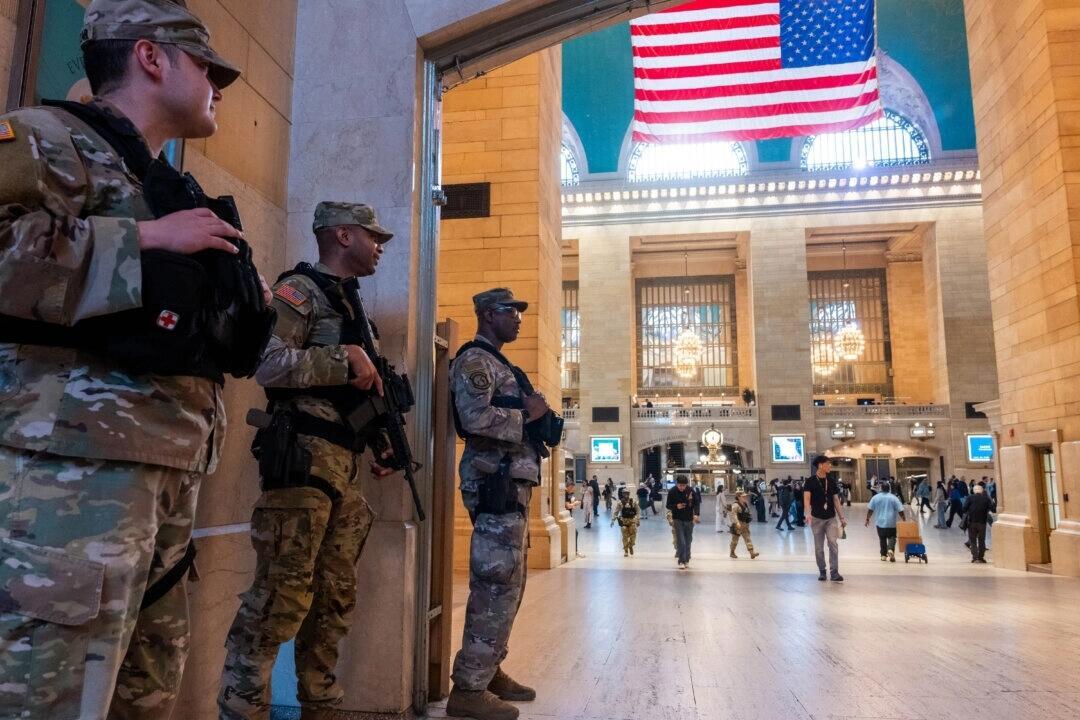


History suggests that wartime often reshapes the relationship between citizens and government.

The United States remains one of the last English-speaking countries where speech and thought are still broadly protected. That did not happen by accident. It is the inheritance of a constitutional republic built on the understanding that rights do not come from government; they come from God. The Constitution did not grant Americans their freedoms. It recognized them and placed limits on what government may do.

Yet when we look honestly at the past century, a pattern becomes difficult to ignore. Nearly every major war America has entered has been followed by some erosion of liberty at home.

During World War I, Congress passed the Espionage Act of 1917, followed by the Sedition Act of 1918. Under these laws, Americans could be arrested and imprisoned simply for criticizing the war or discouraging military enlistment. Speech that would normally fall under the protection of the First Amendment suddenly became criminal. One of the most famous cases involved Eugene V. Debs, a political leader who received a 10-year prison sentence for delivering a speech opposing the war and the draft.

The war eventually ended, but the Espionage Act remains on the books more than a century later.

World War II produced an even more direct violation of civil liberties. After the attack on Pearl Harbor, the federal government issued Executive Order 9066, authorizing the forced relocation of Japanese Americans living on the West Coast. More than 120,000 people, mostly American citizens, were removed from their homes and placed in internment camps. Families lost farms, businesses, and property, and people were detained without criminal charges or trials. The Supreme Court upheld the policy at the time, though it is now widely regarded as one of the most troubling civil liberties failures in modern American history.

The war ended and the camps were eventually closed, but the lesson remained clear: in times of fear and national emergency, the rights of citizens can be pushed aside.

The Cold War era introduced another form of government intrusion into American life. Fear of communist infiltration led to sweeping investigations into the political beliefs of citizens. The House Un-American Activities Committee summoned Americans to testify about their associations and views, while the Smith Act allowed prosecutions for advocating certain political ideas. Teachers, actors, writers, and government employees were blacklisted or pressured into oaths of loyalty. Careers were destroyed not because someone had committed a crime, but because they held—or were suspected of holding—the wrong political beliefs.

The Vietnam War era expanded another category of government power: domestic surveillance. During this period, the FBI operated a secret program known as COINTELPRO, which monitored activists, journalists, and political organizations across the country. Civil rights groups, anti-war movements, student organizations, and political activists found themselves under federal surveillance. What began as intelligence gathering against perceived threats grew into widespread monitoring of American citizens engaged in political activism.

The pattern continued into the modern era. In response to the terrorist attacks of Sept. 11, 2001, the United States launched what became known as the War on Terror, a series of conflicts that included military operations in Afghanistan, Iraq, Libya, and later involvement in the war in Syria.

At home, these wars were accompanied by some of the most significant expansions of federal surveillance authority in modern American history. Congress passed the Patriot Act, granting intelligence agencies broader powers to monitor communications, access financial records, and collect data connected to national security investigations. The federal government also created the Department of Homeland Security, dramatically expanding the domestic security infrastructure of the United States.

Airport travel changed almost overnight with the creation of the Transportation Security Administration, bringing new searches, body scanners, and security databases that monitor millions of travelers. Years later, whistleblower Edward Snowden revealed that intelligence agencies had been collecting vast amounts of digital information through programs designed to monitor global communications networks. Phone metadata, internet traffic, and other digital communications were gathered on a scale few Americans had previously imagined.

The technology had changed, but the pattern had not. Once again, a national crisis and the wars that followed led to an expansion of government authority over the lives and communications of ordinary citizens.

None of this history is meant to pass judgment on any particular war or moment in time. Every generation faces dangers that require difficult decisions, and national security is not an abstract concern. But history does reveal a pattern. War has often expanded the power of government while gradually narrowing the freedoms of citizens. Perhaps our generation can be the one that finally recognizes that pattern and refuses to let the erosion continue.

It is easy to succumb to the emotions of the moment.

War brings grief, anger, fear, and uncertainty. Families pray for sons and daughters in uniform, and communities mourn the innocent lives lost in conflicts far from our shores. Those responses are deeply human.

But between the praying and the grieving, there must also be vigilance. Americans must stand shoulder to shoulder and guard the freedoms that define this country.

Foreign policy decisions are often far beyond the control of ordinary citizens. Individuals living in small towns and rural counties do not set global strategy, but we do have a voice when it comes to the preservation of liberty at home. Whether someone supports this war or opposes it should not matter when it comes to defending constitutional freedoms. Americans across the political spectrum should be able to agree that freedom of speech, privacy, and due process matter. Our disagreements about policy cannot become an excuse to surrender the principles that allow us to disagree in the first place.

History shows that government often expand their reach during wartime through censorship, surveillance, or emergency authority that remains long after the emergency has passed. Americans should make one thing clear: war must never become an excuse to erode the freedoms of citizens at home.

Do not use technological capabilities, border crises, or fears of instability to justify mass surveillance of the American people. Military intelligence tools and artificial intelligence designed for battlefield awareness do not belong in the daily lives of citizens. The American people are not subjects of the state. We are sovereign citizens, and sovereignty means something simple but powerful: government authority ultimately flows from the consent of the governed.

Many forces in the world are beyond the control of ordinary people. Wars between nations are often among them. But the preservation of liberty inside our own country has always depended on the vigilance of citizens, and that responsibility does not disappear in wartime. In fact, wartime is when it matters most.

If the past century teaches us anything, it is that freedom rarely disappears all at once. It erodes slowly, piece by piece, often justified by fear and the promise that restrictions will only be temporary.

Americans have heard that promise before.

This time we should respond that we will pray for peace, we will pray for our troops, and we will mourn innocent lives lost in war. But we will also stand together in sending a clear message:

Our freedoms are not negotiable.

Not this time. Not ever.


Views expressed in this article are opinions of the author and do not necessarily reflect the views of The Epoch Times or ZeroHedge.


War Abroad Should Not Mean Less Freedom At Home:yes_text12::yes_text12::yes_text12:

Tyler Durden's Photo's Photo

by Tyler Durden
Authored...
Authored by Mollie Engelhart via The Epoch Times,

As an American, a mother, and a rancher, I have been reflecting on what it means when our country enters another war—and what history tells us often follows at home.

There will be endless debate about who is right and who is wrong. Some will praise our leaders, others will criticize them, and neighbors will disagree about how we got here and how events will unfold in the future. Those conversations are natural in a free society.

But there is another conversation that deserves just as much attention, one that history quietly asks every time the United States goes to war: What freedoms will Americans lose this time?


History suggests that wartime often reshapes the relationship between citizens and government.

The United States remains one of the last English-speaking countries where speech and thought are still broadly protected. That did not happen by accident. It is the inheritance of a constitutional republic built on the understanding that rights do not come from government; they come from God. The Constitution did not grant Americans their freedoms. It recognized them and placed limits on what government may do.

Yet when we look honestly at the past century, a pattern becomes difficult to ignore. Nearly every major war America has entered has been followed by some erosion of liberty at home.

During World War I, Congress passed the Espionage Act of 1917, followed by the Sedition Act of 1918. Under these laws, Americans could be arrested and imprisoned simply for criticizing the war or discouraging military enlistment. Speech that would normally fall under the protection of the First Amendment suddenly became criminal. One of the most famous cases involved Eugene V. Debs, a political leader who received a 10-year prison sentence for delivering a speech opposing the war and the draft.

The war eventually ended, but the Espionage Act remains on the books more than a century later.

World War II produced an even more direct violation of civil liberties. After the attack on Pearl Harbor, the federal government issued Executive Order 9066, authorizing the forced relocation of Japanese Americans living on the West Coast. More than 120,000 people, mostly American citizens, were removed from their homes and placed in internment camps. Families lost farms, businesses, and property, and people were detained without criminal charges or trials. The Supreme Court upheld the policy at the time, though it is now widely regarded as one of the most troubling civil liberties failures in modern American history.

The war ended and the camps were eventually closed, but the lesson remained clear: in times of fear and national emergency, the rights of citizens can be pushed aside.

The Cold War era introduced another form of government intrusion into American life. Fear of communist infiltration led to sweeping investigations into the political beliefs of citizens. The House Un-American Activities Committee summoned Americans to testify about their associations and views, while the Smith Act allowed prosecutions for advocating certain political ideas. Teachers, actors, writers, and government employees were blacklisted or pressured into oaths of loyalty. Careers were destroyed not because someone had committed a crime, but because they held—or were suspected of holding—the wrong political beliefs.

The Vietnam War era expanded another category of government power: domestic surveillance. During this period, the FBI operated a secret program known as COINTELPRO, which monitored activists, journalists, and political organizations across the country. Civil rights groups, anti-war movements, student organizations, and political activists found themselves under federal surveillance. What began as intelligence gathering against perceived threats grew into widespread monitoring of American citizens engaged in political activism.

The pattern continued into the modern era. In response to the terrorist attacks of Sept. 11, 2001, the United States launched what became known as the War on Terror, a series of conflicts that included military operations in Afghanistan, Iraq, Libya, and later involvement in the war in Syria.

At home, these wars were accompanied by some of the most significant expansions of federal surveillance authority in modern American history. Congress passed the Patriot Act, granting intelligence agencies broader powers to monitor communications, access financial records, and collect data connected to national security investigations. The federal government also created the Department of Homeland Security, dramatically expanding the domestic security infrastructure of the United States.

Airport travel changed almost overnight with the creation of the Transportation Security Administration, bringing new searches, body scanners, and security databases that monitor millions of travelers. Years later, whistleblower Edward Snowden revealed that intelligence agencies had been collecting vast amounts of digital information through programs designed to monitor global communications networks. Phone metadata, internet traffic, and other digital communications were gathered on a scale few Americans had previously imagined.

The technology had changed, but the pattern had not. Once again, a national crisis and the wars that followed led to an expansion of government authority over the lives and communications of ordinary citizens.

None of this history is meant to pass judgment on any particular war or moment in time. Every generation faces dangers that require difficult decisions, and national security is not an abstract concern. But history does reveal a pattern. War has often expanded the power of government while gradually narrowing the freedoms of citizens. Perhaps our generation can be the one that finally recognizes that pattern and refuses to let the erosion continue.

It is easy to succumb to the emotions of the moment.

War brings grief, anger, fear, and uncertainty. Families pray for sons and daughters in uniform, and communities mourn the innocent lives lost in conflicts far from our shores. Those responses are deeply human.

But between the praying and the grieving, there must also be vigilance. Americans must stand shoulder to shoulder and guard the freedoms that define this country.

Foreign policy decisions are often far beyond the control of ordinary citizens. Individuals living in small towns and rural counties do not set global strategy, but we do have a voice when it comes to the preservation of liberty at home. Whether someone supports this war or opposes it should not matter when it comes to defending constitutional freedoms. Americans across the political spectrum should be able to agree that freedom of speech, privacy, and due process matter. Our disagreements about policy cannot become an excuse to surrender the principles that allow us to disagree in the first place.

History shows that government often expand their reach during wartime through censorship, surveillance, or emergency authority that remains long after the emergency has passed. Americans should make one thing clear: war must never become an excuse to erode the freedoms of citizens at home.

Do not use technological capabilities, border crises, or fears of instability to justify mass surveillance of the American people. Military intelligence tools and artificial intelligence designed for battlefield awareness do not belong in the daily lives of citizens. The American people are not subjects of the state. We are sovereign citizens, and sovereignty means something simple but powerful: government authority ultimately flows from the consent of the governed.

Many forces in the world are beyond the control of ordinary people. Wars between nations are often among them. But the preservation of liberty inside our own country has always depended on the vigilance of citizens, and that responsibility does not disappear in wartime. In fact, wartime is when it matters most.

If the past century teaches us anything, it is that freedom rarely disappears all at once. It erodes slowly, piece by piece, often justified by fear and the promise that restrictions will only be temporary.

Americans have heard that promise before.

This time we should respond that we will pray for peace, we will pray for our troops, and we will mourn innocent lives lost in war. But we will also stand together in sending a clear message:

Our freedoms are not negotiable.

Not this time. Not ever.


Views expressed in this article are opinions of the author and do not necessarily reflect the views of The Epoch Times or ZeroHedge.


There may be people who want it though. We watch what goes on in the streets and in schools and other places, and it is tiresome. A dictatorship will eliminate that, and people may feel safe from it. Of course, a host of other dictus come with that dictatorship and no shortage of people who would enforce it.
 
15th post
There may be people who want it though. We watch what goes on in the streets and in schools and other places, and it is tiresome. A dictatorship will eliminate that, and people may feel safe from it. Of course, a host of other dictus come with that dictatorship and no shortage of people who would enforce it.
I'm thinking that History is repeating itself, as in what happened in the early 1900s, & onward 22,

Problem is,.... Mankind learned very little.
 

"Big Brother", as described by George Orwell in his book "1984", is "Watching You".​

Anybody wondering how is it, that our so called "Leaders" have allowed this, & much, much more to happen?

Can I get a "Baaaah! Bahhhh! from the "Sheeple"?


===================

Beyond Cookies - How To Stop The Invisible Browser Fingerprint That Tracks You Everywhere​

Tyler Durden's Photo

by Tyler Durden
Authored...

"For years, the privacy advice was simple: clear your cookies, use incognito mode, or click "Reject All" on those annoying consent banners. That advice is now outdated.


A groundbreaking study published last year has delivered the first peer-reviewed proof that the $600 billion online advertising industry has moved on from cookies. The new tracking method is called browser fingerprinting, and it works even if you never log in, never accept cookies, and have legally opted out under privacy laws.

Researchers from Texas A&M University and Johns Hopkins University built a tool named FPTrace to measure exactly how this works in the wild. They simulated real user sessions, systematically altered browser fingerprints, and watched what happened to the ads being served and the bids advertisers placed in real time. The results were clear: when the fingerprint changed, the price advertisers were willing to pay to target that "user" changed with it. Tracking signals dropped. The system was actively using the fingerprint to follow people across sessions and sites.

And crucially, this happened even in tests where cookies were fully deleted and users were in "opt-out" mode under GDPR and CCPA rules. The law’s exit door for cookies does not cover fingerprinting.

How Browser Fingerprinting Works (No Permission Required)​

Every time your browser loads a page, it leaks dozens of tiny, seemingly harmless signals:

  • Screen resolution and color depth
  • Installed fonts
  • GPU model and graphics capabilities
  • Audio processing signatures
  • Browser version, plugins, and language settings
  • Time zone
  • Canvas rendering differences (how it draws hidden shapes)
  • Whether you run an ad blocker
  • Even battery level in some cases
Alone, each detail is common. Combined, they create a unique "fingerprint" that can identify your device with startling precision. No cookies. No login. No pop-up asking for consent. Just loading the page is enough."


If the government cannot balance its budget, fix roads, or manage healthcare effectively, how can it possibly be trusted to control everything?
The government we see is a facade. It answers to the government hidden in the shadows. The government we should be concerned with is almost completely hidden from view and they're much more precise and efficient than the bumblers we waste our votes on.

A must read for anyone interested in these sorts of topics is: "Conspirator's Hierarchy: The Story Of The Committee Of 300"

Can you imagine an all powerful group, that knows no national boundaries, above the laws of all countries, one that controls every aspect of politics, religion, commerce and industry, banking, insurance, mining, the drug trade, the petroleum industry, a group answerable to no one but its members? To the vast majority of us, such a group would appear to be beyond the realms of possibilities and capabilities of any given organization. If that is what you believe, then you are in the majority. The conception of a secret, elite group exercising control of every aspect of our lives is beyond our comprehension. Americans are prone to say, "It can't happen here, our Constitution forbids it." That there is such a body, called "The committee of 300," is graphically told in this book. When most people attempt to address our problems, they speak or write about "they"; this book tells precisely who "they" are, and what "they" have planned for our future, how "they" have been at war with the American nation for 50 years, a war which we are on the brink of losing, what methods "they" use and exactly how "they" have brainwashed us. If you are puzzled and perplexed as to why things are occurring that we as a nation don't like yet seem powerless to prevent, why it is that the United States always seems to back the wrong horse, why the united states is in a depression from which it will not emerge, why our former social and moral values have been turned aside and seemingly buried; if you are confused by the many conspiracy theories, the Conspirators' hierarchy: the committee of 300 will clearly establish that these conditions have been deliberately created to bring us to our knees. Once you have read the applying truths contained in this book, understanding past and present political, economic, social and religious events will no longer be a problem. This powerful account of the forces ranged against the United States, and indeed the entire free world, cannot be ignored.

1777022597534.webp
 
Another "must read" for anyone interested in who's running the show behind the scenes is "The Creature From Jekyll Island."

1777022794943.webp


Where does money come from? Where does it go? Who makes it? The money magicians' secrets are unveiled. We get a close look at their mirrors and smoke machines, their pulleys, cogs, and wheels that create the grand illusion called money. A dry and boring subject? Just wait! You'll be hooked in five minutes. Reads like a detective story - which it really is.

The book details the formation of the Central Bank. The people who formed it. Their interests and ultimate goals.

Quote from the Banker of all Bankers -- Mayer Amschel Rothschild:

1777023116703.webp
 

New Topics

Back
Top Bottom