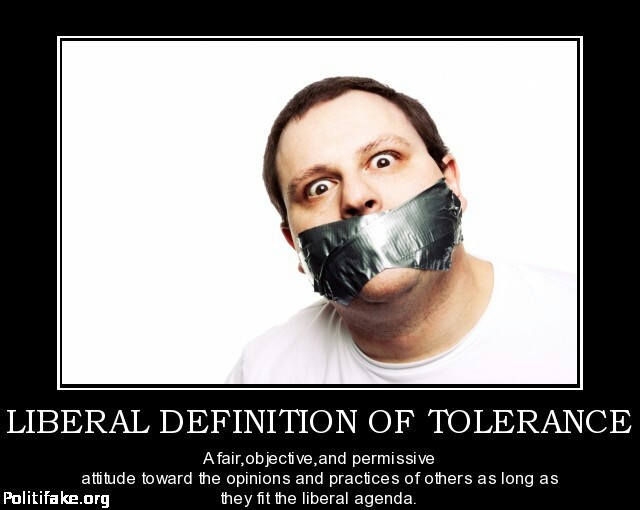
Have they yet? What church has been forced to perform any wedding against their beliefs? Name one.
Wait a bit.
Gay Danish couples win right to marry in church - Telegraph
Are we ditching our American constitution in favor of the Danish flavor constitution? Their nationally established religion is Lutheran, and I'll note that many Lutheran countries are open to SSM, Scandinavia having legalized it in 2006, and in 2009 their church has been officiating their ceremonies. Denmark, Germany, and Norway ALL provide Lutheran "blessed" SSM.
Your article was from 2012 for reference;
A 2011 poll of the Danish public found that 75.8% of Danes approve of same-sex marriages being performed in the church.
[17]
According to a 2011 survey of 1137 priests, 62% of them supported same-sex marriage in the Church on the same basis as for heterosexuals, while 28% were against. A map of the results hints at the traditional west-east division, with a conservative wing being dominant in central
West Jutland (the former
Ringkjøbing Amt) and on
Bornholm, but liberal priests dominating in most other areas.
[18]
In 2004, a poll among pastors said 60% were against church marriage of same-sex couples.
[19]
Similarly, there seems to be a political majority for same-sex marriage in the National Churches of Norway and Sweden; the Norwegian Parliament passed same-sex marriage legislation on June 11, 2008. The Church of Sweden, currently allowing blessings of same-sex couples, approved a proposal to perform same-sex weddings on October 22, 2009 by a majority of the synod.
[20]
Early position of the church[edit]
Since Denmark approved
same-sex civil unions (
registered partnership) in 1989, the question of
church blessing ceremonies for such unions emerged. After an enquiry from the
Danish National Association of Gays and Lesbians in 1993, bishops set up a commission to reach a stance on the matter.
An early stance on registered partnerships was reached in 1997. Bishops maintained that the ceremony of marriage was God's framework for the relation between a man and a woman, but this view of marriage was not affected by the fact that some people chose to live in a responsible community with a person of the same sex, approved by society, i.e. a registered partnership. The bishops disapproved of institutionalising new rituals, but couples who wished a non-ritualised marking in church of their registered partnership should be obliged. In such cases, it would be up to the rector to decide, and he should seek advice from his bishop.
[21]
At this time, many churches chose to bless registered partnerships, however this blessing was distinguished from a legal ceremony, which was performed by a mayor or another municipal official.
[22]
Same-sex marriages accepted[edit]
However, on 15 June 2012 the Church of Denmark made the decision to perform same-sex marriage ceremonies and not merely bless them; therefore Denmark now recognises
same-sex marriages. In early 2012
Minister for Equality,
Ecclesiastical Affairs and
Nordic Cooperation Manu Sareen introduced a bill approving same-sex marriage, which was passed in parliament in June 2012.
[23] A wedding ritual with liturgy has been developed and presented to parliament by the eleven bishops who are in favor of same-sex marriages being performed in church.
[24] Manu Sareen and a majority of bishops initially proposed the ritual would not declare the same-sex couple 'spouses', but 'life partners' (
livsfæller, a Danish
neologism), but the minister later changed his mind on this detail. Two conservative organizations within the National Church,
Inner Mission and
Lutheran Mission, as well as one of the twelve bishops, maintain their protests against same-sex marriage.
[25] It will be up to each individual priest to decide whether he or she will conduct marriages of same-sex couples. The first same-sex couple was married on Friday 15 June.
[26]
The process towards the official recognition of same sex marriage in the Church of Denmark began on 8 February 1973, when 'Provo Priest'
Harald Søbye performed a wedding of a male couple, although not legally recognised, on a suggestion from a journalist at the newspaper
Ekstra Bladet, which announced it as 'The World's First Gay Wedding'. On 25 February 1973 Harald Søbye performed another wedding, of a female couple, in a television programme. The state prosecutor investigated the cases, but concluded that the priest's use of his vestment was not illegal. Søbye had been retired in 1964 for political activism, but remained an ordained priest within the National Church. During the next 15 years, Søbye performed around 210 blessings or weddings of same-sex couples.
[27]
When Denmark introduced the
registered partnership in 1989, the issue of
same-sex marriage had for some years little attention. Church blessings of these partnerships slowly gained ground (see above). Later, the possibility of registered partnership, or same-sex marriage, performed by the church came under discussion. The issue was brought up in an unusual way by Prime Minister
Anders Fogh Rasmussen in 2004, who said he would approve of such a change, although he claimed to speak as a private person on this issue, not as prime minister.
Views among proponents vary whether such a ceremony should be called 'marriage' or merely '
registered partnership'
(registreret partnerskab), as the present same-sex civil union is called. Most likely, clergy would be allowed to decide for themselves whether to perform same-sex marriages or not, similar to the right to deny remarriage of divorced persons (a policy employed by a conservative minority of priests).
Gay and lesbian clergy exist, and this is generally considered a strictly personal issue. Parish councils are central in selecting and employing new priests, including interviews with candidates. Once employed, parish priests are
public servants and cannot be discharged except for
neglect of duties, which will finally be the bishop's decision.
In 2011 a female priest serving two small island parishes was fired after controversies with the parish council of
Agersø, while the neighbouring
Omø supported her. She claimed to have been ousted because of her sexuality, but the parish council rejected this accusation and mentioned 'cooperation problems' as the cause. Twenty years ago she had come out as
lesbian and a practitioner of
sadomasochism in a Swedish TV programme.
[28][29]
In 2009 a parish priest in
Tingbjerg, a Copenhagen suburb, moved away from the parish to a secret address after assaults against his
vicarage, his car and the parish church. The vicarage was put up for sale. According to
Avisen.dk, local youths claimed they harassed him because he was openly homosexual, among other reasons.
[30] The priest himself denied this was the issue, but rather claimed the assaults were part of a general tendency in the 'crumbling district', and intensified after he spoke out in public about the local youth crime.
[31] A Sunday service held a few weeks later was attended by several prominent guests supporting the priest, including Prime Minister
Lars Løkke Rasmussen,
Minister for Education and
Ecclesiastical Affairs Bertel Haarder, and photographer
Jacob Holdt.
[32] Tingbjerg is a single-plan
public housing area, marked by
gang violence and
youth crime, and the most criminal district of Copenhagen.
[33] Tingbjerg has the lowest rate of Church members of all Danish parishes, just 20% (2011), due to the high rate of immigrants and their descendants.
[34] In 2007, 78% were immigrants or descendants, as opposed to 20% in Copenhagen as a whole,
[35] and 10% in Denmark. Danish
Salafists have declared Tingbjerg a '
Sharia zone', but this is repudiated by larger Muslim congregations.
[36]
Also for reference, the group that was fighting against SSM in churches in your cited article is noted as the "Danish People's Party" here's what their position is:
The party's expressed goals are to protect the freedom and cultural heritage of the Danish people, including the family, the
Monarchy and the
Evangelical Lutheran Church of Denmark, to enforce a strict
rule of law, to work against Denmark becoming a multi-ethnic society by limiting
immigration and promoting
cultural assimilation of admitted immigrants, to maintain a strong welfare system for those in need, and to promote
entrepreneurship and
economic growth by strengthening education and encouraging people to work, and to protect the environment and natural resources.
[25] In comparison to its predecessor, the Progress Party, the DPP focus more on immigration, while at the same time being more pragmatic and reliable in general politics.
[26][27] While overall considered part of the radical right, its policies on most economic issues would rather place the party in the centre to centre-left.
[26]
In 2014 the party won the
European Parliament election as the largest party in Denmark with 26.6% of the vote; after the election it joined the
European Conservatives and Reformists Group alongside parties such as the
Conservative Party of the
United Kingdom,
Law and Justice of
Poland and the
Alternative for Germany. It received 21.1% of the vote in the
Danish general election, 2015.