
1srelluc
Diamond Member
A team of archeaologists have recently excavated a formerly well-to-do neighborhood in Pompeii. During the excavation, they uncovered a "fullery", which I'd never heard of before.
A fullery is where slaves washed the clothing of upper-class Pompeiians. So far so good, right? Not so fast.
What did they use to wash the clothes? STALE URINE from people and animals. They put the clothes in a stone tank, added the STALE URINE, and agitated the clothes with their bare feet. Then they squeezed out the STALE URINE, presumably did a rinse with clean water, and hung the clothes out to dry.
Turns out the STALE URINE was collected in jars throughout the city where passersby were encouraged to make, um, deposits. (One wonders how the STALE URINE was collected from animals, but I'm not curious enough to find out.) The STALE URINE was hauled to the fullery for use as a laundry detergent. I'm assuming the ammonia was the active ingredient, but again, I'm not curious enough to find out.
Also turns out the guy who owned the fullery was a wealthy dude, and he lived directly over the fullery. He also owned a bakery immediately adjacent to the fullery where the smell of baking bread could meld with the smell of STALE URINE. Yum!

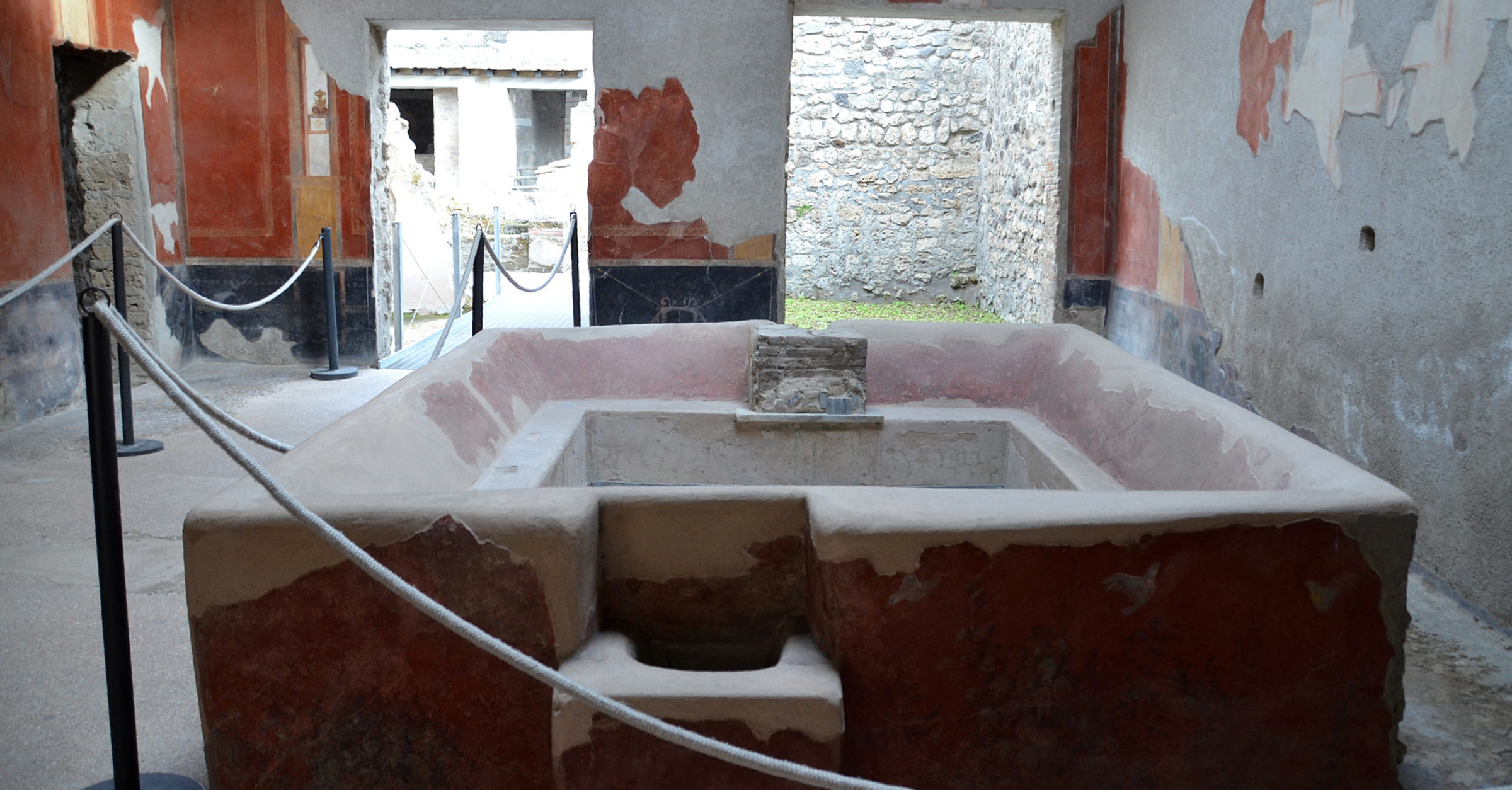
 www.worldhistory.org
A fullery is where slaves washed the clothing of upper-class Pompeiians. So far so good, right? Not so fast.
What did they use to wash the clothes? STALE URINE from people and animals. They put the clothes in a stone tank, added the STALE URINE, and agitated the clothes with their bare feet. Then they squeezed out the STALE URINE, presumably did a rinse with clean water, and hung the clothes out to dry.
Turns out the STALE URINE was collected in jars throughout the city where passersby were encouraged to make, um, deposits. (One wonders how the STALE URINE was collected from animals, but I'm not curious enough to find out.) The STALE URINE was hauled to the fullery for use as a laundry detergent. I'm assuming the ammonia was the active ingredient, but again, I'm not curious enough to find out.
Also turns out the guy who owned the fullery was a wealthy dude, and he lived directly over the fullery. He also owned a bakery immediately adjacent to the fullery where the smell of baking bread could meld with the smell of STALE URINE. Yum!
The Fullonica of Stephanus in Pompeii
The Follonica of Stephanus (also called Fullery of Stephanus) is one of the most important and complete laundries found in Pompeii where manufactured cloth was washed and stain removed. Stephanus' laundry...
www.worldhistory.org
Last edited:


