
1srelluc
Diamond Member
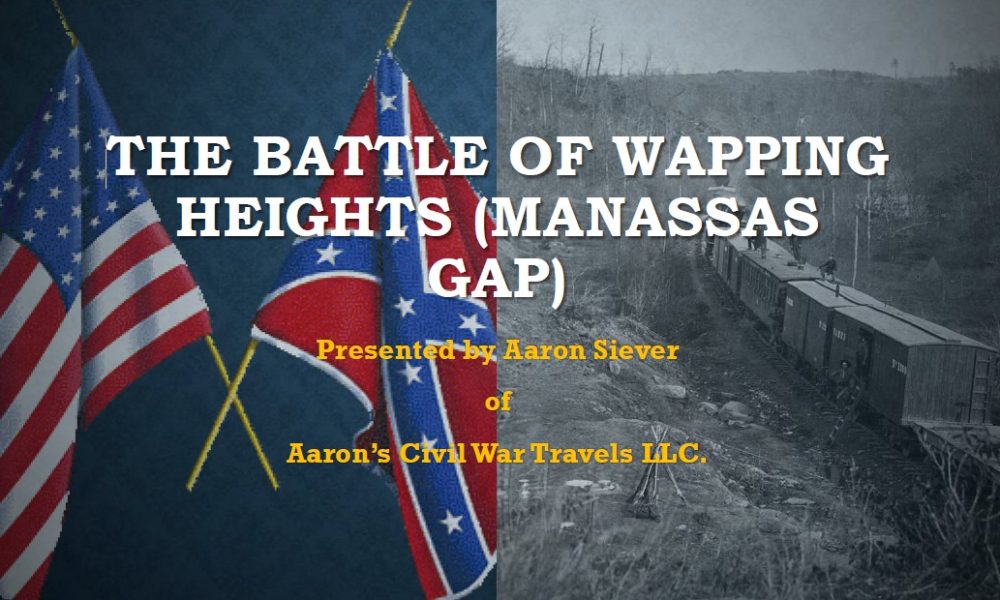
Forgotten Civil War Clash Returns to Spotlight at Front Royal Event
On a cool November night, the Warren Rifles Museum came alive with the echoes of Civil War history as people gathered to hear historian Aaron Siever unravel the forgotten story […]
 royalexaminer.com
On a cool November night, the Warren Rifles Museum came alive with the echoes of Civil War history as people gathered to hear historian Aaron Siever unravel the forgotten story of the Battle of Wapping Heights, also known as the Battle of Manassas Gap. The battle, fought on July 23, 1863, just weeks after Gettysburg, unfolded in the mountains surrounding Front Royal and played a crucial but often overlooked role in Robert E. Lee’s retreat from Pennsylvania.
Siever, founder of Aaron’s Civil War Travels LLC, brought both expertise and energy to the evening presentation. A native of the Shenandoah Valley, Siever has spent decades exploring Civil War battlefields and sharing his findings through YouTube videos, tours, and lectures.
“Growing up here, I was always surrounded by history,” Siever said. “This battle may be lesser-known, but its impact on the Gettysburg campaign and the Valley is significant.”
A Fight in the Fog of War
The Battle of Wapping Heights unfolded in the rugged terrain of Manassas Gap in Warren County, where the Blue Ridge Mountains open to the Shenandoah Valley. Union General George G. Meade, still fresh from his controversial victory at Gettysburg, hoped to cut off Lee’s retreating army by moving his forces through the gap.
But confusion and caution slowed Meade’s pursuit. Uncertain of Lee’s location and wary of his reputation for surprise tactics, Meade hesitated. That delay allowed Confederate forces, including Longstreet’s First Corps and A.P. Hill’s Third Corps, to slip further south, ultimately frustrating Meade’s hopes for a knockout blow.
Siever detailed the geography and strategy at play. “Manassas Gap was the key pass through the mountains. Whoever controlled it controlled movement between the Loudoun and Shenandoah valleys,” he said. “Meade’s slow advance gave the Confederates just enough time to dig in.”
The result was a fierce engagement between Union forces, led by General William French, and a thin Confederate line of just 600 men under Colonel Edward Walker. General Ambrose Wright initially commanded the Confederate troops, but internal disagreements and Wright’s temporary arrest left them under Walker’s untested leadership.
Confederates Dig In, Union Stumbles
Despite being outnumbered—600 Confederates against more than 8,000 Union troops—the Southern defenders held their ground for most of the day. Union troops, slowed by rocky terrain and poor communication, advanced unevenly. Skirmishers from both sides found shelter among blackberry bushes, prompting Siever to nickname the fight “The Battle of the Blackberries jokingly.”
“In every account I’ve read, soldiers mention the blackberries,” Siever said with a grin. “Union and Confederate alike were picking and eating them during the lulls in the fighting. Even the sharpshooters were firing with one hand and snacking with the other.”
Among the Union commanders was General Francis Spinola, a political appointee with little military experience. Though brave, Spinola’s charge into the gap met stiff resistance. He was shot in the foot, then the abdomen, and had to turn over command. His men, part of the famed Excelsior Brigade, were eventually pushed back by Confederate reinforcements arriving from the valley.
Confederate General Robert Rodes, leading weary troops who had marched over 30 miles that day, arrived just in time to bolster the Southern position. Other Confederate commanders, including Edward Johnson and Thomas Carter, also helped stabilize the line. As the day ended, the Confederates had held the high ground at Green Mountain, even as they slowly withdrew under cover of darkness.
A Missed Opportunity
By July 24, Meade had 37,000 troops staged near the gap. But it was too late. The main body of Lee’s army had already passed through the gaps and moved safely south. Confederate General Jubal Early shifted his men through the Luray Valley, avoiding further confrontation.
“Meade believed he had two Confederate corps still trapped in the Shenandoah Valley,” Siever explained. “In reality, only a few stragglers and a rear guard remained.”
Despite holding part of Manassas Gap for a short time, the Union had failed to deliver the blow President Abraham Lincoln had hoped for. The Army of Northern Virginia would live to fight again—and it did, for nearly two more years.
Civil War scholar Jeffrey Hunt, in his book Meade and Lee After Gettysburg, argues that had Meade acted sooner, the war might have taken a very different turn.
“This battle reminds us how timing and terrain shape history,” Siever said. “A few hours or miles can mean the difference between a decisive victory and a missed chance.”
Local Heroes and Personal Stories
Siever also shared stories of local connections, including Company B of the 17th Virginia Infantry and the Warren Rifles, which comprised men from Front Royal. Led by Captain Robert Simpson, they were among the few units to fight in their own hometown. Lucy Buck, a young woman from Front Royal, watched the fighting from her rooftop and later wrote about it in her diary.
“She even gave General Lee some songs and hospitality when he passed through town,” Siever said. “And he returned the favor by sending her a button from his uniform, which is now on display here in the museum.”
From Forgotten to Remembered
Today, the battlefield is bisected by Interstate 66, and much of the terrain has undergone significant changes. But traces of the fight remain, including the Hansborough house, Wapping House, and Civil War trail markers. In a surprising twist, Siever also found images online of Russian Civil War reenactors restaging the Battle of Wapping Heights, evidence, he said, of its global intrigue.
“This might not have been Gettysburg or Antietam,” Siever concluded, “but the men who fought here gave everything. And remembering them, especially in the very town where it happened, is a way to honor their sacrifice.”
The Warren Rifles Museum, home to artifacts from local Civil War soldiers, encourages visitors to explore this history up close. The museum’s display includes Captain Simpson’s weapons, the Lee button, and more relics from the battle that turned Front Royal into a war zone.
This battle was fought over where my home is located and I have relic hunted the area extensively over the years.
No great finds, mostly bullets (spent and dropped), a few Yankee buttons, shell fragments, a Yankee brass spur, and a bayonet but the terrain is very rugged, rocky, and hard to hunt.
As an aside.
The much reduced 20th Maine (of Little Roundtop fame) was also involved in a reserve capacity and watched the event unfold from a neighboring height but did not participate.


