
EMH
Diamond Member
- Apr 5, 2021
- 30,210
- 17,817
- 2,788
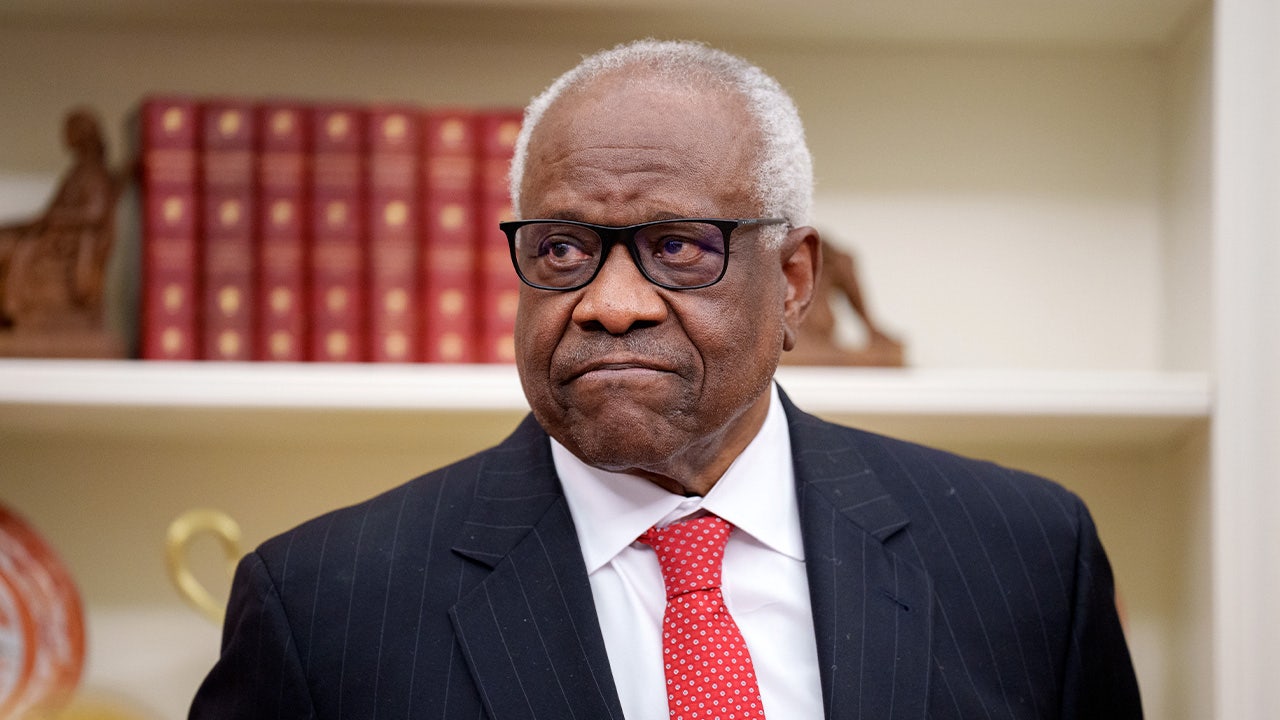
Thomas rips Supreme Court tariffs ruling, says majority 'errs' on Constitution
Justice Clarence Thomas cited President Richard Nixon's 1971 import surcharge precedent in his dissent, arguing Congress authorized tariff authority under emergency powers law.
 www.foxnews.com
"As (Kavanaugh) explains, the Court’s decision … cannot be justified as a matter of statutory interpretation. Congress authorized the President to ‘regulate ... importation,’" Thomas wrote in his dissent. "Throughout American history, the authority to ‘regulate importation’ has been understood to include the authority to impose duties on imports."
In his dissent, Thomas argued that nondelegation doctrine is a narrow constraint, saying a line is crossed only when Congress delegates "core" power to make rules triggering deprivations of "life, liberty, or property" — not "from delegating other kinds of power," such as tariffs.
The nondelegation doctrine forbids Congress from delegating core legislative power to the president.
"As I suggested over a decade ago, the nondelegation doctrine does not apply to ‘a delegation of power to make rules governing private conduct in the area of foreign trade,’ including rules imposing duties on imports," Thomas wrote. "Therefore, to the extent that the Court relies on ‘separation of powers principles’ to rule against the President is mistaken."
Thomas pointed to President Nixon’s 1971 import surcharge as a real-world test case that was later upheld in United States v. Yoshida Int’l under IEEPA’s predecessor statute, the Trading with the Enemy Act.
Nixon announced a 10% across-the-board import surcharge on foreign nations in 1971, with the U.S. Court of Customs and Patent Appeals upholding the policy under the same "regulate ... importation" language in 1975.
"The meaning of that phrase was beyond doubt by the time that Congress enacted this statute, shortly after President Nixon’s highly publicized duties on imports were upheld based on identical language," Thomas wrote.
"The statute that the President relied on therefore authorized him to impose the duties on imports at issue in these cases," Thomas wrote, adding that Kavanaugh "makes clear that the Court errs in concluding otherwise."
Regulate importation = foreign policy = Executive Branch per the Constitution
The SCOTUS not only cost America trillions of dollars, they reversed what they did under Nixon to do it, making up some sort of argument that importation and tariffs aren't foreign policy, which both clearly are. America needs one person, the President, empowered by the Constitution to handle foreign policy, to make sure our trade with each and every foreign country is fair and balanced with both sides behaving in good faith. Tariffs are a means to achieve that goal. This decision isn't just wrong on the facts of historical precedent and the Constitution, it represents the latest attempt by the Judiciary to undermine the Trump Administration and all of the Americans who voted for Trump.
John Roberts, a traitor appointed by W, has warned us to never "threaten" judges and simply to accept their corruption, bigotry, treason, and brazen acts of partisanship like sheep.
Will we??


