BellaJones
Rookie
- Nov 19, 2025
- 29
- 24
- 1
If you’ve been hanging around the markets long enough, you know that "following the money" isn't just a cliché—it’s a survival strategy. While retail traders are busy chasing the latest hype on X or Discord, the real players are looking at a much drier, but far more profitable, source of information: the SEC filings. Specifically, we’re talking about the paper trail left by corporate insiders.
Whenever a CEO, CFO, or a major shareholder buys or sells their own company’s stock, they can’t just do it in secret. They have to tell the world via a specific document.
Think of a Form 4 as a mandatory "confession" for corporate insiders. Legally, any "insider"—defined as officers, directors, or anyone owning more than 10% of a company’s stock—must file this form with the SEC within two business days of a transaction.
Transparency vs. Strategy
The official reason for this is transparency. The SEC wants to ensure that those with non-public information aren't unfairly profiting at the expense of regular investors. But for us traders, the Form 4 is a "cheat sheet." It reveals the sentiment of the people who actually run the building. If a CEO is dumping 30% of their holdings, they might tell the press it’s for "estate planning," but the tape tells a different story.
Identifying "Open Market" vs. "Award" Trades
One thing you have to watch out for is the nature of the trade. Many Form 4s just show executives receiving stock options as part of their salary. That’s noise. What you’re looking for are Open Market Purchases. When an insider reaches into their own wallet to buy shares at the current market price, that is a massive vote of confidence.
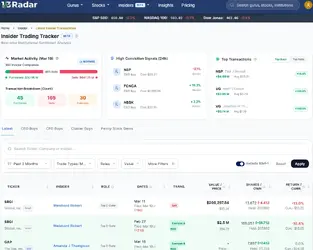
When you dive into SEC Form 4 insider trading data, you aren't just looking for a single buy or sell. You’re looking for clusters. If one director buys, it’s interesting. If the CEO, the CFO, and three board members all buy in the same week? That’s a signal you can’t ignore.
The "Informational Edge" of Insiders
Insiders generally have a better grasp of a company’s "inflection points." They know when a product pipeline is ahead of schedule or when a massive contract is nearing the finish line. By tracking SEC Form 4 insider trading patterns, you’re essentially piggybacking on their internal visibility.
Why Selling is Often a "Fake Out"
Here’s a pro tip: Insider buying is almost always bullish, but insider selling is often neutral. People sell for a million reasons—buying a house, paying for a wedding, or diversifying a portfolio that is 90% tech stock. Don't panic just because a founder sells a tiny fraction of their stake. However, if they sell everything, it’s time to head for the exits.
The trick isn't just finding the forms; it’s filtering the signal from the noise. You want to look for "Cluster Buying" and "Significant Sizing." If a billionaire insider buys $10,000 worth of stock, it’s a rounding error for them. If they buy $10 million? Now they have skin in the game.
At the end of the day, following SEC Form 4 insider trading isn't a magic bullet, but it’s one of the few ways to see what the "big boys" are doing before the rest of the market catches on.
What do you guys think? Do you track insider buys as part of your DD, or do you think the two-day reporting lag makes the data too stale by the time we see it?
Whenever a CEO, CFO, or a major shareholder buys or sells their own company’s stock, they can’t just do it in secret. They have to tell the world via a specific document.
What is the Real Purpose of SEC Form 4?
Think of a Form 4 as a mandatory "confession" for corporate insiders. Legally, any "insider"—defined as officers, directors, or anyone owning more than 10% of a company’s stock—must file this form with the SEC within two business days of a transaction.
Transparency vs. Strategy
The official reason for this is transparency. The SEC wants to ensure that those with non-public information aren't unfairly profiting at the expense of regular investors. But for us traders, the Form 4 is a "cheat sheet." It reveals the sentiment of the people who actually run the building. If a CEO is dumping 30% of their holdings, they might tell the press it’s for "estate planning," but the tape tells a different story.
Identifying "Open Market" vs. "Award" Trades
One thing you have to watch out for is the nature of the trade. Many Form 4s just show executives receiving stock options as part of their salary. That’s noise. What you’re looking for are Open Market Purchases. When an insider reaches into their own wallet to buy shares at the current market price, that is a massive vote of confidence.
Decoding the SEC Form 4 Insider Trading Signals
When you dive into SEC Form 4 insider trading data, you aren't just looking for a single buy or sell. You’re looking for clusters. If one director buys, it’s interesting. If the CEO, the CFO, and three board members all buy in the same week? That’s a signal you can’t ignore.
The "Informational Edge" of Insiders
Insiders generally have a better grasp of a company’s "inflection points." They know when a product pipeline is ahead of schedule or when a massive contract is nearing the finish line. By tracking SEC Form 4 insider trading patterns, you’re essentially piggybacking on their internal visibility.
Why Selling is Often a "Fake Out"
Here’s a pro tip: Insider buying is almost always bullish, but insider selling is often neutral. People sell for a million reasons—buying a house, paying for a wedding, or diversifying a portfolio that is 90% tech stock. Don't panic just because a founder sells a tiny fraction of their stake. However, if they sell everything, it’s time to head for the exits.
How to Use This Data Without Getting Burned
The trick isn't just finding the forms; it’s filtering the signal from the noise. You want to look for "Cluster Buying" and "Significant Sizing." If a billionaire insider buys $10,000 worth of stock, it’s a rounding error for them. If they buy $10 million? Now they have skin in the game.
At the end of the day, following SEC Form 4 insider trading isn't a magic bullet, but it’s one of the few ways to see what the "big boys" are doing before the rest of the market catches on.
What do you guys think? Do you track insider buys as part of your DD, or do you think the two-day reporting lag makes the data too stale by the time we see it?