
Doc7505
Diamond Member
- Feb 16, 2016
- 23,413
- 41,649
- 2,430
Balochistan:
Coordinated attacks in border region with Iran over autonomy and resources
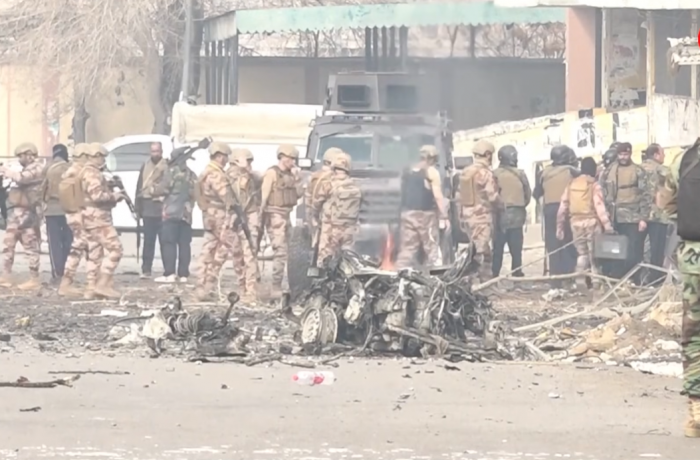
Balochistan: coordinated attacks in border region with Iran over autonomy and resources
In an already tense situation, a series of attacks claimed by the Balochistan Liberation Army (BLA) has resulted in scores of deaths among civilians and security forces, while ethnic tensions rise aga
 www.asianews.it
In an already tense situation, a series of attacks claimed by the Balochistan Liberation Army (BLA) has resulted in scores of deaths among civilians and security forces, while ethnic tensions rise again in Iran. The Taliban in Afghanistan backed the operation. The violence stems from tensions over mineral resources, while local hostility toward Islamabad has fueled the escalation.
Quetta (AsiaNews/Agencies) – Some 31 civilians and 17 members of the security forces were killed in a series of coordinated armed attacks over the weekend in Balochistan, the province’s Chief Minister, Sarfraz Bugti, reported today, adding that after a 40-hour operation, security forces killed 145 fighters.
The Balochistan Liberation Army (BLA), a separatist group that has been fighting Pakistan’s central government for decades demanding greater autonomy and, above all, control over the province’s resources, immediately claimed responsibility for the attacks.
According to Pakistan’s Minister of State for Interior Talal Chaudhry, the attackers entered hospitals, schools, banks, and markets in nine cities on Saturday in civilian clothes and "indiscriminately targeted ordinary people working in shops," in some cases using civilians as human shields.
~Snip~
The Iranian province of Sistan-Balochistan, where two thirds of the population is ethnically Balochi and predominantly Sunni, has been the focus of protests against the Islamic Republic's regime in recent weeks.
As in Pakistan, economic underdevelopment and political marginalization have fueled discontent, resurfacing ethnic tensions.
~Snip~
The border area between Iran and Pakistan is also a hotspot for Jaish ul-Adl activities. Following the Taliban's return to power in Afghanistan, where the group's leaders are believed to be located, the long border between the three countries has become even more porous, facilitating the transit of weapons and fighters.
Pakistan has previously accused Afghanistan (and consistently accused India) of being behind BLA attacks. Unlike India, which has consistently denied the accusations, several Taliban officials have expressed support for Balochi separatists on their social media channels in recent days.
Pakistan's Balochistan is also home to the hub of the China-Pakistan Economic Corridor (CPEC) infrastructure project, the port of Gwadar, which has been targeted several times in the past, along with Chinese workers employed on the project.
The BLA has long accused Islamabad of selling off natural resources without the local population benefiting from foreign investment.
Several local observers point out that the current situation also reflects the limitations of the policies implemented thus far by the Pakistani government.
~Snip~
Human rights organizations have also long criticized Pakistan's handling of the Balochi insurgency.
According to Amnesty International, even civilian activists fighting nonviolently for Baluchistan's autonomy are labelled "terrorists" and arbitrarily detained.
The army is also accused of carrying out extrajudicial killings and enforced disappearances, fueling resentment and frustration in the local population, which is also Pakistan’s poorest.
Commentary:
Behind it all is the Taliban who without the help of Pakistan was able take over during the Biden disastrous retreat.
While the Afghan Taliban are a constant factor, the most intense fighting this week (early February 2026) in the border regions involves the Balochistan Liberation Army (BLA), a separatist group.
Afghan Taliban: Pakistan remains in a state of "open confrontation" with the Afghan Taliban regime, accusing them of providing sanctuary to militants. Recent reports indicate that some Afghan nationals were involved in the latest BLA attacks.
Pakistani Taliban (TTP): This group is distinct from the Afghan Taliban but ideologically aligned. They continue to wage a "war" in border regions like North and South Waziristan, frequently using U.S.-made weapons left behind in Afghanistan..
Just more Islamic terrorist turning upon those that supported them....


