A line runs from the 1964 Republican National Convention to Trump’s Jan. 6 riot. It has zigged and zagged over the years. But there is a path.

www.nbcnews.com
excerpt from 2020: can you see the similarities?
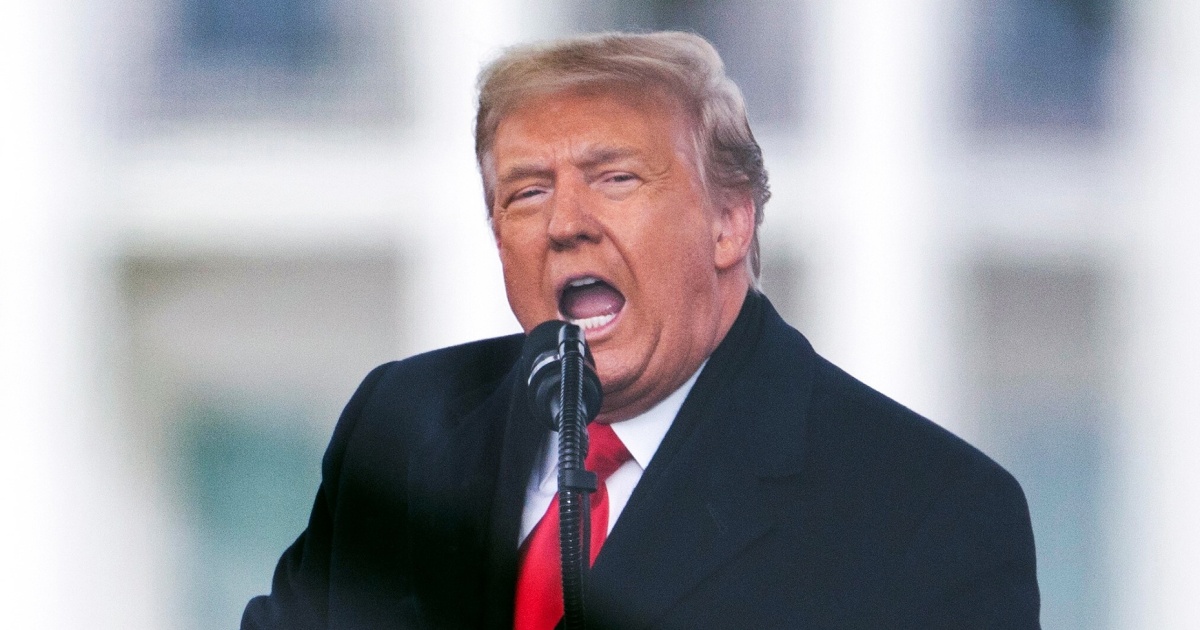
About noon on Jan. 6, 2021, President Donald Trump took the stage at a “Save America” rally on the Ellipse, south of the White House, and surveyed a crowd seething with rage and animated by paranoia. Trump had lost his bid for re-election to former Vice President Joe Biden two months earlier. Yet in the intervening weeks, he had insisted that the results were fraudulent and that he had been denied a second term by a nefarious plot with a global reach.
Trump had long been a purveyor of outlandish conspiracy theories, and, in defeat, he was not going to stop. His volatile presidency had been marked by his never-ending promotion — through tweets and other statements — of dark, misleading, and false claims: The Deep State was out to destroy him. The investigations of Moscow’s attack on the 2016 election were a plot to subvert his presidency. News outlets were an unrelenting enemy conniving to crush him. Trump had painted a Manichean picture of the world for his supporters, asserting an array of sinister forces was bent on sabotaging his presidency. The 2020 election was the latest chapter in this saga, and during this post-election period, Trump had fed the paranoid right and his fellow Republicans outlandishly bogus claims of a stolen election.
Millions of Americans believed him — including many far-right extremists: white supremacists, Christian nationalists (who thought the United States should be identified and organized as a Christian state), neo-Nazis, and adherents of the QAnon conspiracy theory.
Certainly, among the people gathered for this rally — which was organized by a bevy of right-wing outfits controlled by Trump backers working in close coordination with the White House — were Republicans and Trump supporters who did not identify with QAnoners, Nazis, Christian bigots, and racists. These outraged people simply bought Trump’s guff about a rigged election. But hate and paranoia — nurtured by Trump — pervaded the air. Members of self-styled right-wing militias had come to town ready for action, responding to Trump’s tweet of December 19: “Big protest in D.C. on January 6th. Be there, will be wild!” One of these groups, the Oath Keepers, stashed weaponry at a Comfort Inn outside Washington, should Trump call on them to take up arms. Wearing body armor, they were ready to move in and apprehend members of the Deep State on Trump’s signal. During a campaign debate the previous September, Trump had told the Proud Boys to “stand back and stand by” — and the group saw that as a message from Trump: Wait for my call.
Many in the audience had been primed the previous day during pre-march rallies in different Washington locations. These events featured speakers deemed too extreme by the main rally organizers to share the stage with Trump. At one of these well-attended kick-off events on Capitol Hill, paranoia and conspiracy theory ran rampant. Ali Alexander, who had dubbed himself the leader of the so-called Stop the Steal movement, told the crowd, “We are here to stop a coup that’s going on in our country.” He shouted, “This is our country, one way or another.” He led the audience in chanting, “1776! 1776! 1776!”
The flood of paranoia continued to pour forth at this January 5 event. Joe Flynn, the brother of retired Lt. Gen. Michael Flynn, blasted the “cowards” in the GOP. “Are we going to let them cower to these communists?” he asked. Roger Stone, the longtime underhanded political operative and Trump-whisperer convicted of lying to Congress (whom Trump had recently pardoned), insisted that Democrats and the media were mounting a “psy-op” against America to convince people Biden had won. “This is,” he declared, “a fight for the future of Western civilization as we know it. ... It’s a fight between the godly and the godless.” Alan Hostetter, a leader of the Stop the Steal forces in California, proclaimed war was at hand: “We are at war tomorrow. ... They need to know we as a people, a hundred million strong, are coming for them. ... I will see you all tomorrow at the front lines.” That day, Steve Bannon, Trump’s former chief strategist and still an ardent Trump advocate, proclaimed on his website, “All hell is going to break loose tomorrow. It’s gonna be moving. It’s gonna be quick.”
It was within this highly charged atmosphere that Trump was addressing his supporters and feeding them a toxic brew of baseless charges and doomful suspicion, declaring the existence of the United States was threatened. He warned, “If you don’t fight like hell, you’re not going to have a country anymore.” He gave his irate devotees marching orders: “We’re going to the Capitol, and we’re going to try and give ... them the kind of pride and boldness that they need to take back our country.” Trump was directing an armed mob toward Congress. His supporters shouted, “Take the Capitol!”
A line runs from the 1964 convention to Trump’s riot. It’s not a straight line. It has zigged and zagged over the years. But there is a path. For years, the Party of Lincoln had encouraged and cashed in on paranoia, bigotry, and conspiracy theory. Trump took this to a new level, but this was not a new strategy.
More than half a century earlier, Nelson Rockefeller had tried and failed to tame a crowd of Republicans and distance the party from the Birchers and their conspiratorial right-wing swill. Trump, preying on similar conspiratorial sentiments, weaponized the delusions held by his supporters that he had originated and advanced. He was using the hatred, ignorance, and irrationality that gripped millions of Americans to subvert democracy.
There was madness within the mob. These enraged Trumpers lived in a false reality. The election was not stolen. Trump was not battling a secret cabal of pedophiles and cannibals. What they believed was wrong — extremely wrong. Yet facts no longer mattered. They were guided by what Trump adviser Kellyanne Conway once called “alternative facts.” For many of the Capitol Hill assailants, Trump and his paranoia had become a theology. With his false assertions, Trump had engineered a distorted reality — as had all those Republicans who did not refute Trump’s baseless claims about the election. He — and they — had encouraged the spread of this American psychosis.

 www.motherjones.com