Was atomic bomb on Japan meant to save lives or to scare Stalin?

Invisibleflash

Diamond Member
Joined
Aug 4, 2019
Messages
4,725
Reaction score
3,786
Points
1,940
Location
L.A. & NYC...**** that I live in the Rustbelt now!
AI Overview

The debate surrounding President Truman's decision to drop atomic bombs on Japan to end World War II involves multiple perspectives, with the prominent considerations being:

1. Saving Lives and Avoiding an Invasion:
  • Argument: The primary justification presented for the bombings was to avoid a costly ground invasion of Japan, which was anticipated to result in immense casualties on both sides.
  • Support: Supporters argued that a quick end to the war, achieved by using the atomic bombs, would prevent prolonged conflict and save more lives overall, despite the casualties incurred at Hiroshima and Nagasaki.
  • Counterarguments: Some historians challenge the necessity of the bombings, suggesting Japan was already nearing surrender due to other factors like conventional bombings or the imminent Soviet invasion, and that the casualty estimates for an invasion were exaggerated.
2. Intimidating the Soviet Union:
  • Argument: A significant thread of historical analysis suggests that the bombings were also motivated by a desire to gain a strategic advantage in post-war diplomacy with the Soviet Union, demonstrating American military power and hindering Soviet expansion in Asia.
  • Support: President Truman mentioned the existence of a powerful new weapon to Stalin at the Potsdam Conference, and some policymakers hoped that the U.S. nuclear monopoly could influence Soviet concessions.
  • Counterarguments: Others argue that the primary focus remained on ending the war with Japan, and while the atomic bombs may have incidentally served as a message to the Soviets, this was a secondary consideration.
In Conclusion:
It's likely that the decision to use the atomic bombs was influenced by a combination of factors, including the desire to end the war swiftly, save lives by avoiding a costly invasion, and establish a strong diplomatic position vis-à-vis the Soviet Union.
Important Considerations:
  • Revisionist Debate: The extent to which one factor outweighed the other remains a subject of ongoing historical debate and interpretation.
  • Impact on the Cold War: Regardless of the primary intention, the atomic bombings undeniably played a role in shaping the early Cold War, with the Soviet Union intensifying its efforts to develop its own nuclear weapons.


slimball 592.gif
 
AI Overview

The debate surrounding President Truman's decision to drop atomic bombs on Japan to end World War II involves multiple perspectives, with the prominent considerations being:

1. Saving Lives and Avoiding an Invasion:
  • Argument: The primary justification presented for the bombings was to avoid a costly ground invasion of Japan, which was anticipated to result in immense casualties on both sides.
  • Support: Supporters argued that a quick end to the war, achieved by using the atomic bombs, would prevent prolonged conflict and save more lives overall, despite the casualties incurred at Hiroshima and Nagasaki.
  • Counterarguments: Some historians challenge the necessity of the bombings, suggesting Japan was already nearing surrender due to other factors like conventional bombings or the imminent Soviet invasion, and that the casualty estimates for an invasion were exaggerated.
2. Intimidating the Soviet Union:
  • Argument: A significant thread of historical analysis suggests that the bombings were also motivated by a desire to gain a strategic advantage in post-war diplomacy with the Soviet Union, demonstrating American military power and hindering Soviet expansion in Asia.
  • Support: President Truman mentioned the existence of a powerful new weapon to Stalin at the Potsdam Conference, and some policymakers hoped that the U.S. nuclear monopoly could influence Soviet concessions.
  • Counterarguments: Others argue that the primary focus remained on ending the war with Japan, and while the atomic bombs may have incidentally served as a message to the Soviets, this was a secondary consideration.
In Conclusion:
It's likely that the decision to use the atomic bombs was influenced by a combination of factors, including the desire to end the war swiftly, save lives by avoiding a costly invasion, and establish a strong diplomatic position vis-à-vis the Soviet Union.
Important Considerations:
  • Revisionist Debate: The extent to which one factor outweighed the other remains a subject of ongoing historical debate and interpretation.
  • Impact on the Cold War: Regardless of the primary intention, the atomic bombings undeniably played a role in shaping the early Cold War, with the Soviet Union intensifying its efforts to develop its own nuclear weapons.


View attachment 1130840
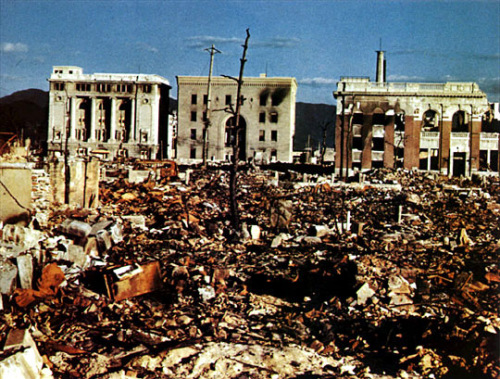
After studying this and visiting the site of one of the bombings, I've come to the conclusion that the US dropped those bombs of two totally different configurations to test what they would do to a human population. Japan was decimated and their gov't was in session debating the proper way to surrender. FWIW
 
I'm sure that both of those items factored into the decision.

Keeping Stalin in check was important, but I think saving the lives of millions of GI's was important too.
 
After studying this and visiting the site of one of the bombings, I've come to the conclusion that the US dropped those bombs of two totally different configurations to test what they would do to a human population. Japan was decimated and their gov't was in session debating the proper way to surrender. FWIW
Wrong. The Japanese “offer” was a return to status quo ante six December 1941, no external observation of disarmament, no war crimes trials and no action against the Emperor. All which violate the unconditional surrender demand of the Allies made at Casablanca in 1943.
 
December 1941
The bomb was dropped on Aug. 6, 1945. A war had been fought and Japan knew they were done. Actions done during the war had nothing to do with dropping those bombs other than providing the justification to test them out. The bombs weren't even functional during the events that you list--indeed December SIXTH, 1941. We weren't even at war with Japan until December 7th, 1941. SMH.
 
Every Japanese Person over 12 years old was Sharpening sticks , taking stock of Kitchen Knives and Farming implements and males over 14 were clamoring for Ceramic Grenades and Bayonets and last ditch Firearms , training to resist an invasion was everywhere and fortifications were planned and under construction . My guess is 25% + of the populace would have gave it a go for the emperor
 
The bomb was dropped on Aug. 6, 1945. A war had been fought and Japan knew they were done. Actions done during the war had nothing to do with dropping those bombs other than providing the justification to test them out. The bombs weren't even functional during the events that you list--indeed December SIXTH, 1941. We weren't even at war with Japan until December 7th, 1941. SMH.
That is the point. The only official Japanese government offer was a complete do over as if the war had never happened. That was all they were willing to accept even after the Hiroshima bomb was dropped and very nearly what they would accept after Nagasaki. The Japanese government was prepared to kill every man, woman and child in Japan rather than suffer the disgrace of surrendering. Remember surrender was the ultimate shame in Japanese society.
 
That is the point. The only official Japanese government offer was a complete do over as if the war had never happened. That was all they were willing to accept even after the Hiroshima bomb was dropped and very nearly what they would accept after Nagasaki. The Japanese government was prepared to kill every man, woman and child in Japan rather than suffer the disgrace of surrendering. Remember surrender was the ultimate shame in Japanese society.
Ignorant nonsense.
 
AI Overview

The debate surrounding President Truman's decision to drop atomic bombs on Japan to end World War II involves multiple perspectives, with the prominent considerations being:

1. Saving Lives and Avoiding an Invasion:
  • Argument: The primary justification presented for the bombings was to avoid a costly ground invasion of Japan, which was anticipated to result in immense casualties on both sides.
  • Support: Supporters argued that a quick end to the war, achieved by using the atomic bombs, would prevent prolonged conflict and save more lives overall, despite the casualties incurred at Hiroshima and Nagasaki.
  • Counterarguments: Some historians challenge the necessity of the bombings, suggesting Japan was already nearing surrender due to other factors like conventional bombings or the imminent Soviet invasion, and that the casualty estimates for an invasion were exaggerated.
2. Intimidating the Soviet Union:
  • Argument: A significant thread of historical analysis suggests that the bombings were also motivated by a desire to gain a strategic advantage in post-war diplomacy with the Soviet Union, demonstrating American military power and hindering Soviet expansion in Asia.
  • Support: President Truman mentioned the existence of a powerful new weapon to Stalin at the Potsdam Conference, and some policymakers hoped that the U.S. nuclear monopoly could influence Soviet concessions.
  • Counterarguments: Others argue that the primary focus remained on ending the war with Japan, and while the atomic bombs may have incidentally served as a message to the Soviets, this was a secondary consideration.
In Conclusion:
It's likely that the decision to use the atomic bombs was influenced by a combination of factors, including the desire to end the war swiftly, save lives by avoiding a costly invasion, and establish a strong diplomatic position vis-à-vis the Soviet Union.
Important Considerations:
  • Revisionist Debate: The extent to which one factor outweighed the other remains a subject of ongoing historical debate and interpretation.
  • Impact on the Cold War: Regardless of the primary intention, the atomic bombings undeniably played a role in shaping the early Cold War, with the Soviet Union intensifying its efforts to develop its own nuclear weapons.


View attachment 1130840
As always you are leaving out massive and important details

There were other lives at risk beyond the millions of Japanese and Americans which would have been lost in an invasion.

An invasion would have beenessential and lasted months and been too costly

In addition however and usually over looked were the 100,000 or so other asians dying every month in China.
The Japanese military murdered more chinese than the number jews killed in the holocaust by the nazis

To make matter sworse the overall effects of the war was causing mass starvation in china and they were losing over a million a year. This could not be fixed until the war ended.

It was not just a calculation of US and Japanese lives it was lives in general for about half the planet. The war simply had to end. The atomics bombings were the most effective and quickest means to that end.

Of all the possible alternatives they were the least bad option
 
15th post
The atomics bombings were the most effective and quickest means to that end.
The atomic bombs were dropped because it was a convenient time to test a new technology on people. LOL, if not why did they use two different configurations. It was a test. Hirohito had the diet convened and was discussing surrender when they were dropped. Put the propaganda away.
 
The atomic bombs were dropped because it was a convenient time to test a new technology on people. LOL, if not why did they use two different configurations. It was a test. Hirohito had the diet convened and was discussing surrender when they were dropped. Put the propaganda away.
Wrong

They were tested in New Mexico there was no advantage to testing them on people. Like any other bomb a test without people told us everything we needed to know

They were discussing cease fire not surrender which was a totally different ending

You are the one speading the propaganda
 
They were not going to surrender even after the first bomb . After the second one they reluctantly relented .

Thanks. That is right. I see a lot of fiction flying about here but the truth is that the bombs were dropped in response to the Pearl Harbor attack. Japan wanted to invade our mainland but was talked out of it by generals who pointed out that there would be an armed person behind every rock and tree.

It was the Emperor who refused to surrender based on ancient imperial traditions of honor, Japan was a feudal society which only knew fighting to the death, and even after Hiroshima he refused, it was not until Nagasaki that he finally relented with much pressure from his generals and he agreed to surrender.
 
Back
Top Bottom