Navigation
Install the app
How to install the app on iOS
Follow along with the video below to see how to install our site as a web app on your home screen.
Note: This feature may not be available in some browsers.
More options
Style variation
You are using an out of date browser. It may not display this or other websites correctly.
You should upgrade or use an alternative browser.
You should upgrade or use an alternative browser.
UK Telegraph claims they have Flight 370 transript
- Thread starter JimH52
- Start date

waltky
Wise ol' monkey
Interesting object found near jet search area...
China satellite finds object near jet search area
22 Mar.`14 — A satellite image released by China on Saturday offered the latest sign that wreckage from a Malaysia Airlines plane lost for more than two weeks could be in a remote stretch of the southern Indian Ocean where planes and ships have been searching for three days.
See also:
JET SEARCH AREA: DISTANT, DANGEROUS, DAZZLING
Mar 22,`14 -- The scientists and support staff stationed on Amsterdam Island find professional value in being about as far away from the hubbub of humanity as it's possible to get. But this week, some of them wandered down to the southern Indian Ocean shoreline to look for the floating objects that could help explain the mystery of Malaysia Airlines Flight 370.
China satellite finds object near jet search area
22 Mar.`14 — A satellite image released by China on Saturday offered the latest sign that wreckage from a Malaysia Airlines plane lost for more than two weeks could be in a remote stretch of the southern Indian Ocean where planes and ships have been searching for three days.
The image, showing an object 22 meters (72 feet) by 13 meters (43 feet), was taken around noon Tuesday. The image location was about 120 kilometers (75 miles) south of where an Australian satellite viewed two objects two days earlier. The larger object was about as long as the one the Chinese satellite detected. "The news that I just received is that the Chinese ambassador received a satellite image of a floating object in the southern corridor and they will be sending ships to verify," Malaysian Defense Minister Hishammuddin Hussein told reporters Saturday. Australian officials said the location was within the 36,000-square-kilometer (14,000-square-mile) area they searched on Saturday, but the object was not found. Australian Maritime Safety Authority spokeswoman Andrea Hayward-Maher said she did not know whether the precise coordinates of the location had been searched, but added that coordinators will use the information to refine the search area.
The authority, which is overseeing the search in the region, said a civil aircraft reported seeing a number of small objects in the search area, including a wooden pallet, but a New Zealand military plane diverted to the location found only clumps of seaweed. The agency said in a statement that searchers would keep trying to determine whether the objects are related to the lost plane. The latest satellite image is another clue in the baffling search for Malaysia Airlines Flight 370, which dropped off air traffic control screens March 8 over the Gulf of Thailand with 239 people on board. After about a week of confusion, Malaysian authorities said pings sent by the Boeing 777-200 for several hours after it disappeared indicated that the plane ended up in one of two huge arcs: a northern corridor stretching from Malaysia to Central Asia, or a southern corridor that stretches toward Antarctica.
The discovery of the two objects by the Australian satellite led several countries to send planes and ships to a stretch of the Indian Ocean about 2,500 kilometers (1,550 miles) southwest of Australia. But three days of searching have produced no confirmed signs of the plane. One of the objects spotted in the earlier satellite imagery was described as 24 meters (almost 80 feet) in length and the other was 5 meters (15 feet). The Boeing 777-200 is about 64 meters (209 feet) long with a wingspan of 61 meters (199 feet) and a fuselage about 6.2 meters (20 feet) in diameter, according to Boeing's website. In a statement on its website announcing China's find, the State Administration of Science, Technology and Industry for National Defense did not explain why it took four days to release the information. But there was a similar delay in the release of the Australian satellite images because experts needed time to examine them.
Two military planes from China arrived Saturday in Perth to join Australian, New Zealand and U.S. aircraft in the search. Japanese planes will arrive Sunday and ships were in the area or on their way. Even if both satellites detected the same object, it may be unrelated to the plane. One possibility is that it could have fallen off a cargo vessel. Erik van Sebille, an oceanographer at the University of New South Wales in Sydney, said the currents in the area typically move at about one meter (yard) per second but can sometimes move faster. Based on the typical speed, a current could theoretically move a floating object about 173 kilometers (107 miles) in two days. Warren Truss, Australia's acting prime minister while Tony Abbott is abroad, said before the new satellite data was announced that a complete search could take a long time. "It is a very remote area, but we intend to continue the search until we're absolutely satisfied that further searching would be futile — and that day is not in sight," he said.
More http://news.yahoo.com/china-satellite-finds-object-near-jet-search-area-121244095--finance.html
See also:
JET SEARCH AREA: DISTANT, DANGEROUS, DAZZLING
Mar 22,`14 -- The scientists and support staff stationed on Amsterdam Island find professional value in being about as far away from the hubbub of humanity as it's possible to get. But this week, some of them wandered down to the southern Indian Ocean shoreline to look for the floating objects that could help explain the mystery of Malaysia Airlines Flight 370.
The world, it seemed, had found them. Well, almost. "There's little chance we'll see anything," said Eric Morbo, the island's administrator. The 18 men and two women on the tiny island, along with the resident rockhopper penguins and elephant seals, are close neighbors to where the search is going on for the missing plane. But distance there is relative, measured in hundreds of miles (kilometers).
The French outpost lies at the edge of a stretch of ocean where the winds and waves circle endlessly eastward around Antarctica, unhindered by land masses. The region is desolate in some ways, beautiful in others, and normally escapes notice by anyone except scientists, sailors and the occasional adventurer. "You feel very alone here," said 25-year-old Vincent Lucaire, a graduate student from France.
It was a satellite image that brought searchers nearby, to a stretch of ocean about 2,500 kilometers (1,550 miles) southwest of Perth. Earlier this week, the satellite spotted two large objects, raising hopes among searchers they might find the plane that disappeared March 8 with 239 people on board. Malaysia and China said Saturday that another satellite also spotted an object in the area, about 120 kilometers (75 miles) south of the earlier sighting.
The weather has complicated the search, but an Australian crew making their second flight over the area in an AP-3C Orion on Saturday said it had improved. Of course, they said the first time was so bad there wasn't an empty barf bag on the plane. This time, cloud cover forced them to fly at about 450 feet (137 meters), rather than the 1,000-foot (304-meter) altitude they normally would have chosen. Not only did that reduce the amount of sea their eyes and their radar could scan, but the lack of sun made it impossible for sunlight to glint off any objects in the water. Gray sky and gray water seemed to blend in with each other.
MORE
Last edited:
waltky
Wise ol' monkey
New search area after updated info...
Search for lost jet shifts after new lead
Sat, Mar 29, 2014 - RADAR DATA: The new search area is 1,100km northeast of where possible debris was seen and is closer to Perth, amid better weather, Australian maritime authorities said
See also:
Malaysians hit back at criticism over search
Sat, Mar 29, 2014 - Malaysians are chafing at scathing Chinese criticism over the lost MH370 passenger jet, with fed-up officials, media and citizens now hitting back after being assailed as incompetent liars and murderers.
Search for lost jet shifts after new lead
Sat, Mar 29, 2014 - RADAR DATA: The new search area is 1,100km northeast of where possible debris was seen and is closer to Perth, amid better weather, Australian maritime authorities said
An international air and sea taskforce hunting for the wreckage of Malaysia Airlines Flight MH370 was redirected yesterday to an area 1,100km north of where they have been searching for more than a week, after Australian authorities received new radar information from Malaysia. The dramatic shift in the search area, moving it further than the distance between London and Berlin, followed analysis of radar data that showed the missing plane had traveled faster, and so would have run out of fuel quicker than previously thought.
The new search area is larger, but closer to the Australian west coast city of Perth, allowing aircraft to spend longer on site by shortening travel times. It is also vastly more favorable in terms of the weather as it is out of the deep sea region known as the Roaring 40s for its huge seas and frequent storm-force winds. Im not sure that well get perfect weather out there, but its likely to be better more often than what weve seen in the past, John Young, general manager of the emergency response division of Australian Maritime Safety Authority (AMSA), told reporters, adding the previous search site was being abandoned. We have moved on from those search areas to the newest credible lead, he said.
For more than a week, ships and surveillance planes have been scouring seas 2,500km southwest of Perth, where satellite images had suggested there could be debris from Flight MH370, which went missing on March 8 with 239 people aboard. Ten aircraft searching yesterday were immediately redirected to the new area of 319,000km2, roughly the size of Poland, about 1,850km west of Perth. The Australian Geospatial-Intelligence Organisation was also redirecting satellites there, AMSA said. However, a flotilla of Australian and Chinese ships would take longer to shift north, with the Australian naval ship the HMAS Success not due to arrive until this morning. The shift was based on analysis of radar data between the South China Sea and the Strait of Malacca, the Australian Transport Safety Bureau said. At that time, the Boeing 777 was making a radical diversion west from its course from Kuala Lumpur to Beijing.
Bureau Chief Commissioner Martin Dolan said radar and satellite polling data had been combined with information about the likely performance of the aircraft, speed and fuel consumption in particular, to arrive at the best assessment of the area in which the aircraft was likely to have entered the water. An international investigative team continued to analyze the data, Dolan said, which could result in further refinement of the potential flight path of MH370. The latest twist underscores the perplexing and frustrating hunt for evidence in the near three-week search. It comes less than a day after the latest reports of sightings of possible wreckage, captured by Thai and Japanese satellites in roughly the same frigid expanse of sea as earlier images reported by France, Australia and China. Satellite images had shown suspected debris, including pieces as large as 24m, within the original search area in the southern Indian Ocean. Potential debris has also been seen from search aircraft, but none has been picked up or confirmed as the wreckage of Flight MH370, which disappeared from civilian radar screens less than an hour after taking off.
More Search for lost jet shifts after new lead - Taipei Times
See also:
Malaysians hit back at criticism over search
Sat, Mar 29, 2014 - Malaysians are chafing at scathing Chinese criticism over the lost MH370 passenger jet, with fed-up officials, media and citizens now hitting back after being assailed as incompetent liars and murderers.
Authorities in Kuala Lumpur have been on the defensive since the Beijing-bound Malaysia Airlines flight went missing on March 8 with 239 people aboard, most of them Chinese citizens. In addition to near-daily displays of fury from Chinese relatives, Chinas tightly controlled state media have heaped opprobrium on the Malaysian government and airline, while the secretive Chinese Communist Party has urged more transparency in the investigation. A letter from the relatives, blasting Malaysias behavior as irresponsible and inhumane, demanded that China now mount its own investigation. And a US law firm says it is consulting with Chinese families on possible legal action against Malaysia Airlines and aircraft maker Boeing.
Malaysia has largely held fire China, the worlds second-largest economy, is its primary trading partner. Yet the strain is starting to show. Malaysian Defense and Transport Minister Hishammuddin Hussein, who had trodden lightly on China in often-testy press briefings on the crisis, was asked by a Chinese reporter on Tuesday about delays and misdirections in Malaysias initial response. Hishammuddin shot back that time was wasted early in the search by Chinese satellite images showing purported plane debris in the South China Sea. Beijing later acknowledged the images were false, and the search for wreckage is now focused far away in the Indian Ocean.
A day later, the minister insisted that history will judge us well. Anybody who has gone through this, what we have gone through... has indicated to me that we have done quite an admirable job, he said, adding that no country has a monopoly on grief the plane carried 50 Malaysian citizens. For the Chinese families there, they must also understand that we in Malaysia have also lost loved ones, Hishammuddin said. State-controlled press have joined in, with the Malay Mail newspaper running a front-page editorial yesterday headlined: MH370 Malaysia under siege. Countries whom we call friends must now do more to prove their friendship, it said. These governments seem happy to allow their citizens to complain and even accuse us of withholding information, it said.
The editorial urged Malaysian Prime Minister Najib Razak to rally Malaysians to defend the countrys reputation and honor. The plane inexplicably diverted from its Kuala Lumpur-Beijing flight path. Malaysia now believes it plunged into the Indian Ocean far to the south, and that all aboard were lost. In their daily press briefings, Malaysian officials have made a series of contradictory statements that added to the confusion, including conflicting information on the number and ethnicities of passengers who boarded the flight with stolen passports.
There have also been about-turns regarding the crucial sequence of events in the planes cockpit before it veered off course, and Malaysias armed forces have been criticized for failing to intercept the diverted plane when it appeared on military radar. Such missteps have fueled families anger. Scores of Chinese relatives were allowed by authorities in Beijing who normally keep a tight lid on public dissent to protest at Malaysias embassy on Tuesday, shouting that Kuala Lumpur authorities were murderers.
More Malaysians hit back at criticism over search - Taipei Times
- Banned
- #5
822. Malaysia airliner missing was created by the Feds (3/20/2014)
It was done to justify the coming airplane’s incident.
In my story, to frame me in fake money case, the Feds have to eliminate my relatives – they are all witnesses. In recent three years, each time the Feds planned a case, they arranged a cruise tour trip for my relatives. See “811. Cruise – a murder trap (1/18/2014)”. In that article, I revealed that each time for a trip, the Feds used to create an incident in advance – either an “engine room fire” in a cruise or a “boat sinking” or “food poisoning” to cover up the coming case as a common one – not particularly ralated to any individual person. So was this Malaysia Airliner’s accident.
Malaysia Airline MH370 disappeared on March 8. I think it was used to justify the coming airplane accident in later March. My wife said she was going to Philippine via Shanghai at the end of this month. This means the Feds has plotted a case in late March and arrange her a South East Asia air trip. My other relatives could be arranged in trip too at that time. Since they are all recruited by the Feds, they’ll have to follow the order of the Feds when it suddenly gives one.
That was why Malaysia airline was chosen. 1. Most victims are Chinese ethnic like my wife’s (or my rlatives’ 2. It was South East airline where my wife will fly.
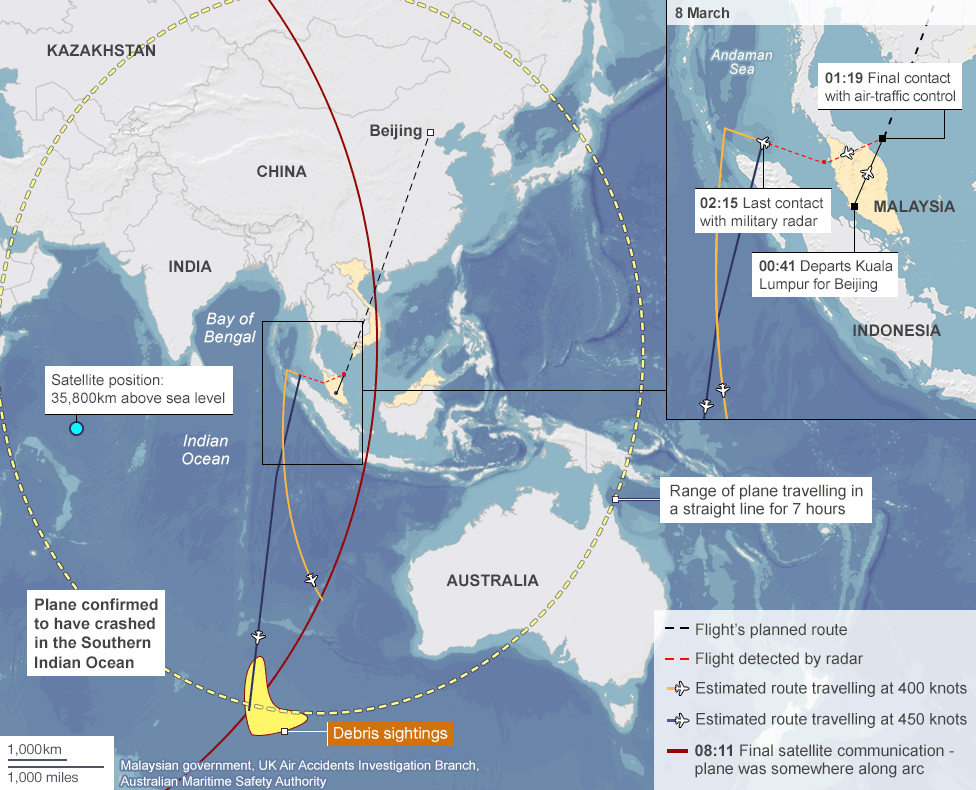
I predict the missing plane crashed somewhere far away in deep south India ocean. The purpose is to eliminate any possible trace of a plot. That’s why MH370 changed its way dramatically to the west and tried to avoid any detection from the ground. Watch the map.
In turning point, north is Vietnam; east is Philippine; South is Malaysia and Indonesia. To west is the shortest way to Indian Ocean.
Forget those hijacker or suicide news. They are used to distract your views and to delay the searches. No hijackers or suicides have such intention to play hide and seek game at this time.
How could they do this? I allege it was the same way they did in 911 attack. Everyone knows the drone is very popular today. It’s a skilled technique to pilot a plane with set up computer data. (or even by remote control) With pre-set computer data, at the turning point, the auto pilot system took over the control of the plane. The pilot can do nothing with it even if they were alive at the time.
To drop an airplane is a rare event. This may indict the Feds has made a big plot in late March. Watch with your eyes with my story in your mind. Tomorrow is Friday, the day the Feds like to act. Because there are two extra days (week ends) for them to carry murder in jail.
It was done to justify the coming airplane’s incident.
In my story, to frame me in fake money case, the Feds have to eliminate my relatives – they are all witnesses. In recent three years, each time the Feds planned a case, they arranged a cruise tour trip for my relatives. See “811. Cruise – a murder trap (1/18/2014)”. In that article, I revealed that each time for a trip, the Feds used to create an incident in advance – either an “engine room fire” in a cruise or a “boat sinking” or “food poisoning” to cover up the coming case as a common one – not particularly ralated to any individual person. So was this Malaysia Airliner’s accident.
Malaysia Airline MH370 disappeared on March 8. I think it was used to justify the coming airplane accident in later March. My wife said she was going to Philippine via Shanghai at the end of this month. This means the Feds has plotted a case in late March and arrange her a South East Asia air trip. My other relatives could be arranged in trip too at that time. Since they are all recruited by the Feds, they’ll have to follow the order of the Feds when it suddenly gives one.
That was why Malaysia airline was chosen. 1. Most victims are Chinese ethnic like my wife’s (or my rlatives’
2. It was South East airline where my wife will fly. I predict the missing plane crashed somewhere far away in deep south India ocean. The purpose is to eliminate any possible trace of a plot. That’s why MH370 changed its way dramatically to the west and tried to avoid any detection from the ground. Watch the map.
In turning point, north is Vietnam; east is Philippine; South is Malaysia and Indonesia. To west is the shortest way to Indian Ocean.
Forget those hijacker or suicide news. They are used to distract your views and to delay the searches. No hijackers or suicides have such intention to play hide and seek game at this time.
How could they do this? I allege it was the same way they did in 911 attack. Everyone knows the drone is very popular today. It’s a skilled technique to pilot a plane with set up computer data. (or even by remote control) With pre-set computer data, at the turning point, the auto pilot system took over the control of the plane. The pilot can do nothing with it even if they were alive at the time.
To drop an airplane is a rare event. This may indict the Feds has made a big plot in late March. Watch with your eyes with my story in your mind. Tomorrow is Friday, the day the Feds like to act. Because there are two extra days (week ends) for them to carry murder in jail.

- Banned
- #8
825. How did they kill the crew and passengers (4/3/2014)
The media is busy to spread disinformation from the “strategy office” to confuse people that public neglected one key information from original news. MH 370 was climbing to 45,000 feet when it turned sharply to the west. The auto pilot system took over the control of the plane and open the passage of internal cabin to the outside air space. The low temperature and low air pressure as well as low oxygen at that altitude disabled all people(include pilots) inside the plane in seconds, then killed them all.
This information revealed the killing of the crew and passengers started as soon as the plane was hijacked to a new track. The hijacker was the pre-set auto pilot system. Then it descended to below normal cruising level. At that time nobody was alive inside the plane and the only mission for the ghost plane was to elude the detection of ground radar as possible as it could and flied as far away as it could to make the search a difficult one. The following chart explained the odd track of MH 370.
decompression
Altitude - Moderate Activity - Sitting Quietly
25 000 feet - 2 minutes - 3 minutes
28 000 feet - 1 minute - 1.5 minutes
30 000 feet - 45 seconds - 1.25 minutes
35 000 feet - 30 seconds - 45 seconds
40 000 feet - 18 seconds - 30 seconds
45,000 feet - ?? seconds - ?? seconds
Time of useful consciousness at 40,000 feet in a depressurized airplane. : MH370
The media is busy to spread disinformation from the “strategy office” to confuse people that public neglected one key information from original news. MH 370 was climbing to 45,000 feet when it turned sharply to the west. The auto pilot system took over the control of the plane and open the passage of internal cabin to the outside air space. The low temperature and low air pressure as well as low oxygen at that altitude disabled all people(include pilots) inside the plane in seconds, then killed them all.
Radar Suggests Jet Shifted Path More Than Once
By MICHAEL FORSYTHE and MICHAEL S. SCHMIDTMARCH 14, 2014
Radar signals recorded by the Malaysian military appeared to show that the missing airliner climbed to 45,000 feet, above the approved altitude limit for a Boeing 777-200, soon after it disappeared from civilian radar and turned sharply to the west, according to a preliminary assessment by a person familiar with the data.
The radar track, which the Malaysian government has not released but says it has provided to the United States and China, showed that the plane then descended unevenly to 23,000 feet, below normal cruising levels, as it approached the densely populated island of Penang.
http://www.nytimes.com/2014/03/15/world/asia/malaysia-military-radar.html?_r=0
This information revealed the killing of the crew and passengers started as soon as the plane was hijacked to a new track. The hijacker was the pre-set auto pilot system. Then it descended to below normal cruising level. At that time nobody was alive inside the plane and the only mission for the ghost plane was to elude the detection of ground radar as possible as it could and flied as far away as it could to make the search a difficult one. The following chart explained the odd track of MH 370.
decompression
Altitude - Moderate Activity - Sitting Quietly
25 000 feet - 2 minutes - 3 minutes
28 000 feet - 1 minute - 1.5 minutes
30 000 feet - 45 seconds - 1.25 minutes
35 000 feet - 30 seconds - 45 seconds
40 000 feet - 18 seconds - 30 seconds
45,000 feet - ?? seconds - ?? seconds
Time of useful consciousness at 40,000 feet in a depressurized airplane. : MH370
- Banned
- #9
826. Decompression – a method to kill (4/9/2014)
This is not the first time they used this method to create an air accident. The similar action they have done in 2005. Here I quote my article #352 wrote eight years ago:
Among these air accidents, the Greek one was exactly the same method – with decompression to kill everyone on board the plane.
In each plot to eliminate me, the Feds used to have planned accidental death for my relatives, either in trip by cruise or by air. I tried my best to record each plot. When the Malaysia airliner incident happened, I immediately recalled the 2005 case. In 2005, they created four air crashes in one month to impress public that air incident was not that unusual. This time they made it a mysterious missing so the topic could occupy a period of time in media to impress public. The purpose is to replace multiple crashes.
Supplementary to 826.
352. Pre-psychological propaganda (10/22/05)
On 7/7 and 7/21, there were bombings took place in London. It was a cover up operation to justify the plotted master bombing in US. To deceive the public that these were the work of Al Qaida. The unusual events happened in same day (July 21) may prove my allegation.(see #330)
Then Feds planned a big action day in September.(9/24) They also planned an elimination of my family members and arranged a trip accident for them. To make the accident not so unusual, Feds, too, prepared a series of airplane accidents to cover up it. In three weeks from 8/14 to 9/5, there were four big air accidents.
1. On 8/14, a Greece plane crashed near Athens, 121 killed.
2. On 8/16, a West Caribbean Airways plane crashed in Venezuela; 152 killed.
3. On 8/24, a TANS Peru plane crashed in the Amazon jungle, killing 37.
4. On 9/5, an Indonesian jetliner crashed in North Sumatra, killing at least 60 of passengers. (The above information were from news of the day.)
When I first heard of Greece accident, I only impressed by the mysterious situation (lack of oxygen, frozen) before its crash. But when the Peru air crash took place, I realize it might be an operation to cover up a coming air accident. My relatives were arranged in a trip between 9/10 and 9/17. If an accident happened, it would be easily added one more to the above list and wouldn't cause any notice. That's why I talked about this twice in 9/2 and 9/7. (see #339, 340)
Pre-psychological influence is a very important tactic Feds uses. We have seen scenes such like Lewinsky scandal, Wen Ho Lee's case, WMD in Iraq..... The recent one is the hurricane Katrina and Rita. Which mainly planned to justify for a high rising inflation. So media want us expecting a gas of 5.00/gallon because most of the oil platforms in the Gulf of Mexico were damaged by hurricane and so was for many oil refineries. That how much money would spend for the refugee and re-build.(e.g. 400,000 people live in the hotels and how much that costs for one day's rent) Now these kind of information are disappeared from media. Or proved to be exaggerated. What I see is the oil dropped below $60.00 a barrel.(10/26) Why, because the framed case went sour and Feds still must keep the interest rate as low as they can to maintain a high housing market.
If the framed case have went successfully, I believe you would meet another face of media. Then you would have believed that all that sudden jumping high inflation was caused by oil and the natural disaster.
The latest movement of propaganda activated by Feds is the Bird Flu. That's another psychological war to justify a new slaughter in the name of natural disaster. Watch how the media propaganda it under the command of Feds.
353. Hurricane (3) Chemical and Greece air accident (10/27/05)
When I said Hurricane Katrina and Rita were created by Feds for a framed case, there were sarcasms such like "You mean government has a weather machine?", or "to create a hurricane with a fan?". Those people, either are very ignorant, or most likely, to smear a truth on purpose. Government doesn't use an oven to produce a warm weather or use a fan to blow wind, just like they don't sprinkle the water to make an artificial rain. They use chemical. (see #218. Chemtrail and climate war)
Control climate generally means control the movement of air stream. By controlling area air pressure or temperature, people can build artificial air passage or air wall, (of course, invisible, but sometimes people saw the chemtrail in the sky) guide the air mass move to area they want. Either it is cold air mass, or warm air mass, or humid or dry air mass.
Now let's turn on to the crash of Greece air plane which I alleged one of four accidents done by intelligence. It caused my attention for its mysterious situation. Here are news about it.
Quote, "YAHOO NEWS:
Cypriot plane crashes near Athens, 121 killed
By Yannis Behrakis
A Cypriot airliner crashed into a mountainous area north of Athens on Sunday killing all 121 people on board after apparently suffering a loss of cabin pressure or oxygen.
"The pilot has turned blue," a passenger said in a mobile text message to his cousin, according to Greek television. "Cousin farewell, we're freezing." "
http://groups-beta.google.com/groups?q=ALT.TV.LOST+FAQ+EDITION
Quote, "Greece Plane Crash Kills All Aboard
"Shortly before the crash, the jet pilots saw one of the airline pilots slumped unconscious over the controls, ...... Some Greek media reports said fighter pilots also could see oxygen masks dangling inside the cabin."
http://aolsvc.news.aol.com/news/article.adp?id=20050814052709990004&ncid=NWS00010000000001
What took place in the Greece plane seemed as follows: the cabin lost pressure, oxygen and temperature.
But it's a Boeing 737. One of the most advanced air craft. And the plane has a well designed oxygen supply and pressurization system. So far we have never heard any problem of the insulation broken which caused low pressure that killed the people on board. This was the only one.
A spokesman for the European Aviation Safety Agency, Daniel Holtgen, based in Cologne, Germany, said: "It is highly unlikely that the loss of cabin pressure alone would cause such an incident. There would have to be other contributing factors." (source, the above Yahoo News)
What were the other factors? It's a puzzle. Then it came the Katrina and Rita. In a TV news report about a research plane which flew over the hurricane, I caught what the researcher said. He said he couldn't believe it that the air pressure was incredible low outside the plane. It suddenly touched off my mind. I thought Feds spreading chemical to control the pressure of air to alter the weather. If the air pressure could be created so low to astonish the researcher, (it was in open air, air would flow from other area to refill) then what would have happened if it was in a closed cabin? I thought of the Greece plane.
I think it is a chemical which is easy to gasify and easy to react with the element part of air (either oxygen, nitrogen or carbon dioxide) and developed to another substance.(either liquid such like water, or solid) Air, after losing part of its element, has lost pressure. The chemical reaction also sucks heat.
A hurricane needs a warm air mass with rich water vapor. Ocean supplies it. A hurricane also needs big air pressure difference and temperature difference above it. This chemical supplies it. That's how an artificial hurricane developed.
When that chemical is used in a closed cabin. The low pressure and temperature it created will kill the people inside it. Oxygen may be exhausted as a component in the reaction. That's what happened in the Greece air plane.
I allege Feds used the same chemical in Greece air accident as they used in hurricane creation. It's not a coincidence when I said the four air accidents was a cover up operation of Feds and Katrina and Rita were created for the same framed case. (to be continued)
This is not the first time they used this method to create an air accident. The similar action they have done in 2005. Here I quote my article #352 wrote eight years ago:
352. Pre-psychological propaganda (10/22/05)
…….
Then Feds planned a big action day in September.(9/24) They also planned an elimination of my family members and arranged a trip accident for them. To make the accident not so unusual, Feds, too, prepared a series of airplane accidents to cover up it. In three weeks from 8/14 to 9/5, there were four big air accidents.
1. On 8/14, a Greece plane crashed near Athens, 121 killed.
2. On 8/16, a West Caribbean Airways plane crashed in Venezuela; 152 killed.
3. On 8/24, a TANS Peru plane crashed in the Amazon jungle, killing 37.
4. On 9/5, an Indonesian jetliner crashed in North Sumatra, killing at least 60 of passengers. (The above information were from news of the day.)
Among these air accidents, the Greek one was exactly the same method – with decompression to kill everyone on board the plane.
YAHOO NEWS:
Cypriot plane crashes near Athens, 121 killed
By Yannis Behrakis
A Cypriot airliner crashed into a mountainous area north of Athens on Sunday killing all 121 people on board after apparently suffering a loss of cabin pressure or oxygen.
"The pilot has turned blue," a passenger said in a mobile text message to his cousin, according to Greek television. "Cousin farewell, we're freezing." "
http://groups-beta.google.com/groups?q=ALT.TV.LOST+FAQ+EDITION
In each plot to eliminate me, the Feds used to have planned accidental death for my relatives, either in trip by cruise or by air. I tried my best to record each plot. When the Malaysia airliner incident happened, I immediately recalled the 2005 case. In 2005, they created four air crashes in one month to impress public that air incident was not that unusual. This time they made it a mysterious missing so the topic could occupy a period of time in media to impress public. The purpose is to replace multiple crashes.
Supplementary to 826.
352. Pre-psychological propaganda (10/22/05)
On 7/7 and 7/21, there were bombings took place in London. It was a cover up operation to justify the plotted master bombing in US. To deceive the public that these were the work of Al Qaida. The unusual events happened in same day (July 21) may prove my allegation.(see #330)
Then Feds planned a big action day in September.(9/24) They also planned an elimination of my family members and arranged a trip accident for them. To make the accident not so unusual, Feds, too, prepared a series of airplane accidents to cover up it. In three weeks from 8/14 to 9/5, there were four big air accidents.
1. On 8/14, a Greece plane crashed near Athens, 121 killed.
2. On 8/16, a West Caribbean Airways plane crashed in Venezuela; 152 killed.
3. On 8/24, a TANS Peru plane crashed in the Amazon jungle, killing 37.
4. On 9/5, an Indonesian jetliner crashed in North Sumatra, killing at least 60 of passengers. (The above information were from news of the day.)
When I first heard of Greece accident, I only impressed by the mysterious situation (lack of oxygen, frozen) before its crash. But when the Peru air crash took place, I realize it might be an operation to cover up a coming air accident. My relatives were arranged in a trip between 9/10 and 9/17. If an accident happened, it would be easily added one more to the above list and wouldn't cause any notice. That's why I talked about this twice in 9/2 and 9/7. (see #339, 340)
Pre-psychological influence is a very important tactic Feds uses. We have seen scenes such like Lewinsky scandal, Wen Ho Lee's case, WMD in Iraq..... The recent one is the hurricane Katrina and Rita. Which mainly planned to justify for a high rising inflation. So media want us expecting a gas of 5.00/gallon because most of the oil platforms in the Gulf of Mexico were damaged by hurricane and so was for many oil refineries. That how much money would spend for the refugee and re-build.(e.g. 400,000 people live in the hotels and how much that costs for one day's rent) Now these kind of information are disappeared from media. Or proved to be exaggerated. What I see is the oil dropped below $60.00 a barrel.(10/26) Why, because the framed case went sour and Feds still must keep the interest rate as low as they can to maintain a high housing market.
If the framed case have went successfully, I believe you would meet another face of media. Then you would have believed that all that sudden jumping high inflation was caused by oil and the natural disaster.
The latest movement of propaganda activated by Feds is the Bird Flu. That's another psychological war to justify a new slaughter in the name of natural disaster. Watch how the media propaganda it under the command of Feds.
353. Hurricane (3) Chemical and Greece air accident (10/27/05)
When I said Hurricane Katrina and Rita were created by Feds for a framed case, there were sarcasms such like "You mean government has a weather machine?", or "to create a hurricane with a fan?". Those people, either are very ignorant, or most likely, to smear a truth on purpose. Government doesn't use an oven to produce a warm weather or use a fan to blow wind, just like they don't sprinkle the water to make an artificial rain. They use chemical. (see #218. Chemtrail and climate war)
Control climate generally means control the movement of air stream. By controlling area air pressure or temperature, people can build artificial air passage or air wall, (of course, invisible, but sometimes people saw the chemtrail in the sky) guide the air mass move to area they want. Either it is cold air mass, or warm air mass, or humid or dry air mass.
Now let's turn on to the crash of Greece air plane which I alleged one of four accidents done by intelligence. It caused my attention for its mysterious situation. Here are news about it.
Quote, "YAHOO NEWS:
Cypriot plane crashes near Athens, 121 killed
By Yannis Behrakis
A Cypriot airliner crashed into a mountainous area north of Athens on Sunday killing all 121 people on board after apparently suffering a loss of cabin pressure or oxygen.
"The pilot has turned blue," a passenger said in a mobile text message to his cousin, according to Greek television. "Cousin farewell, we're freezing." "
http://groups-beta.google.com/groups?q=ALT.TV.LOST+FAQ+EDITION
Quote, "Greece Plane Crash Kills All Aboard
"Shortly before the crash, the jet pilots saw one of the airline pilots slumped unconscious over the controls, ...... Some Greek media reports said fighter pilots also could see oxygen masks dangling inside the cabin."
http://aolsvc.news.aol.com/news/article.adp?id=20050814052709990004&ncid=NWS00010000000001
What took place in the Greece plane seemed as follows: the cabin lost pressure, oxygen and temperature.
But it's a Boeing 737. One of the most advanced air craft. And the plane has a well designed oxygen supply and pressurization system. So far we have never heard any problem of the insulation broken which caused low pressure that killed the people on board. This was the only one.
A spokesman for the European Aviation Safety Agency, Daniel Holtgen, based in Cologne, Germany, said: "It is highly unlikely that the loss of cabin pressure alone would cause such an incident. There would have to be other contributing factors." (source, the above Yahoo News)
What were the other factors? It's a puzzle. Then it came the Katrina and Rita. In a TV news report about a research plane which flew over the hurricane, I caught what the researcher said. He said he couldn't believe it that the air pressure was incredible low outside the plane. It suddenly touched off my mind. I thought Feds spreading chemical to control the pressure of air to alter the weather. If the air pressure could be created so low to astonish the researcher, (it was in open air, air would flow from other area to refill) then what would have happened if it was in a closed cabin? I thought of the Greece plane.
I think it is a chemical which is easy to gasify and easy to react with the element part of air (either oxygen, nitrogen or carbon dioxide) and developed to another substance.(either liquid such like water, or solid) Air, after losing part of its element, has lost pressure. The chemical reaction also sucks heat.
A hurricane needs a warm air mass with rich water vapor. Ocean supplies it. A hurricane also needs big air pressure difference and temperature difference above it. This chemical supplies it. That's how an artificial hurricane developed.
When that chemical is used in a closed cabin. The low pressure and temperature it created will kill the people inside it. Oxygen may be exhausted as a component in the reaction. That's what happened in the Greece air plane.
I allege Feds used the same chemical in Greece air accident as they used in hurricane creation. It's not a coincidence when I said the four air accidents was a cover up operation of Feds and Katrina and Rita were created for the same framed case. (to be continued)
Last edited:
- Banned
- #10
829. A disinformation to mislead public (4/24/2014)
Three days ago, there was such a news:
Did you notice something unusual of the topic of this news? It emphasizes that it’s not that cold and lack of oxygen in high altitude . Do you know why they had this news? I think it was a misinformation created by the mastermind of the missing Malaysia airliner MH370 at the purpose to discount my allegation that the people in MH370 were killed by decompression when it was hijacked by auto pilot system.
It was a swift response to my article “825. How did they kill the crew and passengers (4/3/2014)” and “826. Decompression – a method to kill (4/9/2014)”.
Even if they indeed carried out such a “stowaway” operation, it still won’t prove anything for them. Here I quote a comment:
Three days ago, there was such a news:
How jet stowaways can survive cold, lack of oxygen
By JUSTIN PRITCHARD 4/21/2014
LOS ANGELES (AP) — Despite the subzero temperatures and lack of oxygen, people can survive even a long journey in the wheel well of a jetliner. The latest example is a teenager who, according to authorities, stowed away on a 51/2-hour flight from San Jose, Calif., to Hawaii. While the number of known stowaway attempts is few, people have survived with surprising frequency.
How jet stowaways can survive cold, lack of oxygen
Did you notice something unusual of the topic of this news? It emphasizes that it’s not that cold and lack of oxygen in high altitude . Do you know why they had this news? I think it was a misinformation created by the mastermind of the missing Malaysia airliner MH370 at the purpose to discount my allegation that the people in MH370 were killed by decompression when it was hijacked by auto pilot system.
It was a swift response to my article “825. How did they kill the crew and passengers (4/3/2014)” and “826. Decompression – a method to kill (4/9/2014)”.
Even if they indeed carried out such a “stowaway” operation, it still won’t prove anything for them. Here I quote a comment:
JIm En espanol- Jaime2 hours ago
I am not familiar with this model of Boeing A/C, but on other models the air in the cabin is changed completely every two minutes, with the old heated air being discharged throught high volume outflow valves, in this case into the wheel wells. Since there was no evidence of frostbite it must be assumed that the temperature remained above a certain level, and also that there was enough oxygen to prevent death. The key here is the large volume of air being discharged.
How jet stowaways can survive cold, lack of oxygen
- Banned
- #12
830. Uninterruptible autopilot system (5/1/2014)
Someone argued that how a computerized auto pilot system could drive the plane to avoid the ground radar. That opinion based on that auto pilot system was a pre-set up program. The reality is that Boeing have installed “uninterruptible autopilot system” in its plane. Once triggered, no one on board will be able to deactivate the system. The aircraft was taken over by the ground controller. The system was originally developed to prevent air hijacking. But when the ground controller becomes criminal, the airliner can be hijacked for evil purpose. That’s what happened in 911. That’s what happened in MH370.
Someone argued that how a computerized auto pilot system could drive the plane to avoid the ground radar. That opinion based on that auto pilot system was a pre-set up program. The reality is that Boeing have installed “uninterruptible autopilot system” in its plane. Once triggered, no one on board will be able to deactivate the system. The aircraft was taken over by the ground controller. The system was originally developed to prevent air hijacking. But when the ground controller becomes criminal, the airliner can be hijacked for evil purpose. That’s what happened in 911. That’s what happened in MH370.
New autopilot will make another 9/11 impossible
03 March 2007

Once triggered, no one on board will be able to deactivate the system. Currently, all autopilots are manually switched on and off at the discretion of pilots.
The so-called 'uninterruptible autopilot system' - patented secretly by Boeing in the US last week - will connect ground controllers and security services with the aircraft using radio waves and global satellite positioning systems.
After it has been activated, the aircraft will be capable of remote digital control from the ground, enabling operators to fly it like a sophisticated model plane, manoeuvring it vertically and laterally.
New autopilot will make another 9/11 impossible - News - London Evening Standard

Big Black Dog
Platinum Member
- May 20, 2009
- 23,425
- 8,072
- 890
My guess is the plane has landed some place. Question is, where is that "some place"?
- Banned
- #14
832. The ability to black hole a Boeing craft (5/12/2014)
As a matter of fact, it was impossible that a Boeing being hijacked by terrorists because it was equipped with uninterruptible auto pilot system. When such things happened, the pilot would covertly activate the system to alert the ground security service. The odd thing is not much people knew there was such a system existed. Most absurd was that when MH370’s missing became a hot topic, nobody talked about uninterruptible auto pilot system. It became a forbidden area for mainstream media.
If you doubt me why I concluded that MH 370 case was created by the US intelligence, my reason is pretty simple. Who control uninterruptible auto pilot system? Who have the information of ground radar so MH370 could skirt them?
As a matter of fact, it was impossible that a Boeing being hijacked by terrorists because it was equipped with uninterruptible auto pilot system. When such things happened, the pilot would covertly activate the system to alert the ground security service. The odd thing is not much people knew there was such a system existed. Most absurd was that when MH370’s missing became a hot topic, nobody talked about uninterruptible auto pilot system. It became a forbidden area for mainstream media.
If you doubt me why I concluded that MH 370 case was created by the US intelligence, my reason is pretty simple. Who control uninterruptible auto pilot system? Who have the information of ground radar so MH370 could skirt them?
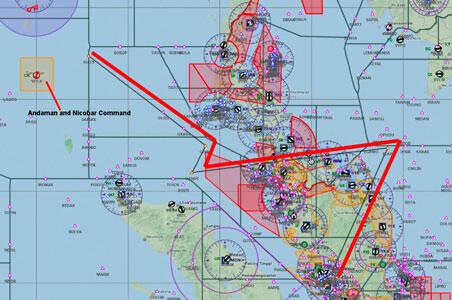
#MH370 route seems carefully chosen to skirt edges of FIRs (Flight Information Regions).
Disparition du Vol MH370 : la zone de recherche étendue à l?Océan Indien | Air Info pic.twitter.com/vhhUy5dSU1
You're mental pal.832. The ability to black hole a Boeing craft (5/12/2014)
As a matter of fact, it was impossible that a Boeing being hijacked by terrorists because it was equipped with uninterruptible auto pilot system. When such things happened, the pilot would covertly activate the system to alert the ground security service. The odd thing is not much people knew there was such a system existed. Most absurd was that when MH370s missing became a hot topic, nobody talked about uninterruptible auto pilot system. It became a forbidden area for mainstream media.
If you doubt me why I concluded that MH 370 case was created by the US intelligence, my reason is pretty simple. Who control uninterruptible auto pilot system? Who have the information of ground radar so MH370 could skirt them?
#MH370 route seems carefully chosen to skirt edges of FIRs (Flight Information Regions).
Disparition du Vol MH370 : la zone de recherche étendue à l?Océan Indien | Air Info pic.twitter.com/vhhUy5dSU1
But keep posting nonsense. It's fun to forward to my friends at the FBI/CIA/Homeland Security.
It's not every day we get some one blaming the "Feds" for causing Katrina folks.
This dude may be on to some thing.
Like my neighbour who is convinced the 'contrails' left behind by planes are actually "chemtrails' the 'Feds' are using to destroy the agriculture base of the country.
Actual quote: "Ever notice how airports are mostly surrounded by farmers fields? Ever notice how many 'chemtrails' there are over these farmer's fields?"
I didn't bother pointing out that there are lots of 'trails' left behind by planes near these farmer's fields because THAT'S WHERE THE ******* AIRPORT IS!!!!!!!
Bat shit crazy!
This dude may be on to some thing.
Like my neighbour who is convinced the 'contrails' left behind by planes are actually "chemtrails' the 'Feds' are using to destroy the agriculture base of the country.
Actual quote: "Ever notice how airports are mostly surrounded by farmers fields? Ever notice how many 'chemtrails' there are over these farmer's fields?"
I didn't bother pointing out that there are lots of 'trails' left behind by planes near these farmer's fields because THAT'S WHERE THE ******* AIRPORT IS!!!!!!!
Bat shit crazy!
- Banned
- #18
835. Uninterruptible Auto Pilot System (5/27/2014)
None released data will be helpful for investigation as the criminal that caused the missing of MH370 also control the satellite information. Do you think they will expose themselves? Anyone with common sense which one has the ability to make a Boeing with 300 people in it disappear without trace.
Former P.M. of Malaysia says:
Malaysia releases satellite data on missing jet
By EILEEN NG and CHRIS BRUMMITT 5/27/2014
Malaysia releases satellite data on missing jet
None released data will be helpful for investigation as the criminal that caused the missing of MH370 also control the satellite information. Do you think they will expose themselves? Anyone with common sense which one has the ability to make a Boeing with 300 people in it disappear without trace.
Former P.M. of Malaysia says:
BOEING TECHNOLOGY WHAT GOES UP MUST COME DOWN
May18th 2014
Written by chedet
3. MH370 is a Boeing 777 aircraft. It was built and equipped by Boeing. All the communications and GPS equipment must have been installed by Boeing. If they failed or have been disabled Boeing must know how it can be done. Surely Boeing would ensure that they cannot be easily disabled as they are vital to the safety and operation of the plane.
4. A search on the Internet reveals that Boeing in 2006 received a US patent for a system that, once activated, removes all control from pilots to automatically return a commercial airliner to a pre-determined landing location.
5. The Flightglobal.com article by John Croft, datelined Washington DC (1st December, 2006) further mentioned The uninterruptible autopilot would be activated either by pilot, by on board sensors, or even remotely by radio or satellite links by government agencies like the Central Intelligence Agency, if terrorists attempt to gain control of the flight deck.
6. Clearly Boeing and certain agencies have the capacity to take over uninterruptible control of commercial airliners of which MH370 B777 is one.
..
11. For some reason the media will not print anything that involves Boeing or the CIA. I hope my readers will read this.
Chedet ? BOEING TECHNOLOGY ? WHAT GOES UP MUST COME DOWN
- Banned
- #19
It's not every day we get some one blaming the "Feds" for causing Katrina folks.
This dude may be on to some thing.
Like my neighbour who is convinced the 'contrails' left behind by planes are actually "chemtrails' the 'Feds' are using to destroy the agriculture base of the country.
!
I don't think they want to destroy the domestic agriculture but it's practice to control weather. Chemtail is used to change the temperature of the atomosphere to create the movement of air mass. The purpose is to create hurricane and tornado and use them as weapons. Also it could be used to create "natural disaster" such like drought or flood as strategy weapon to other countries.
355. Hurricane (4): Chemical and climate war(11/2/05)
The chemical used to create a hurricane is possibly a kind of refrigerant. When the compressed refrigerant is released in air, it gasifies quickly and sucks a lot of heat. That's how a refrigerant works. When it is used in a closed cabinet, that plane becomes a cooler of the refrigerator. This was what happened in Greece air plane.
Freon was a popular refrigerant. Several years ago, scientists said it destroyed the ozonosphere and banned it. It means Freon reacts with part element of air.
To destroy the ozonosphere takes a large quantity of Freon. I think it was the result when it was used in experiment of a covert climate war. I also believe this is why Bush rejected the Tokyo treaty. The government knew they are altering the weather deliberately.
Since climate war depends on chemical spreading, how can Feds apply it on other countries? Read the news here.
Quote, "Treat of shoulder fired missiles prompts action
By steve Johnson
Mercury News, 4/8/2004
Some federal officials hope to modify US commercial planes to fire lasers, launch flares ...... fly at night with lights dimmed to foil terrorists armed with portable missiles.
While no planes in this country have come under missile attack so far, the government wants to be prepared."
A device which launches flares also can spread chemical. And how can it avoid being spotted with a chemtrail? Fly at night. All this was in the name of anti-terrorist.
Anyhow, the proposal was denied by the House due to the high cost. Then I have heard two news.
One was in newspaper. (I didn't keep that newspaper because at first I didn't realize the real meaning behind it) It said because the fuel cost was too high, commercial airline decided to reduce the flight weight. One way was to reduce the water reserve which used to flush the toilet by half.
The other one was from a TV news. It said a family was stunned when their roof of the house was broken through by a chunk of ice. Later it was proved the ice was the toilet water of a commercial plane. It said the toilet water released by air plane encountered with a cool air and froze to an ice.
My allegation is this was an experiment when a commercial plane was reformed to spread chemical. It may also prove my allegation that the chemical was a kind of refrigerant which can freeze certain amount of water instantly.
To carry out a climate war, they need to change the temperature of atmosphere, it could be in other countries. So they reform the commercial flights to spread chemicals and to do it at night to avoid being spotted spreading chemtrails.
blastoff
Undocumented Reg. User
I thought Rod Serling croaked a long time ago?
Similar threads

- Replies
- 38
- Views
- 460


- Replies
- 4
- Views
- 139
- Replies
- 19
- Views
- 293


- Replies
- 4
- Views
- 106


New Topics
-
Russia Is Providing Iran Intelligence To Target US Forces, Washington Post Reports
- Started by 0311
- Replies: 2
-
 Tony Gonzales drops out. Brandon Herrera (THE AK GUY) is very likely to go to WASHINGTON!
- Started by ColonelAngus
- Replies: 1
-
 Dem's State of the Union Guest an Illegal Immigrant Who May Have Been Sexually Assaulting Children
- Started by Captain Creeper
- Replies: 2
-
Trump Warns Iran "The Big One is Coming" as More Stealth Bombers Deploy
- Started by Captain Creeper
- Replies: 45
-

Latest Discussions
-

-

-
Trump Warns Iran "The Big One is Coming" as More Stealth Bombers Deploy
- Latest: Captain Creeper

