
Doc7505
Diamond Member
- Feb 16, 2016
- 23,413
- 41,649
- 2,430
The Dangers of Undermining U.S. Civil–Military Relations
The Dangers of Undermining U.S. Civil–Military Relations
The video draws service members into a political dispute, sowing discord, which is especially dangerous during periods of political tension.
 imprimis.hillsdale.edu
Trump’s critics charge him with violating both domestic and international law by using the U.S. military to target drug cartels and drug runners, claiming that his actions are unprecedented. But as far back as the Reagan administration in 1986, U.S. Army infantry and aviation assets operated with Bolivian forces against drug producers in that country. And in 1993, President Bill Clinton issued a Presidential Decision Directive on Counternarcotics in the Western Hemisphere, assigning a substantial role in drug interdiction to the military.
The National Defense Authorization Act of 1995 authorized use of military assets in drug interdiction: 14 USC Section 526 authorizes firing on vessels carrying drugs, and 8 USC Section 1189 authorizes the designation of narco-terror groups as Foreign Terrorist Organizations, unlocking powers used by every administration since 9/11. As for international law, the United Nations Convention on the Law of the Sea authorizes military force against suspected stateless vessels engaged in piracy and slave trafficking, essentially labeling them hostis humani generis, meaning enemies of mankind.
The Trump administration has proceeded in accordance with legal prudence. Admiral Alvin Holsey, Commander of U.S. Southern Command, properly sought legal justification for the strikes on suspected drug boats. Subsequently, the Justice Department Office of Legal Counsel advised the Pentagon that the strikes were legal under both U.S. and international law, that all strikes have been conducted in “complete compliance with the law of armed conflict,” and that U.S. troops would not be exposed to prosecution for carrying out the orders. It is legitimate to argue that Trump’s policy regarding these strikes is wrongheaded, but it is not unprecedented. Indeed, his interpretation of what constitutes the boundary of his military authority is historically ordinary.
~Snip~
Seditious Video?
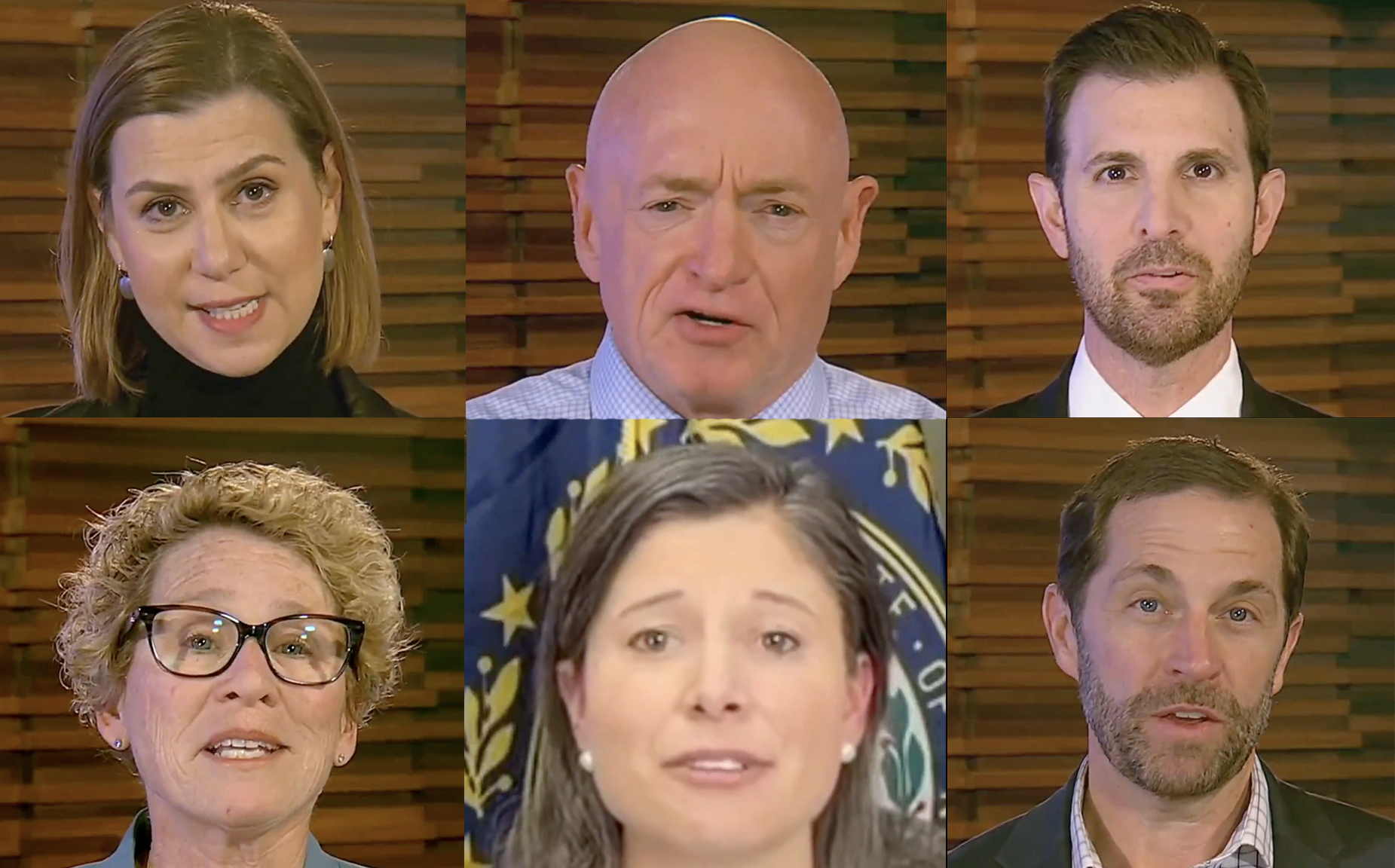
During his second term, many of Trump’s political enemies have taken up where Rosa Brooks left off. Perhaps the most troubling example occurred recently when six Democrat members of Congress posted a video aimed at service members. The video features U.S. Senators Elissa Slotkin of Michigan and Mark Kelly of Arizona and U.S. Representatives Maggie Goodlander of New Hampshire, Jason Crow of Colorado, and Chris Deluzio and Chrissy Houlahan of Pennsylvania—all of whom are either military veterans or former intelligence officials.When queried, the six lawmakers in the video were unable to identify a single example of an “unlawful order” issued by Trump or his administration.
~Snip~
President Trump has the constitutional and legal authority to do these things. Any arguments against his policies must be made in terms of prudence, not the Constitution or the law. Also, it should be needless to say—although today, sadly, it isn’t—that opposition to Trump’s policies should be expressed in a way that is careful not to undermine the principle of civilian control of the military that is fundamental to U.S. civil–military relations.
Commentary:
Great article. Thanks. I especially like his explanation of how Lincoln dealt with a Copperhead and Trump's treatment of today's Copperheads.
As the military hits the 35th drug boat, and after the video concerning supposedly “illegal orders”, and after the War Powers vote, this article seems timely. I appreciated his integrity to take a position regarding lawfulness, even though he considers the actions wrongheaded and imprudent.


