Lobbying, industry cash, and dark money have been shaping science and policy for ages. A lot of people see lobbying and dark money as a kind of LEGALIZED CORRUPTION because they let groups push their own agendas and sway lawmakers, usually putting their profit over what's good for everyone. This is just how politics in the US works behind the curtain. Just enjoy the dramas of Capitol Hill! lol.

 Concise points:
-
How influence happens:
-
Funding ties: industry grants, consulting fees, paid advisory roles, and research contracts create financial relationships that can bias study design, interpretation, or public statements.
-
Publication and speaking: Companies sponsor trials, medical‑education programs, and paid speaking engagements that amplify favorable experts.
-
Think tanks/PR networks: Industry funds third‑party experts, academics, and policy groups to promote preferred messages.
-
Career incentives: Grant prospects, industry collaborations, and patent/license opportunities can shape researchers’ incentives and priorities.
-
Evidence and limits:
-
Documented cases exist of undisclosed conflicts, ghostwriting, or industry‑influenced research (e.g., tobacco, opioids, some pharma controversies).
-
Many scientists follow rigorous disclosure rules and ethical standards; influence is uneven and often indirect rather than direct “purchase.”
-
Peer review, replication, and regulatory oversight reduce but don’t eliminate bias risk.
-
Mitigations that matter:
-
Full disclosure of financial ties, independent funding for confirmatory studies, data transparency, preregistration of trials, stricter journal and institutional conflict‑of‑interest policies, and public funding for neglected areas.
Here are reputable sources and documented examples about industry funding of scientists, conflicts of interest, and influence — with links:
1) “Corporate Influence on Science” — Harvard Business Review overview of how corporate funding can shape research agendas and outcomes
2) ProPublica — “Pharmaceutical Industry Payments to Doctors” (Dollars for Docs / ProPublica’s Prescriber Checkup coverage; searchable database)
ProPublica has compiled the disclosed payments from pharma companies to doctors and other health care providers. Search for your doctor in our interactive database.
projects.propublica.org
3) The New York Times — reporting on industry‑funded research and conflicts (example: pharma money and vaccine advisers)
4) Science journal — review/article on conflicts of interest and industry ties in biomedical research
5) JAMA — systematic reviews on industry sponsorship and research outcomes (shows association between industry funding and favorable results)
6) BMJ — investigation into ghostwriting and pharma influence on clinical literature
7) Open Payments (CMS) — U.S. federal database of industry payments to physicians and teaching hospitals
The official U.S. government website that houses data collected and published by Open Payments, a federally mandated program that collects information about payments that reporting entities, including drug and medical device companies make to covered recipients like physicians.

openpaymentsdata.cms.gov
8) ProPublica / KFF — investigations on pharma funding of patient groups and advocacy influencing policy
9) Example case — “Opioid industry influence” reporting and legal documents (NYT/DOJ settlements) illustrating industry-funded research and marketing impacts
10) Example case — tobacco industry historical documents showing manipulation of science (Truth Tobacco Industry Documents)

www.industrydocuments.ucsf.edu

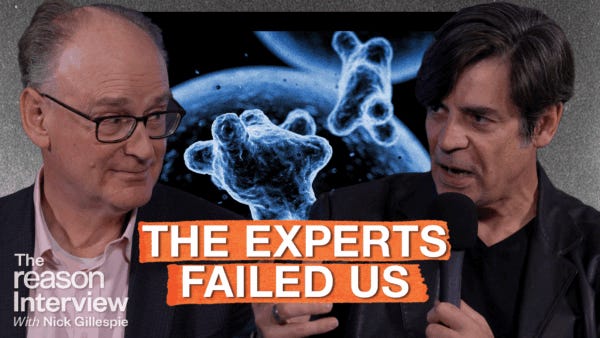
 nickgillespie.substack.com